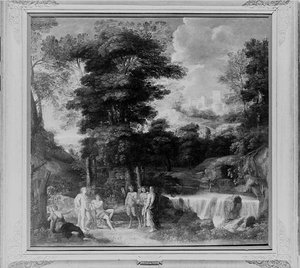
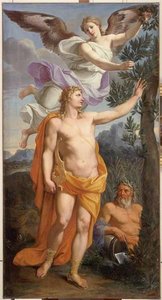
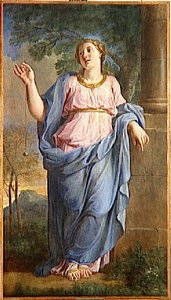
Portretul lui Noël Nicolas Coypel

Picturi Noël Nicolas Coypel: Cele 83 de cele mai faimoase, prin ochii unei galerii

Actualizat Noiembrie 2026 · clasat în funcție de scorul nostru de popularitate (căutări, vizite și comenzi pentru fiecare operă) · 90 lucrări ale lui Noël Nicolas Coypel în catalogul nostru

Pe scurt

În ochii galeriei, cea mai celebră pictură a lui Noël Nicolas Coypel este LE TRIOMPHE D'APOLLON, a cărei originală este expusă la Muzeul Luvru, Paris. The Martyrdom of James, Son of Zebedee (1661) și Neptune enlevant la nymphe Amymone completează trioul pe care orice ochi îl recunoaște. Dintre cele 90 opere ale lui Noël Nicolas Coypel din catalogul nostru, galeria prezintă mai jos cele 83 cele mai faimoase, fiecare fiind originală, cu anul creării, muzeul de păstrare și elementul care o face unică.

1628 – 1707, Paris Baroque Cele mai multe lucrări: Muzeul Luvru

Cele mai apreciate 10 picturi ale lui Noël Nicolas Coypel din galerie

1
LE TRIOMPHE D'APOLLON de Noël Nicolas Coypel

LE TRIOMPHE D'APOLLON

Oil On Canvas · Muzeul Luvru, Paris

To stand before Noel Nicolas Coypel’s Le Triomphe d'Apollon is to step directly into the gilded halls of Baroque mythology. This painting is not merely a depiction; it is an immersion in idealized classical splendor. The central figure, embodying the radiant power and divine grace associated with Apollo—the god of light, music, and the arts—commands the viewer’s gaze. Coypel masterfully frames this apotheosis within an architectural setting so opulent, one…

2
The Martyrdom of James, Son of Zebedee (1661) de Noël Nicolas Coypel

The Martyrdom of James, Son of Zebedee

1661 · Oil On Canvas

Noël Coypel executed The Martyrdom of James, Son of Zebedee in 1661. The artist, born in Paris, France, in 1628, was a significant figure in the French classical tradition. This work captures a violent moment of religious history through a dramatic composition.

3
Neptune enlevant la nymphe Amymone de Noël Nicolas Coypel

Neptune enlevant la nymphe Amymone

Oil On Canvas

The canvas titled Neptune enlevant la nymphe Amymone presents a sudden collision of salt and skin. In this work by Noël Coypel, the god Neptune reaches through the spray to claim the nymph Amymone. It is a moment of divine movement captured in oil, dating to about 1720. The scene freezes the instant of abduction, where the ruler of the seas meets the resistance of the mortal world.

4
Birth of Venus (1732) de Noël Nicolas Coypel

Birth of Venus

1732 · Muzeul Ermitaj, Sankt Petersburg

Noël-Nicolas Coypel’s “Birth of Venus,” painted in 1732, isn't merely a depiction of a classical myth; it’s a vibrant embodiment of the Baroque spirit – a theatrical celebration of beauty, divine grace, and the potent allure of love. This magnificent canvas, now residing within the esteemed collection of the Tokyo Fuji Art Museum, transports us to a world where mythology intertwines with opulent grandeur and sensual delight. It's a painting…

5
Arabesques. A Sacrifice (1650) de Noël Nicolas Coypel

Arabesques. A Sacrifice

1650 · Oil On Canvas

The air within this grand, multi-panel composition feels thick with the scent of ancient incense and the weight of divine ritual. Six vertical sections pull the eye upward, creating a rhythmic ascent that mimics the movement of smoke rising toward the heavens. Figures do not merely sit; they float and descend in a swirling, choreographed dance of flesh and drapery. Cherubs, or putti, drift through a sky of pale blues…

6
The Triumph of Bacchus (five fragments) (1675) de Noël Nicolas Coypel

The Triumph of Bacchus (five fragments)

1675 · Oil On Canvas

This large-scale decorative scheme, composed of five fragments, presents a complex mythological scene through a monochromatic lens. The composition is structured around a dense, vertical arrangement of figures, garlands, and architectural elements. It reflects the French Baroque style, characterized by movement and theatricality. The arrangement of nymphs, satyrs, and deities amidst lush vegetation and classical architecture suggests a highly organized, ornamental design intended for a larger wall or ceiling decoration.…

7
The Triumph of Apollo (three fragments) (1675) de Noël Nicolas Coypel

The Triumph of Apollo (three fragments)

1675 · Oil On Canvas

The gaze meets The Triumph of Apollo (three fragments), a work that emerges from the brush of Noël Coypel. Created about 1675, this piece captures a moment of mythological significance, centering on the celestial victory of Apollo. The scene unfolds through an allegorical lens, presenting the triumph of the god of light and music in a way that feels both structured and alive. It is a window into the grand…

8
The Triumph of Minerva (four fragments) (1675) de Noël Nicolas Coypel

The Triumph of Minerva (four fragments)

1675 · Oil On Canvas

The Triumph of Minerva (four fragments) is a significant work by the French painter Noël Coypel. Created during the second half of the seventeenth century, specifically between 1684 and 1690, these fragments represent a substantial undertaking from the artist's career. The work is part of the Collection de Louis XIV, originating from the manufacture des Gobelins.

9
The Reprobation of Cain after the Death of Abel (1675) de Noël Nicolas Coypel

The Reprobation of Cain after the Death of Abel

1675 · Oil

In The Reprobation of Cain after the Death of Abel, Noël Coypel captures the harrowing aftermath of the first fratricide. The scene unfolds with a heavy, visceral weight, presenting a moment of eternal consequence where the silence of sin meets the light of the heavens. Cain kneels in the foreground, his body language conveying a soul fractured by his own actions. He shields a face contorted by despair, his hands…

10
The Triumph of Mars (one of four fragments) (1687) de Noël Nicolas Coypel

The Triumph of Mars (one of four fragments)

1687 · Oil On Canvas

The Triumph of Mars (one of four fragments) is a monumental Baroque oil painting by Noël Coypel. Executed around 1687, this vertical composition functions as an allegorical study of power and classical authority. The work belongs to a larger series of four fragments, of which this piece remains a significant component.

Picturi cu Noël Nicolas Coypel, clasate de la 11 la 83

11The Triumph of Mars (one of four fragments) (1687) de Noël Nicolas CoypelThe Triumph of Mars (one of four fragments)1687 12The Triumph of Mars (one of four fragments) (1687) de Noël Nicolas CoypelThe Triumph of Mars (one of four fragments)1687 13Spring and Summer (1695) de Noël Nicolas CoypelSpring and Summer1695 14Apollo Shepherd Guarding the Herds of Admetus (1688) de Noël Nicolas CoypelApollo Shepherd Guarding the Herds of Admetus1688 · Opera House 15Autumn and Winter (1697) de Noël Nicolas CoypelAutumn and Winter1697 16The Chariot of the Day Natural (1695) de Noël Nicolas CoypelThe Chariot of the Day Natural1695 17Apollo Crowned by Victory (1688) de Noël Nicolas CoypelApollo Crowned by Victory1688 · Opera House 18The Sacrifice of Manoah and His Wife, Parents of Samson (1690) de Noël Nicolas CoypelThe Sacrifice of Manoah and His Wife, Parents of Samson1690 · Hood Museum of Art 19Jupiter Raised by the Korybantes (1701) de Noël Nicolas CoypelJupiter Raised by the Korybantes1701 20Madame de Bourbon-Conti (1731) de Noël Nicolas CoypelMadame de Bourbon-Conti1731 · Ringling Museum of Art 21Justice Punishing (1681) de Noël Nicolas CoypelJustice Punishing1681 · Château de Versailles 22The Bath of Diana (1732) de Noël Nicolas CoypelThe Bath of Diana1732 · Muzeul Ermitaj 23The Rape of Europa (detail) (1727) de Noël Nicolas CoypelThe Rape of Europa (detail)1727 · Philadelphia Museum of Art 24Trajan donnant des audiences publiques de Noël Nicolas CoypelTrajan donnant des audiences publiquesMuzeul Luvru 25Christ at Prayer on the Mount of Olives (1704) de Noël Nicolas CoypelChrist at Prayer on the Mount of Olives1704 26Jupiter Chariot between Justice and Piety (study) (1671) de Noël Nicolas CoypelJupiter Chariot between Justice and Piety (study)1671 27APOLLON COURONNE PAR MINERVE de Noël Nicolas CoypelAPOLLON COURONNE PAR MINERVEMuzeul Luvru 28Equity (also known as Equité) (1668) de Noël Nicolas CoypelEquity (also known as Equité)1668 · Château de Fontainebleau 29Hercules Fighting Achelous (1669) de Noël Nicolas CoypelHercules Fighting Achelous1669 30LA REPROBATION DE CAIN APRES LA MORT D'ABEL de Noël Nicolas CoypelLA REPROBATION DE CAIN APRES LA MORT D'ABELMuzeul Luvru 31Jupiter Raised by the Korybantes (1705) de Noël Nicolas CoypelJupiter Raised by the Korybantes1705 32Loth and his Daughters (1704) de Noël Nicolas CoypelLoth and his Daughters1704 · Musée Des Beaux 33LA NATIVITE de Noël Nicolas CoypelLA NATIVITE 34The Rape of Europa (1727) de Noël Nicolas CoypelThe Rape of Europa1727 · Philadelphia Museum of Art 35A Landscape with the Flight into Egypt de Noël Nicolas CoypelA Landscape with the Flight into Egypt 36FIGURE ALLEGORIQUE de Noël Nicolas CoypelFIGURE ALLEGORIQUEColecțiile Statale de Pictură din Bavaria 37LA TERRE de Noël Nicolas CoypelLA TERRE 38SAINTE FAMILLE de Noël Nicolas CoypelSAINTE FAMILLE 39APOLLON ET MARSYAS de Noël Nicolas CoypelAPOLLON ET MARSYAS 40TRAJAN RENDANT LA JUSTICE de Noël Nicolas CoypelTRAJAN RENDANT LA JUSTICE 41JUPITER ENFANT ELEVE PAR LES CORYBANTES de Noël Nicolas CoypelJUPITER ENFANT ELEVE PAR LES CORYBANTES 42PTOLEMEE PHILADELPHE REND LA LIBERTE AUX JUIFS de Noël Nicolas CoypelPTOLEMEE PHILADELPHE REND LA LIBERTE AUX JUIFS 43La Vigilance de Noël Nicolas CoypelLa Vigilance 44NYMPHES PRESENTANT UNE CORNE D'ABONDANCE A AMALTHEE de Noël Nicolas CoypelNYMPHES PRESENTANT UNE CORNE D'ABONDANCE A AMALTHEE 45HERCULE ET NESSUS de Noël Nicolas CoypelHERCULE ET NESSUS 46SOLON EXPLIQUANT SES LOIS de Noël Nicolas CoypelSOLON EXPLIQUANT SES LOIS 47La Résurrection du Christ de Noël Nicolas CoypelLa Résurrection du Christ 48DEJANIRE ENVOYANT LA CHEMISE EMPOISONNEE DE NESSUS A HERCULE de Noël Nicolas CoypelDEJANIRE ENVOYANT LA CHEMISE EMPOISONNEE DE NESSUS A HERCULE 49Apollon vainqueur du serpent Python de Noël Nicolas CoypelApollon vainqueur du serpent PythonOpera House 50APOLLON ET MERCURE de Noël Nicolas CoypelAPOLLON ET MERCUREOpera House 51Junon apparaît à Hercule de Noël Nicolas CoypelJunon apparaît à HerculeOpera House 52HERCULE FAISANT UN SACRIFICE A JUPITER de Noël Nicolas CoypelHERCULE FAISANT UN SACRIFICE A JUPITER 53HERCULE ET ACHELOUS de Noël Nicolas CoypelHERCULE ET ACHELOUSOpera House 54L'ABONDANCE de Noël Nicolas CoypelL'ABONDANCE 55ALEXANDRE SEVERE FAIT DISTRIBUER DU BLE AU PEUPLE DANS UN TEMPS DE DISETTE de Noël Nicolas CoypelALEXANDRE SEVERE FAIT DISTRIBUER DU BLE AU PEUPLE DANS UN TEMPS DE DISETTE 56APOTHEOSE D'HERCULE de Noël Nicolas CoypelAPOTHEOSE D'HERCULE 57LA JUSTICE RECOMPENSANTE de Noël Nicolas CoypelLA JUSTICE RECOMPENSANTE 58SOULAGEMENT DE LA FAMINE PAR LES ENFANTS DE LA PIETE de Noël Nicolas CoypelSOULAGEMENT DE LA FAMINE PAR LES ENFANTS DE LA PIETE 59LA JUSTICE PUNISSANTE de Noël Nicolas CoypelLA JUSTICE PUNISSANTE 60ESCLAVES RECEVANT DES MARQUES DE LEUR LIBERTE de Noël Nicolas CoypelESCLAVES RECEVANT DES MARQUES DE LEUR LIBERTE 61SIMON GUILLAIN (1581 1658) de Noël Nicolas CoypelSIMON GUILLAIN (1581 1658) 62JUPITER ACCOMPAGNE DE LA JUSTICE ET DE LA PIETE de Noël Nicolas CoypelJUPITER ACCOMPAGNE DE LA JUSTICE ET DE LA PIETE 63La Résurrection de Noël Nicolas CoypelLa Résurrection 64ANGES PRESENTANT LE MEDAILLON DE LOUIS XIV de Noël Nicolas CoypelANGES PRESENTANT LE MEDAILLON DE LOUIS XIV 65Sacrifice to Jupiter de Noël Nicolas CoypelSacrifice to JupiterOpera House 66ALEXANDRE SEVERE FAISANT DISTRIBUER DU BLE AU PEUPLE DE ROME DANS UN TEMPS DE DISETTE de Noël Nicolas CoypelALEXANDRE SEVERE FAISANT DISTRIBUER DU BLE AU PEUPLE DE ROME DANS UN TEMPS DE DISETTEMuzeul Luvru 67The Justice of Trajan (small version) (1675) de Noël Nicolas CoypelThe Justice of Trajan (small version)1675 68Apollon couronne par la Victoire de Noël Nicolas CoypelApollon couronne par la VictoireMuzeul Luvru 69PTOLEMEE PHILADELPHE DONNANT LA LIBERTE AUX JUIFS de Noël Nicolas CoypelPTOLEMEE PHILADELPHE DONNANT LA LIBERTE AUX JUIFSMuzeul Luvru 70Saint Jacques le Majeur, conduit au supplice, guérit un paralytique et embrasse son accusateur de Noël Nicolas CoypelSaint Jacques le Majeur, conduit au supplice, guérit un paralytique et embrasse son accusateurMuzeul Luvru 71L'Equité de Noël Nicolas CoypelL'Equité 72Christ on the Cross de Noël Nicolas CoypelChrist on the Cross 73Apollo Crowned by Minerva de Noël Nicolas CoypelApollo Crowned by Minerva 74Apollo Crowned by Victory de Noël Nicolas CoypelApollo Crowned by Victory 75Story of Hercules - Hercules Making a Sacrifice to Jupiter de Noël Nicolas CoypelStory of Hercules - Hercules Making a Sacrifice to Jupiter 76Holy Family (after Raphael, small version) de Noël Nicolas CoypelHoly Family (after Raphael, small version)Musée des Beaux-Arts de Dijon 77Purchase de Noël Nicolas CoypelPurchase 78Story of Hercules - The Apotheosis of Hercules de Noël Nicolas CoypelStory of Hercules - The Apotheosis of Hercules 79Hercule combattant Achelous de Noël Nicolas CoypelHercule combattant Achelous 80The Nativity (study) de Noël Nicolas CoypelThe Nativity (study)Musée Des Beaux 81Les échevins parisiens quittent l'Hôtel de Ville pour se rendre à Notre Dame assister au Te Deum, à l'occasion de la victoire de Seneffe (1674) de Noël Nicolas CoypelLes échevins parisiens quittent l'Hôtel de Ville pour se rendre à Notre Dame assister au Te Deum, à l'occasion de la victoire de Seneffe (1674)Muzeul Carnavalet 82Marsyas Playing Flute before Apollo and Midas de Noël Nicolas CoypelMarsyas Playing Flute before Apollo and MidasMusée des Beaux-Arts 83SOLON SOUTENANT LA JUSTICE DE SES LOIS CONTRE LES OBJECTIONS DES ATHENIENS de Noël Nicolas CoypelSOLON SOUTENANT LA JUSTICE DE SES LOIS CONTRE LES OBJECTIONS DES ATHENIENSMuzeul Luvru

Piesele celebre ale lui Noël Nicolas Coypel, perioadă cu perioadă

Subiectele care i-au captivat privirea lui Noël Nicolas Coypel

Cele patru teme care revin cel mai des în aceste opere originale, fiecare având cel mai sublim exemplu.

Muzeele care păstrează originalele lui Noël Nicolas Coypel

Cele 8 muzee care dețin cele mai multe dintre picturile de pe această pagină.

Muzee Oraș Lucrări lui Noël Nicolas Coypel Picturi din această listă
Muzeul Luvru, ParisMuzeul Luvru Paris 9 LE TRIOMPHE D'APOLLON, Trajan donnant des audiences publiques, APOLLON COURONNE PAR MINERVE
Opera House, VersaillesOpera House Versailles 7 Apollo Shepherd Guarding the Herds of Admetus, Apollo Crowned by Victory, Apollon vainqueur du serpent Python
Muzeul Ermitaj, Sankt PetersburgMuzeul Ermitaj Sankt Petersburg 2 Birth of Venus, The Bath of Diana
Philadelphia Museum of Art, PhiladelphiaPhiladelphia Museum of Art Philadelphia 2 The Rape of Europa (detail), The Rape of Europa
Musée Des Beaux, RennesMusée Des Beaux Rennes 2 Loth and his Daughters, The Nativity (study)
Hood Museum of Art, HanoverHood Museum of Art Hanover 1 The Sacrifice of Manoah and His Wife, Parents of Samson
Ringling Museum of Art, SarasotaRingling Museum of Art Sarasota 1 Madame de Bourbon-Conti
Château de Versailles, VersaillesChâteau de Versailles Versailles 1 Justice Punishing

Noël Nicolas Coypel, o pictură emblematică pe deceniu

Lucrări pe deceniu

Alege o deceniu pentru a descoperi opera originală care îl definește.

Picturile lui Noël Nicolas Coypel: răspunsurile galeriei

Care este cea mai celebră pictură a lui Noël Nicolas Coypel?Află răspunsul

LE TRIOMPHE D'APOLLON, Muzeul Luvru, Paris. Urmează The Martyrdom of James, Son of Zebedee (1661) și Neptune enlevant la nymphe Amymone.

Care sunt cele mai importante 10 picturi ale lui Noël Nicolas Coypel?Află răspunsul

LE TRIOMPHE D'APOLLON, The Martyrdom of James, Son of Zebedee, Neptune enlevant la nymphe Amymone, Birth of Venus, Arabesques. A Sacrifice, The Triumph of Bacchus (five fragments), The Triumph of Apollo (three fragments), The Triumph of Minerva (four fragments), The Reprobation of Cain after the Death of Abel și The Triumph of Mars (one of four fragments). Clasamentul de mai sus indică anul și muzeul pentru fiecare piesă.

Câte lucrări a creat Noël Nicolas Coypel?Află răspunsul

Catalogul nostru cuprinde 90 lucrări ale lui Noël Nicolas Coypel, datate între 1650 și 1705.

Unde sunt expuse cele mai celebrele opere originale ale lui Noël Nicolas Coypel?Află răspunsul

În principal în Muzeul Luvru (Paris), Opera House (Versailles) și Muzeul Ermitaj (Sankt Petersburg). Tabelul cu muzee de mai sus le enumeră pe toate.

Când a creat Noël Nicolas Coypel cele mai faimoase picturi?Află răspunsul

În 1670s: 6 dintre cele 83 lucrări de pe această pagină au fost realizate atunci, fiind The Triumph of Bacchus (five fragments) dintre acestea.

Care sunt cele mai vechi și cele mai recente opere celebre ale lui Noël Nicolas Coypel?Află răspunsul

Pe această pagină, cea mai veche lucrare datează din Arabesques. A Sacrifice (1650), iar cea mai recentă este din Jupiter Raised by the Korybantes (1705).

La ce subiecte s-a întors cel mai des Noël Nicolas Coypel?Află răspunsul

Mythology (9), Man (9) și Woman (9), din cele 83 lucrări de pe această pagină.

În ce tehnică a lucrat cel mai mult Noël Nicolas Coypel?Află răspunsul

Oil On Canvas, pentru 29 dintre cele 83 lucrări de pe această pagină.

Cu ce mișcare este asociat(ă) Noël Nicolas Coypel?Află răspunsul

Baroque, judecând după originalele de pe această pagină.

Ce opere originale ale lui Noël Nicolas Coypel deține Muzeul Luvru?Află răspunsul

LE TRIOMPHE D'APOLLON, Trajan donnant des audiences publiques și APOLLON COURONNE PAR MINERVE: Muzeul Luvru, Paris deține 9 dintre lucrările de pe această pagină.

Noël Nicolas Coypel: artistul

O moștenire sculptată în lumina clasică: Viața și arta lui Noël Nicolas Coypel

Noël Nicolas Coypel, un nume adesea rostit cu respect alături de cel al predecesorului său venerat, Nicolas Poussin, a reprezentat o figură esențială în pictura franceză din secolul al XVII-lea. Născut pe 25 decembrie 1628, în inima Parisului, călătoria artistică a lui Coypel nu a fost una de aclamație imediată, ci mai degrabă o ascensiune graduală, modelată de încurajarea familială și de o imersiune profundă în tradiția clasică. Tatăl său, deși el însuși artist, nu a cunoscut un succes substanțial, însă i-a oferit tânărului Noël scânteia inițială — o pasiune pentru pictură care, în cele din urmă, i-ar fi definit întreaga existență. Această expunere timpurie s-a dovedit a fi mult mai mult decât o simplă bază educațională; ea a întări în sufletul lui Coypel determinarea de a nu doar stăpâni meseria, ci și de a ridica statutul acesteia prin studiu riguros și devotament absolut.

Formarea timpurie și influența lui Poussin

Anii formativi ai lui Coypel au fost profund marcați de fascinația sa pentru operele lui Nicolas Poussin, o figură monumentală a artei, a cărui accent asupra ordinii, clarității și a temelor clasice a rezonat profund în spiritul tânărului artist. Această admirație nu a fost una pur pasivă; Coypel a căutat activ să înțeleagă și să emuleze tehnicile lui Poussin, studiind cu o minuțiozitate rară compozițiile, paletele cromatice și abordarea formei acestuia. Un pas crucial în dezvoltarea sa a venit odată cu colaborarea cu Charles Errard, un decorator de renume însărcinat cu crearea numeroaseler picturi pentru Palatul Louvre. Această encomandă i-a oferit experiență practică neprețuită și i-a permis lui Coypel să își perfecționeze abilitățile, contribuind în același timp la unul dintre cele mai prestigioase proiecte artistice ale Franței. De asemenea, a beneficiat de îndrumarea lui Noël Quillerier, un alt pictor respectat, care i-a rafinat și mai mult înțelegerea principiilor clasice și a echilibrului compozițional.

O carieră definită de roluri instituționale și comenzi grandioase

Cariera lui Coypel s-a desfășurat printr-o serie de roluri tot mai importante în cadrul establishmentului artistic francez. În 1672, a fost numit director al prestigioasei Academii Franceze din Roma — o funcție care i-a oferit patru ani pentru a se imersa în inima artistică a Europei și pentru a-și cultiva și mai mult sensibilitățile clasice. Această numire nu a reprezentat doar un onor, ci a semnalat recunoașterea talentului și a potențialului său de lider în lumea artei. La întoarcerea sa în Franța, Coypel a urcat în ierarhie devenind director al Academiei de Pictură, unde s-a dedicat formării următoarei generații de artiști și menținerii standardelor de excelență academică. Printre cele mai celebrate realizări ale sale se numără lucrul la proiecte decorative de amploare, inclusiv picturile destinate Louvre-ului și altor instituții pariziene semnificative. Opera sa, Martiriul Sfântului Iacob în Notre Dame, rămâne o mărturie a măiestriei sale în temele clasice, a compoziției dramatice și a abilității tehnice — o reprezentare puternică ce întruchipează eleganța și măreția caracteristice stilului său.

Moștenirea familiei și impactul durabil

Numele lui Coypel a devenit sinonim cu talentul artistic, extinzându-se dincolo de figura lui Noël Nicolas însuși. Fiicii săi, Antoine și Noël-Nicolas Coypel, au urmat urmele tatălui lor, impunându-se ca pictori realizați și contribuind la continuarea moștenirii familiale. Această dedicare familială subliniază importanța educației artistice în cadrul casei Coypel și influența durabilă a exemplului lui Noël Nicolas. Dincolo de propria producție prolifică, Coypel a jucat un rol vital în modelarea scenei artistice franceze într-o perioadă de schimbări semnificative. Accentul său pus pe principiile clasice, combinat cu un simț rafinat al eleganței, a lăsat o amprentă indelibilă asupra numeroșilor artiști care au urmat. El nu a fost doar un pictor; a fost un profesor, un administrator și un apărător al excelenței artistice, a cărui influență este încă simțită astăzi. Pentru a explora amploarea operei sale, inclusiv capodopere precum Martiriul Sfântului Iacob, puteți vizita resurse precum OriginalUniqueArt.com, unde o colecție cuprinzătoare de picturi ale sale vă așteaptă să fie descoperită. Arta sa rămâne o amintire puternică a frumuseții nemuritoare și a atractivității atemporale a picturii clasice.