The Florentine Soul in Bronze and Brush
Niccolò di Forzore Spinelli, often remembered by the evocative moniker Niccolò Fiorentino, was a master whose hands bridged the gap between the delicate precision of a medalist and the grand vision of a Renaissance painter. Born in the vibrant heart of Florence around 1430, his life unfolded during one of history's most transformative intellectual awakenings. To understand Spinelli is to understand the very pulse of the Quattrocento—a period where the rediscovery of classical antiquity breathed new life into the artistic traditions of Italy. His early years were shaped by the rigorous atmosphere of the Florentine workshops, most notably through his apprenticeship in the studio of Andrea del Verrocchio. This formative connection was instrumental; it provided him with a foundational mastery of anatomy and a meticulous eye for detail that would later define his ability to capture the human essence in both metal and pigment.
As his career matured, Spinelli’s artistry became a tapestry woven from the influences of the greatest minds of his age. His journey through the Florentine landscape brought him into the orbit of luminaries such as Piero della Francesca and Andrea Mantegna. From these masters, he absorbed the sophisticated use of linear perspective and the dramatic interplay of chiaroscuro, techniques that allowed him to create a sense of profound depth and three-dimensional reality. This technical prowess was not merely for show; it served a higher humanist purpose. Whether he was striking a bronze medal or composing an altarpiece, Spinelli sought to capture the psychological weight of his subjects, imbuing them with a dignity that reflected the burgeoning importance of individual identity in Renaissance thought.
A Legacy of Portraiture and Devotion
The breadth of Spinelli’s repertoire is nothing short of extraordinary, spanning the intimate scale of commemorative coinage to the monumental presence of religious altarpieces. He was a celebrated medalist, an artist capable of distilling a person's entire character into the small, tactile surface of a bronze disc. His works, such as the striking portrait of Filippo Strozzi, serve as enduring windows into the past. In these miniature masterpieces, one can observe the heavy texture of period robes and the dignified features of the Florentine elite, rendered with an arresting clarity that makes the subject feel almost tangible across the centuries.
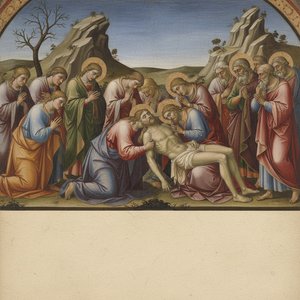
Beyond the intimate realm of portraiture, Spinelli’s reputation flourished in the religious centers of Siena. His ability to marry humanist naturalism with profound spiritual devotion made him a preferred choice for wealthy patrons seeking to honor the divine. His contributions to Sienese churches, including significant works for the Madonna della Scala chapel, demonstrate his skill in creating harmonious compositions that guided the viewer's eye toward moments of intense religious fervor. In these larger works, the grace of figures like Mary Magdalene is presented with a masterful touch, blending the physical beauty of the human form with the ethereal light of the sacred.
The historical significance of Niccolò di Forzore Spinelli lies in his role as a versatile conduit for the Renaissance spirit. His life’s work represents a seamless integration of several key artistic pillars:
- Technical Versatility: The rare ability to master both the metallurgical precision of medal-making and the expansive storytelling of large-scale painting.
- Humanist Realism: A dedication to capturing the psychological depth and physical accuracy of his subjects, from powerful statesmen like Lorenzo de' Medici to religious icons.
- Cultural Bridge: Acting as a vital artistic link between the established traditions of Florence and the evolving aesthetic demands of Siena.
By the time of his death in Florence in 1514, Spinelli had left behind an indelible mark on the Italian Renaissance. His works remain not just as relics of a bygone era, but as profound testaments to a period when art sought to capture the eternal within the ephemeral, and where the strike of a hammer on bronze could echo the heartbeat of history itself.