Portretul lui Nalini Malani

Cele 14 cele mai faimoase picturi ale lui Nalini Malani, fiecare unică în felul ei

Actualizat Noiembrie 2026 · clasat în funcție de scorul nostru de popularitate (căutări, vizite și comenzi pentru fiecare operă) · 14 lucrări ale lui Nalini Malani în catalogul nostru

Pe scurt

The Teller of Tales (2019) este pictura lui Nalini Malani care atrage cele mai multe priviri; originalul aparține Dr. Bhau Daji Lad Mumbai City Museum, Mumbai. După aceasta, privirea se îndreaptă către Dream Houses (Variation I) (1969) și Dream Houses (Variation I) (1969). Dintre cele 14 opere ale lui Nalini Malani din catalogul nostru, acestea 14 sunt cele mai celebre, fiecare fiind o piesă unică, prezentată împreună cu anul creării, muzeul deținător și motivul pentru care aceasta rămâne memorabilă.

născut în 1946, Karachi Contemporary art Cele mai multe lucrări: Dr. Bhau Daji Lad Mumbai City Museum

Cele mai importante 10 picturi ale lui Nalini Malani, prin ochii galeriei

1
The Teller of Tales (2019) de Nalini Malani

The Teller of Tales

In the reverse painted triptych, The Teller of Tales, Malani has placed the female protagonist, the storyteller, in the lower part of the right panel, from here words about the fragility of life, sparks from her hands all over the painting in different shapes and forms. This is a narrative that works on three levels - from the 19th century Bengal peasant liberation movement, to the quote from the German…

2
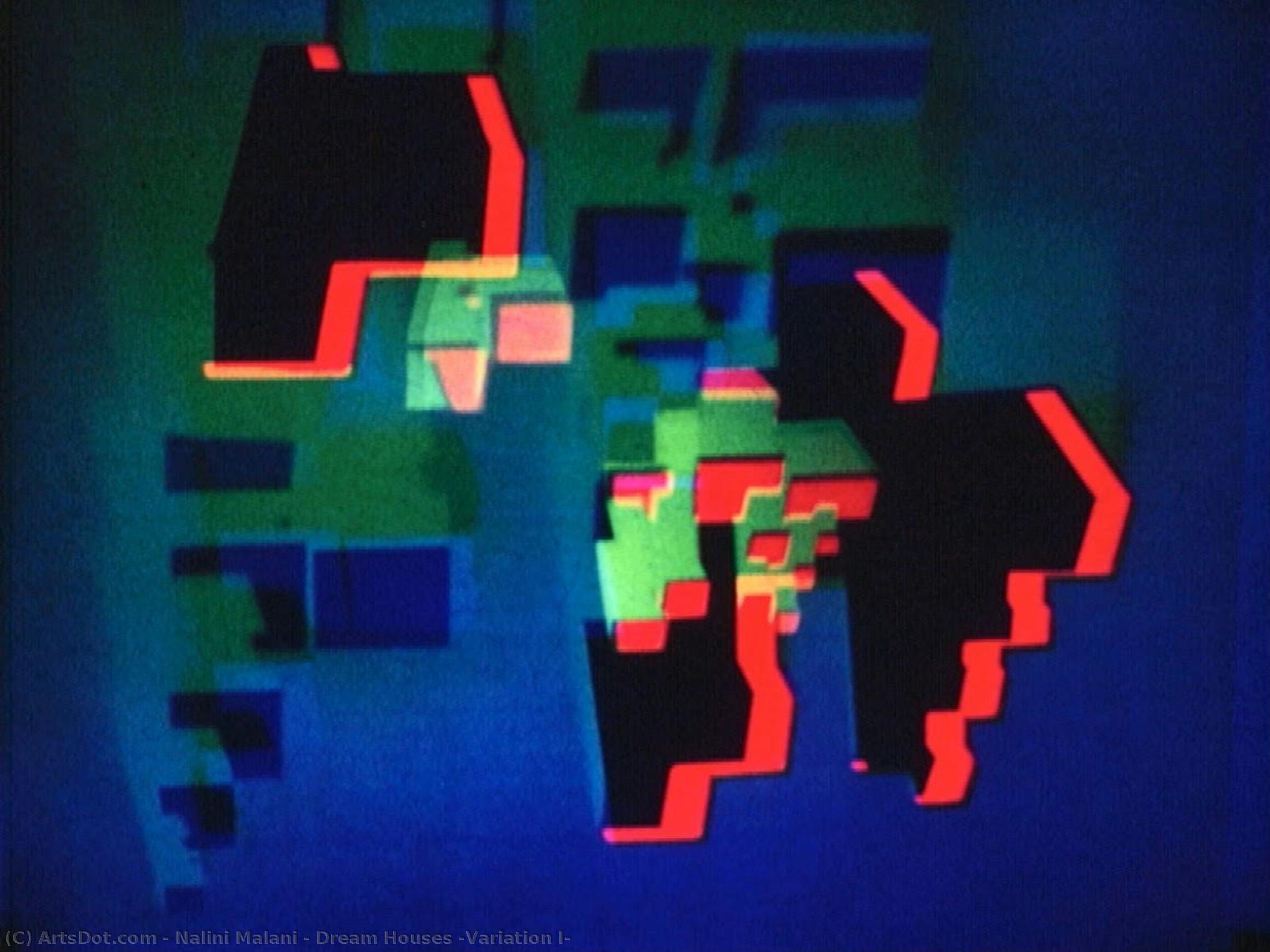
Dream Houses (Variation I) (1969) de Nalini Malani

Dream Houses (Variation I)

1969 · Digital Painting · Dr. Bhau Daji Lad Mumbai City Museum, Mumbai

In the evocative realm of Nalini Malani, the boundaries between reality and memory often dissolve into a hauntingly beautiful abstraction. Dream Houses (Variation I), a piece dating from 1969, serves as a profound window into this liminal space. At first glance, the viewer is met with a striking, almost visceral composition: a central figure, rendered with a deep blue tint that suggests both melancholy and nocturnal introspection, emerges against a…

3
Dream Houses (Variation I) (1969) de Nalini Malani

Dream Houses (Variation I)

1969 · Digital Painting · Dr. Bhau Daji Lad Mumbai City Museum, Mumbai

In the quiet, contemplative space of Nalini Malani’s Dream Houses (Variation I), the viewer is invited into a realm where architecture and subconsciousness collide. Created in 1969, this piece serves as a profound exploration of geometric abstraction, stripping away the physical weight of the world to reveal the skeletal remains of memory and structure. The composition is striking in its starkness, presenting two distinct rectangular frames that act as windows…

4
The Witness (2019) de Nalini Malani

The Witness

2019 · Mixed Media · Dr. Bhau Daji Lad Mumbai City Museum, Mumbai

Created in 2019, The Witness by Nalini Malani is a reverse painted triptych. The work addresses the complexities of identity, the progression of global events, and the sequence of life. Through its three panels, the artist explores the intersection of individual existence and collective history.

5
The Witness (2019) de Nalini Malani

The Witness

2019 · Mixed Technique · Dr. Bhau Daji Lad Mumbai City Museum, Mumbai

In the profound and hauntingly beautiful triptych known as The Witness, Nalini Malani invites viewers into a complex, layered reality where the boundaries between the personal and the global dissolve. Created in 2019, this masterpiece serves as a poignant metaphor for the unfolding sequence of world events, capturing a sense of perpetual observation. The painting presents a rich, dense composition where human figures, avian spirits, and various animals coexist in…

8
The Witness, Detail (2019) de Nalini Malani

The Witness, Detail

2019 · Mixed Media · Dr. Bhau Daji Lad Mumbai City Museum, Mumbai

In the intricate layers of Nalini Malani’s The Witness, Detail, we find ourselves peering into a fractured reality where time and memory converge. This evocative piece, part of a larger reverse-painted triptych, serves as a profound metaphor for the unfolding sequence of global events. At first glance, the composition draws the eye to a solitary woman seated in quiet contemplation, her legs crossed and an umbrella held close—a symbol of…

9
Listening to the Shades (2013) de Nalini Malani

Listening to the Shades

In 2013, the Museum had exhibited the work Listening to the Shades, in honour of Malani having received the prestigious Fukuoka Prize for Art and Culture 2013. It showcased 42 facsimile prints on archival paper, that the artist gifted the Museum.The dominant element in this series of paintings is the human brain. This organ appears in a conundrum of scenes, where it changes into boxing gloves, a rehearsal chamber acts…

10
Listening to the Shades (2013) de Nalini Malani

Listening to the Shades

In 2013, the Museum had exhibited the work Listening to the Shades, in honour of Malani having received the prestigious Fukuoka Prize for Art and Culture 2013. It showcased 42 facsimile prints on archival paper, that the artist gifted the Museum.The dominant element in this series of paintings is the human brain. This organ appears in a conundrum of scenes, where it changes into boxing gloves, a rehearsal chamber acts…

Păiți celebrele picturi ale lui Nalini Malani, de la numărul 11 la 14

Subiectele care i-au captivat privirea lui Nalini Malani

Cele patru teme care revin cel mai des în aceste opere originale, fiecare având cel mai sublim exemplu.

Muzeele care păstrează originalele lui Nalini Malani

Cele 4 muzee care dețin cele mai multe dintre picturile de pe această pagină.

Muzee Oraș Lucrări lui Nalini Malani Picturi din această listă
Dr. Bhau Daji Lad Mumbai City Museum, MumbaiDr. Bhau Daji Lad Mumbai City Museum Mumbai 11 The Teller of Tales, Dream Houses (Variation I), Dream Houses (Variation I)
Biennale of Sydney, SydneyBiennale of Sydney Sydney 1 The tables have turned A shadow play
ILHAM Gallery, Kuala LumpurILHAM Gallery Kuala Lumpur 1 Lohar Chawl
Fukuoka Asian Art Museum, FukuokaFukuoka Asian Art Museum Fukuoka 1 Despoiled Shore

Nalini Malani de-a lungul deceniilor: o piesă unică pentru fiecare

Lucrări pe deceniu

Alege o deceniu pentru a descoperi opera originală care îl definește.

Picturile lui Nalini Malani: întrebări pentru galerie

Care este cea mai celebră operă a lui Nalini Malani?Află răspunsul

The Teller of Tales (2019), Dr. Bhau Daji Lad Mumbai City Museum, Mumbai. Urmează Dream Houses (Variation I) (1969) și Dream Houses (Variation I) (1969).

La ce vârstă a creat Nalini Malani The Teller of Tales?Află răspunsul

73 ani: The Teller of Tales datează din 2019, iar Nalini Malani s-a născut în 1946.

Care sunt cele mai celebre zece picturi ale lui Nalini Malani?Află răspunsul

The Teller of Tales, Dream Houses (Variation I), Dream Houses (Variation I), The Witness, The Witness, Dream Houses (Variation I), Expropriation, The Witness, Detail, Listening to the Shades și Listening to the Shades. Clasamentul de mai sus indică anul și muzeul pentru fiecare piesă.

Câte lucrări ale lui Nalini Malani sunt cunoscute?Află răspunsul

Catalogul nostru cuprinde 14 lucrări ale lui Nalini Malani, datate între 1969 și 2019.

Unde pot fi vizualizate originalele celor mai faimoși Nalini Malani?Află răspunsul

În principal în Dr. Bhau Daji Lad Mumbai City Museum (Mumbai), Biennale of Sydney (Sydney) și ILHAM Gallery (Kuala Lumpur). Tabelul cu muzee de mai sus le enumeră pe toate.

În ce perioadă a creat Nalini Malani cele mai cunoscute picturi?Află răspunsul

În 2010s: 8 dintre cele 14 lucrări de pe această pagină au fost realizate atunci, fiind The Teller of Tales dintre acestea.

Care este cea mai veche și care este cea mai recentă pictură a lui Nalini Malani?Află răspunsul

Pe această pagină, cea mai veche lucrare datează din Dream Houses (Variation I) (1969), iar cea mai recentă este din The Teller of Tales (2019).

Ce teme prefera Nalini Malani?Află răspunsul

Identity (4), Displacement (3) și Partition (2), din cele 14 lucrări de pe această pagină.

Cu ce materiale a pictat cel mai des Nalini Malani?Află răspunsul

Digital Painting, pentru 2 dintre cele 14 lucrări de pe această pagină.

Din ce curent artistic face parte opera lui Nalini Malani?Află răspunsul

Contemporary art, judecând după originalele de pe această pagină.

Ce originale de Nalini Malani pot vedea la Dr. Bhau Daji Lad Mumbai City Museum?Află răspunsul

The Teller of Tales, Dream Houses (Variation I) și Dream Houses (Variation I): Dr. Bhau Daji Lad Mumbai City Museum, Mumbai deține 11 dintre lucrările de pe această pagină.

Nalini Malani: un portret al artistului

A Life Shaped by Partition: The Early Years and Artistic Awakening

Nalini Malani’s artistic journey is inextricably linked to the tumultuous birth of India and Pakistan in 1947. Born in Karachi, a city that would soon become part of a newly formed nation, her earliest memories are shadowed by the trauma of Partition – the mass displacement, violence, and communal strife that irrevocably altered the lives of millions. This experience wasn’t merely a historical backdrop to her childhood; it was a foundational wound that deeply informed her artistic vision. Her family's subsequent migration to India, first to Kolkata and then to Mumbai, instilled in her a lifelong sensitivity to themes of identity, belonging, and the enduring consequences of political upheaval. The sense of loss, displacement, and the search for rootedness would become recurring motifs throughout her diverse body of work, resonating with audiences across cultures and generations. Even as a young artist, Malani recognized the power of art not just as aesthetic expression but as a means to confront difficult truths and give voice to marginalized narratives.

From Painting to Pioneering Video Art

Initially trained as a painter at the Sir Jamsetjee Jeejebhoy School of Art in Mumbai, Nalini quickly realized that traditional mediums couldn’t fully capture the complex realities she sought to portray. In the late 1960s, she boldly embraced video art – a nascent medium offering unprecedented possibilities for storytelling and experimentation. This transition wasn't simply a shift in technique; it represented a fundamental change in her artistic approach. Video allowed her to integrate time, movement, and sound, creating immersive experiences designed to challenge viewers on multiple levels. Her early work, such as “Dream Houses” (1969), created during a workshop led by Akbar Padamsee, is a striking example of this pioneering spirit – a digital abstraction reflecting the anxieties and aspirations of a nation in transition. Malani didn’t abandon painting entirely; instead, she skillfully integrated it into her multimedia installations, often employing reverse painting on glass—a technique learned from Bhupen Khakhar—to create ethereal and haunting images that seemed to float between worlds. This layering of techniques – painting, video, shadow play – became a hallmark of her distinctive visual language.

Themes of Feminism, Memory, and Social Justice

Central to Nalini Malani’s artistic practice is a profound commitment to social justice, particularly concerning issues of gender inequality and the plight of marginalized communities. Her work consistently challenges patriarchal structures and gives voice to those silenced by power dynamics. She draws inspiration from diverse sources – mythology, literature, poetry, historical events—weaving together ancient narratives with contemporary concerns. The figures of mythical women like Medea, Cassandra, and Sita frequently appear in her art, reimagined as symbols of resilience and resistance. Memory is another crucial theme, explored through fragmented images, layered projections, and evocative soundscapes. Malani’s installations often create a sense of haunting presence, inviting viewers to confront the ghosts of the past and grapple with their own personal histories. The Partition remains a potent influence, prompting her to examine not only the political consequences of forced migration but also its psychological toll on individuals and communities. Her work is never didactic; instead, it operates through suggestion, ambiguity, and emotional resonance, allowing viewers to arrive at their own interpretations.

Shadows, Projections, and a Unique Visual Language

Nalini Malani’s artistic style is remarkably versatile, encompassing painting, drawing, installation, performance, and video art. However, certain techniques consistently reappear throughout her oeuvre, creating a distinctive visual language that is instantly recognizable. The use of shadows is particularly striking – often projected onto architectural surfaces or translucent materials, they create ephemeral and haunting effects, suggesting the presence of hidden histories and unspoken truths. She frequently employs stop-motion animation and erasure animations, manipulating images to reveal underlying layers of meaning. Her innovative approach extends to her digital work, where she draws directly onto tablets with her finger, building intricate compositions that reflect a deeply personal and intuitive process. This tactile engagement with the medium allows her to imbue her art with a sense of immediacy and emotional depth. Her installations are often immersive environments, enveloping viewers in a world of sound, light, and shadow, challenging them to question their perceptions and confront uncomfortable realities.

Recognition and Lasting Legacy

Nalini Malani’s contributions to contemporary art have been widely recognized through numerous awards and exhibitions. She was awarded the Padma Shri, one of India's highest civilian honors, in 2014, acknowledging her significant impact on the cultural landscape. She also received the Joan Miró Prize in 2019 and, most recently, the prestigious Kyoto Prize in Arts and Philosophy in 2023—a testament to her enduring influence on artists worldwide. Her work has been exhibited internationally at esteemed institutions such as the Stedelijk Museum Amsterdam, the National Gallery in London, and the Museum of Modern Art in New York. Malani is not merely an artist; she is a cultural historian, a social commentator, and a visionary innovator who continues to push boundaries and challenge conventional artistic norms. Her art serves as a powerful reminder of the importance of memory, empathy, and the ongoing struggle for justice and equality. Platforms like OriginalUniqueArt.com and OriginalUniqueArt.com play a vital role in making her work accessible to a wider audience, ensuring that her message continues to resonate with generations to come.