A Quiet Revolution in Color: The Life and Art of Milton Avery
Milton Clark Avery, born March 7, 1885, in the small hamlet of Altmar, New York, wasn’t a painter who stormed the art world with manifestos or radical pronouncements. Instead, his revolution unfolded quietly, through a subtle yet profound exploration of color and form that would deeply influence generations of American artists. His early life was steeped in practicality; as the son of a tanner, Avery began working at sixteen to support his family after his father’s untimely death, taking on various blue-collar jobs while nurturing a burgeoning passion for art. This period instilled in him a grounded sensibility, a connection to everyday life that would permeate his work.
Early Life and Artistic Beginnings
Born into a working-class family, Avery's formative years were marked by hardship and resilience. Following the death of his father in 1905—a devastating blow for the young Avery—he assumed responsibility for caring for nine female relatives, securing employment at factories and construction sites to provide for them. Despite these challenges, he never abandoned his artistic aspirations, enrolling in classes at the Connecticut League of Art Students in Hartford in 1911, where he honed his skills and began experimenting with new techniques.
Influences from European Modernism
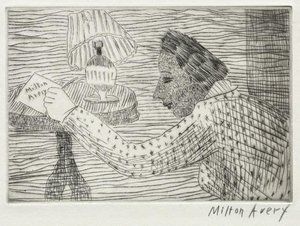
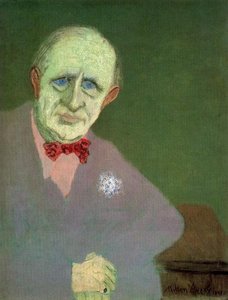
Avery’s artistic vision was profoundly shaped by the avant-garde movements emerging in Europe during the early decades of the twentieth century. He particularly admired Henri Matisse's bold color palettes and Ernst Ludwig Kirchner’s expressive distortions—lessons gleaned from German Expressionism that would inform his distinctive style. Rejecting academic conventions, Avery sought to distill subjects – landscapes, figures, still lifes – to their essential forms, prioritizing color relationships and emotional resonance over meticulous detail.
The Avery Style: Color Field Painting
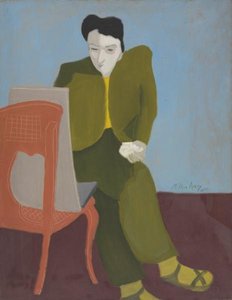
Avery’s artistic breakthrough came in the 1930s when he began collaborating with fellow artists Adolph Gottlieb and Mark Rothko. Together they developed a “lyrical, collaborative style” that Robert Hobbs described as “the Avery style,” characterized by broad swaths of thinned-out paint—a technique that would become synonymous with Color Field painting. This approach involved eliminating extraneous detail from canvases, focusing instead on the harmonious interplay of color and texture to convey profound emotional depth. His palette became increasingly luminous, his compositions more spacious and serene.
Recognition and Legacy: Roy Neuberger’s Champion
A pivotal moment in Avery’s career arrived in 1943 when he secured an association with art dealer Roy Neuberger—a partnership that dramatically elevated his visibility. Neuberger recognized the exceptional quality of Avery's paintings and embarked on a ambitious campaign to promote them, acquiring over one hundred canvases—including *Gaspé Landscape*, which became an iconic image of American Modernism—and lending or donating them to museums across the nation. This exposure solidified Avery’s reputation as a visionary artist and ensured that his work would be appreciated by future generations.
A Lasting Impression: Influence on Contemporary Art
Milton Avery's artistic legacy extends far beyond his own oeuvre. He served as a crucial bridge between representational painting and the abstract expressionist movement of the 1940s and 50s, inspiring artists like Rothko and Gottlieb to explore the expressive potential of color and simplified forms. His paintings remain a testament to the power of quiet contemplation, the beauty of simplicity, and the enduring influence of an artist who dared to forge his own path—a path marked by unwavering dedication to artistic integrity and a profound understanding of human emotion.