

1


Actualizat Noiembrie 2026 · clasat în funcție de scorul nostru de popularitate (căutări, vizite și comenzi pentru fiecare operă) · 27 lucrări ale lui Maud Ireland Button în catalogul nostru
Pe scurt
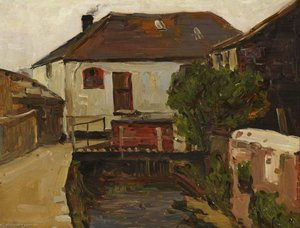
În ochii galeriei, cea mai celebră pictură a lui Maud Ireland Button este Fountain's Mill, Uxbridge (1914), a cărei originală este expusă la Hillingdon Local Studies, London. Cottages by the River (1914) și A Local Church (1921) completează trioul pe care orice ochi îl recunoaște. Dintre cele 27 opere ale lui Maud Ireland Button din catalogul nostru, galeria prezintă mai jos cele 27 cele mai faimoase, fiecare fiind originală, cu anul creării, muzeul de păstrare și elementul care o face unică.


 Rustic Country Home1921 · Hillingdon Local Studies
12
 Townscape Dominated by a Church Tower1921 · Hillingdon Local Studies
13
 Canal Scene1921 · Hillingdon Local Studies
14
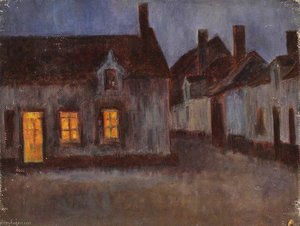 Townscape1921 · Hillingdon Local Studies
15
 A Local Yard1921 · Hillingdon Local Studies
16
 Country House1921 · Hillingdon Local Studies
17
 View over Uxbridge1921 · Hillingdon Local Studies
18
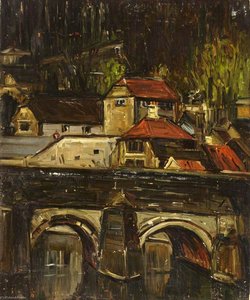 Bridge over a River1921 · Hillingdon Local Studies
19
 An Uxbridge Yard1921 · Hillingdon Local Studies
20
 A Yard1921 · Hillingdon Local Studies
21A Distant View of Harrow on the Hill1921 · Hillingdon Local Studies
22
 River Scene1921 · Hillingdon Local Studies
23
 Bell Yard, Uxbridge1921 · Hillingdon Local Studies
24
 Boat on River1921 · Hillingdon Local Studies
25
 Ram YardHillingdon Local Studies
26
 New Inn Yard, Windsor Street, UxbridgeHillingdon Local Studies
27
 Uxbridge High StreetHillingdon Local Studies
Cele patru teme care revin cel mai des în aceste opere originale, fiecare având cel mai sublim exemplu.
Muzeul care deține cele mai multe dintre picturile prezentate pe această pagină.
| Muzee | Oraș | Lucrări lui Maud Ireland Button | Picturi din această listă |
|---|---|---|---|
 Hillingdon Local Studies |
London | 27 | Fountain's Mill, Uxbridge, Cottages by the River, A Local Church |
Un deceniu, de la 1914 la 1921, a fost suficient pentru Maud Ireland Button: galeria îi parcurge an de an, cap-coadă, o operă originală celebră după alta.
Alege un an pentru a vedea originalele acestuia.
Mai multe de la 1921
 #4 Queen's Court, Windsor
 #5 Church Tower
 #6 Landscape
 #7 The Bell Yard, Uxbridge
 #8 Countryside Scene
 #9 A Local Park
 #10 Farmyard
#11 Rustic Country Home
#12 Townscape Dominated by a Church Tower
#13 Canal Scene
#14 Townscape
#15 A Local Yard
#16 Country House
#17 View over Uxbridge
#18 Bridge over a River
#19 An Uxbridge Yard
#20 A Yard
#21 A Distant View of Harrow on the Hill
#22 River Scene
#23 Bell Yard, Uxbridge
#24 Boat on River
Fountain's Mill, Uxbridge (1914), Hillingdon Local Studies, London. Urmează Cottages by the River (1914) și A Local Church (1921).
37 ani: Fountain's Mill, Uxbridge datează din 1914, iar Maud Ireland Button s-a născut în 1877.
Fountain's Mill, Uxbridge, Cottages by the River, A Local Church, Queen's Court, Windsor, Church Tower, Landscape, The Bell Yard, Uxbridge, Countryside Scene, A Local Park și Farmyard. Clasamentul de mai sus indică anul și muzeul pentru fiecare piesă.
Catalogul nostru cuprinde 27 lucrări ale lui Maud Ireland Button, datate între 1914 și 1921.
În principal în Hillingdon Local Studies (London). Tabelul cu muzee de mai sus le enumeră pe toate.
În 1921: 22 dintre cele 27 lucrări de pe această pagină au fost realizate atunci, fiind A Local Church dintre acestea.
Pe această pagină, cea mai veche lucrare datează din Fountain's Mill, Uxbridge (1914), iar cea mai recentă este din A Local Church (1921).
Tranquility (3) și Cottage scene (2), din cele 27 lucrări de pe această pagină.
Fountain's Mill, Uxbridge, Cottages by the River și A Local Church: Hillingdon Local Studies, London deține 27 dintre lucrările de pe această pagină.
Maud Ireland Button (1877-1965) remains a quietly compelling figure in the history of British watercolor painting, largely due to her deeply personal and evocative depictions of rural Irish life. Born in Uxbridge, England, into a family with strong ties to the West Country, Button’s artistic journey was shaped by a profound connection to the land and its people – a connection that resonated powerfully through her delicate brushstrokes and serene color palettes.
Her early life offered little indication of an artistic career. She was the daughter of Alfred Button, a solicitor, and Mary Jane Stransom, and possessed a twin sister, Anne Louisa. However, it’s believed she received informal training from her artist sister, Anne, who later became known as Maud Ireland Button. This familial influence undoubtedly provided a foundation for her own artistic explorations, though Button largely developed her distinctive style independently.
Button's work is immediately recognizable by its intimate scale – often small, almost sketch-like paintings that capture fleeting moments and subtle details. She eschewed grand landscapes or dramatic scenes in favor of quiet domestic interiors, glimpses of farm life, and portraits of local villagers. Her subjects were not celebrated heroes but ordinary people engaged in everyday activities: a woman mending nets, children playing in the fields, a farmer tending his livestock – all rendered with remarkable sensitivity and empathy.
Her technique is characterized by loose, expressive brushwork, often applied in thin washes of color. She employed a muted palette dominated by soft blues, greens, and browns, creating an atmosphere of tranquility and nostalgia. Influenced by the Impressionists and particularly by artists like Camille Pissarro, Button sought to capture not just the appearance of her subjects but also their essence – their mood, their character, and their connection to the surrounding environment.
Several paintings stand out as exemplifying Button’s unique vision. “Boat on River” (1921), a delicate depiction of a small boat gliding along a tranquil waterway, is perhaps her most iconic work. It embodies her signature style – the subtle interplay of light and shadow, the intimate scale, and the sense of quiet contemplation. Similarly, "Bell Yard, Uxbridge" (1921) offers a charming snapshot of village life, capturing the warmth and simplicity of everyday routines.
Throughout her career, Button consistently explored themes of rural identity, community, and the passage of time. Her paintings are not merely representations of landscapes or people; they are imbued with a deep sense of place and a profound understanding of human experience. She was particularly interested in capturing the changing seasons and the rhythms of agricultural life.
Button’s artistic career spanned several decades, during which she steadily developed her distinctive style and built a loyal following among collectors and art enthusiasts. Despite facing financial challenges and limited recognition during much of her career, she remained committed to her craft, producing a substantial body of work that continues to resonate with viewers today.
She was largely self-taught, relying on observation and personal experience rather than formal training. Her artistic practice was deeply intertwined with her life in Uxbridge and the surrounding countryside, providing her with an endless source of inspiration. Her dedication to capturing the beauty and dignity of ordinary people cemented her place as a significant, if often overlooked, figure in British watercolor painting.
Maud Ireland Button’s legacy lies not in grand exhibitions or critical acclaim but in the quiet power of her paintings. Her work offers a poignant glimpse into a disappearing world – a world of rural simplicity, close-knit communities, and enduring traditions. Her sensitive portrayals of Irish life have earned her a place among the most beloved watercolorists of the 20th century, and her paintings continue to evoke a sense of nostalgia and appreciation for the beauty of the natural world.