Portretul lui Matthew Boulton

Cele 8 cele mai faimoase picturi ale lui Matthew Boulton, fiecare unică în felul ei

Actualizat Noiembrie 2026 · clasat în funcție de scorul nostru de popularitate (căutări, vizite și comenzi pentru fiecare operă) · 8 lucrări ale lui Matthew Boulton în catalogul nostru

Pe scurt

Mâini Împinse (1793) este pictura lui Matthew Boulton care atrage cele mai multe priviri; originalul aparține Skokloster Castle, Skokloster. După aceasta, privirea se îndreaptă către East India Company Coin (1791) și A Lion Coin (1792). Dintre cele 8 opere ale lui Matthew Boulton din catalogul nostru, acestea 8 sunt cele mai celebre, fiecare fiind o piesă unică, prezentată împreună cu anul creării, muzeul deținător și motivul pentru care aceasta rămâne memorabilă.

Neoclassical Cele mai multe lucrări: Skokloster Castle

Cele mai importante 10 picturi ale lui Matthew Boulton, prin ochii galeriei

1
Mâini Împinse (1793) de Matthew Boulton

Mâini Împinse

1793 · Prelucrarea metalului · Skokloster Castle, Skokloster

Matthew Boulton’s “Clasped Hands” isn't merely a coin; it’s a miniature emblem of ambition, innovation, and the burgeoning spirit of Enlightenment Britain. Minted in 1793 by the Soho Mint—a revolutionary facility spearheaded by Boulton himself alongside James Watt—this bronze sculpture embodies more than just monetary value; it speaks to a profound desire for unity amidst societal change.

2
East India Company Coin (1791) de Matthew Boulton

East India Company Coin

1791 · Bronze · Skokloster Castle, Skokloster

This unassuming bronze coin, dated 1791, offers a fascinating window into the complex world of the British East India Company and the burgeoning industrial revolution in late 18th-century England. More than mere currency, it represents a confluence of artistic innovation, imperial ambition, and technological advancement, all masterfully orchestrated by Matthew Boulton at his groundbreaking Soho Mint. The coin’s very existence speaks volumes about an era defined by global trade, colonial…

3
A Lion Coin (1792) de Matthew Boulton

A Lion Coin

1792 · Bronze · Skokloster Castle, Skokloster

A Lion's Gaze: Matthew Boulton’s Symbolic Coin of Sierra Leone The small bronze coin resting against a stark white background holds within it a remarkable story – one interwoven with industrial innovation, colonial ambition, and the burgeoning power of symbolic representation. This is "A Lion Coin," crafted in 1792 by the visionary Matthew Boulton, a figure who stands as a pivotal bridge between traditional artistry and the dawn of the…

4
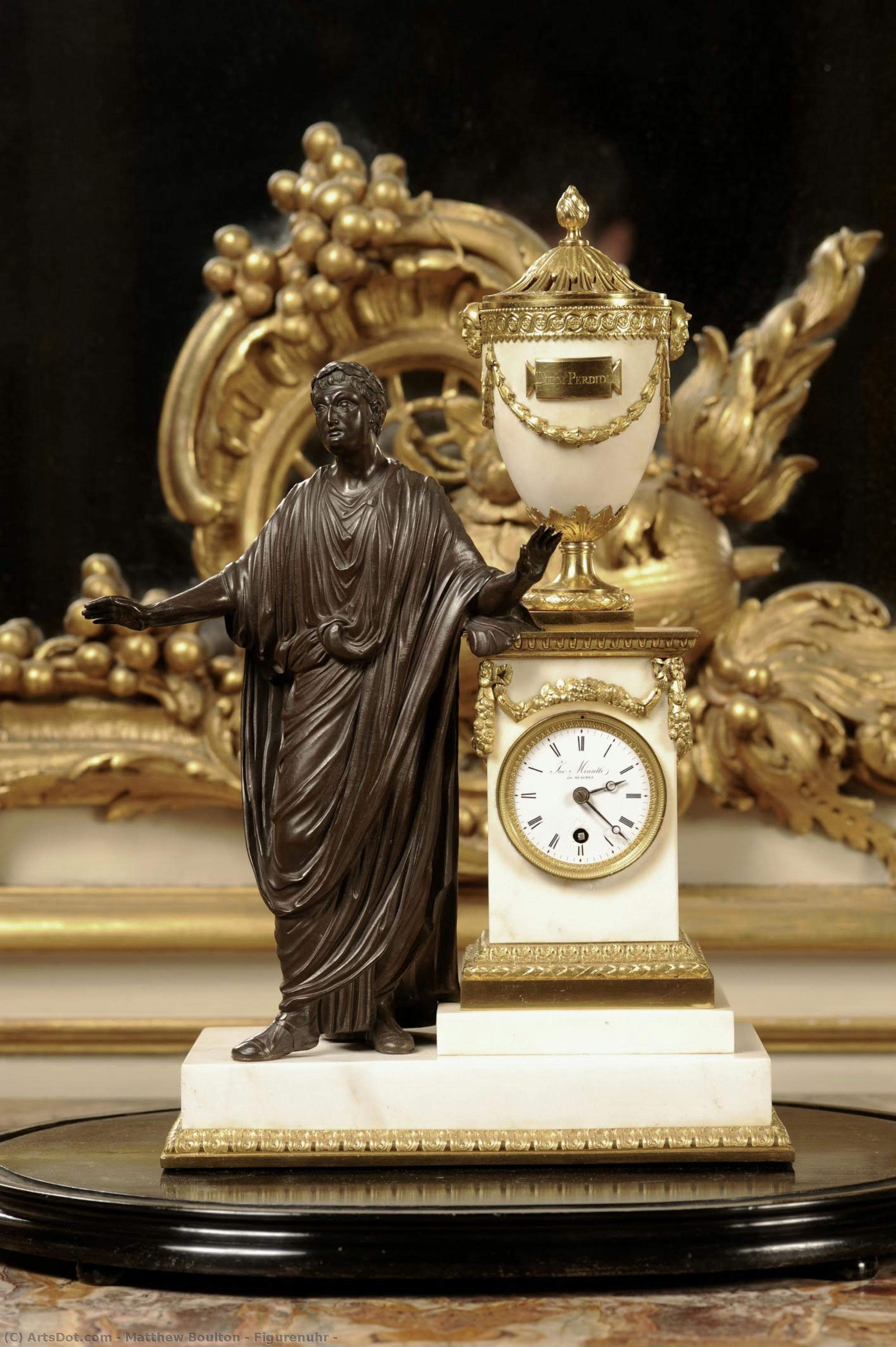
Figurenuhr (1771) de Matthew Boulton

Figurenuhr

1771 · Bronze · Palatul Sanssouci, Potsdam

In the quiet intersection where industrial ingenuity meets the sublime grace of antiquity, there exists the Figurenuhr “Titus.” Crafted around 1771, this extraordinary timepiece is far more than a mere instrument for measuring hours; it is a profound dialogue between the precision of the Enlightenment and the enduring grandeur of the Roman Empire. Born from the collaborative genius of Matthew Boulton, the visionary master of the Soho Manufactory, and the…

5
A Just Coin (1791) de Matthew Boulton

A Just Coin

1791 · Bronze · Skokloster Castle, Skokloster

In the quiet, tactile presence of "A Just Coin," one finds much more than a mere relic of 1791; one encounters a profound intersection of mechanical precision and moral symbolism. This bronze masterpiece, struck at the legendary Soho Mint, serves as a mesmerizing window into an era where the gears of the Industrial Revolution began to turn in harmony with classical ideals. As a piece of numismatic art, it transcends…

6
The Just Scales (1791) de Matthew Boulton

The Just Scales

1791 · Bronze · Skokloster Castle, Skokloster

In the quiet intersection of industrial innovation and classical symbolism lies The Just Scales, a breathtaking bronze artifact from 1791 that transcends its original purpose as a numismatic object to become a profound piece of historical art. At first glance, the viewer is captivated by the warm, muted golden-brown patina that envelops the circular composition, evoking the weathered dignity of an ancient relic. The centerpiece—a meticulously rendered set of scales—commands…

7
Semnul celor patru (1791) de Matthew Boulton

Semnul celor patru

1791 · Acrilic pe pânză întinsă · Skokloster Castle, Skokloster

Matthew Boulton și semnul patru Un simbol unic în lumea numismatică și a artei industriale: moneda britanică din 1791 realizată de Matthew Boulton și James Watt. Această operă fascinantă nu este doar un obiect financiar, ci o mărturie a unei perioade istorice importante și a unei abordări inovatoare în producția artistică. Imaginea prezentată oferă o perspectivă apropiată asupra detaliei complexe a monedei, evidențiind meticulozitatea și ingeniozitatea echipei Soho Mint. Originea…

8
Aircraft wing de Matthew Boulton

Aircraft wing

Known as the P10, this unique prototype aircraft built by Boulton and Paul Ltd of Norwich in 1919 was the first British plane to have a frame constructed entirely from metal. It was a light two seater plane with a thirty foot wing span. Described by the manufacturers as an exercise in constructional techniques, rather than as a commercial aircraft, the remaining wing and rudder section are the oldest surviving…

Subiectele care i-au captivat privirea lui Matthew Boulton

Cele patru teme care revin cel mai des în aceste opere originale, fiecare având cel mai sublim exemplu.

Muzeele care păstrează originalele lui Matthew Boulton

Cele 3 muzee care dețin cele mai multe dintre picturile de pe această pagină.

Muzee Oraș Lucrări lui Matthew Boulton Picturi din această listă
Skokloster Castle, SkoklosterSkokloster Castle Skokloster 6 Mâini Împinse, East India Company Coin, A Lion Coin
Palatul Sanssouci, PotsdamPalatul Sanssouci Potsdam 1 Figurenuhr
the-bridewell-museum Museum of Norwich at the Bridewell, Norwichthe-bridewell-museum Museum of Norwich at the Bridewell Norwich 1 Aircraft wing

Matthew Boulton de-a lungul anilor: originalele unice ale fiecăruia

O carieră de 23 ani, de la 1771 la 1793: cele mai faimoase originale ale lui Matthew Boulton, prezentate an de an.

Lucrări pe an

Alege un an pentru a vedea originalele acestuia.

Picturile lui Matthew Boulton: întrebări pentru galerie

Care este cea mai celebră operă a lui Matthew Boulton?Află răspunsul

Mâini Împinse (1793), Skokloster Castle, Skokloster. Urmează East India Company Coin (1791) și A Lion Coin (1792).

Câte lucrări ale lui Matthew Boulton sunt cunoscute?Află răspunsul

Catalogul nostru cuprinde 8 lucrări ale lui Matthew Boulton, datate între 1771 și 1793.

Unde pot fi vizualizate originalele celor mai faimoși Matthew Boulton?Află răspunsul

În principal în Skokloster Castle (Skokloster), Palatul Sanssouci (Potsdam) și the-bridewell-museum Museum of Norwich at the Bridewell (Norwich). Tabelul cu muzee de mai sus le enumeră pe toate.

În ce perioadă a creat Matthew Boulton cele mai cunoscute picturi?Află răspunsul

În 1791: 4 dintre cele 8 lucrări de pe această pagină au fost realizate atunci, fiind East India Company Coin dintre acestea.

Care este cea mai veche și care este cea mai recentă pictură a lui Matthew Boulton?Află răspunsul

Pe această pagină, cea mai veche lucrare datează din Figurenuhr (1771), iar cea mai recentă este din Mâini Împinse (1793).

Ce teme prefera Matthew Boulton?Află răspunsul

Soho mint (2), Numismatics (2) și Bronze (2), din cele 8 lucrări de pe această pagină.

Cu ce materiale a pictat cel mai des Matthew Boulton?Află răspunsul

Bronze, pentru 5 dintre cele 8 lucrări de pe această pagină.

Din ce curent artistic face parte opera lui Matthew Boulton?Află răspunsul

Neoclassical, judecând după originalele de pe această pagină.

Ce originale de Matthew Boulton pot vedea la Skokloster Castle?Află răspunsul

Mâini Împinse, East India Company Coin și A Lion Coin: Skokloster Castle, Skokloster deține 6 dintre lucrările de pe această pagină.

Matthew Boulton: un portret al artistului

Matthew Boulton: A Pioneer of Industrial Art

Early Life and Background

  • Born in Handsworth, West Midlands, England, Matthew Boulton (1728-1809) came from a family deeply involved in manufacturing.
  • His father was a successful metalworker, and young Matthew received his early education at the Soho Manufactory, laying the foundation for his future endeavors.
  • This upbringing instilled in him both a practical understanding of industrial processes and an appreciation for craftsmanship.

The Establishment of the Soho Mint

  • In 1788, Boulton established the Soho Mint, a groundbreaking enterprise that revolutionized coin production.
  • He partnered with James Watt, inventor of the improved steam engine, to power machinery used in minting coins and medals.
  • This collaboration marked a pivotal moment in the integration of industrial technology into artistic creation.

Artistic Development & Numismatic Innovation

  • Boulton wasn’t a traditional artist in the sense of painting or sculpting, but he possessed an exceptional eye for design and detail.
  • His primary focus was on numismatics – the study and collection of coins and medals.
  • He elevated medal-making from a craft to a fine art form through innovative designs and meticulous execution.
  • The use of steam power allowed for greater precision, consistency, and artistic complexity in his work.

Notable Works & Commissions

  • Seringapatam Medal (1801-2): Commissioned by the East India Company to commemorate the British victory over Tipu Sultan at Seringapatam. A highly detailed and historically significant medal.
  • Battle of Trafalgar Medal (1805): Boulton personally funded the production of this medal, celebrating Admiral Nelson’s triumph. It exemplifies his patriotic spirit and artistic commitment.
  • He also produced coins for the East India Company and various other institutions, showcasing a diverse range of designs.
  • Other works include various commemorative medals and tokens reflecting significant events and individuals of his time.

Influences & Artistic Style

  • Boulton drew inspiration from classical art, particularly the sculptural traditions of ancient Greece and Rome.
  • He admired the precision and detail found in antique coins and medals, striving to emulate these qualities in his own work.
  • The prevailing Neoclassical style of the late 18th century heavily influenced his designs, emphasizing order, balance, and clarity.

Historical Significance & Legacy

  • Matthew Boulton’s innovations transformed coin production, setting new standards for quality and security.
  • His integration of steam power into the artistic process was a landmark achievement in industrial history.
  • The Soho Mint continued to operate after his death (sold in 1850), leaving a lasting legacy on British coinage and medal-making.
  • Boulton’s work demonstrates the powerful synergy between art, industry, and technological advancement. He remains a significant figure in both artistic and industrial history.