Portretul lui Masaccio

Cele 96 cele mai faimoase picturi ale lui Masaccio, fiecare unică în felul ei

Actualizat Octombrie 2026 · clasat în funcție de scorul nostru de popularitate (căutări, vizite și comenzi pentru fiecare operă) · 97 lucrări ale lui Masaccio în catalogul nostru

Pe scurt

Sfânta Treime (1428) este pictură lui Masaccio care atrage cele mai multe priviri. După aceasta, privirea se îndreaptă către Banii tributului (1425) și Expulzarea din Grădina Edenului (1426). Dintre cele 97 opere ale lui Masaccio din catalogul nostru, acestea 96 sunt cele mai celebre, fiecare fiind o piesă unică, prezentată împreună cu anul creării, muzeul deținător și motivul pentru care aceasta rămâne memorabilă.

1401 – 1428, San Giovanni Valdarno Renașterea timpurie Cele mai multe lucrări: Santa Maria del Carmine

Cele mai importante 10 picturi ale lui Masaccio, prin ochii galeriei

1
Sfânta Treime (1428) de Masaccio

Sfânta Treime

1428 · Frescă

Sfânta Treime de Masaccio a fost o lucrare revoluționară ce a introdus numeroase inovații artistice. Aceasta este una dintre primele picturi monumentale ale Renașcinței care utilizează perspectiva liniară, creând un sentiment profund de adâncime și spațiu. Utilizarea tehnicilor de chiaroscuro și sfumato adaugă volum și textură figurilor, oferindu-le un aspect mult mai realist și captivant.

2
Banii tributului (1425) de Masaccio

Banii tributului

1425 · Frescă

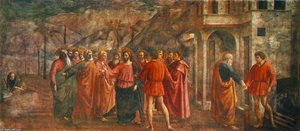
Scena se desfășoară în cadrul Capela Brancacci a basilicii Santa Maria del Carmine din Florența. Aici, fresca intitulată „Banii tributului” de Masaccio aduce la viață o povestire biblică pe pereții capelei. Comisionată de Felice Brancacci, această operă constituie o parte semnificativă dintr-un ciclu mai amplu dedicat vieții Sfântului Petru. Atmosfera din capelă pare să poarte greutatea acestei istorii sacre, pe măsură ce figurile traversează un moment de o profunzime spirituală…

3
Expulzarea din Grădina Edenului (1426) de Masaccio

Expulzarea din Grădina Edenului

1426 · Frescă

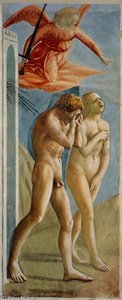
Tăcerea apăsătoare a Capela Brancacci din biserica Santa Maria del Carmine din Florența, Italia, poartă greutatea unei tragedii profunde. Aici, pereții rezonează cu povestea Expulzării din Grădina Edenului, o frescă pictată de Masaccio în jurul anului 1425. Aerul pare să se îngroașe în jurul figurilor pe măsură ce acestea se confruntă cu plecarea lor bruscă și ireversibilă din paradis. Această scenă marchează începutul unei narațiuni mai vaste, acționând ca prima…

4
Rendering of the Tribute Money de Masaccio

Rendering of the Tribute Money

Frescă

Acest detaliu captivant provine din fresca revoluționară a lui Masaccio, „Tributul”, o operă esențială din Capela Brancacci din Florența. Realizată în jurul anului 1426, aceasta reprezintă un punct de cotitură în arta occidentală, îndepărtându-se de convențiile stilizate ale perioadei gotice către o nouă eră a naturalismului și a expresiei umaniste.

5
Predella panel from the Pisa Altar (1426) de Masaccio

Predella panel from the Pisa Altar

1426 · Oil On Panel · Muzeele Statale din Berlin, Berlin

To stand before this Predella panel from the Pisa Altar is to encounter a moment frozen in time, yet vibrating with raw, undeniable human drama. Dating to 1426, this work captures Masaccio at the zenith of his revolutionary power. It is not merely a depiction of the Crucifixion; it is a profound meditation on sacrifice, community, and the weight of divine narrative rendered with startling immediacy. The composition draws the…

6
The Madonna of Humility (1424) de Masaccio

The Madonna of Humility

1424 · Tempera On Panel

In the quiet, profound stillness of Masaccio’s The Madonna of Humility, we encounter one of the most moving snapshots of the Early Italian Renaissance. Created around 1424, this masterpiece transcends mere religious iconography to offer a window into a moment of raw, maternal intimacy. The scene is set not upon a celestial throne, but on the earth itself, where the Virgin Mary sits upon a blue patterned cushion. This choice…

7
Trinity (detail) (1425) de Masaccio

Trinity (detail)

1425 · Fresco · Santa Maria Novella, Florența

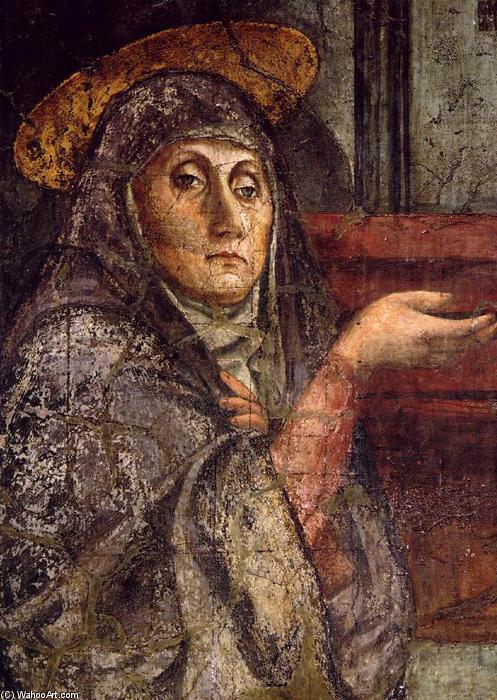
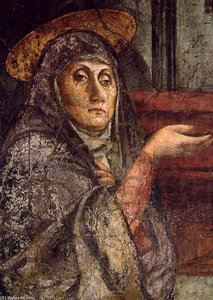
The image presents a detail from a fresco painting created in 1425 by Masaccio. Within this specific view, a figure is depicted that appears to be Mary Magdalene, identified by the traditional iconography of her long hair and a head covering. She possesses a contemplative expression, directing her gaze slightly downwards toward an object held in her right hand, which may be interpreted as a symbol of faith or devotion.

8
Two panels from the Pisa Altarpiece (1426) de Masaccio

Two panels from the Pisa Altarpiece

1426 · Tempera On Panel · Muzeele Statale din Berlin, Berlin

In the quiet, hallowed halls of art history, few works capture the dawn of a new era as poignantly as Masaccio’s Two Panels from the Pisa Altarpiece. Completed in 1426, these panels are far more than mere fragments of a lost polyptych; they are windows into a transformative moment when the rigid conventions of the Gothic period began to dissolve, giving way to the profound humanism of the Early Italian…

9
Trinity (1425) de Masaccio

Trinity

1425 · Fresco · Santa Maria Novella, Florența

To step before Masaccio’s Holy Trinity is to witness the exact moment when the flattened, symbolic world of the Middle Ages dissolved into the profound, breathing reality of the Renaissance. Painted between 1425 and 1427 within the hallowed walls of Santa Maria Novella in Florence, this fresco does not merely depict a religious scene; it carves a hole in the very wall of the chapel, inviting the viewer to step…

10
Trinity (detail) (1425) de Masaccio

Trinity (detail)

1425 · Acrylic On Canvas · Santa Maria Novella, Florența

Masaccio’s “Trinity (detail),” housed within the magnificent Santa Maria Novella in Florence, isn't merely a fresco; it’s a pivotal moment in art history – a visual manifesto declaring the arrival of the High Renaissance. Painted between 1425 and 1427, this intimate section captures the essence of Masaccio’s revolutionary approach to depicting reality, a departure from the stylized elegance of the preceding Gothic era and a profound influence on generations of…

Păiți celebrele picturi ale lui Masaccio, de la numărul 11 la 96

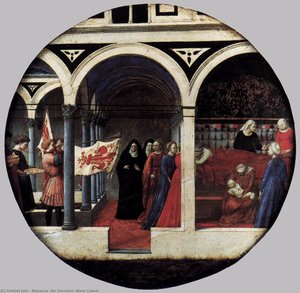
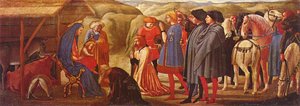
11Vizul Cappellei Brancacci (înainte de restaurare) (1426) de MasaccioVizul Cappellei Brancacci (înainte de restaurare)1426 · Santa Maria del Carmine 12Trinity (scheme of the perspective) (1425) de MasaccioTrinity (scheme of the perspective)1425 · Santa Maria Novella 13Raising of the Son of Theophilus and St Peter Enthroned (detail) (1426) de MasaccioRaising of the Son of Theophilus and St Peter Enthroned (detail)1426 14St Peter Healing the Sick with his Shadow (detail) (1426) de MasaccioSt Peter Healing the Sick with his Shadow (detail)1426 15Fresco în Cappella Brancacci (vedere dreapta) (1426) de MasaccioFresco în Cappella Brancacci (vedere dreapta)1426 · Santa Maria del Carmine 16Madonna Casini (1426) de MasaccioMadonna Casini1426 17Adam and Eve banished from Paradise (1427) de MasaccioAdam and Eve banished from Paradise1427 18The Distribution of Alms and the Death of Ananias (detail) (1426) de MasaccioThe Distribution of Alms and the Death of Ananias (detail)1426 19Fresco în Cappella Brancacci (vedere stânga) (1426) de MasaccioFresco în Cappella Brancacci (vedere stânga)1426 · Santa Maria del Carmine 20Baptism of the Neophytes (1427) de MasaccioBaptism of the Neophytes1427 21Christ in the Garden of Gethsemane (detail) (1424) de MasaccioChrist in the Garden of Gethsemane (detail)1424 · Lindenau-Museum 22Crucifixion (1426) de MasaccioCrucifixion1426 · Museo di Capodimonte 23Tribute Money (detail) (1426) de MasaccioTribute Money (detail)1426 24The Agony in the Garden (1426) de MasaccioThe Agony in the Garden1426 25St Peter Healing the Sick with his Shadow (detail) (1426) de MasaccioSt Peter Healing the Sick with his Shadow (detail)1426 26St. Juvenal Triptych (1422) de MasaccioSt. Juvenal Triptych1422 27Maria and Child (1426) de MasaccioMaria and Child1426 28Tribute Money (detail) (1426) de MasaccioTribute Money (detail)1426 29The Expulsion from the Garden of Eden (detail) (1426) de MasaccioThe Expulsion from the Garden of Eden (detail)1426 30Birth tray (1428) de MasaccioBirth tray1428 31The Baptism of the Neophytes (1426) de MasaccioThe Baptism of the Neophytes1426 32Raising of the Son of Theophilus and St Peter Enthroned (1426) de MasaccioRaising of the Son of Theophilus and St Peter Enthroned1426 33The Distribution of Alms and the Death of Ananias (detail) (1426) de MasaccioThe Distribution of Alms and the Death of Ananias (detail)1426 34Adoration of the Knigs (1428) de MasaccioAdoration of the Knigs1428 35Tribute Money (detail) (1426) de MasaccioTribute Money (detail)1426 36Tribute Money (1426) de MasaccioTribute Money1426 37The Expulsion from the Garden of Eden (1426) de MasaccioThe Expulsion from the Garden of Eden1426 38Tribute Money (detail) (1426) de MasaccioTribute Money (detail)1426 39Raising of the Son of Theophilus and St Peter Enthroned (detail) (9) (1426) de MasaccioRaising of the Son of Theophilus and St Peter Enthroned (detail) (9)1426 40San Giovenale Triptych. Right panel. (1422) de MasaccioSan Giovenale Triptych. Right panel.1422 41Raising of the Son of Theophilus and St Peter Enthroned (detail) (1426) de MasaccioRaising of the Son of Theophilus and St Peter Enthroned (detail)1426 42Raising of the Son of Theophilus and St Peter Enthroned (detail) (1426) de MasaccioRaising of the Son of Theophilus and St Peter Enthroned (detail)1426 43The Raising of the Son of Theophilus and St Peter Enthroned (detail) (1426) de MasaccioThe Raising of the Son of Theophilus and St Peter Enthroned (detail)1426 44Raising of the Son of Theophilus and St Peter Enthroned (detail) (1426) de MasaccioRaising of the Son of Theophilus and St Peter Enthroned (detail)1426 45Christ in the Garden of Gethsemane (detail) (1424) de MasaccioChrist in the Garden of Gethsemane (detail)1424 · Lindenau-Museum 46San Giovenale Triptych. Central panel (1423) de MasaccioSan Giovenale Triptych. Central panel1423 47Distribution of Alms and Death of Ananias (1425) de MasaccioDistribution of Alms and Death of Ananias1425 48Profile Portrait of a Young Man de MasaccioProfile Portrait of a Young Man 49Profile Portrait of a Young Man (1425) de MasaccioProfile Portrait of a Young Man1425 · National Gallery of Art 50Rendering of the Tribute Money de MasaccioRendering of the Tribute Money 51Distribution of the Goods of the Community and the Death of Ananias (detail) de MasaccioDistribution of the Goods of the Community and the Death of Ananias (detail) 52St. Giovenale Triptych de MasaccioSt. Giovenale Triptych 53The Expulsion from Paradise de MasaccioThe Expulsion from Paradise 54The Adoration of the Magi de MasaccioThe Adoration of the Magi 55St. Peter Baptizing the Neophytes de MasaccioSt. Peter Baptizing the Neophytes 56Birth Salver de MasaccioBirth Salver 57Medallion de MasaccioMedallion 58Madonna and Child de MasaccioMadonna and Child 59Madonna Enthroned de MasaccioMadonna Enthroned 60St Jerome and St John the Baptist de MasaccioSt Jerome and St John the Baptist 61Christ in the Garden of Gethsemane (1424) de MasaccioChrist in the Garden of Gethsemane1424 · Lindenau-Museum 62San Giovenale Triptych. Left panel (1422) de MasaccioSan Giovenale Triptych. Left panel1422 63Portrait of a Young Woman (1425) de MasaccioPortrait of a Young Woman1425 64Distribution of the Goods of the Community and the Death of Ananias de MasaccioDistribution of the Goods of the Community and the Death of Ananias 65The Holy Trinity with the Virgin, St. John and Two Donors de MasaccioThe Holy Trinity with the Virgin, St. John and Two Donors 66The Cricifixion of St. Peter. The Beheading of St. John the Baptist de MasaccioThe Cricifixion of St. Peter. The Beheading of St. John the Baptist 67La Consagración de MasaccioLa Consagración 68Crucifixion de MasaccioCrucifixion 69St Jerome and St John the Baptist 1 de MasaccioSt Jerome and St John the Baptist 1 70The Madonna and Child with Saint Anne de MasaccioThe Madonna and Child with Saint Anne 71Two panels from the Pisa Altarpiece de MasaccioTwo panels from the Pisa Altarpiece 72Portrait of a young man de MasaccioPortrait of a young manIsabella Stewart Gardner Museum 73View of the Cappella Brancacci (after restoration) de MasaccioView of the Cappella Brancacci (after restoration) 74Putto and a Small Dog (back side of the Berlin Tondo) de MasaccioPutto and a Small Dog (back side of the Berlin Tondo) 75The Madonna and Child with st.Anna. (1424) de MasaccioThe Madonna and Child with st.Anna.1424 76Plate of Nativity (Berlin Tondo) (1427) de MasaccioPlate of Nativity (Berlin Tondo)1427 · Muzeele Statale din Berlin 77Madonna with Child and Angels (1426) de MasaccioMadonna with Child and Angels1426 · National Gallery 78The Distribution of Alms and the Death of Ananias (1426) de MasaccioThe Distribution of Alms and the Death of Ananias1426 · Santa Maria del Carmine 79St Peter Healing the Sick with his Shadow (1426) de MasaccioSt Peter Healing the Sick with his Shadow1426 · Santa Maria del Carmine 80San Giovenale Triptych (1422) de MasaccioSan Giovenale Triptych1422 81Raising of the Son of Teophilus and St.Peter Enthroned (1427) de MasaccioRaising of the Son of Teophilus and St.Peter Enthroned1427 · Santa Maria del Carmine 82St Paul (1426) de MasaccioSt Paul1426 · Museo Nazionale di San Matteo 83Carnesecchi Triptych (1423) de MasaccioCarnesecchi Triptych1423 84Adoration of the Magi (1426) de MasaccioAdoration of the Magi1426 · Muzeele Statale din Berlin 85Martyrdom of San Giovanni Battista (1426) de MasaccioMartyrdom of San Giovanni Battista1426 · Gemäldegalerie 86Predella panel from the Pisa Altar (1426) de MasaccioPredella panel from the Pisa Altar1426 · Muzeele Statale din Berlin 87A Bearded Carmelite Saint (1426) de MasaccioA Bearded Carmelite Saint1426 · Gemäldegalerie 88Madonna Casini (1426) de MasaccioMadonna Casini1426 89Madonna of Humility (1420) de MasaccioMadonna of Humility1420 · National Gallery of Art 90Repentance of Saint Peter (1425) de MasaccioRepentance of Saint Peter1425 · Santa Maria del Carmine 91San Agustín de MasaccioSan AgustínGemäldegalerie 92St. Andrew (1426) de MasaccioSt. Andrew1426 · J. Paul Getty Museum 93Carmelita de MasaccioCarmelitaGemäldegalerie 94St. Jerome de MasaccioSt. JeromeGemäldegalerie 95St.Girolamo end Giovanni Battista (1428) de MasaccioSt.Girolamo end Giovanni Battista1428 · National Gallery 96Crucifixion of St Peter (1426) de MasaccioCrucifixion of St Peter1426 · Muzeele Statale din Berlin

Piesele celebre ale lui Masaccio, perioadă cu perioadă

Perioada timpurie

1425 – 1428 · 3 lucrări în această listă

Subiectele care i-au captivat privirea lui Masaccio

Cele patru teme care revin cel mai des în aceste opere originale, fiecare având cel mai sublim exemplu.

Muzeele care păstrează originalele lui Masaccio

Cele 8 muzee care dețin cele mai multe dintre picturile de pe această pagină.

Muzee Oraș Lucrări lui Masaccio Picturi din această listă
Santa Maria del Carmine, FlorențaSanta Maria del Carmine Florența 7 Vizul Cappellei Brancacci (înainte de restaurare), Fresco în Cappella Brancacci (vedere dreapta), Fresco în Cappella Brancacci (vedere stânga)
Muzeele Statale din Berlin, BerlinMuzeele Statale din Berlin Berlin 6 Predella panel from the Pisa Altar, Two panels from the Pisa Altarpiece, Plate of Nativity (Berlin Tondo)
Gemäldegalerie, BerlinGemäldegalerie Berlin 5 Martyrdom of San Giovanni Battista, A Bearded Carmelite Saint, San Agustín
Santa Maria Novella, FlorențaSanta Maria Novella Florența 4 Trinity (detail), Trinity, Trinity (detail)
Lindenau-Museum, AltengauLindenau-Museum Altengau 3 Christ in the Garden of Gethsemane (detail), Christ in the Garden of Gethsemane (detail), Christ in the Garden of Gethsemane
National Gallery of Art, WashingtonNational Gallery of Art Washington 2 Profile Portrait of a Young Man, Madonna of Humility
National Gallery, LondraNational Gallery Londra 2 Madonna with Child and Angels, St.Girolamo end Giovanni Battista
Museo di Capodimonte, NapoliMuseo di Capodimonte Napoli 1 Crucifixion

Masaccio de-a lungul anilor: originalele unice ale fiecăruia

Originalele datate ale lui Masaccio prezentate aici se încadrează pe un interval de aproximativ zece ani, de la 1420 la 1428: privirea le urmărește an de an.
Lucrări pe an

Alege un an pentru a vedea originalele acestuia.

Picturile lui Masaccio: întrebări pentru galerie

Care este cea mai celebră operă a lui Masaccio?Află răspunsul

Sfânta Treime (1428). Urmează Banii tributului (1425) și Expulzarea din Grădina Edenului (1426).

La ce vârstă a creat Masaccio Sfânta Treime?Află răspunsul

27 ani: Sfânta Treime datează din 1428, iar Masaccio s-a născut în 1401.

Care sunt cele mai celebre zece picturi ale lui Masaccio?Află răspunsul

Sfânta Treime, Banii tributului, Expulzarea din Grădina Edenului, Rendering of the Tribute Money, Predella panel from the Pisa Altar, The Madonna of Humility, Trinity (detail), Two panels from the Pisa Altarpiece, Trinity și Trinity (detail). Clasamentul de mai sus indică anul și muzeul pentru fiecare piesă.

Câte lucrări ale lui Masaccio sunt cunoscute?Află răspunsul

Catalogul nostru cuprinde 97 lucrări ale lui Masaccio, datate între 1420 și 1428.

Unde pot fi vizualizate originalele celor mai faimoși Masaccio?Află răspunsul

În principal în Santa Maria del Carmine (Florența), Muzeele Statale din Berlin (Berlin) și Gemäldegalerie (Berlin). Tabelul cu muzee de mai sus le enumeră pe toate.

În ce perioadă a creat Masaccio cele mai cunoscute picturi?Află răspunsul

În 1426: 40 dintre cele 96 lucrări de pe această pagină au fost realizate atunci, fiind Expulzarea din Grădina Edenului dintre acestea.

Care este cea mai veche și care este cea mai recentă pictură a lui Masaccio?Află răspunsul

Pe această pagină, cea mai veche lucrare datează din Madonna of Humility (1420), iar cea mai recentă este din Sfânta Treime (1428).

Ce teme prefera Masaccio?Află răspunsul

Saints (28), Religious (22) și Renaissance (16), din cele 96 lucrări de pe această pagină.

Cu ce materiale a pictat cel mai des Masaccio?Află răspunsul

Fresco, pentru 8 dintre cele 96 lucrări de pe această pagină.

Din ce curent artistic face parte opera lui Masaccio?Află răspunsul

Renașterea timpurie, judecând după originalele de pe această pagină.

Ce originale de Masaccio pot vedea la Santa Maria del Carmine?Află răspunsul

Vizul Cappellei Brancacci (înainte de restaurare), Fresco în Cappella Brancacci (vedere dreapta) și Fresco în Cappella Brancacci (vedere stânga): Santa Maria del Carmine, Florența deține 7 dintre lucrările de pe această pagină.

Masaccio: un portret al artistului

Masaccio (1401-1428): The Dawn of Renaissance Realism

Tommaso di Ser Giovanni di Simone Cassai, better known as Masaccio (meaning "clumsy Tom"), was a pivotal figure in the Early Italian Renaissance. Born on December 21, 1401, in San Giovanni Valdarno, Italy, and dying tragically young in 1428, his brief career revolutionized painting with groundbreaking realism, perspective, and chiaroscuro (the use of strong contrasts between light and dark). Despite his short life, Masaccio’s impact on subsequent generations of artists was profound, establishing a new standard for naturalism and influencing the course of Western art.

Early Life and Training

Masaccio's origins were humble; he descended from Ser Giovanni di Mone Cassai, a notary, and Jacopa di Martinozzo di Dino. His family name, Cassai, derived from his paternal grandfather’s trade as a cabinet maker—a craft that instilled in him an appreciation for meticulous detail and craftsmanship. Orphaned at age five when his father perished unexpectedly, Masaccio was cared for by his brother Giovanni (Lo Scheggia), who also pursued artistic endeavors. The precise details of Masaccio's formative years remain shrouded in obscurity – a rarity amongst Renaissance artists—underscoring the mystery surrounding his rapid ascent to mastery and the innovative techniques he pioneered. Scholarly speculation suggests that he likely apprenticed around the age of 12, though definitive documentation confirming his teacher is absent. This lack of verifiable biographical information adds to the fascination surrounding Masaccio’s artistic journey. He joined the painters’ guild (Arte de’ Medici e Speziali) in Florence on January 7, 1422, marking his emergence as an independent artist and signaling a decisive step toward realizing his creative ambitions.

Artistic Development and Major Works

Masaccio's artistic vision was profoundly shaped by Giotto di Bondone—a predecessor who championed naturalism and imbued his frescoes with emotive depth. However, Masaccio swiftly surpassed Giotto’s achievements in mastering perspective and anatomical accuracy. He also absorbed inspiration from Filippo Brunelleschi’s revolutionary rediscovery of linear perspective—a breakthrough that fundamentally altered artistic representation. This intellectual engagement fueled Masaccio's groundbreaking innovations:
  • Linear Perspective: Masaccio meticulously applied vanishing points and mathematical precision to create a convincing illusion of depth on canvas, mirroring Brunelleschi’s architectural experiments.
  • Chiaroscuro: He wielded light and shadow with unparalleled skill—a technique perfected by Leonardo da Vinci—to sculpt forms and imbue his paintings with palpable emotion and realism.
His most enduring legacy resides in the Brancacci Chapel frescoes—commissioned for Santa Maria del Carmine in Florence—where Masaccio achieved artistic apotheosis. These monumental canvases, including “The Trinity,” “Expulsion from Paradise,” and “St. Peter Baptizing the Neophytes,” represent a pinnacle of Early Renaissance art and stand as testament to Masaccio’s unparalleled talent. They exemplify his mastery of perspective, anatomy, and emotional expression—elements that would become hallmarks of subsequent artistic movements. Furthermore, Masaccio collaborated closely with Masolino on the Madonna and Child with St. Anne fresco, demonstrating his ability to synthesize stylistic influences while maintaining a distinctive artistic voice.

Historical Significance and Legacy

Giorgio Vasari, the celebrated Renaissance biographer, eloquently captured Masaccio’s genius—declaring him “the best painter of his generation” due to his unwavering commitment to imitating nature and conveying human emotion with breathtaking fidelity. Masaccio's influence extended far beyond Florence, inspiring artists across Italy and shaping the trajectory of Western art for centuries to come. He fundamentally challenged prevailing artistic conventions, ushering in an era of unprecedented realism and psychological depth—a transformation that continues to resonate today. His untimely demise at the age of 26—likely due to malaria—was mourned by contemporaries like Filippo Brunelleschi, who lamented the loss of such a prodigious talent. Masaccio’s legacy endures as one of the most important and influential artists in history—a beacon illuminating the path toward artistic innovation and demonstrating the transformative power of creative vision.