Portretul lui Lo Scheggia

Cele 26 cele mai faimoase picturi ale lui Lo Scheggia, o selecție de galerie

Actualizat Noiembrie 2026 · clasat în funcție de scorul nostru de popularitate (căutări, vizite și comenzi pentru fiecare operă) · 29 lucrări ale lui Lo Scheggia în catalogul nostru

Pe scurt

Dintre toate originalele lăsate de Lo Scheggia, cea mai faimoasă este Portrait of a Lady (1460), din colecția Philadelphia Museum of Art, Philadelphia. Imediat după acestea urmează Game of Civettino (detail) (1450) și Virgin and Child Enthroned with Saints Anthony Abbot and Julian and a Donor (1430). Catalogul nostru cuprinde 29 lucrări ale lui Lo Scheggia; galeria a păstrat cele 26 pe care lumea le admiră cel mai mult, fiecare fiind prezentată împreună cu data, muzeul și povestea sa.

1406 – 1486, San Giovanni Valdarno Early renaissance Cele mai multe lucrări: Museo di Palazzo Davanzati

Cele mai importante 10 picturi ale lui Lo Scheggia: selecția galeriei

1
Portrait of a Lady (1460) de Lo Scheggia

Portrait of a Lady

1460 · Tempera On Panel · Philadelphia Museum of Art, Philadelphia

A single subject is captured in profile, facing left against a deep, monochromatic background. This stark contrast emphasizes the luminosity of her pale complexion and the delicate strands of her blonde hair. The composition focuses entirely on the subject's features and attire, utilizing a classic profile view that provides a shallow depth. Her gaze is fixed toward the distance, lending an air of dignity and restraint to her posture.

2
Game of Civettino (detail) (1450) de Lo Scheggia

Game of Civettino (detail)

1450 · Tempera On Panel · Museo di Palazzo Davanzati, Florence

In this detail from the 1450 work, we observe a moment of youthful rivalry. The scene depicts two infants engaged in a playful wrestling match, a depiction of childhood play captured with remarkable immediacy. Rather than a scene of conflict, the interaction suggests the innocent struggle for dominance often found in early childhood. The figures are set within a composition that includes onlookers and a sense of a lived environment,…

3
Virgin and Child Enthroned with Saints Anthony Abbot and Julian and a Donor (1430) de Lo Scheggia

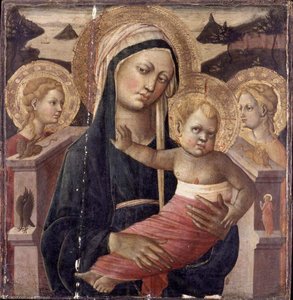
Virgin and Child Enthroned with Saints Anthony Abbot and Julian and a Donor

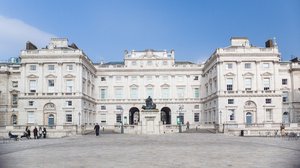
1430 · Tempera On Panel · Courtauld Gallery, Londra

The air within the frame feels heavy with a quiet, luminous stillness. At the center of this sacred assembly, the Virgin Mary sits upon a throne, her presence commanding yet gentle. She holds the Christ Child, whose small form radiates a soft light against the deep blues of her robes. Surrounding them, the saints emerge from a background of shimmering gold leaf, their figures caught in a moment of eternal…

4
Saint Anthony Abbot Tempted by Gold (1400) de Lo Scheggia

Saint Anthony Abbot Tempted by Gold

1400 · Tempera On Panel · Birmingham Museum of Art, Birmingham

The painting titled Saint Anthony Abbot Tempted by Gold is a work by the Italian artist Giovanni di ser Giovanni Guidi, who is also known by the name Lo Scheggia. This tempera on panel work dates to the mid-15th century. The subject matter focuses on the figure of Saint Anthony Abbot, who is depicted with a golden halo. The saint holds a red book and a staff in his hands.

5
Madonna and Child with two Angels (1450) de Lo Scheggia

Madonna and Child with two Angels

1450 · Tempera On Panel · Musée du Petit Palais, Avignon

The painting titled Madonna and Child with two Angels is a work by the Florentine artist Giovanni di ser Giovanni Guidi. Created about 1450, the panel captures a quiet moment of divine presence. The figures are centered in a tight, vertical arrangement, held within a space of gold and deep ultramarine blue. This composition focuses on the Virgin Mary as she holds the Christ Child, flanked by two celestial beings.

6
Three panels adorning a Wedding Cassone (1467) de Lo Scheggia

Three panels adorning a Wedding Cassone

1467 · Tempera On Panel

The wood bears the weight of centuries, its surface etched with fine cracks that trace the passage of time. These three panels, once part of a wedding cassone, carry the quiet gravity of the Quattrocento. Tempera on wood, the medium allows for a precise, linear clarity that defines every movement. A ceremonial procession moves across the top panel, a frieze of horses and carriages winding through a landscape of architectural…

7
The Triumph of a Roman General (1462) de Lo Scheggia

The Triumph of a Roman General

1462 · Tempera On Panel · Scottish National Gallery, Edinburgh

A horizontal frieze of movement unfolds across the panel. A Roman general sits within a raised golden chariot, a singular point of stillness amidst a rhythmic surge of soldiers. The landscape stretches toward distant, rolling hills and pale skies, creating a sense of immense scale. Beneath the chariot, the terrain is rendered in earthy ochres and browns, while the sky holds a deep, quiet blue. The composition relies on a…

8
The Seven Liberal Arts (1460) de Lo Scheggia

The Seven Liberal Arts

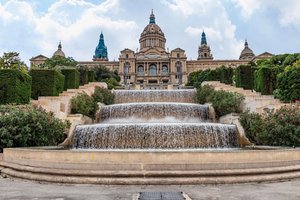
1460 · Tempera On Panel · Museu Nacional d'Art de Catalunya, Barcelona

The Seven Liberal Arts is an allegorical painting by Giovanni di Ser Giovanni Guidi. Created around 1460, this work offers a structured look into the intellectual disciplines of the Renaissance. The artist, who was also known as Lo Scheggia, approached the subject with a specific sense of order and decorative intent. Each figure within the composition represents a particular branch of knowledge, arranged in a rhythmic, architectural sequence.

9
Triumph of Julius Caesar (1455) de Lo Scheggia

Triumph of Julius Caesar

1455 · Tempera On Panel · New York Historical Society, New York City

The work is organized as a long, horizontal frieze-like arrangement, guiding the eye across a crowded procession. Numerous figures, horses, and animals move steadily from left to right through a landscape. This movement creates a sense of continuous narrative, as if we are witnessing a single moment of a historical or allegorical triumphal procession. The perspective remains somewhat flattened, a characteristic approach for the mid-15th century, yet the artist achieves…

10
Church of San Lorenzo (San Giovanni Valdarno), Toscana, Italy (1457) de Lo Scheggia

Church of San Lorenzo (San Giovanni Valdarno), Toscana, Italy

1457 · Fresco

The work known as Church of San Lorenzo (San Giovanni Valdarno), Toscana, Italy, was executed by Giovanni di ser Giovanni Guidi. This artist, often referred to by the nickname Lo Scheggia, was born in San Giovanni Valdarno, Italy, and remained connected to this region throughout his life until his death in 1486. His presence in the Florentine Renaissance is often noted through his relationship to his brother, Masaccio, though his…

Selecția pentru Lo Scheggia continuă, de la 11 la 26

Piesele celebre ale lui Lo Scheggia, perioadă cu perioadă

Subiectele care i-au captivat privirea lui Lo Scheggia

Cele patru teme care revin cel mai des în aceste opere originale, fiecare având cel mai sublim exemplu.

Muzeele care păstrează originalele lui Lo Scheggia

Cele 8 muzee care dețin cele mai multe dintre picturile de pe această pagină.

Muzee Oraș Lucrări lui Lo Scheggia Picturi din această listă
Museo di Palazzo Davanzati, FlorenceMuseo di Palazzo Davanzati Florence 3 Game of Civettino (detail), Game of Civettino (a Birth Salver), Game of Civettino (a Birth Salver)
Birmingham Museum of Art, BirminghamBirmingham Museum of Art Birmingham 2 Saint Anthony Abbot Tempted by Gold, Saint Bernardino of Siena Preaching
Musée du Petit Palais, AvignonMusée du Petit Palais Avignon 2 Madonna and Child with two Angels, Reclining Youth
Philadelphia Museum of Art, PhiladelphiaPhiladelphia Museum of Art Philadelphia 1 Portrait of a Lady
Courtauld Gallery, LondraCourtauld Gallery Londra 1 Virgin and Child Enthroned with Saints Anthony Abbot and Julian and a Donor
Scottish National Gallery, EdinburghScottish National Gallery Edinburgh 1 The Triumph of a Roman General
Museu Nacional d'Art de Catalunya, BarcelonaMuseu Nacional d'Art de Catalunya Barcelona 1 The Seven Liberal Arts
New York Historical Society, New York CityNew York Historical Society New York City 1 Triumph of Julius Caesar

Lo Scheggia deceniu cu deceniu: originalul care definește fiecare

Lucrări pe deceniu

Alege o deceniu pentru a descoperi opera originală care îl definește.

Întrebări ale colecționarilor despre picturile lui Lo Scheggia

Pentru ce operă este cel mai cunoscut Lo Scheggia?Află răspunsul

Portrait of a Lady (1460), Philadelphia Museum of Art, Philadelphia. Urmează Game of Civettino (detail) (1450) și Virgin and Child Enthroned with Saints Anthony Abbot and Julian and a Donor (1430).

Ce vârstă avea Lo Scheggia când a fost creată Portrait of a Lady?Află răspunsul

54 ani: Portrait of a Lady datează din 1460, iar Lo Scheggia s-a născut în 1406.

Care sunt cele mai celebre zece picturi ale lui Lo Scheggia?Află răspunsul

Portrait of a Lady, Game of Civettino (detail), Virgin and Child Enthroned with Saints Anthony Abbot and Julian and a Donor, Saint Anthony Abbot Tempted by Gold, Madonna and Child with two Angels, Three panels adorning a Wedding Cassone, The Triumph of a Roman General, The Seven Liberal Arts, Triumph of Julius Caesar și Church of San Lorenzo (San Giovanni Valdarno), Toscana, Italy. Clasamentul de mai sus indică anul și muzeul pentru fiecare piesă.

Câte picturi a lăsat Lo Scheggia?Află răspunsul

Catalogul nostru cuprinde 29 lucrări ale lui Lo Scheggia, datate între 1430 și 1467.

În ce muzee sunt expuse capodoperele lui Lo Scheggia?Află răspunsul

În principal în Museo di Palazzo Davanzati (Florence), Birmingham Museum of Art (Birmingham) și Musée du Petit Palais (Avignon). Tabelul cu muzee de mai sus le enumeră pe toate.

În ce ani a pictat Lo Scheggia cele mai cunoscute opere?Află răspunsul

În 1450s: 12 dintre cele 26 lucrări de pe această pagină au fost realizate atunci, fiind Game of Civettino (detail) dintre acestea.

Care sunt prima și ultima pictură originală celebră a lui Lo Scheggia?Află răspunsul

Pe această pagină, cea mai veche lucrare datează din Virgin and Child Enthroned with Saints Anthony Abbot and Julian and a Donor (1430), iar cea mai recentă este din Three panels adorning a Wedding Cassone (1467).

Ce subiecte a ales cel mai des Lo Scheggia?Află răspunsul

Woman (6), Architecture (5) și People (4), din cele 26 lucrări de pe această pagină.

Ce tehnică a folosit cel mai des Lo Scheggia?Află răspunsul

Tempera On Panel, pentru 12 dintre cele 26 lucrări de pe această pagină.

Din ce mișcare artistică face parte Lo Scheggia?Află răspunsul

Early renaissance, judecând după originalele de pe această pagină.

Ce lucrări ale lui Lo Scheggia sunt expuse la Museo di Palazzo Davanzati?Află răspunsul

Game of Civettino (detail), Game of Civettino (a Birth Salver) și Game of Civettino (a Birth Salver): Museo di Palazzo Davanzati, Florence deține 3 dintre lucrările de pe această pagină.

Lo Scheggia: viață și operă

The Splinter of Florentine Elegance

In the grand, sun-drenched tapestry of the Florentine Renaissance, certain names shine with a revolutionary brilliance that alters the course of art history forever. While his brother Masaccio is celebrated as the pioneer of groundbreaking realism, Giovanni di Ser Giovanni—affectionately known to history as Lo Scheggia, or "the splinter"—carved out a legacy defined by a different, more delicate kind of mastery. Born in San Giovanni Valdarno, Italy, he was part of a family deeply rooted in the artistic traditions of Tuscany, an environment that nurtured his innate talent for visual storytelling and intricate craftsmanship.

The nickname Lo Scheggia likely derived from his slender build, but it also perhaps alluded to his specialized relationship with wooden artifacts. His grandfather, Mone, was a cassaio—a craftsman specializing in the construction of chests—and this heritage profoundly influenced Giovanni’s artistic path. Rather than pursuing the visceral, muscular drama seen in the works of his brother, Lo Scheggia found his calling in the decoration of domestic furnishings, such as wedding chests, birth trays, and spalliera panels.

A Journey Through Workshops and Traditions

The journey of this Florentine master began in earnest when he moved to the heart of the Renaissance. His early years were shaped by rigorous discipline within the workshop of Lorenzo Bicci, an artist still bound to more traditional stylistic features that lacked the modern sophistication of the International Gothic or the emerging perspective approaches. Seeking greater innovation, Giovanni eventually moved to the workshop of his brother, Masaccio, living alongside him and their mother in Via de’ Servi.

Despite the monumental shadow cast by his brother's revolution, Lo Scheggia demonstrated a remarkable sense of artistic integrity. In 1428, he famously declined to inherit Masaccio's estate, a decision that suggests a man deeply committed to forging his own creative identity. His work represents a realm of quieter elegance, where meticulous detail and profound spiritual contemplation reign supreme, stepping away from the heavy realism of his brother to embrace a more graceful, decorative aesthetic.

Mastery of Detail and Symbolism

Lo Scheggia’s technical prowess is most evident in his ability to manipulate tempera paint to create depth and luminosity. His works often feature a meticulous attention to detail that draws the viewer into an intimate, almost private world. One of his most captivating achievements is the Game of Civettino (a Birth Salvor), painted around 1450. This circular painting, executed in tempera on gessoed panel, captures a poignant window into the burgeoning artistic sensibilities of the Early Renaissance through its depiction of two infants engaged in a playful wrestling match.

His ability to blend decorative richness with symbolic depth is further showcased in his commissions for the most powerful families of the era. His work on the Triumph of Fame, part of a large birth tray commissioned for the birth of Lorenzo de’ Medici, illustrates his skill in navigating the complex heraldry and allegorical language of the time. Through the use of muted golds, browns, and ochres, Lo Scheggia created compositions that were both visually captivating and deeply embedded in the social and familial narratives of Renaissance Florence.