Portretul lui Lesser Ury

Picturi Lesser Ury: Cele 92 de cele mai faimoase, prin ochii unei galerii

Actualizat Noiembrie 2026 · clasat în funcție de scorul nostru de popularitate (căutări, vizite și comenzi pentru fiecare operă) · 92 lucrări ale lui Lesser Ury în catalogul nostru

Pe scurt

În ochii galeriei, cea mai celebră pictură a lui Lesser Ury este Nude Lying Down (1889), a cărei originală este expusă la Berlinische Galerie, Berlin. Moses on Mount Nebo Looking at the Promised Land (1927) și Praying Jew (1931) completează trioul pe care orice ochi îl recunoaște. Dintre cele 92 opere ale lui Lesser Ury din catalogul nostru, galeria prezintă mai jos cele 92 cele mai faimoase, fiecare fiind originală, cu anul creării, muzeul de păstrare și elementul care o face unică.

1861 – 1931, Międzychód Impressionism Cele mai multe lucrări: Berlinische Galerie

Cele mai apreciate 10 picturi ale lui Lesser Ury din galerie

1
Nude Lying Down (1889) de Lesser Ury

Nude Lying Down

1889 · Oil · Berlinische Galerie, Berlin

A woman rests upon a bed of deep red sheets. She lies on her side, her body a pale curve against the saturated fabric. The stillness of the room is heavy, held in place by the weight of shadows and the soft geometry of furniture. A chair sits near the edge of the frame, and a couch occupies the opposite side, anchoring the space in a domestic silence. High above,…

3
Praying Jew (1931) de Lesser Ury

Praying Jew

1931 · Oil On Canvas · Muzeul Evreiesc din New York, New York City

Lesser Ury's "Praying Jew," painted in 1931, is more than just a portrait; it’s a poignant meditation on faith, solitude, and the quiet dignity of an aging man. Born Leo Lesser Ury in Birnbaum, Prussia (now Międzychód, Poland), his early life was marked by profound loss – the untimely death of his father instilled within him a sensitivity to the transient nature of existence, a theme that would permeate much…

4
Bülowstraße high station (1922) de Lesser Ury

Bülowstraße high station

1922 · Oil

The scene depicts a city street at night, rendered in a black and white palette. Rain falls through the air, creating a sense of movement across the composition. On the asphalt road, several vehicles are positioned at varying distances from the viewer. A bus moves along the street, its form defined by the light and the wet surface of the road. Traffic lights are placed at intervals throughout the urban…

5
Strolling in the Forest (1923) de Lesser Ury

Strolling in the Forest

1923

A man and a woman walk a narrow path carved through the woods. They move together, their figures small against the vertical lines of the trees. The forest closes in on both sides, creating a corridor of shade and light. Further ahead, a third figure drifts along the trail, a quiet presence in the distance. The air feels still, caught in the soft, dappled light of the canopy. It is…

6
Interior with Children (the Silblings) (1883) de Lesser Ury

Interior with Children (the Silblings)

In Interior with Children (the Silblings), Lesser Ury presents an intimate, quiet scene within a domestic setting. The composition is vertically oriented, drawing the viewer into a private moment shared by three siblings. The figures are arranged in a deliberate triangular formation that guides the eye through the room. At the base of this arrangement, a child sits on the floor in the foreground, facing the viewer directly. This placement…

7
Interior with Woman at the Piano (1888) de Lesser Ury

Interior with Woman at the Piano

1888 · Oil On Canvas

A dim hallway stretches into the distance, a narrow passage of receding walls that pulls the eye toward a doorway. The air feels heavy, thick with the quiet of a house at rest. A red sofa sits in the foreground, its saturated color anchoring the composition against a sea of dark tones. Light does not flood this space; it struggles through, creating sharp highlights and deep, velvet shadows that define…

8
Woman at a Desk (also known as At the Desk) (1898) de Lesser Ury

Woman at a Desk (also known as At the Desk)

1898 · Oil On Canvas · Alte Nationalgalerie, Berlin

The composition centers on a woman seated at a desk, positioned before a large window that divides the interior space from the exterior view. The scene is rendered in a grayscale palette, utilizing a range of black, white, and gray tones. The woman is oriented toward the desk, her posture suggesting she is engaged in reading or writing. To her side, a piano stool and various chairs are placed within…

9
Rebekka at the well (1908) de Lesser Ury

Rebekka at the well

1908 · Oil · Muzeul Evreiesc din Berlin, Berlin

The air feels heavy with the stillness of a fading afternoon. A solitary woman stands poised by a stone well, her figure caught in a moment of quiet contemplation. She holds a water jug, her presence anchoring the composition slightly to the right of center. Around her, the world seems to soften into a haze of muted, earthy tones. Deep blues and dark browns ground the scene, while ochre and…

10
In the café - Woman in red (1911) de Lesser Ury

In the café - Woman in red

1911 · Oil · Alte Nationalgalerie, Berlin

A single figure anchors the composition, a woman draped in a saturated red garment that pulls the eye through the dimness of the café. She sits slightly off-center, her presence heavy and immediate, as if the viewer has just pulled up a chair at her table. Her blonde hair catches a soft, ambient light, contrasting against the pale skin of her face and the deep, murky tones of the background.…

Picturi cu Lesser Ury, clasate de la 11 la 92

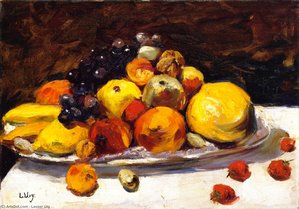
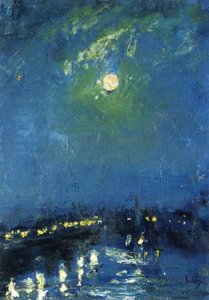
11Street scene at Night, Berlin (1920) de Lesser UryStreet scene at Night, Berlin1920 12Selfportrait (1921) de Lesser UrySelfportrait1921 13Café Scene in Paris (1928) de Lesser UryCafé Scene in Paris1928 14The Red Carpet (1894) de Lesser UryThe Red Carpet1894 · Muzeul Israel 15On Lake Garda (1897) de Lesser UryOn Lake Garda1897 16The Pont Royal in Paris (1928) de Lesser UryThe Pont Royal in Paris1928 · Hamburger Kunsthalle 17Parisian Interior (1881) de Lesser UryParisian Interior1881 18Woman at the Kitchen Stove (1882) de Lesser UryWoman at the Kitchen Stove1882 19Flowers on the Mantel (1882) de Lesser UryFlowers on the Mantel1882 20Estaminet - Flämische Schenke (1884) de Lesser UryEstaminet - Flämische Schenke1884 · Alte Nationalgalerie 21Gargenlichtung am Zaun (1883) de Lesser UryGargenlichtung am Zaun1883 22Siblings (1883) de Lesser UrySiblings1883 23Self-Portrait (1881) de Lesser UrySelf-Portrait1881 24Newspaper Reader in a Café (also known as Woman in a Café or Café Interior) (1882) de Lesser UryNewspaper Reader in a Café (also known as Woman in a Café or Café Interior)1882 25In the Sunshine, near Volluvet (1884) de Lesser UryIn the Sunshine, near Volluvet1884 26Village Road at the Edge of the Forest (1884) de Lesser UryVillage Road at the Edge of the Forest1884 27Mountain Lake (1886) de Lesser UryMountain Lake1886 · Berlinische Galerie 28View into a Valley (1890) de Lesser UryView into a Valley1890 29The Coast of Rügen (1892) de Lesser UryThe Coast of Rügen1892 30Woman by the Chimney Fire (also known as Reverie by the Fireplace) (1890) de Lesser UryWoman by the Chimney Fire (also known as Reverie by the Fireplace)1890 31Rocky Shore at Capri (1890) de Lesser UryRocky Shore at Capri1890 32Young Lady with a Large Hat (1886) de Lesser UryYoung Lady with a Large Hat1886 33Leipzig Street (1889) de Lesser UryLeipzig Street1889 · Berlinische Galerie 34NIght Lights (1889) de Lesser UryNIght Lights1889 35Unter den Linden after the Rain (1888) de Lesser UryUnter den Linden after the Rain1888 36Lake Garda and Monte Baldo (1897) de Lesser UryLake Garda and Monte Baldo1897 37Old Man in a Fur Coat (1895) de Lesser UryOld Man in a Fur Coat1895 38Moonrise on the Grunewaldsee (1898) de Lesser UryMoonrise on the Grunewaldsee1898 39Evening at Café Bauer (1898) de Lesser UryEvening at Café Bauer1898 40Interior (also known as Interior Scene with Woman Reading on a Terrace) (1894) de Lesser UryInterior (also known as Interior Scene with Woman Reading on a Terrace)1894 41Reader with Magnifying Glass (1895) de Lesser UryReader with Magnifying Glass1895 42Sunset at Lake Grunewald (1900) de Lesser UrySunset at Lake Grunewald1900 43Ludwig Geiger (1905) de Lesser UryLudwig Geiger1905 44Eugen Schiffer (1905) de Lesser UryEugen Schiffer1905 45Landscape at Sunset (1900) de Lesser UryLandscape at Sunset1900 46View over Nollendorfplatz (1901) de Lesser UryView over Nollendorfplatz1901 47Otto Brahm in His Loge at the German Theater (1901) de Lesser UryOtto Brahm in His Loge at the German Theater1901 48Stroller in Tiergarten (1905) de Lesser UryStroller in Tiergarten1905 49Rainbow at Beelitzhof (also known as Brandenburg Landscape) (1899) de Lesser UryRainbow at Beelitzhof (also known as Brandenburg Landscape)1899 50On the Kurfurstendamm (1910) de Lesser UryOn the Kurfurstendamm1910 51Field workers in Thuringa (1911) de Lesser UryField workers in Thuringa1911 52Berlin street scene with horse-drawn cabs (1910) de Lesser UryBerlin street scene with horse-drawn cabs1910 53Berlin, Alexanderplatz (1910) de Lesser UryBerlin, Alexanderplatz1910 54Lake Garda Motif (1906) de Lesser UryLake Garda Motif1906 55Self-Portrait with Brush and Palette (1910) de Lesser UrySelf-Portrait with Brush and Palette1910 56Promontory on Lake Garda (1909) de Lesser UryPromontory on Lake Garda1909 57Sunset over the Grunewaldsee (1909) de Lesser UrySunset over the Grunewaldsee1909 58Rebecca at the Fountain (1908) de Lesser UryRebecca at the Fountain1908 59On a Canal (1912) de Lesser UryOn a Canal1912 60Lake Garda with Mount Baldo (1914) de Lesser UryLake Garda with Mount Baldo1914 61Self-Portrait with Dark Hat (1914) de Lesser UrySelf-Portrait with Dark Hat1914 62In Front of the Cafe (Berlin at Night) (1920) de Lesser UryIn Front of the Cafe (Berlin at Night)1920 63Lilac Bouquet (1922) de Lesser UryLilac Bouquet1922 64Street Scene with Woman, Berlin (1918) de Lesser UryStreet Scene with Woman, Berlin1918 65Newspaper Reader at the Café (also known as Gentleman at a Coffee House) (1920) de Lesser UryNewspaper Reader at the Café (also known as Gentleman at a Coffee House)1920 66Two Girls walking along the Street (1921) de Lesser UryTwo Girls walking along the Street1921 67Unter den Linden (1922) de Lesser UryUnter den Linden1922 68Vase of Flowers (1921) de Lesser UryVase of Flowers1921 69Champs-Elysees with Arc de Triomphe, Paris (1928) de Lesser UryChamps-Elysees with Arc de Triomphe, Paris1928 70Paris, Sunrise (1928) de Lesser UryParis, Sunrise1928 71Waterloo Bridge in the Fog (1926) de Lesser UryWaterloo Bridge in the Fog1926 72Eiffel Tower (1928) de Lesser UryEiffel Tower1928 73Nollendorfplazt at Night (1925) de Lesser UryNollendorfplazt at Night1925 74Lennéstraße (1925) de Lesser UryLennéstraße1925 75Traffic Jam at Potsdamer Platz (1925) de Lesser UryTraffic Jam at Potsdamer Platz1925 76Schloß Rheinstein am Rhein (1924) de Lesser UrySchloß Rheinstein am Rhein1924 77Charing Cross, London (1926) de Lesser UryCharing Cross, London1926 78Tiergarten Avenue with Siegessäule (1925) de Lesser UryTiergarten Avenue with Siegessäule1925 79Rainy Day in London, Thames Port (1926) de Lesser UryRainy Day in London, Thames Port1926 80Waterloo Bridge Emerging in the Sunlight (1926) de Lesser UryWaterloo Bridge Emerging in the Sunlight1926 81Paris, Rainy Day at the Quai Voltaire (1928) de Lesser UryParis, Rainy Day at the Quai Voltaire1928 82Untitled (Park Scene or Man in the Gray Suit) (1913) de Lesser UryUntitled (Park Scene or Man in the Gray Suit)1913 · Muzeul Evreiesc din New York 83Morning Sun (1924) de Lesser UryMorning Sun1924 84A Jewish Man in His Prayer Shawl (1931) de Lesser UryA Jewish Man in His Prayer Shawl1931 85Still Life with Fruit on a White Table (1920) de Lesser UryStill Life with Fruit on a White Table1920 86Thames Bridges in the Twilight (also known as London Bridge) (1926) de Lesser UryThames Bridges in the Twilight (also known as London Bridge)1926 87Abendlicher Park bei Regenwetter de Lesser UryAbendlicher Park bei Regenwetter 88Tiergartenstrasse, Berlin de Lesser UryTiergartenstrasse, Berlin 89Landscape de Lesser UryLandscape 90Self Portrait with Spread Fingers de Lesser UrySelf Portrait with Spread Fingers 91The River Thames, London, Moonlight de Lesser UryThe River Thames, London, Moonlight 92The Fence (also known as Farmyard with Well) (1888) de Lesser UryThe Fence (also known as Farmyard with Well)1888

Piesele celebre ale lui Lesser Ury, perioadă cu perioadă

Early Modern

1905 – 1928 · 3 lucrări în această listă

Subiectele care i-au captivat privirea lui Lesser Ury

Cele patru teme care revin cel mai des în aceste opere originale, fiecare având cel mai sublim exemplu.

Muzeele care păstrează originalele lui Lesser Ury

Cele 7 muzee care dețin cele mai multe dintre picturile de pe această pagină.

Muzee Oraș Lucrări lui Lesser Ury Picturi din această listă
Berlinische Galerie, BerlinBerlinische Galerie Berlin 3 Nude Lying Down, Mountain Lake, Leipzig Street
Alte Nationalgalerie, BerlinAlte Nationalgalerie Berlin 3 Woman at a Desk (also known as At the Desk), In the café - Woman in red, Estaminet - Flämische Schenke
Muzeul Evreiesc din New York, New York CityMuzeul Evreiesc din New York New York City 2 Praying Jew, Untitled (Park Scene or Man in the Gray Suit)
Colecțiile Statale de Pictură din Bavaria, MunchenColecțiile Statale de Pictură din Bavaria Munchen 1 Interior with Children (the Silblings)
Muzeul Evreiesc din Berlin, BerlinMuzeul Evreiesc din Berlin Berlin 1 Rebekka at the well
Muzeul Israel, IerusalimMuzeul Israel Ierusalim 1 The Red Carpet
Hamburger Kunsthalle, HamburgHamburger Kunsthalle Hamburg 1 The Pont Royal in Paris

Lesser Ury, o pictură emblematică pe deceniu

Lucrări pe deceniu

Alege o deceniu pentru a descoperi opera originală care îl definește.

Picturile lui Lesser Ury: răspunsurile galeriei

Care este cea mai celebră pictură a lui Lesser Ury?Află răspunsul

Nude Lying Down (1889), Berlinische Galerie, Berlin. Urmează Moses on Mount Nebo Looking at the Promised Land (1927) și Praying Jew (1931).

Ce vârstă avea Lesser Ury când a finalizat Nude Lying Down?Află răspunsul

28 ani: Nude Lying Down datează din 1889, iar Lesser Ury s-a născut în 1861.

Care sunt cele mai importante 10 picturi ale lui Lesser Ury?Află răspunsul

Nude Lying Down, Moses on Mount Nebo Looking at the Promised Land, Praying Jew, Bülowstraße high station, Strolling in the Forest, Interior with Children (the Silblings), Interior with Woman at the Piano, Woman at a Desk (also known as At the Desk), Rebekka at the well și In the café - Woman in red. Clasamentul de mai sus indică anul și muzeul pentru fiecare piesă.

Câte lucrări a creat Lesser Ury?Află răspunsul

Catalogul nostru cuprinde 92 lucrări ale lui Lesser Ury, datate între 1881 și 1931.

Unde sunt expuse cele mai celebrele opere originale ale lui Lesser Ury?Află răspunsul

În principal în Berlinische Galerie (Berlin), Alte Nationalgalerie (Berlin) și Muzeul Evreiesc din New York (New York City). Tabelul cu muzee de mai sus le enumeră pe toate.

Când a creat Lesser Ury cele mai faimoase picturi?Află răspunsul

În 1920s: 29 dintre cele 92 lucrări de pe această pagină au fost realizate atunci, fiind Moses on Mount Nebo Looking at the Promised Land dintre acestea.

Care sunt cele mai vechi și cele mai recente opere celebre ale lui Lesser Ury?Află răspunsul

Pe această pagină, cea mai veche lucrare datează din Parisian Interior (1881), iar cea mai recentă este din Praying Jew (1931).

La ce subiecte s-a întors cel mai des Lesser Ury?Află răspunsul

Woman (8), Interior (7) și Night (6), din cele 92 lucrări de pe această pagină.

În ce tehnică a lucrat cel mai mult Lesser Ury?Află răspunsul

Oil On Canvas, pentru 8 dintre cele 92 lucrări de pe această pagină.

Cu ce mișcare este asociat(ă) Lesser Ury?Află răspunsul

Impressionism, judecând după originalele de pe această pagină.

Ce opere originale ale lui Lesser Ury deține Berlinische Galerie?Află răspunsul

Nude Lying Down, Mountain Lake și Leipzig Street: Berlinische Galerie, Berlin deține 3 dintre lucrările de pe această pagină.

Lesser Ury: artistul

A Life Painted in Light: The World of Leo Lesser Ury

Leo Lesser Ury, un nume poate mai puțin imediat de recunoscut în comparație cu alți pictori impresionisti contemporani, totuși ocupă un spațiu vital și evocator în narațiunea picturii germane. Născut pe 7 noiembrie 1861, în Birnbaum, Prusia – acum Międzychód, Polonia – călătoria lui Ury a fost marcată de ambele triumfe artistice și dificultăți personale. Viața sa timpurie a fost umbrită de pierdere; moartea tatălui său, un coppersmith, în 1872, a forțat o mutare la Berlin cu mama sa. Această deplasare a imprimat, poate, pe veci o sensibilitate la peisajele urbane și la natura efemeră a vieții moderne în el. Inițial angajat ca meșter, chemarea artistică a lui Ury s-a dovedit prea puternică pentru a fi ignorată, conducându-l la Academia de Artă din Düsseldorf în 1879. A fost începutul unei perioade extinse de explorare europeană – Bruxelles, Paris, Munchen, Stuttgart, Karlsruhe – fiecare oraș contribuind la paleta și perspectiva evolutive care ar defini stilul său unic. Aceste călătorii nu au fost doar geografice; au fost studii imersive în lumină, atmosferă și energia înfloritoare a vieții moderne.

Embracing Impressionism and Capturing a City's Soul

Dezvoltarea artistică a lui Ury a fost profund legată de curentele artei din sfârșitul secolului al XIX-lea. Deși inițial întâmpinat cu o reacție ostilă – prima sa expoziție în 1889 provocând un răspuns negativ –, a găsit un susținător în cel respectat Adolph Menzel, a cărui sprijin a deschis uși în cadrul Academiei din Berlin. Această recunoaștere s-a dovedit crucială, permițându-i lui Ury să își perfecționeze tehnica și viziunea. Adoptarea impresionismului nu a fost doar stilistică; a fost o modalitate de a surprinde momentele fugare ale vieții urbane moderne. S-a alăturat Secesiunii din Munchen în 1893, aliniindu-se cu un grup de artiști care au provocat convențiile academice și căutau noi forme de expresie. Pânzele lui Ury au început să strălucească cu pensule vii, aplicarea impasto creând textură și profunzime, și o sensibilitate acută la puterea transformatoare a luminii. Subiectele sale principale s-au cristalizat în această perioadă: peisaje impregnate de atmosferă, scene interioare intime, dar mai ales scene vibrante, adesea nocturne, ale vieții urbane. Nu doar *depunea* Berlin; îl captura esența sa – strălucirea lămpilor de gaz pe străzi ude de ploaie, energia frenetică a cafenelelor, liniștea solitară a colțurilor umbroase.

Recognition and a Complex Legacy

Primii ani ai secolului al XX-lea au marcat o întoarcere a lui Ury la Berlin, unde s-a remarcat rapid ca fiind o figură proeminentă în scena artistică a orașului. Participarea sa la expoziții cu Secesiunea din Berlin din 1915 a sporit treptat recunoașterea sa. O expoziție importantă în 1922, prezentând 150 dintre picturile și pastelurile sale, a consolidat reputația sa. Mai târziu, primarul Berlinului l-a numit pe Ury „glorificatorul artistic al capitalei” la aniversarea sa de șasezeci de ani în 1921, referindu-se la reprezentările sale vii ale scenelor urbane. Această perioadă a marcat un punct culminant în cariera lui Ury, alimentată atât de aclamația critică, cât și de succesul comercial. A devenit mai ales cunoscut pentru măiestria sa în pastel, folosind acest mediu pentru a crea opere de delicatețe și profunzime atmosferică excepționale. Cu toate acestea, această reușită a fost umbrită de un aspect complex al practicii sale. Pentru a satisface cererea crescândă, Ury a început să repete compozițiile, producând numeroase copii – unele de calitate inferioară – care au diluat în mod nedorit statutul său artistic în ochii unor critici. Abordarea pragmatică aceasta, deși avantajoasă financiar, a contribuit în cele din urmă la o evaluare ambivalentă a operei sale.

A Lasting Impression: Historical Significance and Enduring Appeal

Importanța istorică a lui Leo Lesser Ury se extinde dincolo de abilitatea sa tehnică și de sensibilitățile estetice. El este amintit ca un observator priceput și un portretiv evocator al vieții urbane moderne, în special al peisajelor nocturne ale Berlinului care au rezonat cu publicul căutând să înțeleagă lumea lor în schimbare rapidă. Lucrările sale oferă o privire asupra unui moment și loc specific – un oraș la apogeul modernității, confruntându-se cu industrializarea, schimbările sociale și anxietățile unei noi ere. Mai mult decât atât, ca artist evreu navigând în societatea germană, viața și opera lui Ury reflectă aspecte ale identității culturale evreiești și ale experienței sale într-un peisaj socio-politic complex. Picturile sale, deși nu sunt explicit politice, transmit subtil un sentiment de apartenență și alienare, oferind o perspectivă unică asupra provocărilor cu care s-au confruntat comunitățile evreiești în Germania în această perioadă. Moartea sa pe 18 octombrie 1931, la Berlin, și înmormântarea sa în cimitirul evreiesc din Berlin-Weissensee, marchează o concluzie tristă a unei vieți pline de contradicții. Cu toate acestea, moștenirea lui Ury continuă să fie simțită astăzi. Stilul său unic a deschis drumul pentru generațiile ulterioare de artiști, iar reprezentările sale evocatoare ale vieții urbane continuă să captiveze privitorii cu frumusețea lor, atmosfera și sentimentul poignant al timpului și locului.