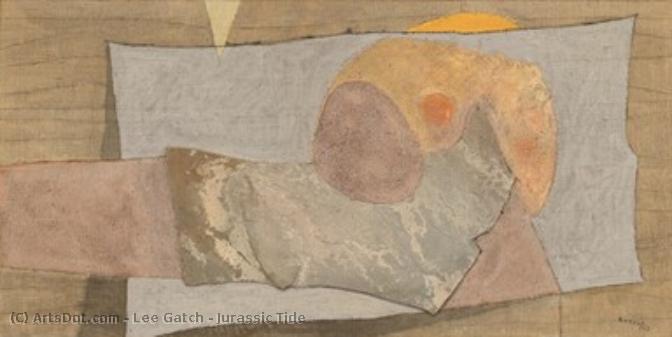
Pe scurt
Dintre toate originalele lăsate de Lee Gatch, cea mai faimoasă este Jurassic Tide (1962). Imediat după acestea urmează Squaws Rest (mural study, Elizabethtown, Pennsylvania Post Office) (1941) și Sketch for Greenhouse (1950). Catalogul nostru cuprinde 18 lucrări ale lui Lee Gatch; galeria a păstrat cele 6 pe care lumea le admiră cel mai mult, fiecare fiind prezentată împreună cu data, muzeul și povestea sa.
Cele mai importante 10 picturi ale lui Lee Gatch: selecția galeriei
Herodiae
The artwork Herodiae by Lee Gatch is a captivating piece that showcases the artist's unique style and technique. Created in 1960, this collage measures 112 x 92 cm and is currently housed at the Smithsonian American Art Museum in the United States. Artistic Style and Influences Lee Gatch's work is characterized by his use of bold colors and textures, which are evident in Herodiae. The painting features a person holding…
Muzeele care păstrează originalele lui Lee Gatch
Cele 2 muzee care dețin cele mai multe dintre picturile de pe această pagină.
| Muzee | Oraș | Lucrări lui Lee Gatch | Picturi din această listă |
|---|---|---|---|

| Washington, D.C. | 1 | Squaws Rest (mural study, Elizabethtown, Pennsylvania Post Office) | |
| Boca Raton | 1 | The Fire Eater |
Lee Gatch deceniu cu deceniu: originalul care definește fiecare
Lucrări pe deceniu
Alege o deceniu pentru a descoperi opera originală care îl definește.
Squaws Rest (mural study, Elizabethtown, Pennsylvania Post Office)
Întrebări ale colecționarilor despre picturile lui Lee Gatch
Pentru ce operă este cel mai cunoscut Lee Gatch?Află răspunsul
Jurassic Tide (1962). Urmează Squaws Rest (mural study, Elizabethtown, Pennsylvania Post Office) (1941) și Sketch for Greenhouse (1950).
Ce vârstă avea Lee Gatch când a fost creată Jurassic Tide?Află răspunsul
60 ani: Jurassic Tide datează din 1962, iar Lee Gatch s-a născut în 1902.
Câte picturi a lăsat Lee Gatch?Află răspunsul
Catalogul nostru cuprinde 18 lucrări ale lui Lee Gatch, datate între 1941 și 1962.
În ce muzee sunt expuse capodoperele lui Lee Gatch?Află răspunsul
În principal în Smithsonian American Art Museum (Washington, D.C.) și Boca Raton Museum of Art (Boca Raton). Tabelul cu muzee de mai sus le enumeră pe toate.
În ce ani a pictat Lee Gatch cele mai cunoscute opere?Află răspunsul
În 1950s: 3 dintre cele 6 lucrări de pe această pagină au fost realizate atunci, fiind Sketch for Greenhouse dintre acestea.
Care sunt prima și ultima pictură originală celebră a lui Lee Gatch?Află răspunsul
Pe această pagină, cea mai veche lucrare datează din Squaws Rest (mural study, Elizabethtown, Pennsylvania Post Office) (1941), iar cea mai recentă este din Jurassic Tide (1962).
Lee Gatch: viață și operă
A Lyrical Vision: The Life and Art of Lee Gatch
Harry Lee Gatch, born September 10, 1902, near Baltimore, Maryland, was a quietly compelling figure in twentieth-century American art—an artist whose lyrical abstractions emerged from a determined pursuit of personal expression against the backdrop of shifting artistic tides. His story is one of unwavering dedication to his vision, even amidst familial disapproval and periods of relative obscurity. From early struggles for recognition to eventual acclaim, Gatch carved out a unique space for himself through a distinctive blend of Fauvist color sensibilities, Post-Impressionist structure, and an enduring fascination with the natural world. His family offered little encouragement to his artistic ambitions; this lack of support became a defining element in his life, fueling a resolute commitment to establishing himself as a painter. He sought formal training at the Maryland Institute College of Art in the early 1920s, where he found an important mentor in New York painter John Sloan, whose influence solidified Gatch’s vocational path.European Influences and the Search for Style
Driven by a desire for advanced instruction and broader exposure to modern art movements, Gatch embarked on a journey to Europe in 1924. He initially enrolled at the American School at Fontainebleau, France, but soon found himself drawn to the vibrant artistic atmosphere of Paris. There, he studied with André Lhote, immersing himself in Cubist principles. However, it was his engagement with French modern masters—André Derain, Édouard Vuillard, and Pierre Bonnard—that proved most formative. These artists’ refined color palettes and evocative depictions of light and space resonated deeply with Gatch, becoming integral to the development of his own aesthetic language. He absorbed their techniques, not as imitation but as inspiration for a fresh approach to representing form and nature. This period was crucial in shaping his signature style—one characterized by interwoven patterns of flattened figures and a Fauvist-inspired sense of landscape.Murals, Marriage, and the American Landscape
Upon returning to the United States in 1925, Gatch faced the challenges of establishing a career during a time of economic hardship. He found temporary employment as a muralist for the Federal Art Project during the Great Depression, completing works such as *Tobacco Industry* (1940) in Mullins, South Carolina, and *Squaw's Rest* (1942) in Elizabethtown, Pennsylvania. These projects provided valuable experience but did not fully satisfy his artistic aspirations. A pivotal moment arrived in 1936 with his marriage to Elsie Driggs, a Precisionist artist who became a steadfast supporter of his work. Together, they settled in Lambertville, New Jersey, where the surrounding landscape would become a primary source of inspiration for Gatch’s most celebrated paintings. The couple's life was often financially strained, but Driggs’ unwavering belief in his talent sustained him through difficult times.Recognition and Enduring Legacy
Despite facing periods of relative obscurity, Gatch gradually gained recognition for his unique artistic vision. He exhibited at the Venice Biennials in 1950 and 1956—significant milestones that brought international attention to his work. In 1957, he was inducted into the American Academy of Arts and Letters, a testament to his contributions to the field. His paintings are characterized by an abstract style that seamlessly blends elements of Post-Impressionism, Cubism, and Symbolism, creating mystical evocations of nature. Gatch strove throughout his career to maintain an individual style rooted in the American representational tradition while simultaneously pushing beyond mere appearances to explore deeper meanings through design and color. Though he often felt overlooked during the rise of Abstract Expressionism and Pop Art, his work has since been recognized for its quiet power and enduring beauty. His paintings can be found in prominent collections including those of the Guggenheim Museum, the Whitney Museum of American Art, the Metropolitan Museum of Art, and the Phillips Collection—a lasting tribute to a life dedicated to the pursuit of artistic truth.Major Achievements
- Venice Biennale Exhibitions (1950 & 1956): International recognition for his abstract landscapes.
- Induction into the American Academy of Arts and Letters (1957): Acknowledgment of his significant contributions to American art.
- Development of a Unique Abstract Style: Blending Post-Impressionism, Cubism, and Symbolism in evocative depictions of nature.
- Influence on Contemporary Artists: His work resonated with artists like Milton Avery, sharing a kinship in their pursuit of color and form.