Portretul lui Kristian Møhl

Cele 3 cele mai faimoase picturi ale lui Kristian Møhl, o selecție de galerie

Actualizat Noiembrie 2026 · clasat în funcție de scorul nostru de popularitate (căutări, vizite și comenzi pentru fiecare operă) · 3 lucrări ale lui Kristian Møhl în catalogul nostru

Pe scurt

Dintre toate originalele lăsate de Kristian Møhl, cea mai faimoasă este The Strandmølle Lake (1906), din colecția Statens Museum For Kunst, Copenhaga. Imediat după acestea urmează View of Gammel and Nytorv in Copenhagen (1924) și Cushion,. Catalogul nostru cuprinde 3 lucrări ale lui Kristian Møhl; galeria a păstrat cele 3 pe care lumea le admiră cel mai mult, fiecare fiind prezentată împreună cu data, muzeul și povestea sa.

1876 – 1962, Ibsker Cele mai multe lucrări: Statens Museum For Kunst

Cele mai importante 10 picturi ale lui Kristian Møhl: selecția galeriei

3
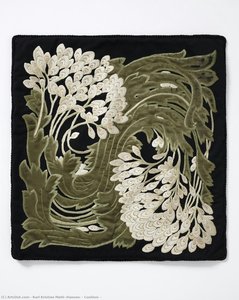
Cushion, de Kristian Møhl

Cushion,

Embroidery · Designmuseum Danmark, Copenhaga

Karl Kristian Møhl-Hansen’s embroidered cushion offers a quiet departure from the dramatic, turbulent skies often found in his landscape paintings. While his canvases frequently capture the sweeping vistas of the Danish countryside, this textile work focuses on the intimate details of the natural world. The design features stylized leaves and flowers woven into complex geometric patterns, drawing heavily from Scandinavian mythology. These motifs act as symbols of fertility and the…

Muzeele care păstrează originalele lui Kristian Møhl

Cele 2 muzee care dețin cele mai multe dintre picturile de pe această pagină.

Muzee Oraș Lucrări lui Kristian Møhl Picturi din această listă
Statens Museum For Kunst, CopenhagaStatens Museum For Kunst Copenhaga 2 The Strandmølle Lake, View of Gammel and Nytorv in Copenhagen
Designmuseum Danmark, CopenhagaDesignmuseum Danmark Copenhaga 1 Cushion,

Kristian Møhl an de an: originalele care definesc fiecare perioadă

De la 1906 la 1924, Kristian Møhl a activat timp de 19 ani: selecția urmărește această lungă carieră an de an, prin cele mai deosebite opere originale.

Lucrări pe an

Alege un an pentru a vedea originalele acestuia.

Întrebări ale colecționarilor despre picturile lui Kristian Møhl

Pentru ce operă este cel mai cunoscut Kristian Møhl?Află răspunsul

The Strandmølle Lake (1906), Statens Museum For Kunst, Copenhaga. Urmează View of Gammel and Nytorv in Copenhagen (1924) și Cushion,.

Ce vârstă avea Kristian Møhl când a fost creată The Strandmølle Lake?Află răspunsul

30 ani: The Strandmølle Lake datează din 1906, iar Kristian Møhl s-a născut în 1876.

Câte picturi a lăsat Kristian Møhl?Află răspunsul

Catalogul nostru cuprinde 3 lucrări ale lui Kristian Møhl, datate între 1906 și 1924.

În ce muzee sunt expuse capodoperele lui Kristian Møhl?Află răspunsul

În principal în Statens Museum For Kunst (Copenhaga) și Designmuseum Danmark (Copenhaga). Tabelul cu muzee de mai sus le enumeră pe toate.

Care sunt prima și ultima pictură originală celebră a lui Kristian Møhl?Află răspunsul

Pe această pagină, cea mai veche lucrare datează din The Strandmølle Lake (1906), iar cea mai recentă este din View of Gammel and Nytorv in Copenhagen (1924).

Ce lucrări ale lui Kristian Møhl sunt expuse la Statens Museum For Kunst?Află răspunsul

The Strandmølle Lake și View of Gammel and Nytorv in Copenhagen: Statens Museum For Kunst, Copenhaga deține 2 dintre lucrările de pe această pagină.

Kristian Møhl: viață și operă

Karl Kristian Møhl(-Hansen) (1876-1962): A Danish Painter of Expressionist Landscapes and Decorative Arts

  • Born: Esbjerg, Denmark, 1876
  • Died: 1962
  • Other Names: Christian Møhl-Hansen, Karl Kristian M0hl(-Hansen), Christian M0hl-Hansen

Early Life and Artistic Training

  • Born Carl Christian Hansen, he later changed his name to Møhl-Hansen on February 23, 1929, and further simplified it to Møhl in 1957.
  • Brother of theologian Peter Olaf Ryberg Hansen.
  • Began as an apprentice building painter, demonstrating early practical skills.
  • Attended technical school before pursuing formal artistic training at the Royal Danish Academy of Fine Arts, enrolling on April 18, 1895. This foundational education provided him with a strong understanding of technique and composition.
  • Early career involved diverse experiences, laying groundwork for his later stylistic development.

Artistic Development and Influences

  • Møhl’s artistic journey was marked by extensive travel throughout Europe, including Italy, London, Spain, the Netherlands, and Paris. These travels exposed him to a wide range of artistic styles and cultural influences.
  • His work is generally categorized as Expressionist, characterized by its emotional intensity and subjective interpretation of reality. While influenced by broader European Expressionism, Møhl developed a distinct Danish sensibility in his landscapes.
  • While specific direct influences are not extensively documented, the prevalence of landscape painting within his oeuvre suggests an appreciation for artists depicting nature's power and beauty. The influence of the Danish Golden Age painters is also likely present, though he moved beyond their more classical approach.
  • His decorative art pieces demonstrate a keen eye for design and pattern, reflecting a broader interest in applied arts alongside fine art painting.

Major Works and Achievements

  • Møhl’s oeuvre primarily consists of landscapes, often depicting the Danish countryside with an expressive use of color and brushwork. These works capture not just the visual appearance but also the emotional atmosphere of the scenes.
  • He created decorative art pieces such as cushions, showcasing his versatility and talent for design.
  • While he didn't achieve widespread international fame during his lifetime, Møhl was a respected figure within the Danish art scene.
  • His work is represented in collections of museums like the Brücke Museum in Berlin, indicating recognition beyond Denmark.

Historical Significance and Legacy

  • Karl Kristian Møhl(-Hansen) contributes to understanding the development of Expressionism within a Scandinavian context. His landscapes offer a unique perspective on Danish nature through an emotionally charged lens.
  • His exploration of decorative arts highlights the interconnectedness between fine art and applied design in early 20th-century Denmark.
  • Møhl’s legacy lies in his ability to capture the essence of the Danish landscape with expressive power, contributing to a broader understanding of Expressionist aesthetics within Scandinavian art history. His work provides valuable insight into the artistic climate of Denmark during the first half of the 20th century.