Portretul lui Koloman Moser

Cele 100 cele mai faimoase picturi ale lui Koloman Moser, fiecare unică în felul ei

Actualizat Noiembrie 2026 · clasat în funcție de scorul nostru de popularitate (căutări, vizite și comenzi pentru fiecare operă) · 189 lucrări ale lui Koloman Moser în catalogul nostru

Pe scurt

Dansul Vrindelor Înfloritoare (1898) este pictura lui Koloman Moser care atrage cele mai multe priviri; originalul aparține Secession, Viena. După aceasta, privirea se îndreaptă către Poster of the Beethoven sonatas evening (1908) și Drafts for the exlibris for Fritz Waerndorfer (1903). Dintre cele 189 opere ale lui Koloman Moser din catalogul nostru, acestea 100 sunt cele mai celebre, fiecare fiind o piesă unică, prezentată împreună cu anul creării, muzeul deținător și motivul pentru care aceasta rămâne memorabilă.

1868 – 1918, Viena Art nouveau Cele mai multe lucrări: Leopold Museum

Cele mai importante 10 picturi ale lui Koloman Moser, prin ochii galeriei

1
Dansul Vrindelor Înfloritoare (1898) de Koloman Moser

Dansul Vrindelor Înfloritoare

1898 · Fotografie alb-negru · Secession, Viena

Dansul Maidenei Încoronate de Ghirlande „Dansul Maidenei Încoronate de Ghirlande” este o pictură realizată de Koloman Moser în anul 1898 și reprezintă un simbol puternic al esteticii Secessioniste Viennese. Opera lui Moser, aflată în colecția Muzeului Aplicatelor Arti din Viena (MAK), este una dintre cele mai importante creații ale acestui artist și reflectă influențele clasicismului greco-roman asupra artei moderne austriece. În centrul imaginii se află o clădire impresionantă, probabil Clădirea…

2
Poster of the Beethoven sonatas evening (1908) de Koloman Moser

Poster of the Beethoven sonatas evening

1908 · Print

The Poster of the Beethoven sonatas evening by Koloman Moser emerges from 1908, a moment when the air in Vienna pulses with new artistic energy. This graphic work functions as a visual invitation to a specific musical encounter. It announces an evening dedicated to the profound compositions of Ludwig van Beethoven, inviting the viewer to witness the power of his sonatas through a modern lens. The design carries the weight…

3
Drafts for the exlibris for Fritz Waerndorfer (1903) de Koloman Moser

Drafts for the exlibris for Fritz Waerndorfer

1903 · Ink On Paper

The ink flows across the paper in a rhythmic dance, capturing a moment of transition between thought and final form. In this 1903 draft for an exlibris, the lines possess a liquid quality, winding around figures with an organic grace that feels alive. Three women emerge from the composition, their bodies elongated and poised in a way that suggests a dreamlike elegance. One figure wears a crown, her presence lending…

4
Semmering Landscape de Koloman Moser

Semmering Landscape

Oil On Canvas

The landscape of the Semmering region finds a quiet, symbolic expression in this work. Mountains rise against a sky saturated with purple hues, while a rising sun casts a warm glow over the peaks. Scattered trees provide texture and depth to the composition, grounding the ethereal light in the physical reality of the terrain. Two figures are positioned within the scene—one near the center and another toward the right—offering a…

5
Loneliness (1902) de Koloman Moser

Loneliness

1902 · Watercolor

In Loneliness, Koloman Moser explores a quiet, introspective moment through the medium of watercolor. Created about 1902, this work reflects the sensibilities of the Art Nouveau style, focusing on a singular, solitary figure. A man stands beneath a tree, his head partially obscured by the foliage, creating a sense of withdrawal from the world around him. This choice of posture suggests a deep internal focus, a retreat into the self…

6
Figure study of Tristan (1915) de Koloman Moser

Figure study of Tristan

1915 · Drawing

The scene unfolds through a black and white drawing titled Figure study of Tristan. Created by Koloman Moser, this work captures a singular, quiet moment of preparation. The artist’s hand moves across the paper to document the human form, focusing on the physical presence of the subject. It is a study of light and shadow, stripped of color to emphasize the raw essence of the figure.

7
Poster for 'Prince Richard Metternich' (1899) de Koloman Moser

Poster for 'Prince Richard Metternich'

1899 · Print

In this 1899 composition, we find ourselves observing a moment of suspended motion. A single figure, draped in a flowing blue dress, appears to drift through a serene sky. There is a sense of weightlessness here, as if the subject is caught in a dance or perhaps a flight between the clouds. The lines are not merely outlines; they are sinuous, organic curves that define the movement of the fabric…

8
Self Portrait in Colonial Dress (1910) de Koloman Moser

Self Portrait in Colonial Dress

1910 · Watercolor · Muzeul Kunsthistorisches din Viena, Viena

The painting depicts a man with a mustache wearing a suit and tie, appearing to look directly at the viewer while seated. His attire is suggestive of colonial clothing. The man's facial features and outfit are rendered with significant detail. The background is somewhat blurry, depicting an indoor setting that includes two chairs, one on the left side and another toward the right, and a bowl located near the bottom…

10
Am Steinhof Church, Design for the rise window (1905) de Koloman Moser

Am Steinhof Church, Design for the rise window

1905 · Gouache

The design for the rise window of Am Steinhof Church emerges from the creative mind of Koloman Moser. Created about 1905, this work captures a moment of intense artistic focus. Moser, who was born in Vienna, Austria-Hungary in 1868, brings a specific vision to this ecclesiastical design. His hand moves through the intricate patterns that define the window's structure.

Păiți celebrele picturi ale lui Koloman Moser, de la numărul 11 la 100

11The Rax (1912) de Koloman MoserThe Rax1912 · Leopold Museum 12Franz Dangl in Uniform (1891) de Koloman MoserFranz Dangl in Uniform1891 13Inlaid Eisler-Terramare Armoire (1903) de Koloman MoserInlaid Eisler-Terramare Armoire1903 · Leopold Museum 14Wreath bearer. Design for decorative facade of the Viennese Secession. (1897) de Koloman MoserWreath bearer. Design for decorative facade of the Viennese Secession.1897 15Cover design for Meggendorfer leaves (1895) de Koloman MoserCover design for Meggendorfer leaves1895 16Profile of a girl. Preparatory work for a decorative stain in red and green. (1897) de Koloman MoserProfile of a girl. Preparatory work for a decorative stain in red and green.1897 17Mermaid. Illustration for Jugendschatz German seals. (1896) de Koloman MoserMermaid. Illustration for Jugendschatz German seals.1896 18Reproduction template for the leaf for Gerlach's love allegories. New Series, Plate 35 (1895) de Koloman MoserReproduction template for the leaf for Gerlach's love allegories. New Series, Plate 351895 19A modern Tantalus. Illustration for 'Meggendorfer leaves'. (1895) de Koloman MoserA modern Tantalus. Illustration for 'Meggendorfer leaves'.1895 20Happy editing. Illustration with self-portrait. (1895) de Koloman MoserHappy editing. Illustration with self-portrait.1895 21The sketch of the round window art (1897) de Koloman MoserThe sketch of the round window art1897 22‘Surface Decoration,’ Cover (1902) de Koloman Moser‘Surface Decoration,’ Cover1902 · Harvard Art Museums 23Picture book for the niece of Ditha Mautner von Markhof (1904) de Koloman MoserPicture book for the niece of Ditha Mautner von Markhof1904 24Poster for the XIII. Secession (1902) de Koloman MoserPoster for the XIII. Secession1902 25Elisabeth Steindl, Niece of the Artist (1910) de Koloman MoserElisabeth Steindl, Niece of the Artist1910 26Charlotte Moser, Sister of the Artist (1910) de Koloman MoserCharlotte Moser, Sister of the Artist1910 27Rudolf Steindl, Brother-in-law of the Artist (1910) de Koloman MoserRudolf Steindl, Brother-in-law of the Artist1910 28Portrait of the painter Carl Otto Czeschka (1909) de Koloman MoserPortrait of the painter Carl Otto Czeschka1909 29Postcard with Emperor Franz Josef (1908) de Koloman MoserPostcard with Emperor Franz Josef1908 30Catalogue of the Austrian Exhibition in London (1906) de Koloman MoserCatalogue of the Austrian Exhibition in London1906 31Design for the bill of 50 crowns (1911) de Koloman MoserDesign for the bill of 50 crowns1911 32Self-Portrait (1915) de Koloman MoserSelf-Portrait1915 33Venus in the Grotto (1914) de Koloman MoserVenus in the Grotto1914 · Leopold Museum 34The Wayfarer (1914) de Koloman MoserThe Wayfarer1914 · Leopold Museum 35Stamp Design for Emperor Charles I (not accepted) (1917) de Koloman MoserStamp Design for Emperor Charles I (not accepted)1917 36Reclining Female Nude (Mileva Roller) (1912) de Koloman MoserReclining Female Nude (Mileva Roller)1912 37Three women squatting (1914) de Koloman MoserThree women squatting1914 38Kolo middle Dolomites (1912) de Koloman MoserKolo middle Dolomites1912 39Loïe Fuller in the Dance (1902) de Koloman MoserLoïe Fuller in the Dance1902 · Albertina 40Decorative Fabric [“Bird Bülow”] (1900) de Koloman MoserDecorative Fabric [“Bird Bülow”]1900 · MAK – Muzeul de Artă Aplicată din Viena 41Animal motif for a picture book (1904) de Koloman MoserAnimal motif for a picture book1904 42Marigolds (1909) de Koloman MoserMarigolds1909 · Leopold Museum 43Steinhoch church in Vienna de Koloman MoserSteinhoch church in Vienna 44Study for The Wanderer (1914) de Koloman MoserStudy for The Wanderer1914 45Illustration for the Viennese fashion magazine (1890) de Koloman MoserIllustration for the Viennese fashion magazine1890 46Male Nude Study (1888) de Koloman MoserMale Nude Study1888 47Ver Sacrum (1898) de Koloman MoserVer Sacrum1898 48Draft of the emblem by the Association of Austrian Artists Secession (1897) de Koloman MoserDraft of the emblem by the Association of Austrian Artists Secession1897 49Allegory of Ver Sacrum, sketch of illustration to Ver Sacrum, 101 1898, p.1 (1897) de Koloman MoserAllegory of Ver Sacrum, sketch of illustration to Ver Sacrum, 101 1898, p.11897 50Vignettes for the catalog Secessionausstellung, 1898 (1898) de Koloman MoserVignettes for the catalog Secessionausstellung, 18981898 51Waidmannsheil (1896) de Koloman MoserWaidmannsheil1896 52Laurel wreath (1897) de Koloman MoserLaurel wreath1897 53Serpentine dancer. Poster design for Lois Fuller. (1895) de Koloman MoserSerpentine dancer. Poster design for Lois Fuller.1895 54Landscape with Tree (1896) de Koloman MoserLandscape with Tree1896 55A decorative stain in red and green (1897) de Koloman MoserA decorative stain in red and green1897 56Pisces (1904) de Koloman MoserPisces1904 57Postcard to Carl Moll, Ver Sacrum (1897) de Koloman MoserPostcard to Carl Moll, Ver Sacrum1897 58Spring morning (1896) de Koloman MoserSpring morning1896 59Girls in henhouse (1897) de Koloman MoserGirls in henhouse1897 60A decorative stain in red and green (1898) de Koloman MoserA decorative stain in red and green1898 61Sketch of emblem to 'Ver Sacrum' (1898) de Koloman MoserSketch of emblem to 'Ver Sacrum'1898 62Square vignette (1896) de Koloman MoserSquare vignette1896 63Rudolf Steindl, a brother of the artist (1895) de Koloman MoserRudolf Steindl, a brother of the artist1895 64Iris. Illustration to a poem by Arno Holz. (1898) de Koloman MoserIris. Illustration to a poem by Arno Holz.1898 65Girl in rose (1898) de Koloman MoserGirl in rose1898 66Pieta (1895) de Koloman MoserPieta1895 67'The Rich Catch of Fish' Armchair (1900) de Koloman Moser'The Rich Catch of Fish' Armchair1900 · Los Angeles County Museum of Art 68Sketches for Eisler Terramare High Chair (1903) de Koloman MoserSketches for Eisler Terramare High Chair1903 69Purkersdorf Sanatorium Armchair (1903) de Koloman MoserPurkersdorf Sanatorium Armchair1903 70Lacquered Wood Chair (1905) de Koloman MoserLacquered Wood Chair1905 71Designs for silver brooches (1904) de Koloman MoserDesigns for silver brooches1904 72Picture book for the niece of Ditha Mautner von Markhof (1904) de Koloman MoserPicture book for the niece of Ditha Mautner von Markhof1904 73Picture book for the niece of Ditha Mautner von Markhof (1904) de Koloman MoserPicture book for the niece of Ditha Mautner von Markhof1904 74Picture book for the niece of Ditha Mautner von Markhof (1904) de Koloman MoserPicture book for the niece of Ditha Mautner von Markhof1904 75Picture book for the niece of Ditha Mautner von Markhof (1904) de Koloman MoserPicture book for the niece of Ditha Mautner von Markhof1904 76Picture book for the niece of Ditha Mautner von Markhof (1904) de Koloman MoserPicture book for the niece of Ditha Mautner von Markhof1904 77Picture book for the niece of Ditha Mautner von Markhof (1904) de Koloman MoserPicture book for the niece of Ditha Mautner von Markhof1904 78Am Steinhof Church, Design for the right side altar Guardian Angel (1904) de Koloman MoserAm Steinhof Church, Design for the right side altar Guardian Angel1904 79Picture book for the niece of Ditha Mautner von Markhof (1904) de Koloman MoserPicture book for the niece of Ditha Mautner von Markhof1904 80Am Steinhof Church, Design for the left side altar Our Lady of Mercy (1904) de Koloman MoserAm Steinhof Church, Design for the left side altar Our Lady of Mercy1904 81Picture book for the niece of Ditha Mautner von Markhof (1904) de Koloman MoserPicture book for the niece of Ditha Mautner von Markhof1904 82Picture book for the niece of Ditha Mautner von Markhof (1904) de Koloman MoserPicture book for the niece of Ditha Mautner von Markhof1904 83Church Am Steinhof, drawing of the angel in the left side window (1905) de Koloman MoserChurch Am Steinhof, drawing of the angel in the left side window1905 84Draft of furniture decoration for the bedroom of the apartment Eisler Terra Mare (1902) de Koloman MoserDraft of furniture decoration for the bedroom of the apartment Eisler Terra Mare1902 85Draft for wall decoration in the living room of the apartment in Berlin Stonborough (1904) de Koloman MoserDraft for wall decoration in the living room of the apartment in Berlin Stonborough1904 86Book cover of Austrian art of the XIX. Century (1903) de Koloman MoserBook cover of Austrian art of the XIX. Century1903 87Exlibris Adele Bloch - Bookplate with princess and frog (1905) de Koloman MoserExlibris Adele Bloch - Bookplate with princess and frog1905 88Fabric design with moving waves for Backhausen (1902) de Koloman MoserFabric design with moving waves for Backhausen1902 89Landscape with cloudy sky (1904) de Koloman MoserLandscape with cloudy sky1904 90Backhausen Interior Texiles (1899) de Koloman MoserBackhausen Interior Texiles1899 91Fabric design with floral awakening for Backhausen (1900) de Koloman MoserFabric design with floral awakening for Backhausen1900 92Backhausen Interior Texiles (1899) de Koloman MoserBackhausen Interior Texiles1899 93Am Steinhof Church, mosaic design for the main altar (1905) de Koloman MoserAm Steinhof Church, mosaic design for the main altar1905 94Design for the fabric (1902) de Koloman MoserDesign for the fabric1902 95Design for a Stage Decoration (1901) de Koloman MoserDesign for a Stage Decoration1901 96Design for the bill of 50 crowns (1902) de Koloman MoserDesign for the bill of 50 crowns1902 97Drafts for metal relief (1904) de Koloman MoserDrafts for metal relief1904 98Fabric design with trout dance for Backhausen (1899) de Koloman MoserFabric design with trout dance for Backhausen1899 99Fabric design with birds for Backhausen (1899) de Koloman MoserFabric design with birds for Backhausen1899 100Drafts for metal relief (1904) de Koloman MoserDrafts for metal relief1904

Piesele celebre ale lui Koloman Moser, perioadă cu perioadă

Subiectele care i-au captivat privirea lui Koloman Moser

Cele patru teme care revin cel mai des în aceste opere originale, fiecare având cel mai sublim exemplu.

Muzeele care păstrează originalele lui Koloman Moser

Cele 7 muzee care dețin cele mai multe dintre picturile de pe această pagină.

Muzee Oraș Lucrări lui Koloman Moser Picturi din această listă
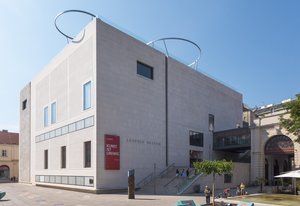
Leopold Museum, VienaLeopold Museum Viena 6 The Rax, Inlaid Eisler-Terramare Armoire, Venus in the Grotto
Secession, VienaSecession Viena 2 Dansul Vrindelor Înfloritoare
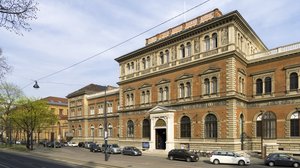
MAK – Muzeul de Artă Aplicată din Viena, VienaMAK – Muzeul de Artă Aplicată din Viena Viena 2 Decorative Fabric [“Bird Bülow”]
Muzeul Kunsthistorisches din Viena, VienaMuzeul Kunsthistorisches din Viena Viena 1 Self Portrait in Colonial Dress
Harvard Art Museums, CambridgeHarvard Art Museums Cambridge 1 ‘Surface Decoration,’ Cover
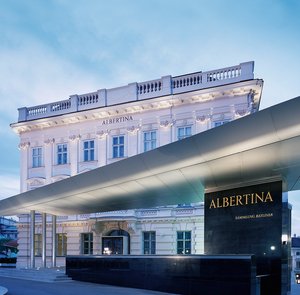
Albertina, VienaAlbertina Viena 1 Loïe Fuller in the Dance
Los Angeles County Museum of Art, Los AngelesLos Angeles County Museum of Art Los Angeles 1 'The Rich Catch of Fish' Armchair

Koloman Moser de-a lungul deceniilor: o piesă unică pentru fiecare

Lucrări pe deceniu

Alege o deceniu pentru a descoperi opera originală care îl definește.

Picturile lui Koloman Moser: întrebări pentru galerie

Care este cea mai celebră operă a lui Koloman Moser?Află răspunsul

Dansul Vrindelor Înfloritoare (1898), Secession, Viena. Urmează Poster of the Beethoven sonatas evening (1908) și Drafts for the exlibris for Fritz Waerndorfer (1903).

La ce vârstă a creat Koloman Moser Dansul Vrindelor Înfloritoare?Află răspunsul

30 ani: Dansul Vrindelor Înfloritoare datează din 1898, iar Koloman Moser s-a născut în 1868.

Care sunt cele mai celebre zece picturi ale lui Koloman Moser?Află răspunsul

Dansul Vrindelor Înfloritoare, Poster of the Beethoven sonatas evening, Drafts for the exlibris for Fritz Waerndorfer, Semmering Landscape, Loneliness, Figure study of Tristan, Poster for 'Prince Richard Metternich', Self Portrait in Colonial Dress, Sketch for a poster of the Vienna Workshop și Am Steinhof Church, Design for the rise window. Clasamentul de mai sus indică anul și muzeul pentru fiecare piesă.

Câte lucrări ale lui Koloman Moser sunt cunoscute?Află răspunsul

Catalogul nostru cuprinde 189 lucrări ale lui Koloman Moser, datate între 1888 și 1917.

Unde pot fi vizualizate originalele celor mai faimoși Koloman Moser?Află răspunsul

În principal în Leopold Museum (Viena), Secession (Viena) și MAK – Muzeul de Artă Aplicată din Viena (Viena). Tabelul cu muzee de mai sus le enumeră pe toate.

În ce perioadă a creat Koloman Moser cele mai cunoscute picturi?Află răspunsul

În 1900s: 47 dintre cele 100 lucrări de pe această pagină au fost realizate atunci, fiind Poster of the Beethoven sonatas evening dintre acestea.

Care este cea mai veche și care este cea mai recentă pictură a lui Koloman Moser?Află răspunsul

Pe această pagină, cea mai veche lucrare datează din Male Nude Study (1888), iar cea mai recentă este din Stamp Design for Emperor Charles I (not accepted) (1917).

Ce teme prefera Koloman Moser?Află răspunsul

Designs and sketches (14), Woman (13) și Man (11), din cele 100 lucrări de pe această pagină.

Cu ce materiale a pictat cel mai des Koloman Moser?Află răspunsul

Oil On Canvas, pentru 10 dintre cele 100 lucrări de pe această pagină.

Din ce curent artistic face parte opera lui Koloman Moser?Află răspunsul

Art nouveau, judecând după originalele de pe această pagină.

Ce originale de Koloman Moser pot vedea la Leopold Museum?Află răspunsul

The Rax, Inlaid Eisler-Terramare Armoire și Venus in the Grotto: Leopold Museum, Viena deține 5 dintre lucrările de pe această pagină.

Koloman Moser: un portret al artistului

Early Life and Artistic Roots

Koloman Moser, a name synonymous with Viennese Art Nouveau and the innovative spirit of the early 20th century, was born on March 30, 1868, in Vienna, Austria-Hungary – a city that would profoundly shape his artistic vision. His birthplace, nestled within the heart of the Habsburg Empire, provided him with an environment steeped in tradition yet simultaneously receptive to new ideas and influences. His family background played a crucial role in nurturing his nascent artistic sensibilities; his father, Josef Moser, was a respected administrator for the prestigious Theresianum, an aristocratic academy renowned for its diverse range of craft workshops – an exposure that undoubtedly ignited young Koloman’s fascination with materials, techniques, and the tangible beauty of creation. Secretly, he pursued drawing lessons, demonstrating a quiet determination to hone his skills outside the formal curriculum, foreshadowing the multifaceted nature of his future career. This early immersion in both academic rigor and hands-on craftsmanship would become a defining characteristic of his artistic approach.

A Multifaceted Career: Graphic Art, Fashion, and Architecture

Moser’s artistic journey transcended simple categorization, manifesting as a remarkable convergence of disciplines. He wasn't merely a painter; he was a designer, an architect, a craftsman, and a visionary. His impact on graphic art is particularly noteworthy – he designed postage stamps with striking geometric patterns, created elegant vignettes for magazines, and masterfully employed typography to convey both information and aesthetic appeal. Beyond the printed page, Moser’s talent extended into the realm of fashion, where his designs incorporated flowing lines and intricate details, reflecting the elegance of the Art Nouveau movement. He also contributed significantly to applied arts, designing stained glass windows for the Kirche am Steinhof (1904), porcelains, ceramics, blown glass, tableware, silver, and jewelry – a testament to his commitment to integrating art into everyday life. His architectural designs, most notably the apse mosaic and glass windows of the same church, stand as masterpieces of Art Nouveau architecture, seamlessly blending artistic vision with functional design principles. These works demonstrate his ability to create spaces that are both visually stunning and inherently practical.

The Wiener Werkstätte: A Collaborative Utopia

In 1903, Koloman Moser joined forces with Josef Hoffmann and Fritz Wärndorfer to establish the Wiener Werkstätte – a collaborative workshop dedicated to producing aesthetically pleasing household goods through the union of artists and craftsmen. This venture embodied the “Gesamtkunstwerk” (total work of art) philosophy, demanding that every element of an object—from its initial design to its final production—be meticulously considered. Moser’s involvement in the Wiener Werkstätte solidified his commitment to functional beauty and elevated the status of applied arts within Viennese society. The workshop became a crucible for innovation, pushing the boundaries of design and challenging conventional notions of craftsmanship.

Influences and Artistic Evolution

Moser's artistic development was shaped by a confluence of influential movements. Art Nouveau, with its emphasis on organic forms and flowing lines, provided a foundational aesthetic framework. He also drew inspiration from Symbolism, embracing evocative imagery and exploring the emotional depths of his subjects. Crucially, he found resonance in Japanese woodblock prints, which informed his use of flat planes of color, simplified forms, and a deliberate sense of restraint. Over time, his style evolved, becoming increasingly abstract and geometric while retaining an underlying elegance and refinement. His work reflected a constant dialogue between tradition and innovation, resulting in a uniquely Viennese aesthetic that continues to captivate audiences today.

Legacy and Enduring Influence

Koloman Moser’s legacy extends far beyond the confines of his lifetime. His designs were immortalized on the Austrian 100 Euro commemorative coin (2005), recognizing his enduring influence on art and design. He died in Vienna in 1918, leaving behind a substantial body of work that continues to inspire artists and designers worldwide. His contributions fundamentally shaped the course of modern art and design, emphasizing the importance of integrating beauty into everyday objects and spaces—a principle that remains profoundly relevant in our contemporary world.