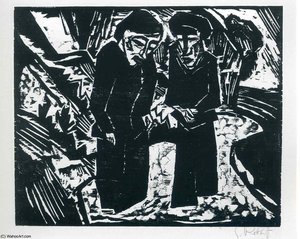
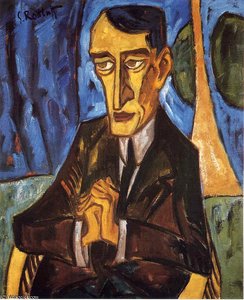
Portretul lui Karl Schmidt-Rottluff

Cele 68 cele mai faimoase picturi ale lui Karl Schmidt-Rottluff, o selecție de galerie

Actualizat Noiembrie 2026 · clasat în funcție de scorul nostru de popularitate (căutări, vizite și comenzi pentru fiecare operă) · 76 lucrări ale lui Karl Schmidt-Rottluff în catalogul nostru

Pe scurt

Dintre toate originalele lăsate de Karl Schmidt-Rottluff, cea mai faimoasă este Houses at Night. Imediat după acestea urmează Woman's Head (1921) și Self-Portrait with Monocle (1910). Catalogul nostru cuprinde 76 lucrări ale lui Karl Schmidt-Rottluff; galeria a păstrat cele 68 pe care lumea le admiră cel mai mult, fiecare fiind prezentată împreună cu data, muzeul și povestea sa.

1884 – 1976, Rottluff Expressionism Cele mai multe lucrări: Colecțiile Statale de Pictură din Bavaria

Cele mai importante 10 picturi ale lui Karl Schmidt-Rottluff: selecția galeriei

1
Houses at Night de Karl Schmidt-Rottluff

Houses at Night

Oil

In the heart of the early 20th century, amidst the rapid pulse of a transforming Europe, Karl Schmidt-Rottluff captured a moment of profound urban tension in his masterpiece, Houses at Night. This captivating oil painting serves as a quintessential window into the soul of German Expressionism, specifically through the lens of the Die Brücke movement. Rather than offering a literal or photographic depiction of a cityscape, Schmidt-Rottluff invites the viewer…

Selecția pentru Karl Schmidt-Rottluff continuă, de la 11 la 68

11Boathouse in Jershöft (1920) de Karl Schmidt-RottluffBoathouse in Jershöft1920 12Self-Portrait (1928) de Karl Schmidt-RottluffSelf-Portrait1928 · Colecțiile Statale de Pictură din Bavaria 13Still Life with African Bowl (1926) de Karl Schmidt-RottluffStill Life with African Bowl1926 14Harz Landscape (1923) de Karl Schmidt-RottluffHarz Landscape1923 15Self-Portrait before Easel (1928) de Karl Schmidt-RottluffSelf-Portrait before Easel1928 16Still Life with Aloe Pot (1929) de Karl Schmidt-RottluffStill Life with Aloe Pot1929 17Untitled (870) de Karl Schmidt-RottluffUntitled (870) 18Landscape by the Lake (1934) de Karl Schmidt-RottluffLandscape by the Lake1934 19Untitled (935) de Karl Schmidt-RottluffUntitled (935) 20Erich Heckel in Yellow Oil Jacket (1908) de Karl Schmidt-RottluffErich Heckel in Yellow Oil Jacket1908 21Blossoms (1907) de Karl Schmidt-RottluffBlossoms1907 22North German Children (1906) de Karl Schmidt-RottluffNorth German Children1906 23Park corner (Parkecke) (1910) de Karl Schmidt-RottluffPark corner (Parkecke)1910 · Colecțiile Statale de Pictură din Bavaria 24Cows on the dike (1910) de Karl Schmidt-RottluffCows on the dike1910 25Landscape in Fall (1910) de Karl Schmidt-RottluffLandscape in Fall1910 26The Reader (1911) de Karl Schmidt-RottluffThe Reader1911 27Untitled (790) de Karl Schmidt-RottluffUntitled (790) 28Untitled (443) de Karl Schmidt-RottluffUntitled (443) 29Untitled (533) de Karl Schmidt-RottluffUntitled (533) 30Untitled (663) de Karl Schmidt-RottluffUntitled (663) 31Untitled (685) de Karl Schmidt-RottluffUntitled (685) 32Primroses in Vase (1912) de Karl Schmidt-RottluffPrimroses in Vase1912 33Village by the Lake (1913) de Karl Schmidt-RottluffVillage by the Lake1913 34Woman with Bracelets (1912) de Karl Schmidt-RottluffWoman with Bracelets1912 35Pharisees (1912) de Karl Schmidt-RottluffPharisees1912 36Sick Boy (1915) de Karl Schmidt-RottluffSick Boy1915 37Landscape with Water Carrier (1919) de Karl Schmidt-RottluffLandscape with Water Carrier1919 · Colecțiile Statale de Pictură din Bavaria 38Double Portrait (1919) de Karl Schmidt-RottluffDouble Portrait1919 · Colecțiile Statale de Pictură din Bavaria 39Peasant Woman in the Stable (1922) de Karl Schmidt-RottluffPeasant Woman in the Stable1922 · Colecțiile Statale de Pictură din Bavaria 40Women by the Sea (1919) de Karl Schmidt-RottluffWomen by the Sea1919 41Barn (1922) de Karl Schmidt-RottluffBarn1922 42Woman and landscape (1920) de Karl Schmidt-RottluffWoman and landscape1920 · Colecțiile Statale de Pictură din Bavaria 43Interior (1920) de Karl Schmidt-RottluffInterior1920 · Colecțiile Statale de Pictură din Bavaria 44Talk of death (1920) de Karl Schmidt-RottluffTalk of death1920 · Colecțiile Statale de Pictură din Bavaria 45Still life with iris and gorse (1920) de Karl Schmidt-RottluffStill life with iris and gorse1920 · Staatliche Kunsthalle Karlsruhe 46Woman and Girl (1925) de Karl Schmidt-RottluffWoman and Girl1925 · Colecțiile Statale de Pictură din Bavaria 47Rain Clouds, Lago di Garda (1927) de Karl Schmidt-RottluffRain Clouds, Lago di Garda1927 · Detroit Institute of Arts 48Roman Still Life (1930) de Karl Schmidt-RottluffRoman Still Life1930 · Brücke Museum 49The White Staircase (1929) de Karl Schmidt-RottluffThe White Staircase1929 · Staatliche Kunsthalle Karlsruhe 50Lithuanian girl de Karl Schmidt-RottluffLithuanian girl 51Untitled (714) de Karl Schmidt-RottluffUntitled (714) 52Untitled (163) de Karl Schmidt-RottluffUntitled (163) 53Untitled (386) de Karl Schmidt-RottluffUntitled (386) 54Untitled (660) de Karl Schmidt-RottluffUntitled (660) 55Untitled (339) de Karl Schmidt-RottluffUntitled (339) 56Untitled (716) de Karl Schmidt-RottluffUntitled (716) 57Untitled (362) de Karl Schmidt-RottluffUntitled (362) 58Untitled (310) de Karl Schmidt-RottluffUntitled (310) 59Untitled (731) de Karl Schmidt-RottluffUntitled (731) 60Untitled (831) de Karl Schmidt-RottluffUntitled (831) 61Untitled (817) de Karl Schmidt-RottluffUntitled (817) 62Untitled (527) de Karl Schmidt-RottluffUntitled (527) 63Untitled (989) de Karl Schmidt-RottluffUntitled (989) 64Untitled (298) de Karl Schmidt-RottluffUntitled (298) 65Untitled (300) de Karl Schmidt-RottluffUntitled (300) 66Untitled (382) de Karl Schmidt-RottluffUntitled (382) 67Untitled (103) de Karl Schmidt-RottluffUntitled (103) 68Untitled (338) de Karl Schmidt-RottluffUntitled (338)

Subiectele care i-au captivat privirea lui Karl Schmidt-Rottluff

Cele patru teme care revin cel mai des în aceste opere originale, fiecare având cel mai sublim exemplu.

German art history 2 lucrări

Muzeele care păstrează originalele lui Karl Schmidt-Rottluff

Cele 5 muzee care dețin cele mai multe dintre picturile de pe această pagină.

Muzee Oraș Lucrări lui Karl Schmidt-Rottluff Picturi din această listă
Colecțiile Statale de Pictură din Bavaria, MunchenColecțiile Statale de Pictură din Bavaria Munchen 11 Resting Woman, Boats on the Beach, Self-Portrait
Staatliche Kunsthalle Karlsruhe, KarlsruheStaatliche Kunsthalle Karlsruhe Karlsruhe 2 Still life with iris and gorse, The White Staircase
Statens Museum For Kunst, CopenhagaStatens Museum For Kunst Copenhaga 1 Woman's Head
Detroit Institute of Arts, DetroitDetroit Institute of Arts Detroit 1 Rain Clouds, Lago di Garda
Brücke Museum, BerlinBrücke Museum Berlin 1 Roman Still Life

Karl Schmidt-Rottluff deceniu cu deceniu: originalul care definește fiecare

Lucrări pe deceniu

Alege o deceniu pentru a descoperi opera originală care îl definește.

Întrebări ale colecționarilor despre picturile lui Karl Schmidt-Rottluff

Pentru ce operă este cel mai cunoscut Karl Schmidt-Rottluff?Află răspunsul

Houses at Night. Urmează Woman's Head (1921) și Self-Portrait with Monocle (1910).

Care sunt cele mai celebre zece picturi ale lui Karl Schmidt-Rottluff?Află răspunsul

Houses at Night, Woman's Head, Self-Portrait with Monocle, After the Rain, Landscape with Fields, Resting Woman, Boats on the Beach, Still Life with Pitcher and Mask, Melancholy și Lupines in Vase. Clasamentul de mai sus indică anul și muzeul pentru fiecare piesă.

Câte picturi a lăsat Karl Schmidt-Rottluff?Află răspunsul

Catalogul nostru cuprinde 76 lucrări ale lui Karl Schmidt-Rottluff, datate între 1906 și 1934.

În ce muzee sunt expuse capodoperele lui Karl Schmidt-Rottluff?Află răspunsul

În principal în Colecțiile Statale de Pictură din Bavaria (Munchen), Staatliche Kunsthalle Karlsruhe (Karlsruhe) și Statens Museum For Kunst (Copenhaga). Tabelul cu muzee de mai sus le enumeră pe toate.

În ce ani a pictat Karl Schmidt-Rottluff cele mai cunoscute opere?Află răspunsul

În 1910s: 18 dintre cele 68 lucrări de pe această pagină au fost realizate atunci, fiind Self-Portrait with Monocle dintre acestea.

Care sunt prima și ultima pictură originală celebră a lui Karl Schmidt-Rottluff?Află răspunsul

Pe această pagină, cea mai veche lucrare datează din North German Children (1906), iar cea mai recentă este din Landscape by the Lake (1934).

Ce subiecte a ales cel mai des Karl Schmidt-Rottluff?Află răspunsul

Geometric forms (2) și German art history (2), din cele 68 lucrări de pe această pagină.

Din ce mișcare artistică face parte Karl Schmidt-Rottluff?Află răspunsul

Expressionism, judecând după originalele de pe această pagină.

Ce lucrări ale lui Karl Schmidt-Rottluff sunt expuse la Colecțiile Statale de Pictură din Bavaria?Află răspunsul

Resting Woman, Boats on the Beach și Self-Portrait: Colecțiile Statale de Pictură din Bavaria, Munchen deține 11 dintre lucrările de pe această pagină.

Karl Schmidt-Rottluff: viață și operă

A Pioneer of Expressionist Emotion: The Life and Art of Karl Schmidt-Rottluff

Karl Schmidt-Rottluff, born Karl Schmidt in 1884 in the small German town of Rottenflut (later Rottluff), stands as a monumental figure in the tumultuous world of early 20th-century art. His adoption of “Schmidt-Rottluff” in 1906 was more than a simple name change; it was an assertion of identity, a grounding in the very landscape that would so profoundly influence his artistic vision. He wasn’t merely painting what he saw, but translating the raw emotional resonance of the world around him onto canvas and into woodcuts with unparalleled intensity. Initially drawn to architecture at the Technical University of Dresden, Schmidt-Rottluff quickly found himself captivated by a more urgent calling – one that resonated with fellow students Ernst Ludwig Kirchner, Fritz Bleyl, and Erich Heckel. This shared artistic fervor ignited the formation of *Die Brücke* (“The Bridge”) in 1905, a collective destined to shatter conventions and forge a new path for modern art. The group’s name itself spoke volumes: a desire to bridge the gap between tradition and innovation, between academic constraints and the untamed expression of inner experience.

Forging a New Visual Language with *Die Brücke*

The early years of *Die Brücke* were characterized by a relentless pursuit of authenticity. Rejecting the polished surfaces and idealized forms of prevailing artistic norms, Schmidt-Rottluff and his colleagues sought to capture the immediacy of feeling, the visceral energy of modern life. Influences from Art Nouveau and Neo-Impressionism initially played a role, but these were quickly subsumed by a more radical aesthetic. Schmidt-Rottluff’s early work balanced composition with simple forms and flat color areas, a deliberate move away from illusionistic depth. He wasn't interested in replicating reality; he wanted to distill it down to its emotional essence. This period saw him experimenting with bold colors and dynamic compositions, laying the groundwork for his signature style. However, what truly set Schmidt-Rottluff apart was his masterful revival of the woodcut as a vital artistic medium. He produced over 300 woodcuts throughout his career, each one characterized by its stark contrasts, bold lines, and powerful graphic impact. The very process of carving into wood – a direct, physical engagement with the material – seemed to mirror the artist’s own struggle to excavate raw emotion from within. His summers spent on the coast at Dangast, beginning in 1907, proved particularly fruitful, inspiring a series of landscapes that captured the wild beauty and untamed spirit of the sea.

Evolution and Adversity: A Life Marked by Change

The dissolution of *Die Brücke* in 1913 marked a turning point for Schmidt-Rottluff. While the collective’s energy had been undeniably potent, its members were increasingly drawn to individual paths. His artistic journey continued to evolve, becoming more focused on draughtsmanship with dark, contrasting lines between shapes rather than juxtaposing colors. The outbreak of World War I interrupted his creative momentum, forcing him into military service on the Eastern Front. Though deeply affected by the horrors he witnessed, these experiences didn’t directly translate into explicit war imagery; instead, they seemed to deepen his existing preoccupation with existential themes and the fragility of human existence. The post-war years brought a period of recognition and acclaim, but this was tragically short-lived. The rise of Nazism cast a dark shadow over Schmidt-Rottluff’s career. His work was branded “degenerate art,” he was expelled from artistic organizations, and his paintings were removed from public view. This persecution represented not only a personal blow but also a chilling indictment of the regime's intolerance towards artistic freedom. Despite these hardships, Schmidt-Rottluff persevered, continuing to create in secret during the war years.

Key Characteristics of Schmidt-Rottluff’s Style

  • Bold Lines & Stark Contrasts: Particularly evident in his woodcuts, these elements create a sense of immediacy and emotional intensity.
  • Simplified Forms: He moved away from representational accuracy towards more abstracted shapes that conveyed feeling rather than detail.
  • Emotional Intensity: His work is characterized by a raw, visceral quality that reflects his deep engagement with the human condition.
  • Landscape Focus: Throughout his career, he remained committed to depicting landscapes, often imbued with a sense of melancholy and isolation.
  • Woodcut Mastery: He revitalized the woodcut technique, using it to create powerful and expressive images.

Legacy and Enduring Influence

The aftermath of World War II saw a resurgence of interest in Schmidt-Rottluff’s work, and his reputation was gradually restored. He was appointed professor at the University of Arts in Berlin-Charlottenburg in 1947, where he mentored a new generation of artists, imparting his knowledge and passion for expressive art. His commitment to artistic innovation extended beyond his own practice; through an endowment established in 1964, he laid the foundation for the Brücke Museum in West Berlin, ensuring that the legacy of *Die Brücke* would endure for generations to come. Karl Schmidt-Rottluff died in Berlin in 1976, leaving behind a vast and compelling body of work that continues to resonate with audiences today. His paintings, woodcuts, lithographs, and etchings are held in major museums worldwide, including the Museum of Modern Art (New York), the Neue Galerie (New York), and the Los Angeles County Museum of Art. His contribution to Expressionism is undeniable, a testament to his unwavering commitment to artistic integrity and his profound ability to capture the complexities of the human condition. He remains a pivotal figure, not just in German art history, but in the broader narrative of modern art itself – a bridge between tradition and innovation, emotion and intellect, darkness and light.