


1


Actualizat Noiembrie 2026 · clasat în funcție de scorul nostru de popularitate (căutări, vizite și comenzi pentru fiecare operă) · 15 lucrări ale lui Joseph Lindon Smith în catalogul nostru
Pe scurt
Table d'Hote (1886) este pictura lui Joseph Lindon Smith care atrage cele mai multe priviri; originalul aparține Isabella Stewart Gardner Museum, Boston. După aceasta, privirea se îndreaptă către Head of a Putti (1894) și Gaston de Foix (1894). Dintre cele 15 opere ale lui Joseph Lindon Smith din catalogul nostru, acestea 13 sunt cele mai celebre, fiecare fiind o piesă unică, prezentată împreună cu anul creării, muzeul deținător și motivul pentru care aceasta rămâne memorabilă.


Cele 3 muzee care dețin cele mai multe dintre picturile de pe această pagină.
| Muzee | Oraș | Lucrări lui Joseph Lindon Smith | Picturi din această listă |
|---|---|---|---|
 Harvard Art Museums |
Cambridge | 6 | Egyptian Relief - Incised Head, Abu Simbel, Concarneau, France |
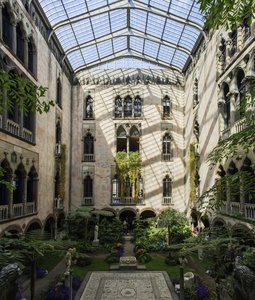 Isabella Stewart Gardner Museum |
Boston | 5 | Table d'Hote, Head of a Putti, Gaston de Foix |
 Rhode Island School of Design Museum of Art |
Providence | 2 | Wall relief from Tomb of Sibtah, Valley of the Kings, Luxor, Egypt, Karnak |
Alege o deceniu pentru a descoperi opera originală care îl definește.
Table d'Hote (1886), Isabella Stewart Gardner Museum, Boston. Urmează Head of a Putti (1894) și Gaston de Foix (1894).
23 ani: Table d'Hote datează din 1886, iar Joseph Lindon Smith s-a născut în 1863.
Table d'Hote, Head of a Putti, Gaston de Foix, Egyptian Relief - Incised Head, Abu Simbel, Wall relief from Tomb of Sibtah, Valley of the Kings, Luxor, Egypt, Concarneau, France, Cabbages, Cappucini Amalfi Monastery și Karnak. Clasamentul de mai sus indică anul și muzeul pentru fiecare piesă.
Catalogul nostru cuprinde 15 lucrări ale lui Joseph Lindon Smith, datate între 1884 și 1910.
În principal în Harvard Art Museums (Cambridge), Isabella Stewart Gardner Museum (Boston) și Rhode Island School of Design Museum of Art (Providence). Tabelul cu muzee de mai sus le enumeră pe toate.
În 1880s: 4 dintre cele 13 lucrări de pe această pagină au fost realizate atunci, fiind Table d'Hote dintre acestea.
Pe această pagină, cea mai veche lucrare datează din Concarneau, France (1884), iar cea mai recentă este din Wall relief from Tomb of Sibtah, Valley of the Kings, Luxor, Egypt (1910).
Egyptian Relief - Incised Head, Abu Simbel și Concarneau, France: Harvard Art Museums, Cambridge deține 6 dintre lucrările de pe această pagină.
In the golden age of archaeological discovery, few artists possessed the singular ability to bridge the gap between the modern canvas and the ancient dust of antiquity as gracefully as Joseph Lindon Smith. Born in Pawtucket, Rhode Island, on October 11, 1863, Smith was a man whose imagination was never tethered to a single era or geography. While his roots were firmly planted in New England, his spirit wandered through the corridors of time, seeking to capture the fading echoes of lost civilizations. His journey began with formal training at the School of the Museum of Fine Arts in Boston, but it was his departure for Paris in 1883 that truly ignited his artistic soul. Alongside his lifelong friend and fellow painter Frank Weston Benson, Smith immersed himself in the rigorous atmosphere of the Académie Julian. Under the watchful eyes of masters like William-Adolphe Bouguereau and Jules Joseph Lefebvre, he mastered the technical precision that would later become his hallmark—a skill that allowed him to transform a simple study into a breathtakingly lifelike representation of history.
The essence of Smith’s artistry lay in his extraordinary capacity for mimicry and meticulous observation. He was not merely a painter of scenes, but an interpreter of textures; he could translate the weathered grain of Egyptian tomb reliefs and the vibrant, yet aged, pigments of ancient murals onto canvas with startling fidelity. This talent was most profoundly realized during his many winters spent in Egypt. Alongside his wife, the scholar and activist Corinna Lindon Smith, Joseph traversed archaeological sites such as Thebes and Karnak. His work became a vital visual record of Egyptian antiquity, capturing the delicate beauty of temple reliefs and tomb paintings with an accuracy that served both art and science. To look upon a Smith painting is to feel the weight of centuries, as he breathed life back into the silent stone of the Pharaohs through his masterful use of light and color.
Beyond the sun-drenched ruins of Egypt, Smith’s life was deeply intertwined with the cultural fabric of the American landscape. He was a founding pillar of the renowned art colony at Dublin, New Hampshire, a place where the boundaries between fine art, theater, and social intellectualism blurred beautifully. In the lush summers of New England, Smith and his wife hosted vibrant gatherings that drew luminaries such as Mark Twain and John Singer Sargent. His creative energy was not confined to the easel; he possessed a theatrical flair that led him to devise, stage, and act in elaborate historical pageants, effectively bringing the past to life for his community through performance. This multifaceted approach to art—treating history as something to be lived, performed, and meticulously documented—defined his unique contribution to the American art movement.
The significance of Joseph Lindon Smith extends far beyond the aesthetic pleasure of his paintings. He stands as a monumental figure at the intersection of art and archaeology, providing a window into the ancient world that remains as clear today as it was during his lifetime. His ability to blend the technical rigor of the French academic tradition with a profound, almost spiritual, reverence for global heritage created a body of work that is both historically invaluable and emotionally resonant. Through his eyes, we do not just see the ruins of the past; we witness their enduring majesty, preserved forever in the delicate strokes of an artist who refused to let time erase the beauty of human achievement.


