
José Clemente Orozco - A Life Forged in Revolution: The World of José Clemente Orozco
José Clemente Orozco, born November 23, 1883, in the small town of Zapotlán el Grande (now Ciudad Guzmán), Jalisco, Mexico, stands as a monumental figure in the pantheon of Mexican muralists. His life was inextricably linked to the tumultuous currents of his nation’s history—a period defined by revolution, social upheaval, and a fervent search for national identity. Orozco wasn't merely a painter; he was a visual chronicler of Mexico’s soul, translating its struggles, hopes, and contradictions onto vast canvases that continue to resonate with power today. From an early age, the vibrant yet often harsh realities of Mexican life captivated him. His initial artistic awakening occurred during his school years in Mexico City, where he became enthralled by the work of José Guadalupe Posada, a master engraver whose satirical depictions of death and daily life challenged societal norms. This exposure instilled in Orozco a commitment to art as a vehicle for social commentary—a principle that would define his entire career. A youthful accident, losing his left hand at seventeen while experimenting with explosives, did not deter him; instead, it seemed to fuel an even greater determination to overcome adversity and express himself through artistic creation.Early Life & Artistic Formation
Orozco’s formative years were marked by a profound engagement with Mexican culture and folklore. He absorbed the spirit of Posada's engravings—a rebellious defiance of convention coupled with a deep empathy for the marginalized—and this influence would permeate his entire oeuvre. Recognizing the importance of formal training, he enrolled at the Academy of San Carlos in 1906, where he encountered David Alfaro Siqueiros, another student who shared his passion for social realism and revolutionary ideals. This encounter proved pivotal, fostering a collaborative spirit that would characterize their artistic partnership throughout their careers. Despite facing significant obstacles—including the devastating loss of his left hand—Orozco persevered with unwavering dedication, demonstrating an extraordinary resilience and transforming physical impairment into a catalyst for creative innovation. His decision to abandon architectural studies in favor of painting was driven by a conviction that art offered a more potent means of addressing social injustices and shaping national consciousness.The Birth of Mexican Muralism & Orozco’s Distinct Voice
The eruption of the Mexican Revolution (1910-1920) unleashed an unprecedented surge of artistic expression across Mexico, fueled by aspirations to forge a uniquely Mexican aesthetic—one that honored indigenous heritage and confronted the nation's pressing challenges. Alongside Diego Rivera and Siqueiros, Orozco emerged as one of the “big three” muralists who spearheaded this movement, establishing a new paradigm for art practice as a tool for social transformation. Unlike Rivera’s optimistic portrayal of Mexico’s past and future, or Siqueiros’ dynamic celebration of revolutionary fervor, Orozco adopted a darker, more introspective approach—one that interrogated the psychological complexities of human experience and confronted the brutal realities of conflict. He rejected simplistic narratives in favor of allegorical representations that demanded careful contemplation, reflecting his profound understanding of symbolism and its capacity to convey nuanced meanings. His distinctive style—characterized by monumental scale, earthy palettes, and fragmented figures—became instantly recognizable and profoundly influential.Technique & Symbolism: A Language of Walls
Orozco’s mastery lay not only in his ability to capture emotional intensity but also in his groundbreaking utilization of fresco technique—a method that involved applying pigment directly onto wet plaster, resulting in durable murals capable of enduring for centuries. He meticulously studied the works of European masters like Gustave Moreau and Edvard Munch, absorbing their expressive techniques and exploring the psychological dimensions of art. His artistic vision was informed by a deep engagement with philosophical ideas—particularly those championed by Nietzsche—who questioned traditional morality and celebrated the affirmation of life in its totality. Recurring motifs—such as machines, skulls, and fragmented human figures—served as potent symbols within his murals, conveying themes of dehumanization, mortality, and psychological turmoil. These images weren’t merely decorative; they functioned as conduits for profound philosophical meditations on the human condition.Legacy & Enduring Impact
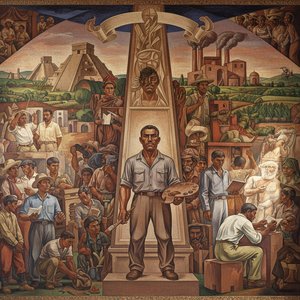
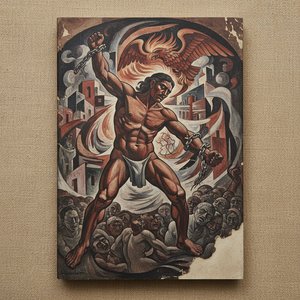
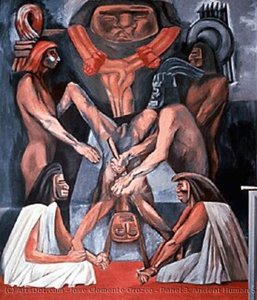
José Clemente Orozco's influence extends far beyond the confines of Mexico. His monumental murals—including *Omnisciencia*, *The Poor*, *Cortés & La Malinche*, and *Mexican Soldiers*—remain among the most iconic representations of Mexican history and culture, inspiring artists worldwide. He championed social realism as a means to confront societal injustices and elevate the artistic consciousness of his time. The Museo de las Artes Universidad Guadalajara houses a workshop-museum dedicated to preserving Orozco’s legacy—a testament to his unwavering commitment to artistic innovation and intellectual rigor. Artists like Gustavo Arias Murueta and Óscar Salas Moya acknowledge Orozco's profound impact on their own creative endeavors, demonstrating the enduring resonance of his vision. His work continues to provoke contemplation and inspire dialogue about fundamental questions concerning human existence—solidifying his place as one of Mexico’s most celebrated artistic figures.Întrebări și răspunsuri
Pot să vizualizez lucrările lui José Clemente Orozco în funcție de tehnică?
Pagina Toate mediile grupează operele lui José Clemente Orozco pe tehnici.
Există o cronologie a operelor lui José Clemente Orozco?
Pagina Cronologia operelor de artă a artistului prezintă lucrările lui José Clemente Orozco ordonate cronologic, an de an.
Pot explora operele lui José Clemente Orozco pe teme?
Operele lui José Clemente Orozco pot fi explorate pe temă pe pagina Atlas pe subiecte a artistului.






![Mexican Landscape \n[paisaije Mexicano] — José Clemente Orozco](/media/artworks/images-thumb/1b/4f/1b4fb08c1150706f7451e9f7b5673180.jpg)


