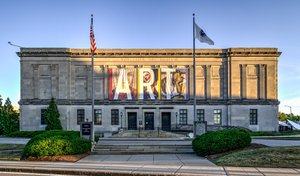
Portretul lui John Ritto Penniman

Picturi John Ritto Penniman: Cele 9 de cele mai faimoase, prin ochii unei galerii

Actualizat Noiembrie 2026 · clasat în funcție de scorul nostru de popularitate (căutări, vizite și comenzi pentru fiecare operă) · 11 lucrări ale lui John Ritto Penniman în catalogul nostru

Pe scurt

În ochii galeriei, cea mai celebră pictură a lui John Ritto Penniman este Portrait of a Man (1804), a cărei originală este expusă la Worcester Art Museum, Worcester. Family Group (1798) și Profile Portrait of Edward Tuckerman (1823) completează trioul pe care orice ochi îl recunoaște. Dintre cele 11 opere ale lui John Ritto Penniman din catalogul nostru, galeria prezintă mai jos cele 9 cele mai faimoase, fiecare fiind originală, cu anul creării, muzeul de păstrare și elementul care o face unică.

1782 – 1841, Worcester County Cele mai multe lucrări: Smithsonian American Art Museum

Cele mai apreciate 10 picturi ale lui John Ritto Penniman din galerie

1
Portrait of a Man (1804) de John Ritto Penniman

Portrait of a Man

1804 · Oil · Worcester Art Museum, Worcester

The man sits in a quiet, three-quarter view, his presence emerging from a dark, rectangular void. He gazes slightly toward the viewer, his expression neutral and composed, as if caught in a moment of private reflection. A soft light descends from the upper left, carving the contours of his face and casting gentle shadows that give his features a palpable, three-dimensional weight. His skin appears pale and smooth, contrasted sharply…

2
Family Group (1798) de John Ritto Penniman

Family Group

1798 · Oil On Canvas · Muzeul de Artă Plastică din Boston, Boston

In this 1798 portrait, we find ourselves observing a family gathered within a lush, shadowed landscape. The composition is anchored by a seated man whose red coat provides a singular point of warmth against the darker, organic textures of the foliage behind him. Around him, the figures of a woman, two children, and an older relative are arranged with a poised, formal grace. A small dog rests near the group,…

3
Profile Portrait of Edward Tuckerman (1823) de John Ritto Penniman

Profile Portrait of Edward Tuckerman

1823 · Oil · Worcester Art Museum, Worcester

Profile Portrait of Edward Tuckerman by John Ritto Penniman presents a formal and dignified profile of an older gentleman. The subject is positioned in a strict profile view, centered within an oval trompe l'oeil frame. This framing device creates a sense of depth, making the sitter appear as if he is peering through a window from a dark, featureless void. The composition relies on high contrast between the subject and…

4
Meetinghouse Hill, Roxbury, Massachusetts (1799) de John Ritto Penniman

Meetinghouse Hill, Roxbury, Massachusetts

1799 · Oil On Canvas · Art Institute of Chicago, Chicago

An elevated panoramic view captures the rolling topography of Meetinghouse Hill, revealing the structured layout of a colonial-era settlement. The composition utilizes a high horizon line to organize the landscape into receding planes, where the undulating green pastures meet a vast, expansive sky. White fences create rhythmic, geometric lines that guide the eye through the midground, tracing the contours of the hills and the boundaries of the land. The architectural…

5
(Scene from Don Quixote) (1816) de John Ritto Penniman

(Scene from Don Quixote)

1816 · Oil · Smithsonian American Art Museum, Washington, D.C.

A woman in a yellow dress occupies the center of the frame, her gaze fixed upon the viewer with an expression of sudden fear. Her hair falls in loose, dark curls against a white collar. Behind her, the air is thick with the urgency of a rescue. Two men move through the scene, their bodies angled toward a struggle or a descent. One man grips a rope ladder, while another…

6
Henry Nolen (1830) de John Ritto Penniman

Henry Nolen

1830 · Oil

This portrait of Henry Nolen, painted by John Ritto Penniman around 1830, captures a man defined by the precision of his craft. Nolen was the ninth child born to Thomas Nolen and Elizabeth Blaney Nolen. He was a trained decorative painter from Roxbury, Massachusetts, a trade that required a steady hand and a keen eye for the fine lines of ornamentation.

7
Elizabeth Bartlett Nolen (1825) de John Ritto Penniman

Elizabeth Bartlett Nolen

1825 · Oil

A woman gazes from the shadows, her expression fixed in an intense, unyielding stare. She wears a white cap adorned with pink ribbons, a detail that catches the light against the dark, indeterminate background. Her hair is pulled back into a neat bun, revealing the contours of her face and the subtle glint of earrings and a necklace. The composition focuses entirely on the subject, using a high-contrast environment to…

8
Classical Landscape (1826) de John Ritto Penniman

Classical Landscape

1826 · Smithsonian American Art Museum, Washington, D.C.

The scene before us is Classical Landscape, a work that emerges from the brush of John Ritto Penniman. Created between 1822 and 1826, this oil on wood piece captures a moment of quietude within the natural world. The artist, who began his life in Milford, Massachusetts, United States, brings a specific sense of place and purpose to this composition. Every stroke seems to hold the breath of the era in…

9
Christ Tempted by the Devil (1818) de John Ritto Penniman

Christ Tempted by the Devil

1818 · Smithsonian American Art Museum, Washington, D.C.

The painting Christ Tempted by the Devil by John Ritto Penniman is a remarkable work of art that showcases the artist's skill in capturing the intensity of a dramatic scene. Created in 1818, this oil on wood piece measures 81 x 60 cm and is currently housed at the Smithsonian American Art Museum. The Artist and His Work John Ritto Penniman was a painter in Boston, Massachusetts, United States. He…

Piesele celebre ale lui John Ritto Penniman, perioadă cu perioadă

Subiectele care i-au captivat privirea lui John Ritto Penniman

Cele patru teme care revin cel mai des în aceste opere originale, fiecare având cel mai sublim exemplu.

Muzeele care păstrează originalele lui John Ritto Penniman

Cele 4 muzee care dețin cele mai multe dintre picturile de pe această pagină.

Muzee Oraș Lucrări lui John Ritto Penniman Picturi din această listă
Smithsonian American Art Museum, Washington, D.C.Smithsonian American Art Museum Washington, D.C. 3 (Scene from Don Quixote), Classical Landscape, Christ Tempted by the Devil
Worcester Art Museum, WorcesterWorcester Art Museum Worcester 2 Portrait of a Man, Profile Portrait of Edward Tuckerman
Muzeul de Artă Plastică din Boston, BostonMuzeul de Artă Plastică din Boston Boston 1 Family Group
Art Institute of Chicago, ChicagoArt Institute of Chicago Chicago 1 Meetinghouse Hill, Roxbury, Massachusetts

John Ritto Penniman, o pictură emblematică pe deceniu

Lucrări pe deceniu

Alege o deceniu pentru a descoperi opera originală care îl definește.

Picturile lui John Ritto Penniman: răspunsurile galeriei

Care este cea mai celebră pictură a lui John Ritto Penniman?Află răspunsul

Portrait of a Man (1804), Worcester Art Museum, Worcester. Urmează Family Group (1798) și Profile Portrait of Edward Tuckerman (1823).

Ce vârstă avea John Ritto Penniman când a finalizat Portrait of a Man?Află răspunsul

22 ani: Portrait of a Man datează din 1804, iar John Ritto Penniman s-a născut în 1782.

Câte lucrări a creat John Ritto Penniman?Află răspunsul

Catalogul nostru cuprinde 11 lucrări ale lui John Ritto Penniman, datate între 1798 și 1830.

Unde sunt expuse cele mai celebrele opere originale ale lui John Ritto Penniman?Află răspunsul

În principal în Smithsonian American Art Museum (Washington, D.C.), Worcester Art Museum (Worcester) și Muzeul de Artă Plastică din Boston (Boston). Tabelul cu muzee de mai sus le enumeră pe toate.

Când a creat John Ritto Penniman cele mai faimoase picturi?Află răspunsul

În 1820s: 3 dintre cele 9 lucrări de pe această pagină au fost realizate atunci, fiind Profile Portrait of Edward Tuckerman dintre acestea.

Care sunt cele mai vechi și cele mai recente opere celebre ale lui John Ritto Penniman?Află răspunsul

Pe această pagină, cea mai veche lucrare datează din Family Group (1798), iar cea mai recentă este din Henry Nolen (1830).

La ce subiecte s-a întors cel mai des John Ritto Penniman?Află răspunsul

Man (4), Woman (3) și Trees (3), din cele 9 lucrări de pe această pagină.

În ce tehnică a lucrat cel mai mult John Ritto Penniman?Află răspunsul

Oil, pentru 5 dintre cele 9 lucrări de pe această pagină.

Ce opere originale ale lui John Ritto Penniman deține Smithsonian American Art Museum?Află răspunsul

(Scene from Don Quixote), Classical Landscape și Christ Tempted by the Devil: Smithsonian American Art Museum, Washington, D.C. deține 3 dintre lucrările de pe această pagină.

John Ritto Penniman: artistul

A Bostonian Ingenuity: The Life and Art of John Ritto Penniman

John Ritto Penniman, a name perhaps less celebrated than his mentor Gilbert Stuart, nevertheless occupies a fascinating niche in the annals of early American art. Born around 1782 in Milford, Massachusetts, Penniman’s life unfolded against the backdrop of a burgeoning nation striving to define its own artistic identity. He wasn't merely a painter; he was an embodiment of the resourceful spirit of the Federal era—a decorative artist, portraitist, engraver, and even a designer of civic symbols. His career, though marked by periods of both success and personal turmoil, reveals a remarkable versatility and a keen eye for detail that distinguished him within the Boston art scene. Penniman’s early training began at the tender age of eleven as an ornamental painter in Roxbury, Massachusetts—a foundation that instilled in him a meticulous approach to craftsmanship and a love for embellishment. By his twenty-first year, he had established his own shop in Boston, quickly gaining recognition for his ability to transform everyday objects into works of art. He painted clock faces, signs, furniture, and other decorative elements, catering to the growing demand for refined aesthetics among the city’s burgeoning middle class.

The Stuart Connection and Early Commissions

Penniman's trajectory took a pivotal turn when he befriended Gilbert Stuart, the renowned portraitist who had recently arrived in Boston. He spent considerable time in Stuart’s studio, absorbing his techniques and benefiting from his guidance. This association proved invaluable, not only refining Penniman’s skills but also introducing him to a network of influential patrons. While working as an assistant to Stuart, he gained practical experience in portraiture, though his own style would ultimately diverge from the more formal grandeur favored by his mentor. The early years of Penniman's independent practice were characterized by a diverse range of commissions. He painted portraits that captured the likenesses of Boston’s prominent citizens, landscapes reflecting the natural beauty of New England, and allegorical paintings imbued with symbolic meaning. However, it was his designs for engravings—most notably the official seal of the City of Boston in 1822—that brought him widespread recognition. This iconic emblem, a testament to Penniman's artistic skill and civic pride, remains a lasting symbol of the city’s identity.

A Versatile Talent: From Portraits to Allegories

Penniman’s versatility was perhaps his most defining characteristic. He seamlessly transitioned between different genres, demonstrating an exceptional command of technique and composition in each. His portraits, while not as psychologically penetrating as those of Stuart, possessed a charming simplicity and a keen attention to detail. He captured the essence of his sitters with a delicate brushstroke and a subtle use of color. Landscapes were rendered with a romantic sensibility, evoking the tranquility and majesty of the New England countryside. But it was in his allegorical paintings that Penniman truly showcased his imaginative flair. These works, often commissioned for public buildings or private residences, were rich in symbolism and narrative detail, reflecting the prevailing intellectual currents of the era. He drew inspiration from classical mythology, literature, and history, creating visually compelling compositions that conveyed complex ideas and moral lessons.

Challenges and Legacy

Despite his artistic talent and growing reputation, Penniman’s life was not without its challenges. A penchant for indulgence—particularly in wine—led to financial difficulties and professional setbacks. In 1827, he was forced to sell all of his paintings to settle debts, a devastating blow that marked a turning point in his career. The remaining years were marred by legal troubles and personal hardship, culminating in his death in Baltimore in 1841. Despite these struggles, Penniman’s legacy endures through the surviving examples of his work. His paintings offer a glimpse into the lives and values of early America, while his designs for engravings continue to adorn public spaces and private collections. He represents a fascinating figure—a talented artist whose life was shaped by both creative brilliance and personal demons.
  • Major Works: Official Seal of the City of Boston (1822), numerous portraits, landscapes, and allegorical paintings.
  • Influences: Gilbert Stuart, Thomas Sheraton, classical mythology, and literature.
  • Historical Significance: Penniman’s work reflects the artistic tastes and cultural values of early America. His designs for engravings—particularly the City of Boston seal—remain iconic symbols of civic identity.