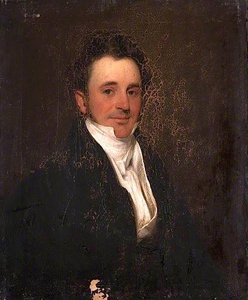
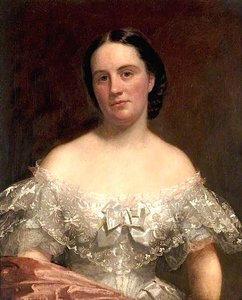
Portretul lui John Graham-Gilbert

Cele 100 cele mai faimoase picturi ale lui John Graham-Gilbert, o selecție de galerie

Actualizat Noiembrie 2026 · clasat în funcție de scorul nostru de popularitate (căutări, vizite și comenzi pentru fiecare operă) · 140 lucrări ale lui John Graham-Gilbert în catalogul nostru

Pe scurt

Dintre toate originalele lăsate de John Graham-Gilbert, cea mai faimoasă este James Watt (1736–1819) (1819). Imediat după acestea urmează Professor George Jardine (1742–1827) (after Henry Raeburn) (1827) și John T. Alston (1780–1857), Provost of Glasgow (1820–1821) (1832). Catalogul nostru cuprinde 140 lucrări ale lui John Graham-Gilbert; galeria a păstrat cele 100 pe care lumea le admiră cel mai mult, fiecare fiind prezentată împreună cu data, muzeul și povestea sa.

1794 – 1866, Glasgow Neoclassicism Cele mai multe lucrări: The Dick Institute

Cele mai importante 10 picturi ale lui John Graham-Gilbert: selecția galeriei

1
James Watt (1736–1819) (1819) de John Graham-Gilbert

James Watt (1736–1819)

1819 · Oil On Canvas

A single light source strikes the brow of James Watt, casting the rest of the world into a heavy, velvet darkness. He sits in a quiet stillness, his gaze fixed forward as if looking through the viewer toward a horizon of steam and iron. The white of his hair catches the light, a stark contrast against the deep shadows that define the contours of his face. There is a gravity…

2
Professor George Jardine (1742–1827) (after Henry Raeburn) (1827) de John Graham-Gilbert

Professor George Jardine (1742–1827) (after Henry Raeburn)

1827 · Oil On Canvas

The shadows cling to the edges of the frame, leaving only the face and upper torso of Professor George Jardine to emerge from the darkness. He gazes directly at us, his expression heavy with a quiet, intellectual authority that seems to command the very air around him. There is a stillness here, a moment frozen in 1827, where the weight of a lifetime of thought is etched into the lines…

3
John T. Alston (1780–1857), Provost of Glasgow (1820–1821) (1832) de John Graham-Gilbert

John T. Alston (1780–1857), Provost of Glasgow (1820–1821)

1832 · Oil On Canvas

The portrait presents a formal study of John Thomas Alston, a man whose posture and expression command the space of the canvas. He is depicted in a moment of quiet gravity, his presence defined by the heavy, dark tones of his attire and the deliberate arrangement of his hands. The lighting is directional, carving his features out of a deep, shadowed background and emphasizing the textures of his skin and…

4
Mrs Hugh Robertson of Gartloch (1798–1846) (1841) de John Graham-Gilbert

Mrs Hugh Robertson of Gartloch (1798–1846)

1841 · Oil On Canvas

The portrait depicts a woman seated in profile against a dark, indistinct background. She is positioned centrally, her form creating a pyramidal structure that directs the eye toward her head. The subject wears a burgundy velvet dress, the texture of which is rendered through meticulous brushwork that suggests the weight and softness of the fabric. A lace detail adorns the neckline, and a red feathered hat rests upon her head.…

5
Professor James Adair Lawrie; (1801-1859) (1855) de John Graham-Gilbert

Professor James Adair Lawrie; (1801-1859)

1855 · Oil On Canvas · The Hunterian Museum and Art Gallery, Glasgow

In this 1855 oil portrait, we encounter Professor James Adair Lawrie, a man whose presence commands a quiet, somber authority. He is presented in a three-quarter length view, seated with an upright posture that suggests a lifetime of academic discipline. The composition is intimate, placing the viewer at eye-level with the subject, creating a direct connection that feels almost private. There is a profound sense of weight to the figure,…

6
Mrs Agnes D'Arcy Jarvie (1866) de John Graham-Gilbert

Mrs Agnes D'Arcy Jarvie

1866 · Oil On Canvas

This portrait, titled Mrs Agnes D'Arcy Jarvie, was painted by John Graham Gilbert in 1866. The subject is depicted from the chest up in a seated position. She is positioned in the center of the frame, gazing directly at the viewer. The composition focuses on her face and upper body, set against a blurred background that suggests an interior environment.

Selecția pentru John Graham-Gilbert continuă, de la 11 la 100

11Self Portrait (copy of Joshua Reynolds) (1819) de John Graham-GilbertSelf Portrait (copy of Joshua Reynolds)1819 12James Irvine (1826) de John Graham-GilbertJames Irvine1826 13An Italian Nobleman (1830) de John Graham-GilbertAn Italian Nobleman1830 14James Dennistoun, Esq., of Golfhill (1829) de John Graham-GilbertJames Dennistoun, Esq., of Golfhill1829 15Joseph Hume, Political Economist (1823) de John Graham-GilbertJoseph Hume, Political Economist1823 16James Irvine (d.1831) (1826) de John Graham-GilbertJames Irvine (d.1831)1826 17William Murdoch (1754–1839) (1827) de John Graham-GilbertWilliam Murdoch (1754–1839)1827 · Birmingham Museum and Art Gallery 18William Dale (1794–1827) (1825) de John Graham-GilbertWilliam Dale (1794–1827)1825 19A Tyrolese Hunter (1826) de John Graham-GilbertA Tyrolese Hunter1826 20Joseph Hume (1777–1855), Political Economist (1823) de John Graham-GilbertJoseph Hume (1777–1855), Political Economist1823 · Galeria Națională a Scottei 21William Richardson (1743–1814), Professor of Humanity at the University of Glasgow (1773–1815) (1827) de John Graham-GilbertWilliam Richardson (1743–1814), Professor of Humanity at the University of Glasgow (1773–1815)1827 22An Italian Nobleman (1830) de John Graham-GilbertAn Italian Nobleman1830 · Royal Scottish Academy of Art - Architecture 23Saint Sebastian (1826) de John Graham-GilbertSaint Sebastian1826 24James Dennistoun, Esq., of Golfhill (1758–1835) (1829) de John Graham-GilbertJames Dennistoun, Esq., of Golfhill (1758–1835)1829 25Sir Walter Scott (1771–1832), Bt, FRSE (1829) de John Graham-GilbertSir Walter Scott (1771–1832), Bt, FRSE1829 · The Royal Society of Edinburgh 26Figure of a Lady (after Jacopo Palma il vecchio) (1825) de John Graham-GilbertFigure of a Lady (after Jacopo Palma il vecchio)1825 27The Martyrdom of Saint Justina (after Paolo Veronese) (1825) de John Graham-GilbertThe Martyrdom of Saint Justina (after Paolo Veronese)1825 28Reverend Stevenson MacGill (1765–1840), Professor of Divinity at the University of Glasgow (1834) de John Graham-GilbertReverend Stevenson MacGill (1765–1840), Professor of Divinity at the University of Glasgow1834 29James Hopkirk of Dalbeth (1835) de John Graham-GilbertJames Hopkirk of Dalbeth1835 30Thomas Graham (1805–1869), FRS (1837) de John Graham-GilbertThomas Graham (1805–1869), FRS1837 31Duncan MacFarlan (1771–1857), Principal of the University of Glasgow (1823–1857) (1839) de John Graham-GilbertDuncan MacFarlan (1771–1857), Principal of the University of Glasgow (1823–1857)1839 32John Gibson (1847) de John Graham-GilbertJohn Gibson1847 · Scottish National Gallery 33John Burns, Professor of Surgery at the University of Glasgow (1848) de John Graham-GilbertJohn Burns, Professor of Surgery at the University of Glasgow1848 34Lord Kelvin William Thomson, at the Age of 22 (1846) de John Graham-GilbertLord Kelvin William Thomson, at the Age of 221846 35John Burns (1775–1850), Professor of Surgery at the University of Glasgow (1815–1850) (1848) de John Graham-GilbertJohn Burns (1775–1850), Professor of Surgery at the University of Glasgow (1815–1850)1848 36John Gibson (1790–1866), RA (1848) de John Graham-GilbertJohn Gibson (1790–1866), RA1848 37Portrait of an Unknown Sitter with a Book (1846) de John Graham-GilbertPortrait of an Unknown Sitter with a Book1846 · The Dick Institute 38Georgina Smith (1846) de John Graham-GilbertGeorgina Smith1846 · Stirling Smith Art Gallery And Museum 39Georgina Smith (1846) de John Graham-GilbertGeorgina Smith1846 · The Stirling Smith Art Gallery - Museum 40Lord Kelvin William Thomson (1824–1907), at the Age of 22 (1846) de John Graham-GilbertLord Kelvin William Thomson (1824–1907), at the Age of 221846 41Portrait of a Man (formerly designated as Andreas Vesalius) (after a Venetian artist) (1840) de John Graham-GilbertPortrait of a Man (formerly designated as Andreas Vesalius) (after a Venetian artist)1840 42Mrs James Scott of Kelly (1850) de John Graham-GilbertMrs James Scott of Kelly1850 43The Holy Family (1850) de John Graham-GilbertThe Holy Family1850 · Baddesley Clinton 44Mrs James Scott of Kelly (1850) de John Graham-GilbertMrs James Scott of Kelly1850 45Thomas Thomson (1773–1852) (1850) de John Graham-GilbertThomas Thomson (1773–1852)1850 46William Fleming (d.1866), Professor of Oriental Languages (1831–1839) and Professor of Moral Philosophy (1839–1866) at the University of Glasgow (1854) de John Graham-GilbertWilliam Fleming (d.1866), Professor of Oriental Languages (1831–1839) and Professor of Moral Philosophy (1839–1866) at the University of Glasgow1854 47Sir John Watson Gordon (1788–1864), Artist (1854) de John Graham-GilbertSir John Watson Gordon (1788–1864), Artist1854 · Galeria Națională a Scottei 48The First Born (1853) de John Graham-GilbertThe First Born1853 49Mrs John Jarvie (1859) de John Graham-GilbertMrs John Jarvie1859 50James Buchanan (1860) de John Graham-GilbertJames Buchanan1860 · Nhs Lothian 51Going to Market (1860) de John Graham-GilbertGoing to Market1860 52Crossing the Ford (1859) de John Graham-GilbertCrossing the Ford1859 53Alexander Hill (1786–1867), Professor of Divinity at the University of Glasgow (1840–1862) (1864) de John Graham-GilbertAlexander Hill (1786–1867), Professor of Divinity at the University of Glasgow (1840–1862)1864 54William Weir (1794–1876), President of the Faculty of Physicians and Surgeons of Glasgow (1847–1849) (1865) de John Graham-GilbertWilliam Weir (1794–1876), President of the Faculty of Physicians and Surgeons of Glasgow (1847–1849)1865 55The Bandit’s Bride (1866) de John Graham-GilbertThe Bandit’s Bride1866 · Royal Scottish Academy of Art - Architecture 56The Beggar Maid de John Graham-GilbertThe Beggar Maid 57Ideal Portrait de John Graham-GilbertIdeal Portrait 58A Lady (after Henry Raeburn) de John Graham-GilbertA Lady (after Henry Raeburn) 59Bailie David Mitchell, OBE de John Graham-GilbertBailie David Mitchell, OBE 60Charles Lawson of Borthwick Hall (d.1874), Lord Provost of Edinburgh (1862–1865) de John Graham-GilbertCharles Lawson of Borthwick Hall (d.1874), Lord Provost of Edinburgh (1862–1865) 61Archibald William Montgomerie (1812–1861), 13th Earl of Eglinton de John Graham-GilbertArchibald William Montgomerie (1812–1861), 13th Earl of Eglinton 62Ann Margaret Forbes Leslie, Wife of Alexander Forbes Irvine, 20th Laird of Drum de John Graham-GilbertAnn Margaret Forbes Leslie, Wife of Alexander Forbes Irvine, 20th Laird of Drum 63Professor James Thomson (1786–1849), Professor of Mathematics at the University of Glasgow (1832–1849) de John Graham-GilbertProfessor James Thomson (1786–1849), Professor of Mathematics at the University of Glasgow (1832–1849)The Hunterian Museum and Art Gallery 64James Dennistoun, Esq. of Golfhill (1758–1835) de John Graham-GilbertJames Dennistoun, Esq. of Golfhill (1758–1835) 65The Young Seamstress de John Graham-GilbertThe Young Seamstress 66Dr William Hunter (1718–1783) (after Joshua Reynolds) de John Graham-GilbertDr William Hunter (1718–1783) (after Joshua Reynolds) 67Old Woman Reading (after Rembrandt van Rijn) de John Graham-GilbertOld Woman Reading (after Rembrandt van Rijn) 68Head of an Old Woman with a Cap, in Profile to the Right de John Graham-GilbertHead of an Old Woman with a Cap, in Profile to the Right 69Madonna della scodella (after Correggio) (1825) de John Graham-GilbertMadonna della scodella (after Correggio)1825 70Madonna with Saint Jerome (after Correggio) (1825) de John Graham-GilbertMadonna with Saint Jerome (after Correggio)1825 71Humphrey E. Maclae of Cathkin de John Graham-GilbertHumphrey E. Maclae of Cathkin 72Mungo Campbell de John Graham-GilbertMungo Campbell 73Elizabeth Buchanan de John Graham-GilbertElizabeth Buchanan 74Mrs Isabella C. Campbell de John Graham-GilbertMrs Isabella C. Campbell 75Girls at a Stream de John Graham-GilbertGirls at a Stream 76Italian Gentleman de John Graham-GilbertItalian Gentleman 77Self Portrait de John Graham-GilbertSelf PortraitRoyal Scottish Academy of Art - Architecture 78A Grecian Girl de John Graham-GilbertA Grecian Girl 79Study of a Female Figure de John Graham-GilbertStudy of a Female Figure 80Mrs James Buchanan de John Graham-GilbertMrs James BuchananNhs Lothian 81James Hamilton de John Graham-GilbertJames Hamilton 82Reverend John Burns (1744–1839), Minister of the Barony Church, Glasgow (1774–1839) de John Graham-GilbertReverend John Burns (1744–1839), Minister of the Barony Church, Glasgow (1774–1839) 83A Lady Sketching de John Graham-GilbertA Lady Sketching 84Portrait of Lady de John Graham-GilbertPortrait of LadyThe Dick Institute 85Female Portrait de John Graham-GilbertFemale Portrait 86Female Portrait de John Graham-GilbertFemale Portrait 87Italian Woman de John Graham-GilbertItalian Woman 88James Buchanan of Dowanhill (1756–1844) de John Graham-GilbertJames Buchanan of Dowanhill (1756–1844) 89Jane Buchanan de John Graham-GilbertJane BuchananThe Dick Institute 90William Murdock (1754–1839) de John Graham-GilbertWilliam Murdock (1754–1839)The Royal Society of Edinburgh 91Adam Black de John Graham-GilbertAdam BlackThe Merchant's Hall 92Italian Girl de John Graham-GilbertItalian Girl 93Andrew Stevenson Dalglish (1793–1858) de John Graham-GilbertAndrew Stevenson Dalglish (1793–1858) 94Humphrey E. Maclae of Cathkin (1773–1860) de John Graham-GilbertHumphrey E. Maclae of Cathkin (1773–1860) 95Contemplation de John Graham-GilbertContemplation 96Mungo Campbell de John Graham-GilbertMungo Campbell 97Portrait of a Man de John Graham-GilbertPortrait of a ManThe Dick Institute 98Elizabeth Buchanan de John Graham-GilbertElizabeth BuchananThe Dick Institute 99Figure Study de John Graham-GilbertFigure Study 100A Grecian Girl de John Graham-GilbertA Grecian Girl

Subiectele care i-au captivat privirea lui John Graham-Gilbert

Cele patru teme care revin cel mai des în aceste opere originale, fiecare având cel mai sublim exemplu.

Muzeele care păstrează originalele lui John Graham-Gilbert

Cele 8 muzee care dețin cele mai multe dintre picturile de pe această pagină.

Muzee Oraș Lucrări lui John Graham-Gilbert Picturi din această listă
The Dick Institute, KilmarnockThe Dick Institute Kilmarnock 5 Portrait of an Unknown Sitter with a Book, Portrait of Lady, Jane Buchanan
The Hunterian Museum and Art Gallery, GlasgowThe Hunterian Museum and Art Gallery Glasgow 3 Professor James Adair Lawrie; (1801-1859), Self Portrait, Professor James Thomson (1786–1849), Professor of Mathematics at the University of Glasgow (1832–1849)
Royal Scottish Academy of Art - Architecture, EdinburghRoyal Scottish Academy of Art - Architecture Edinburgh 3 An Italian Nobleman, The Bandit’s Bride, Self Portrait
Galeria Națională a Scottei, EdinburghGaleria Națională a Scottei Edinburgh 2 Joseph Hume (1777–1855), Political Economist, Sir John Watson Gordon (1788–1864), Artist
The Royal Society of Edinburgh, EdinburghThe Royal Society of Edinburgh Edinburgh 2 Sir Walter Scott (1771–1832), Bt, FRSE, William Murdock (1754–1839)
Nhs Lothian, EdinburghNhs Lothian Edinburgh 2 James Buchanan, Mrs James Buchanan
Birmingham Museum and Art Gallery, BirminghamBirmingham Museum and Art Gallery Birmingham 1 William Murdoch (1754–1839)
Scottish National Gallery, EdinburghScottish National Gallery Edinburgh 1 John Gibson

John Graham-Gilbert deceniu cu deceniu: originalul care definește fiecare

Lucrări pe deceniu

Alege o deceniu pentru a descoperi opera originală care îl definește.

Întrebări ale colecționarilor despre picturile lui John Graham-Gilbert

Pentru ce operă este cel mai cunoscut John Graham-Gilbert?Află răspunsul

James Watt (1736–1819) (1819). Urmează Professor George Jardine (1742–1827) (after Henry Raeburn) (1827) și John T. Alston (1780–1857), Provost of Glasgow (1820–1821) (1832).

Ce vârstă avea John Graham-Gilbert când a fost creată James Watt (1736–1819)?Află răspunsul

25 ani: James Watt (1736–1819) datează din 1819, iar John Graham-Gilbert s-a născut în 1794.

Care sunt cele mai celebre zece picturi ale lui John Graham-Gilbert?Află răspunsul

James Watt (1736–1819), Professor George Jardine (1742–1827) (after Henry Raeburn), John T. Alston (1780–1857), Provost of Glasgow (1820–1821), Mrs Hugh Robertson of Gartloch (1798–1846), Professor James Adair Lawrie; (1801-1859), Mrs Agnes D'Arcy Jarvie, Meditation, Isabella Ewing, Mrs Smith of Jordanhill, James Watt și Self Portrait. Clasamentul de mai sus indică anul și muzeul pentru fiecare piesă.

Câte picturi a lăsat John Graham-Gilbert?Află răspunsul

Catalogul nostru cuprinde 140 lucrări ale lui John Graham-Gilbert, datate între 1810 și 1866.

În ce muzee sunt expuse capodoperele lui John Graham-Gilbert?Află răspunsul

În principal în The Dick Institute (Kilmarnock), The Hunterian Museum and Art Gallery (Glasgow) și Royal Scottish Academy of Art - Architecture (Edinburgh). Tabelul cu muzee de mai sus le enumeră pe toate.

În ce ani a pictat John Graham-Gilbert cele mai cunoscute opere?Află răspunsul

În 1820s: 18 dintre cele 100 lucrări de pe această pagină au fost realizate atunci, fiind Professor George Jardine (1742–1827) (after Henry Raeburn) dintre acestea.

Care sunt prima și ultima pictură originală celebră a lui John Graham-Gilbert?Află răspunsul

Pe această pagină, cea mai veche lucrare datează din Isabella Ewing, Mrs Smith of Jordanhill (1810), iar cea mai recentă este din Mrs Agnes D'Arcy Jarvie (1866).

Ce subiecte a ales cel mai des John Graham-Gilbert?Află răspunsul

Portrait (13), Victorian era (10) și Formal (6), din cele 100 lucrări de pe această pagină.

Ce tehnică a folosit cel mai des John Graham-Gilbert?Află răspunsul

Oil On Canvas, pentru 6 dintre cele 100 lucrări de pe această pagină.

Din ce mișcare artistică face parte John Graham-Gilbert?Află răspunsul

Neoclassicism, judecând după originalele de pe această pagină.

Ce lucrări ale lui John Graham-Gilbert sunt expuse la The Dick Institute?Află răspunsul

Portrait of an Unknown Sitter with a Book, Portrait of Lady și Jane Buchanan: The Dick Institute, Kilmarnock deține 5 dintre lucrările de pe această pagină.

John Graham-Gilbert: viață și operă

John Graham-Gilbert: O ecou venețian în Highlands Scoția

John Graham-Gilbert (1794 – 4 iunie 1866) se impune ca o figură captivantă în cadrul artei britanice victoriene, un pictor a cărui carieră s-a desfășurat pe mai multe continente și a cărui stil dezvăluit o fuziune fascinantă de influențe. Născut în Glasgow, Scoția, într-o familie înrădăcinată în comerț — tatăl său fiind un prominent comerciant cu West India — Graham-Gilbert a urmat inițial o cale în contabilitate, înainte de a-și descoperi adevărata vocație: lumea fascinantă a picturii. Această schimbare nu a fost doar o simplă schimbare de profesie; ea a reprezentat o respingere deliberată a așteptărilor familiale și o îmbrățișare a expresiei artistice, o decizie care, în cele din urmă, i-ar fi modelat atât viața, cât și moștenirea. Formarea sa timpurie a fost somewhat neconvențională, fiind marcată de călătoria la Londra în 1818, unde a obținut admiterea la Royal Academy, un pas crucial spre consacrarea sa în lumea stabilită a artei. În această perioadă a început să își dezvolte stilul distinctiv, caracterizat printr-o sensibilitate remarcabilă față de lumină și umbră, aspect vizibil în special în portretele și scenele sale de gen.

Influența venețiană: Correggio și maeștrii

Călătoria artistică a lui Graham-lGilbert a luat o întorsătură decisivă odată cu o șeztoare în Italia, în anii 1820. Această imersiune în inima Renașterii s-a dovedit a fi transformatoare, influențându-i profund tehnica și sensibilitatea estetică. A devenit în mod deosebit îndrăgostit de operele lui Correggio, al cărui maestru utilizare a chiaroscuro – jocul dramatic de lumină și întuneric – a rezonat profund în sufletul său. El a studiat cu meticulozitate compozițiile lui Correggio, nu doar copindu-le, ci absorbind principiile perspectivei atmosferice, modelarea delicată și o înțelegere profundă a emoției umane. Această fascinație pentru Correggio este evidentă în multe dintre lucrările sale ulterioare, în special în portrete, unde folosește cu îndemânare gradații subtile de ton pentru a crea iluzia profunzimii și a volumului. Dincolo de Correggio, Graham-Gilbert a căutat inspirație la alți maeștri venețieni, precum Palma Vecchio și Gaspard Dughet, integrând tehnicile lor de culoare luminoasă și pensulă dinamică în propria sa practică. Picturile sale evocă frecvent atmosfera Veneției – canalele, lumina și viața socială vibrantă – sugerând o apreciere profundă pentru moștenirea artistică a orașului.

Portrete și scene de gen: Capturarea vieții victoriene

Graham-Gilbert s-a concentrat în principal pe două genuri: portretul și scenele de gen. Portretele sale nu erau simple asemănări; ele urmăreau să surprindă personalitatea, caracterul și statutul social al subiectelor sale. Poseda o capacitate remarcabilă de a picta indivizi cu sensibilitate și perspicacitate, dezvăluindu-le viața interioară prin gesturi subtile, expresii și detalii atent observate. Portretele sale ale societății victoriene – industriali, comercianți, academicieni și membri ai aristocrației – sunt considerate exemple deosebit de fine ale convențiilor artistice ale epocii, însă posedă și o calitate distinct umană. Alături de portretistică, Graham-Gilbert a realizat numeroase scene de gen care descriu viața de zi cu zi în Scoția și Anglia. Aceste lucrări oferă priviri asupra rutinelor domestice, interacțiunilor sociale și activităților de timp liber din perioada victoriană, fiind adesea îmbibate cu un umor blând și o conștientizare acută a nuanțelor comportamentului uman. „Mireasa banditului”, una dintre cele mai celebrate picturi ale sale, exemplifică această îndemânare – o reprezentare captivantă a unei femei misterioase într-un peisaj pitoresc, demonstrând măiestria sa în lumină, culoare și compoziție.

Tehnică și stil: Un echilibru delicat

Stilul artistic al lui Graham-Gilbert poate fi caracterizat printr-un echilibru delicat între observație și imaginație. A fost un observator meticulos al lumii din jurul său, studiind cu atenție anatomia, perspectiva și efectele luminii. Totuși, poseda și un puternic simț al libertății artistice, utilizând tehnici precum sfumato – o estompare subtilă a contururilor – pentru a crea o atmosferă de mister și ambiguitate. Traseul pensulei sale este, în general, fin și rafinat, însă păstrează o anumită spontaneitate și vitalitate. A fost deosebit de priceput în redarea materialelor și a texturilor, conferind picturilor sale un sentiment remarcabil de realism. Influența lui Correggio este cea mai evidentă în utilizarea chiaroscuro, pe care a folosit-o pentru a crea contrasturi dramatice între lumină și întuneric, adăugând profunzime și intensitate emoțională compozițiilor sale.

Moștenire și influență

Contribuția lui John Graham-Gilbert la arta victoriană rezidă nu doar în calitatea lucrărilor sale individuale, ci și în rolul său de interpret abil al tradițiilor artistice venețiene. El a ajutat la introducerea stilului lui Correggio în fața publicului britanic, influențând o generație de artiști care au căutat să emuleze măiestria sa asupra luminii și culorii. Picturile sale continuă să fie admirate pentru frumusețea, sensibilitatea și îndemânarea tehnică. Opera sa este acum păstrată în colecții precum Glasgow Kelvingrove Art Gallery and Museum, o dovadă a meritului său artistic durabil. Deși s-ar putea să nu fie la fel de celebrat ca unii dintre contemporanii săi, John Graham-Gilbert rămâne o figură semnificativă în istoria artei scoțiene — un pictor care a reușit să îmbine cu succes tradiția nordică cu idealurile Renașterii italiene.