Portretul lui Johann Closterman

Picturi Johann Closterman: Cele 62 de cele mai faimoase, prin ochii unei galerii

Actualizat Noiembrie 2026 · clasat în funcție de scorul nostru de popularitate (căutări, vizite și comenzi pentru fiecare operă) · 68 lucrări ale lui Johann Closterman în catalogul nostru

Pe scurt

În ochii galeriei, cea mai celebră pictură a lui Johann Closterman este Robert Constable (1651–1714), 3rd Viscount Dunbar (1690). Portrait of a Figure with Cockatoo (1685) și Henry Purcell (1695) completează trioul pe care orice ochi îl recunoaște. Dintre cele 68 opere ale lui Johann Closterman din catalogul nostru, galeria prezintă mai jos cele 62 cele mai faimoase, fiecare fiind originală, cu anul creării, muzeul de păstrare și elementul care o face unică.

1660 – 1711, Osnabrück Baroque Cele mai multe lucrări: National Portrait Gallery

Cele mai apreciate 10 picturi ale lui Johann Closterman din galerie

1
Robert Constable (1651–1714), 3rd Viscount Dunbar (1690) de Johann Closterman

Robert Constable (1651–1714), 3rd Viscount Dunbar

1690 · Oil On Canvas

A man leans against a table, his body anchored in a quiet, interior space. He wears the heavy, polished armor of a nobleman, the metal catching a sharp light from the upper left. This light carves the contours of his face and the rigid lines of his breastplate, casting deep shadows that give his form a heavy, physical presence. A blue scarf drapes around his neck, a single splash of…

2
Portrait of a Figure with Cockatoo (1685) de Johann Closterman

Portrait of a Figure with Cockatoo

1685 · Oil · Muzeul Prado, Madrid

A young man occupies the center of this vertical composition, his presence anchored by a heavy, navy blue velvet coat. He stands amidst a rugged landscape where the earth meets a heavy, cloudy sky. His dark, wavy hair falls long against the structured collar of a white ruffled cravat. On his right hand, a white cockatoo rests, its feathers catching the light. The bird is a pale, sharp contrast against…

3
Henry Purcell (1695) de Johann Closterman

Henry Purcell

1695 · Oil On Canvas · National Portrait Gallery, Londra

In this portrait of Henry Purcell by Johann Closterman, we encounter a man who shaped the very foundations of English music. Painted about 1695, the work captures the likeness of a figure widely celebrated as the father of modern music in England. Purcell was a presence of significant influence during the Restoration period, a time of profound musical transformation. His career was marked by an early and remarkable ascent within…

4
Sir Richard Haddock (1629–1715) (1700) de Johann Closterman

Sir Richard Haddock (1629–1715)

1700 · Oil On Canvas · Ministry of Defence, London

In this portrait from 1700, we encounter the steady gaze of Sir Richard Haddock. The subject meets our eyes with a stern, unwavering expression that suggests a life defined by discipline and command. His features are rendered with a meticulous attention to detail, from the heavy texture of his mustache to the individual strands of his long hair. There is a certain weight to his presence, a gravity that comes…

6
Major general thomas fairfax ) (1633) de Johann Closterman

Major general thomas fairfax )

1633 · Oil On Canvas

In this formal portrait, Johann Closterman positions Major general thomas fairfax ) in a three-quarter pose. The composition is anchored by the subject's stature, defined by strong vertical lines that command the space. A voluminous wig rests atop his head, adding a heavy, sculptural weight to his silhouette. To the right, a landscape element appears faintly in the background, a ghost of a world beyond the immediate shadow.

7
John Poulett, first Earl Poulett (1690) de Johann Closterman

John Poulett, first Earl Poulett

1690 · Oil On Canvas · Yale Center for British Art, New Haven

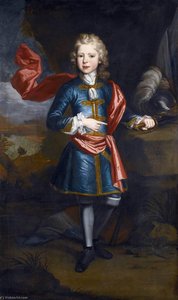
This portrait of John Poulett, first Earl Poulett, was executed by the artist Johann Closterman around 1690. The subject is depicted as a young boy, presented in a full-length pose that emphasizes his status and lineage. As a British politician and courtier, the young Poulett is portrayed with the formal attributes associated with his noble standing. He is shown standing slightly off-center, accompanied by a small dog at his feet.

8
Portrait of David Papillon ) (1691) de Johann Closterman

Portrait of David Papillon )

1691 · Oil On Canvas

Johann Closterman executed the Portrait of David Papillon ) in 1691. The subject is a young man identified as David Papillon, presented in a formal depiction that emphasizes his social standing and character. The work emerged during a period when Closterman was establishing his reputation for capturing the nuances of the European elite.

9
Isabella Machell, Viscountess Irwin (1690) de Johann Closterman

Isabella Machell, Viscountess Irwin

1690 · Oil On Canvas · Temple Newsam House, Leeds

In this portrait of Isabella Machell, Viscountess Irwin, Johann Closterman captures a moment of quiet dignity. Painted about 1690, the work presents the subject in a serene, seated pose upon an ornate bench. She is positioned within a garden setting, a choice that lends a sense of grace to the composition. The subject gazes directly at the viewer, her expression softened by a gentle smile that suggests a calm and…

10
John Manners, 1st Duke of Rutland (1638 – 1711) (1703) de Johann Closterman

John Manners, 1st Duke of Rutland (1638 – 1711)

1703 · Oil On Canvas · Hardwick Hall

In this full-length portrait from 1703, we encounter John Manners, 1st Duke of Rutland, captured in a moment of profound stillness and high station. He is positioned slightly to the left, his presence commanding the vertical space of the canvas. The subject is draped in heavy, ceremonial coronation robes, the deep reds of the velvet creating a striking contrast against the white and black of the ermine fur trim. His…

Picturi cu Johann Closterman, clasate de la 11 la 62

11William Bromley, MP & Speaker (1664 – 1732) (1709) de Johann ClostermanWilliam Bromley, MP & Speaker (1664 – 1732)1709 · Charlecote Park 12Colonel George Lucy (1665/66 - 1721) (1704) de Johann ClostermanColonel George Lucy (1665/66 - 1721)1704 · Charlecote Park 13Portrait of a Gentleman (said to be John Howe, 1630–1705, chaplain to Oliver Cromwell and his son) (1702) de Johann ClostermanPortrait of a Gentleman (said to be John Howe, 1630–1705, chaplain to Oliver Cromwell and his son)1702 · Christ's College 14John Bridgeman Of Prinknash (1638) de Johann ClostermanJohn Bridgeman Of Prinknash1638 15John Bridgeman of Prinknash (1638) de Johann ClostermanJohn Bridgeman of Prinknash1638 16Portrait of Judge George Jeffreys, First Baron of Wem (1648) de Johann ClostermanPortrait of Judge George Jeffreys, First Baron of Wem1648 17John Churchill 1st Duke Of Marlborough And Sarah Duchess Of Marlborough With (1660) de Johann ClostermanJohn Churchill 1st Duke Of Marlborough And Sarah Duchess Of Marlborough With1660 18Elizabeth Mulso, Mrs John Dolben (1685) de Johann ClostermanElizabeth Mulso, Mrs John Dolben1685 19Sir William Brownlow (1665–1702), 4th Bt of Humby, MP (1685) de Johann ClostermanSir William Brownlow (1665–1702), 4th Bt of Humby, MP1685 · National Trust 20Alice Sherard (1659–1721), Lady Brownlow (1685) de Johann ClostermanAlice Sherard (1659–1721), Lady Brownlow1685 · National Trust 21John Dolben, MP (1685) de Johann ClostermanJohn Dolben, MP1685 22Sir John Brownlow (1659–1697), 3rd Bt, 'Young Sir John' (1685) de Johann ClostermanSir John Brownlow (1659–1697), 3rd Bt, 'Young Sir John'1685 · National Trust 23Dorothy Mason (1665–1699 1700), Lady Brownlow (1685) de Johann ClostermanDorothy Mason (1665–1699 1700), Lady Brownlow1685 · National Trust 24Lady Margaret Tufton, Lady Coventry (1680) de Johann ClostermanLady Margaret Tufton, Lady Coventry1680 25Inscribed as 'Elizabeth Kirkley (d.1674), First Wife of Sir William Blackett, 1st Bt (1st Creation)' (but probably Mary Yorke, 2nd wife of Sir Edward Blackett, 2nd Bt) (1680) de Johann ClostermanInscribed as 'Elizabeth Kirkley (d.1674), First Wife of Sir William Blackett, 1st Bt (1st Creation)' (but probably Mary Yorke, 2nd wife of Sir Edward Blackett, 2nd Bt)1680 · Wallington National Trust 26Lady Amabel Grey (b.1673), Sister of Henry Grey, Duke of Kent (1694) de Johann ClostermanLady Amabel Grey (b.1673), Sister of Henry Grey, Duke of Kent1694 27Charles Seymour (1662–1748), 6th Duke of Somerset, KG, with a Black Page (1692) de Johann ClostermanCharles Seymour (1662–1748), 6th Duke of Somerset, KG, with a Black Page1692 · Petworth House 28Christopher Wren (1632–1723) (1690) de Johann ClostermanChristopher Wren (1632–1723)1690 · Royal Society 29Colonel George Lucy (1665 1666–1721) (1690) de Johann ClostermanColonel George Lucy (1665 1666–1721)1690 · National Trust 30Lady Elizabeth Percy, Duchess of Somerset, and Her Son (1690) de Johann ClostermanLady Elizabeth Percy, Duchess of Somerset, and Her Son1690 · Petworth House 31Samuel Pepys (1690) de Johann ClostermanSamuel Pepys1690 · National Portrait Gallery 32The Children of John Taylor of Bifrons Park (1696) de Johann ClostermanThe Children of John Taylor of Bifrons Park1696 · Beningbrough Hall 33Lady Amabel Grey, Daughter of Henry Grey, Duke of Kent (1694) de Johann ClostermanLady Amabel Grey, Daughter of Henry Grey, Duke of Kent1694 34William Cowper (1666–1709) (1690) de Johann ClostermanWilliam Cowper (1666–1709)1690 35Portrait of Guilford Killigrew, When a Boy (1709) de Johann ClostermanPortrait of Guilford Killigrew, When a Boy1709 36Queen Anne (1665–1714) (after Godfrey Kneller) (1703) de Johann ClostermanQueen Anne (1665–1714) (after Godfrey Kneller)1703 · Windsor Guildhall 37James Craggs the Elder (1710) de Johann ClostermanJames Craggs the Elder1710 · National Portrait Gallery 38Arthur Herbert (c.1648–1716), 1st Earl of Torrington (1700) de Johann ClostermanArthur Herbert (c.1648–1716), 1st Earl of Torrington1700 39Eleanor Brownlow (1691–1730), Later Viscountess Tyrconnel, as a Young Girl (1702) de Johann ClostermanEleanor Brownlow (1691–1730), Later Viscountess Tyrconnel, as a Young Girl1702 · National Trust 40Sir Henry Parker (c.1640–1713), 2nd Bt of Honington (1700) de Johann ClostermanSir Henry Parker (c.1640–1713), 2nd Bt of Honington1700 41Eleanor Brownlow, Later Viscountess Tyrconnel, as a Young Girl (1702) de Johann ClostermanEleanor Brownlow, Later Viscountess Tyrconnel, as a Young Girl1702 · Belton House 42Unknown man, formerly known as Sir James Thornhill (1705) de Johann ClostermanUnknown man, formerly known as Sir James Thornhill1705 · National Portrait Gallery 43Maurice Ashley Cooper Anthony Ashley Cooper, 3rd Earl of Shaftesbury (1702) de Johann ClostermanMaurice Ashley Cooper Anthony Ashley Cooper, 3rd Earl of Shaftesbury1702 44Sir John Aubrey (c.1650–1700), 2nd Bt de Johann ClostermanSir John Aubrey (c.1650–1700), 2nd Bt 45Sir Robert Dashwood (1666–1734), Bt de Johann ClostermanSir Robert Dashwood (1666–1734), Bt 46Sir William Temple de Johann ClostermanSir William Temple 47Edward Montagu (1670–1729), 3rd Earl of Sandwich de Johann ClostermanEdward Montagu (1670–1729), 3rd Earl of Sandwich 48Portrait of a Racehorse and Jockey de Johann ClostermanPortrait of a Racehorse and Jockey 49Portrait Of Charles Calvert de Johann ClostermanPortrait Of Charles Calvert 50Portrait of Edward Radclyffe, 2nd Earl of Derwentwater (oil on canvas) de Johann ClostermanPortrait of Edward Radclyffe, 2nd Earl of Derwentwater (oil on canvas) 51Portrait of Thomas and George Dashwood de Johann ClostermanPortrait of Thomas and George Dashwood 52Portrait of a Lady de Johann ClostermanPortrait of a Lady 53Mary Hough, Lady (Basil) Firebrace de Johann ClostermanMary Hough, Lady (Basil) FirebraceMelford Hall 54Daniel parke de Johann ClostermanDaniel parke 55Portrait of Queen Anne de Johann ClostermanPortrait of Queen Anne 56Prince George of Denmark (1653–1708), Consort to Queen Anne (after Godfrey Kneller) de Johann ClostermanPrince George of Denmark (1653–1708), Consort to Queen Anne (after Godfrey Kneller)Windsor Guildhall 57Edward Montagu, 3rd Earl of Sandwich de Johann ClostermanEdward Montagu, 3rd Earl of Sandwich 58Elizabeth Crewe, Countess of Arran de Johann ClostermanElizabeth Crewe, Countess of ArranCalke Abbey 59Portrait of a Gentleman Wearing Red de Johann ClostermanPortrait of a Gentleman Wearing Red 60Probably Sir Edward Blackett (1651 1652–1718), 2nd Bt de Johann ClostermanProbably Sir Edward Blackett (1651 1652–1718), 2nd BtWallington National Trust 61The Triumph of John, 1st Duke of Marlborough de Johann ClostermanThe Triumph of John, 1st Duke of MarlboroughRoyal Hospital Chelsea 62Portrait of William Paul (1673 1711) of Bray, Berkshire, with his dog and a gun de Johann ClostermanPortrait of William Paul (1673 1711) of Bray, Berkshire, with his dog and a gun

Piesele celebre ale lui Johann Closterman, perioadă cu perioadă

Subiectele care i-au captivat privirea lui Johann Closterman

Cele patru teme care revin cel mai des în aceste opere originale, fiecare având cel mai sublim exemplu.

Muzeele care păstrează originalele lui Johann Closterman

Cele 8 muzee care dețin cele mai multe dintre picturile de pe această pagină.
Muzee Oraș Lucrări lui Johann Closterman Picturi din această listă
National Portrait Gallery, LondraNational Portrait Gallery Londra 5 Henry Purcell, John Churchill, 1st Duke of Marlborough, Samuel Pepys
National Trust, GranthamNational Trust Grantham 5 Sir William Brownlow (1665–1702), 4th Bt of Humby, MP, Alice Sherard (1659–1721), Lady Brownlow, Sir John Brownlow (1659–1697), 3rd Bt, 'Young Sir John'
Charlecote Park, WarwickshireCharlecote Park Warwickshire 2 William Bromley, MP & Speaker (1664 – 1732), Colonel George Lucy (1665/66 - 1721)
Wallington National Trust, WallingtonWallington National Trust Wallington 2 Inscribed as 'Elizabeth Kirkley (d.1674), First Wife of Sir William Blackett, 1st Bt (1st Creation)' (but probably Mary Yorke, 2nd wife of Sir Edward Blackett, 2nd Bt), Probably Sir Edward Blackett (1651 1652–1718), 2nd Bt
Petworth House, PetworthPetworth House Petworth 2 Charles Seymour (1662–1748), 6th Duke of Somerset, KG, with a Black Page, Lady Elizabeth Percy, Duchess of Somerset, and Her Son
Windsor Guildhall, WindsorWindsor Guildhall Windsor 2 Queen Anne (1665–1714) (after Godfrey Kneller), Prince George of Denmark (1653–1708), Consort to Queen Anne (after Godfrey Kneller)
Muzeul Prado, MadridMuzeul Prado Madrid 1 Portrait of a Figure with Cockatoo
Ministry of Defence, LondonMinistry of Defence London 1 Sir Richard Haddock (1629–1715)

Johann Closterman, o pictură emblematică pe deceniu

Lucrări pe deceniu

Alege o deceniu pentru a descoperi opera originală care îl definește.

Picturile lui Johann Closterman: răspunsurile galeriei

Care este cea mai celebră pictură a lui Johann Closterman?Află răspunsul

Robert Constable (1651–1714), 3rd Viscount Dunbar (1690). Urmează Portrait of a Figure with Cockatoo (1685) și Henry Purcell (1695).

Ce vârstă avea Johann Closterman când a finalizat Robert Constable (1651–1714), 3rd Viscount Dunbar?Află răspunsul

30 ani: Robert Constable (1651–1714), 3rd Viscount Dunbar datează din 1690, iar Johann Closterman s-a născut în 1660.

Care sunt cele mai importante 10 picturi ale lui Johann Closterman?Află răspunsul

Robert Constable (1651–1714), 3rd Viscount Dunbar, Portrait of a Figure with Cockatoo, Henry Purcell, Sir Richard Haddock (1629–1715), John Churchill, 1st Duke of Marlborough, Major general thomas fairfax ), John Poulett, first Earl Poulett, Portrait of David Papillon ), Isabella Machell, Viscountess Irwin și John Manners, 1st Duke of Rutland (1638 – 1711). Clasamentul de mai sus indică anul și muzeul pentru fiecare piesă.

Câte lucrări a creat Johann Closterman?Află răspunsul

Catalogul nostru cuprinde 68 lucrări ale lui Johann Closterman, datate între 1680 și 1710.

Unde sunt expuse cele mai celebrele opere originale ale lui Johann Closterman?Află răspunsul

În principal în National Portrait Gallery (Londra), National Trust (Grantham) și Charlecote Park (Warwickshire). Tabelul cu muzee de mai sus le enumeră pe toate.

Când a creat Johann Closterman cele mai faimoase picturi?Află răspunsul

În 1690s: 14 dintre cele 62 lucrări de pe această pagină au fost realizate atunci, fiind Robert Constable (1651–1714), 3rd Viscount Dunbar dintre acestea.

Care sunt cele mai vechi și cele mai recente opere celebre ale lui Johann Closterman?Află răspunsul

Pe această pagină, cea mai veche lucrare datează din Lady Margaret Tufton, Lady Coventry (1680), iar cea mai recentă este din James Craggs the Elder (1710).

La ce subiecte s-a întors cel mai des Johann Closterman?Află răspunsul

Man (13), Women (9) și Royalty (7), din cele 62 lucrări de pe această pagină.

În ce tehnică a lucrat cel mai mult Johann Closterman?Află răspunsul

Oil On Canvas, pentru 14 dintre cele 62 lucrări de pe această pagină.

Cu ce mișcare este asociat(ă) Johann Closterman?Află răspunsul

Baroque, judecând după originalele de pe această pagină.

Ce opere originale ale lui Johann Closterman deține National Portrait Gallery?Află răspunsul

Henry Purcell, John Churchill, 1st Duke of Marlborough și Samuel Pepys: National Portrait Gallery, Londra deține 5 dintre lucrările de pe această pagină.

Johann Closterman: artistul

Johann Closterman: Un Portretist de Distincție

Johann Closterman (cunoscut și sub numele de cloosterman, klosterman; 1660 – 24 mai 1711) se impune ca o figură semnificativă în peisajul picturii de portret vestfaliană, în timpul erei de la sfârșitul Barocului și începutul Rococo. Născut în Osnabrück, Germania — un oraș îmbibat de istoria medievală și situat în cadrul Sfântului Imperiu Roman — călătoria artistică a lui Closterman a început sub îndrumarea tatălui său, care i-a transmis principiile fundamentale ale designului și ale artei vizuale. Această influență formativă s-a dovedit a fi crucială în modelarea stilului distinctiv al lui Johann Closterman, consacrându-l ca pe un artist respectat al timpului său.

Recunoscând talentul său excepțional, Closterman a făcut un pas decisiv în educația sa artistică relocându-se la Paris în 1679. Acolo, a găsit mentorat sub îndrumarea lui François de Troy, un pictor celebru pentru depinderile sale opulente ale vieții aristocratice și pentru schemele decorative elaborate. Această asociere l-a expus pe Closterman la curentul artistic dominant al curții pariziene și i-a rafinat abilitatea de a surprinde expresii nuanțate și de a transmite măreția prin tehnici de pensulă meticuloase.

Motivat de ambiție și de dorința de a descoperi oportunități mai mari, Closterman a plecat spre Anglia în 1681. S-a impus rapid ca asistent al lui John Riley, un pictor de portrete prominent, recunoscut pentru capacitatea sa de a surprinde subiectele cu un realism remarcabil și o profunzime psihologică profundă. În mod remarcabil, Closterman a contribuit semnificativ la portretele monumentale ale familiilor nobile realizate de Riley, concentrându-se în special pe draperii — o tehnică ce i-a demonstrat măiestria în manipularea culorii și a texturii.

Comenzi Regale și Evoluție Artistică

Moartea lui John Riley în 1691 a marcat un punct de cotitură decisiv în cariera lui Closterman, impulsionându-l să finalizeze mai multe portrete inacapate, începute anterior de Riley. Această realizare i-a consolidat reputația de maestru priceput și a demonstrat capacitatea sa de a onora moștenirea unui predecesor respectat. Totuși, fortuna s-a dovedit a fi capricioasă atunci când Charles Seymour, al 6-lea Duce de Somerset — un patron care îl angajase inițial pe Closterman — și-a exprimat nemulțumirea față de un portret al lui Guercino pe care pictorul îl realizase pentru acesta. Această relație tensionată a culminat cu ruperea legăturilor de către duce, ceea ce a dus, în mod efectiv, la încetarea implicării sale în comenzi regale. În ciuda acestui setbacks, Lord Halifax a intervenit, achiziționând portretul lui Guercino și asigurând astfel continuitatea eforturilor artistice ale lui Closterman.

Patronajul Spaniol și Explorarea Artistică: În anul 1696, Closterman a primit invitația de a servi ca pictor de curte pentru regele Carlos al II-lea al Spaniei — un onor prestigios care i-a oferit acces în cele mai bogate și influente cercuri din Europa. În perioada petrecută la Madrid, acesta a realizat portrete ale regelui, ale consorției sale, Mariana de Austria, și ale altor dignatari, demonstrând o versatilitate remarcabilă prin adaptarea stilului său la diverse tradiții artistice. Mai mult, Closterman a întreprins două călătorii vaste prin Italia, acumulând opere de artă de o valoare inestimabilă, care i-au îmbogățit colecția personală și i-au lărgit orizonturile artistice.

Revenirea în Anglia și succesul continuat

La întoarcerea sa în Anglia, Johann Closterman a experimentat o renaștere a cererii pentru serviciile sale în rândul elitei engleze, un fapt ce a servit drept mărturie a talentului său durabil și a reputației sale remarcabile. În anul 1698, acesta s-a căsătorit cu Hannah, construind o viață domestică plină de bucurii și de suferințe, elemente inerent legate de orice relație de familie. Din păcat, Hannah a cedat în fața bolii în anul 1702, lăsându-l pe Johann Closterman într-o profundă călănie. Relatările istorice sugerează că, ulterior, acesta s-a implicat într-o relație cu o amantă care i-a deturnat bunuri și avere considerabile — un eveniment care, conform zvonurilor, l-a prăbușit într-o declinament mental sever. Relatarea biografică a lui Jacob Campo Weyerman îl descrie pe Closterman ca fiind „un pictor care avusese o amantă frumoasă ce, în absența lui la țară, i-a furat obiectele de valoare și a dispărut, acțiuni care l-au împins pe pictor spre nebunie”. El a trecut în liniște în anul 1711, fiind înmormântat în cimitirul de la Covent Garden, în Londra.

Moștenirea și Importanța Artistică

Moștenirea artistică a lui Johann Closterman rezidă în principal în portretele sale captivante — în special în cele comisionate de figuri proeminente ale nobilității britanice. Atenția sa meticuloasă la detalii, utilizarea magistrală a culorii și a texturii, precum și capacitatea de a transmite nuanțe psihologice profunde, l-au distins de mulți dintre contemporanii săi. În timp ce relatările biografice ne oferă doar câteva fragmente din viața sa personală și de luptele pe care le-a dus, contribuția durabilă a lui Closterman la istoria artei epocii sale rămâne incontestabilă — o mărturie a talentului său de portretist și a rolului său în documentarea măreției și a complexităților societății georgiene. Opera sa continuă să fie studiată și admirată pentru eleganța sa stilistică și pentru integritatea sa artistică.