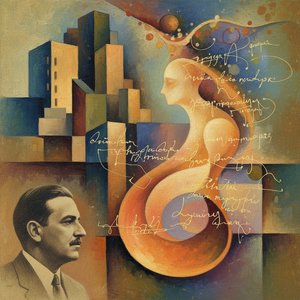
A Pioneer of Brazilian Modernism: The Life and Legacy of João Batista Vilanova Artigas
João Batista Vilanova Artigas, born in Curitiba, Brazil, in 1915, stands as a monumental figure in the evolution of Brazilian architecture. More than simply a builder of structures, Artigas was a visionary who sought to imbue his designs with social responsibility and artistic expression, ultimately becoming the founding father of the Paulista School. His journey began at the Polytechnic School of the University of São Paulo, where he earned his degree in 1937, an education that would serve as the bedrock for a career defined by innovation and a deep commitment to the Brazilian people. An early formative experience was his collaboration with Gregori Warchavchik on the ambitious remodeling of Praça da República, a project that hinted at the modernist sensibilities he would soon champion. From 1941 to 1947, Artigas dedicated himself to academia, shaping young minds as a professor of aesthetics, architecture, and planning at the University of São Paulo. This period culminated in the prestigious Guggenheim Fellowship awarded in 1946, solidifying his growing reputation within architectural circles and providing him with invaluable opportunities for international exposure.Early Influences and Architectural Style
Artigas’s formative years were profoundly shaped by Frank Lloyd Wright, whose organicist architecture—characterized by horizontal lines, flowing spaces, and a harmonious integration with the natural environment—became a cornerstone of his aesthetic vision. His residential designs exemplify this influence, prioritizing continuity between interior and exterior spaces and utilizing materials that respond to climatic conditions. The House Ariosto Martirani stands as an early testament to Wright’s principles, demonstrating Artigas's initial exploration of modernist ideals. Simultaneously, he absorbed the lessons of Le Corbusier, embracing functional design and structural innovation—particularly the use of reinforced concrete—to address pressing social needs. This approach would define his architectural style throughout his career, prioritizing efficiency and durability while simultaneously striving for artistic expression.Academic Contributions and Recognition
From 1941 to 1947, Artigas honed his skills as an educator at São Paulo University, fostering a new generation of architects who embraced the modernist movement’s ethos. He championed the importance of experimentation and critical thinking, encouraging students to challenge conventional norms and explore innovative solutions. The Guggenheim Fellowship awarded in 1946 further cemented his reputation within architectural circles, affording him access to international precedents and broadening his intellectual horizons. This period established Artigas as a leading voice in Brazilian architecture education and solidified his commitment to disseminating knowledge about modern design principles.The Brutalist Period: Monumental Expressionism
Artigas’s architectural style evolved dramatically during the 1960s and 1970s, embracing Brutalism—a movement characterized by its raw concrete aesthetic and monumental scale. This stylistic shift reflected Artigas's engagement with social activism and his conviction that architecture could serve as a vehicle for transformative change. Projects like Guarulhos Gymnasium exemplify this period’s expressive power, utilizing massive concrete volumes to convey grandeur and solidity while simultaneously addressing the practical demands of public spaces. His approach prioritized structural honesty—revealing the material itself—and rejecting decorative embellishments in favor of austere simplicity.Legacy and Enduring Influence
João Batista Vilanova Artigas’s legacy extends far beyond his architectural creations. He established the Paulista School, which championed functional design, structural innovation, and a deep concern for social responsibility—principles that continue to inspire architects worldwide. His unwavering belief in “minutiae”—the small details—elevated buildings from mere structures into works of art, infusing each project with a unique character and sense of place. Artigas’s contributions to Brazilian architecture are commemorated in institutions like the Museu Antonio Parreiras and the Oscar Niemeyer Museum in Curitiba, ensuring that his vision persists as a beacon for future generations. His work stands as a powerful reminder of the transformative potential of architectural design—a testament to Artigas's enduring influence on the landscape of Brazilian culture and innovation.Întrebări și răspunsuri
Pot să explorez lucrările lui João Batista Vilanova Artigas în funcție de paleta de culori?
Pagina După palete de culori grupează operele lui João Batista Vilanova Artigas în funcție de paletele de culori utilizate.
Pot explora operele lui João Batista Vilanova Artigas pe baza unor cuvinte cheie?
Pagina După cuvinte cheie a lui João Batista Vilanova Artigas grupează operele de artă ale artistului în funcție de cuvintele cheie.
De unde este João Batista Vilanova Artigas?
João Batista Vilanova Artigas s-a născut în Brazil.