Portretul lui Joane Cardinal-Schubert

Cele 4 cele mai faimoase picturi ale lui Joane Cardinal-Schubert, fiecare unică în felul ei

Actualizat Noiembrie 2026 · clasat în funcție de scorul nostru de popularitate (căutări, vizite și comenzi pentru fiecare operă) · 5 lucrări ale lui Joane Cardinal-Schubert în catalogul nostru

Pe scurt

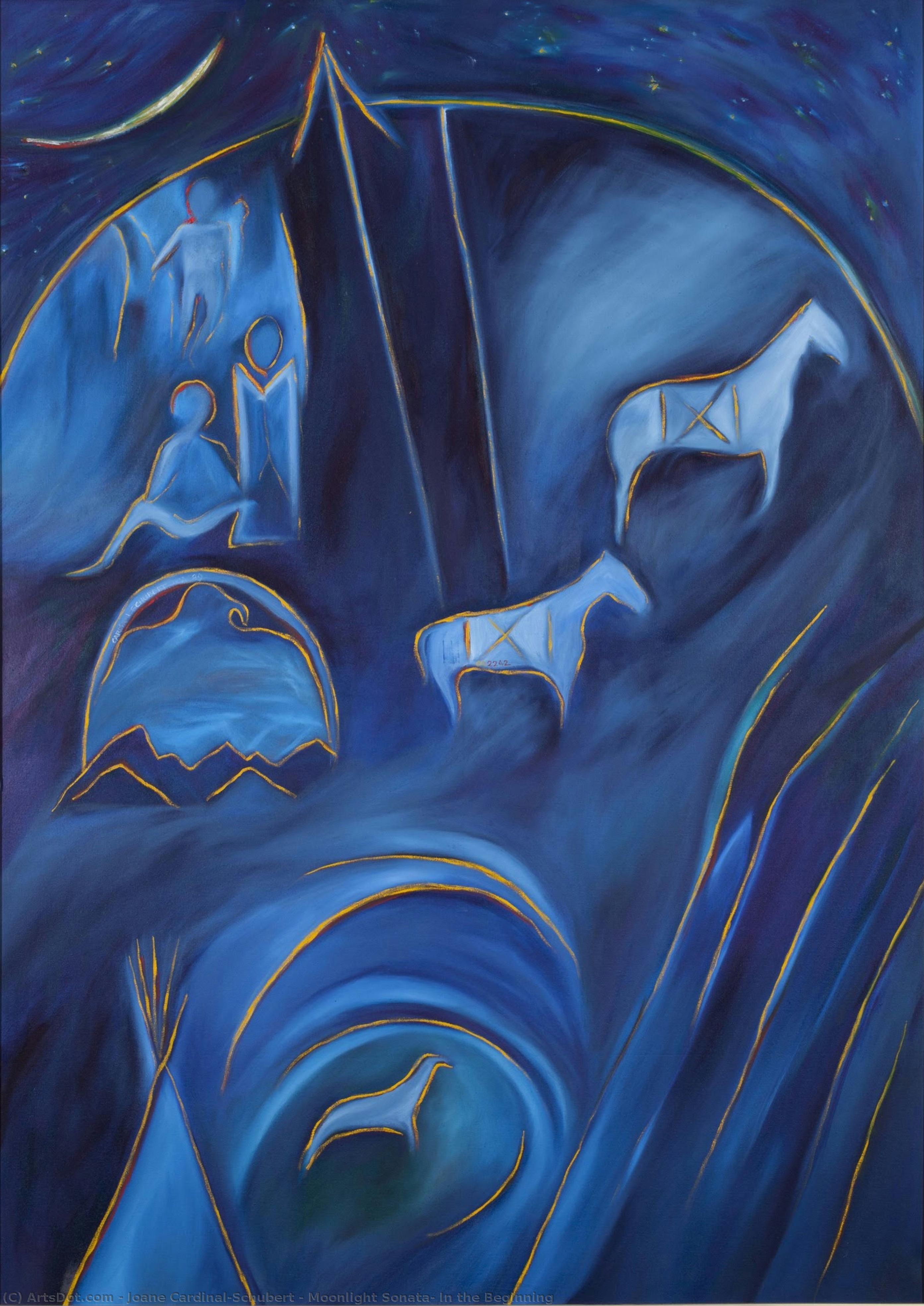
Moonlight Sonata: In the Beginning (1989) este pictura lui Joane Cardinal-Schubert care atrage cele mai multe priviri; originalul aparține Alberta Foundation for the Arts, Edmonton. După aceasta, privirea se îndreaptă către I Dream of Horse / Counterpane (2002) și Looking For the Silver Bullet (1995). Dintre cele 5 opere ale lui Joane Cardinal-Schubert din catalogul nostru, acestea 4 sunt cele mai celebre, fiecare fiind o piesă unică, prezentată împreună cu anul creării, muzeul deținător și motivul pentru care aceasta rămâne memorabilă.

1942 – 2009, Red Deer Contemporary art Cele mai multe lucrări: Alberta Foundation for the Arts

Cele mai importante 10 picturi ale lui Joane Cardinal-Schubert, prin ochii galeriei

2
I Dream of Horse / Counterpane (2002) de Joane Cardinal-Schubert

I Dream of Horse / Counterpane

In the breathtaking canvas of I Dream of Horse / Counterpane, the viewer is transported into a world where movement and memory intertwine. Created in 2002 by the esteemed Kainai Nation artist Joane Cardinal-Schubert, this masterpiece serves as a vibrant window into a landscape teeming with life and ancestral echoes. The composition is a rhythmic dance of equine forms; a central, large horse bows its head in a moment of…

3
Looking For the Silver Bullet (1995) de Joane Cardinal-Schubert

Looking For the Silver Bullet

1995 · Painting · Alberta Foundation for the Arts, Edmonton

In the profound and evocative masterpiece Looking For the Silver Bullet, created in 1995, the viewer is transported into a realm where the boundaries between humanity and the natural world dissolve. This vibrant work by the esteemed Kainai Nation artist Joane Cardinal-Shrubert serves as more than just a painting; it is a powerful testament to Indigenous identity and cultural endurance. The composition centers on a striking female figure, adorned with…

Subiectele care i-au captivat privirea lui Joane Cardinal-Schubert

Cele patru teme care revin cel mai des în aceste opere originale, fiecare având cel mai sublim exemplu.

Muzeele care păstrează originalele lui Joane Cardinal-Schubert

Muzeul care deține cele mai multe dintre picturile prezentate pe această pagină.

Muzee Oraș Lucrări lui Joane Cardinal-Schubert Picturi din această listă
Alberta Foundation for the Arts, EdmontonAlberta Foundation for the Arts Edmonton 4 Moonlight Sonata: In the Beginning, I Dream of Horse / Counterpane, Looking For the Silver Bullet

Joane Cardinal-Schubert de-a lungul deceniilor: o piesă unică pentru fiecare

Lucrări pe deceniu

Alege o deceniu pentru a descoperi opera originală care îl definește.

Picturile lui Joane Cardinal-Schubert: întrebări pentru galerie

Care este cea mai celebră operă a lui Joane Cardinal-Schubert?Află răspunsul

Moonlight Sonata: In the Beginning (1989), Alberta Foundation for the Arts, Edmonton. Urmează I Dream of Horse / Counterpane (2002) și Looking For the Silver Bullet (1995).

La ce vârstă a creat Joane Cardinal-Schubert Moonlight Sonata: In the Beginning?Află răspunsul

47 ani: Moonlight Sonata: In the Beginning datează din 1989, iar Joane Cardinal-Schubert s-a născut în 1942.

Câte lucrări ale lui Joane Cardinal-Schubert sunt cunoscute?Află răspunsul

Catalogul nostru cuprinde 5 lucrări ale lui Joane Cardinal-Schubert, datate între 1989 și 2002.

Unde pot fi vizualizate originalele celor mai faimoși Joane Cardinal-Schubert?Află răspunsul

În principal în Alberta Foundation for the Arts (Edmonton). Tabelul cu muzee de mai sus le enumeră pe toate.

În ce perioadă a creat Joane Cardinal-Schubert cele mai cunoscute picturi?Află răspunsul

În 1990s: 2 dintre cele 4 lucrări de pe această pagină au fost realizate atunci, fiind Looking For the Silver Bullet dintre acestea.

Care este cea mai veche și care este cea mai recentă pictură a lui Joane Cardinal-Schubert?Află răspunsul

Pe această pagină, cea mai veche lucrare datează din Moonlight Sonata: In the Beginning (1989), iar cea mai recentă este din I Dream of Horse / Counterpane (2002).

Din ce curent artistic face parte opera lui Joane Cardinal-Schubert?Află răspunsul

Contemporary art, judecând după originalele de pe această pagină.

Ce originale de Joane Cardinal-Schubert pot vedea la Alberta Foundation for the Arts?Află răspunsul

Moonlight Sonata: In the Beginning, I Dream of Horse / Counterpane și Looking For the Silver Bullet: Alberta Foundation for the Arts, Edmonton deține 4 dintre lucrările de pe această pagină.

Joane Cardinal-Schubert: un portret al artistului

A Legacy of Resilience: The Art of Joane Cardinal-Schubert

Joane Cardinal-Schubert (1942–2009) was far more than a painter; she was a profound visual storyteller and a fierce advocate for the Kainai Nation. Born in Canoe Lake, Alberta, her life’s work emerged as a powerful response to the systemic erasures of Indigenous history within the Canadian landscape. Growing up amidst the quiet strength of her heritage, she recognized early on how colonial education systems sought to omit the vibrant traditions, languages, and histories of her people. This void became the catalyst for her artistic mission. Rather than accepting the silence imposed by mainstream narratives, Cardinal-Schubert utilized her canvas as a site of reclamation, transforming personal and collective memory into a monumental act of cultural preservation. Her formal training at the Alberta College of Art + Design provided her with a sophisticated technical foundation in painting, printmaking, and multimedia, yet her true education was rooted in the oral histories and spiritual landscapes of the Kainaiwa people. As her career progressed, her work evolved from traditional representations into complex, multi-layered installations that challenged the viewer to confront the uncomfortable realities of colonialism. She mastered the ability to weave together disparate elements—textiles, sculptural components, and photographic prints—to create immersive environments that breathed life into ancestral spirits and historical truths.

Symbolism, Narrative, and the Spirit of the Land

The aesthetic language of Cardinal-Schultbert is deeply evocative, characterized by a rich tapestry of symbolism that bridges the gap between the physical and spiritual realms. Her compositions often feature figures that serve as vessels for resilience, embodying the enduring spirit of her ancestors. These figures do not exist in isolation; they are inextricably linked to landscapes that are imbued with profound spiritual significance. In her work, the land is never merely a backdrop but a living participant in the narrative, reflecting the deep-seated connection between Indigenous identity and the natural world. Through her use of mixed media, she achieved a tactile depth that invited viewers into a sensory experience of history. Her paintings often possess a rhythmic quality, where color and form dance to the cadence of mythic storytelling. By integrating sculptural elements and textiles, she broke the boundaries of the two-dimensional plane, mirroring the way Indigenous culture is lived through movement, craft, and ceremony. This approach allowed her to address themes of sovereignty and identity with a complexity that transcended simple protest, offering instead a nuanced celebration of survival and continuity.

Historical Significance and Artistic Achievement

The impact of Joane Cardinal-Schubert extends well beyond the borders of the gallery space. As an artist-activist, she utilized her platform to spark essential dialogues regarding Indigenous sovereignty and the lasting scars of colonial policy. Her work served as a vital bridge, bringing the struggles and triumphs of the Kainai Nation to a global audience and demanding recognition for the truths often suppressed by history books. Her contributions were formally recognized through her induction into the Royal Canadian Academy of Arts, a testament to her standing within the highest echelons of the Canadian art community. Her enduring legacy can be summarized through several key pillars of her contribution to contemporary art:
  • Cultural Reclamation: She successfully re-centered Kainaiwa history and mythology within the contemporary art discourse, countering colonial erasure.
  • Interdisciplinary Innovation: Her mastery of mixed media and installation art expanded the boundaries of Indigenous expression in Canada.
  • Artistic Activism: She pioneered a way for fine art to function as a tool for political and social change, addressing themes of sovereignty and justice.
  • Spiritual Connection: Her ability to translate the sacred relationship between people and the environment into visual form remains a cornerstone of her oeuvre.
Today, Cardinal-Schubert is remembered not only as a master of her craft but as a visionary who transformed the act of painting into an act of resistance and a profound celebration of Indigenous endurance.