1


Actualizat Octombrie 2026 · clasat în funcție de scorul nostru de popularitate (căutări, vizite și comenzi pentru fiecare operă) · 80 lucrări ale lui James Mcbey în catalogul nostru
Pe scurt
În ochii galeriei, cea mai celebră pictură a lui James Mcbey este Tul Keram A Retreating Turkish Column Bombed and Machine Gunned by Airmen in the Defile at Tul Keram, 26 September 1918 (1918). The Allies Entering Jerusalem, 11 December 1917 General Allenby with Colonel de Piépape Commanding the French Detachment and Lieutenant Colonel D'Agostio Commanding the Italian Detachment, Entering the City by the Jaffa Gate (1919) și Black and White Puppy Lying on a Bed completează trioul pe care orice ochi îl recunoaște. Dintre cele 80 opere ale lui James Mcbey din catalogul nostru, galeria prezintă mai jos cele 79 cele mai faimoase, fiecare fiind originală, cu anul creării, muzeul de păstrare și elementul care o face unică.
 1. Tul Keram A Retreating Turkish Column Bombed and Machine Gunned by Airmen in the Defile at Tul Keram, 26 September 1918 1918
 2. The Allies Entering Jerusalem, 11 December 1917 General Allenby with Colonel de Piépape Commanding the French Detachment and Lieutenant Colonel D'Agostio Commanding the Italian Detachment, Entering the City by the Jaffa Gate 1919
 3. Black and White Puppy Lying on a Bed

The painting "The Allies Entering Jerusalem, 11 December 1917 General Allenby with Colonel de Piépape Commanding the French Detachment and Lieutenant Colonel D'Agostio Commanding the Italian Detachment, Entering the City by the Jaffa Gate" by James McBey is a significant historical representation of the Allied forces entering Jerusalem during World War I. Created in 1919, this oil on canvas painting measures 107 x 152 cm and captures a pivotal moment…


 The Musician1896
12
 The Umbrella Man1896
13
 The Artist's Grandmother1901
14
 Arab Woman (sketch)
15
 Two Views of a Moroccan Town
16
 Ouarzazate, Morocco
17
 Figures at a Doorway, Morocco
18
 The Artist's Studio
19
 Arab Girl
20
 Dutch Girl with Sunflowers1910
21
 Portrait of a Woman in Red
22
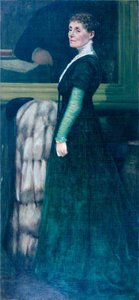 Mrs Robert Watt1909
23
 The Headland1909
24
 Robert Watt1908
25
 Martin Hardie (1875–1952), in His Etching Studio1915
26
 Phyllis with a Violin (Phyllis Allan, Later Lady Langley Taylor)1915
27
 Lieutenant Colonel T. E. Lawrence (1888–1935), CB, DSO1918
28
 Lieutenant General Sir Henry George Chauvel (1865–1945), KCB, KCMG1918
29
 Nebi Samwil The First Sight of Jerusalem1919
30
 Felix Sanchez (The Picador)1921
31
 Lieutenant General Sir Edward S. Bulfin (1862–1939), KCB, CVO1918
32
 James Hutcheon (d.c.1933) (study)1922
33
 General Sir Edmund Allenby (1861–1936), KCB1918
34
 Arsuf The Cavalry Dash along the Sea Coast on the Morning of 19 September 19181918
35
 Sir Harry Lauder (1870–1950)1921
36
 Venetian Scene, Lagoon with Boats at Quay1927
37
 Church Villefranche1927 · Paisley Art Institute Collection
38
 Seascape, Macduff, Aberdeenshire1927
39
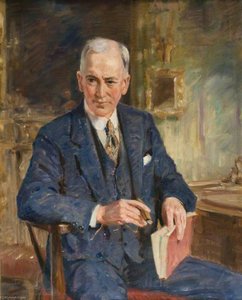 Andrew G. Kidd (1866–1950)1927
40
 Regatta on the Grand Canal, Venice1925
41
 Lady in a Red Dress1925
42
 Mrs John Arnott1927
43
 Mrs R. Wemyss Honeyman1928
44
 Arab Man with a Child1933
45
 Woman on a Sofa1929
46
 Woman Writing at a Secretaire1932
47
 Mr R. Wemyss Honeyman1929
48
 Atlas Mountains, Morocco (sketch)1938
49
 Sunday in Scotland (Rowallan)1936
50
 Saada1936
51
 Farmyard Hen and Chicks1936
52
 Bury, Sussex, Hill in the Distance1936
53
 View of Meknes, Morocco1935
54
 Bury, Sussex, 'Black Dog and Duck' Pub1936
55
 Bury, Sussex, Landscape with a Church Spire1937
56
 Anghera Peasant Girl1938
57
 Foveran Mill, Aberdeenshire1936
58
 Ouarzazate, Morocco1935
59
 Marrakesh, Morocco1938
60
 Marguerite1937
61
 Harvest, Angus (recto)1936
62
 Portrait of a Hero (John Innes of Newburgh)1936
63
 Acrobats, Marrakesh, Morocco1936
64
 Chinese Woman1936
65
 Robert Bontine Cunninghame Graham1934
66The Musician1896
67
 Atlas Mountains, Morocco (sketch)
68
 Venetian Scene, Doge's Palace and St Mark's
69
 View of the Atlas Mountains, Morocco
70
 Atlas Mountains and a River, Morocco (sketch)
71
 Black and White Puppy
72
 View of Lerma
73
 Tizi n Tichka Pass, Morocco (sketch)
74
 Dreams
75
 Red Hibiscus
76
 Head and Shoulders of a Woman
77
 Outside Walls, Marrakech, Morocco
78
 Thomas Mcquicker (sketch)
79
 The Dwarf Don Diego de Acedo 'El Primo' (after Diego Velázquez)
Cele patru teme care revin cel mai des în aceste opere originale, fiecare având cel mai sublim exemplu.
Muzeul care deține cele mai multe dintre picturile prezentate pe această pagină.
| Muzee | Oraș | Lucrări lui James Mcbey | Picturi din această listă |
|---|---|---|---|
 Paisley Art Institute Collection |
Paisley | 1 | Church Villefranche |
Alege o deceniu pentru a descoperi opera originală care îl definește.

The Musician is a captivating painting by the renowned artist James McBey, created in 1896. This artwork showcases the artist's skill in depicting the subject matter, capturing the essence of music and the musician's passion. The painting measures 23 x 20 cm and is rendered on canvas, demonstrating the artist's mastery over this medium. Background on James McBey James McBey was a prominent artist known for his portraits, landscapes, and…
Tul Keram A Retreating Turkish Column Bombed and Machine Gunned by Airmen in the Defile at Tul Keram, 26 September 1918 (1918). Urmează The Allies Entering Jerusalem, 11 December 1917 General Allenby with Colonel de Piépape Commanding the French Detachment and Lieutenant Colonel D'Agostio Commanding the Italian Detachment, Entering the City by the Jaffa Gate (1919) și Black and White Puppy Lying on a Bed.
35 ani: Tul Keram A Retreating Turkish Column Bombed and Machine Gunned by Airmen in the Defile at Tul Keram, 26 September 1918 datează din 1918, iar James Mcbey s-a născut în 1883.
Tul Keram A Retreating Turkish Column Bombed and Machine Gunned by Airmen in the Defile at Tul Keram, 26 September 1918, The Allies Entering Jerusalem, 11 December 1917 General Allenby with Colonel de Piépape Commanding the French Detachment and Lieutenant Colonel D'Agostio Commanding the Italian Detachment, Entering the City by the Jaffa Gate, Black and White Puppy Lying on a Bed, Miss Gillespie, Volendam Girl, Tetouan Market Place, Morocco, James Hutcheon (d.c.1933), Venice, Ythan Mouth și El Marrakeshia. Clasamentul de mai sus indică anul și muzeul pentru fiecare piesă.
Catalogul nostru cuprinde 80 lucrări ale lui James Mcbey, datate între 1896 și 1938.
În principal în Paisley Art Institute Collection (Paisley). Tabelul cu muzee de mai sus le enumeră pe toate.
În 1930s: 22 dintre cele 79 lucrări de pe această pagină au fost realizate atunci, fiind Ythan Mouth dintre acestea.
Pe această pagină, cea mai veche lucrare datează din The Musician (1896), iar cea mai recentă este din Atlas Mountains, Morocco (sketch) (1938).
Portrait (2) și Portrait painting (2), din cele 79 lucrări de pe această pagină.
Impressionism și Contemporary realism, judecând după originalele de pe această pagină.
James McBey was a master of the line and light, an artist whose life story is as much a narrative of self-invention as the evocative landscapes he captured on copper plates and canvas. Born in 1883 in Newburgh, Aberdeenshire, McBey’s journey from a humble clerk in a local bank to one of Scotland’s most celebrated printmakers is nothing short of extraordinary. Lacking formal academic training in his youth, he possessed an insatiable curiosity that led him to study the technical treatises of masters like Maxime Lalanne by candlelight. This self-directed discipline allowed him to develop a visual vocabulary rooted in meticulous detail and atmospheric depth, eventually establishing him as a cornerstone of the early 20th-century etching revival.
His early artistic impulses were deeply tethered to the rugged beauty of his homeland. The dramatic vistas of the Scottish Highlands, with their sweeping heather moorlands and mist-shrouded mountains, provided the perfect crucible for honing his mastery of tonal subtlety. Influenced by the atmospheric legacies of Turner and the delicate precision of Whistler, McBey learned to manipulate light to evoke emotion, a skill that would later serve him as his horizons expanded far beyond the borders of Scotland. His work during this period established a foundational strength in composition, where every etched line served to build a sense of place and permanence.
As McBey’s reputation grew, so too did the geographical scope of his subject matter. The artist’s life became a tapestry of global encounters, moving from the familiar terrains of Britain to the sun-drenched landscapes of North Africa and the Middle East. This period of exploration brought about some of his most significant historical contributions. During the First World War, McBey acted as a vital visual chronicler, capturing the monumental shifts of geopolitical power with a raw, journalistic precision. His masterpiece, The Allies Entering Jerusalem, 11 December 1917, stands as a profound testament to this era, rendering the complex movement of cavalry and infantry through the Jaffa Gate with both historical gravity and artistic grace.
This fascination with the "other" and the exotic allowed him to explore themes of light and texture in ways that were impossible in the muted tones of Scotland. His travels through Morocco and Spain introduced a vibrant palette and a new interest in the interplay of shadow and heat. Whether rendering the rhythmic movement of a Spanish figure in Felix Sanchez (The Picador) or the delicate, colorful bloom of Red Hibiscus, McBey possessed a unique ability to translate the sensory experiences of foreign lands into a language that resonated with a global audience. His work became a bridge between the intimate observations of a traveler and the grand narratives of history.
Beyond his personal output of prints and paintings, McBey’s impact on the art world was cemented through his profound commitment to the next generation of creators. Serving as the Director of the Dundee Art School from 1920 until 1959, he transformed the institution into a vital center for Scottish art instruction. He did not merely teach technique; he championed a philosophy of direct observation and experimental courage. By fostering an environment where students could engage with diverse traditions while maintaining their own unique voices, he ensured that his influence would ripple through decades of subsequent artistic movements.
McBey’s life concluded in 1959 in Tangier, Morocco, a fitting end for an artist whose soul was forever entwined with the far reaches of the world. His legacy remains preserved not only in the prestigious collections of museums worldwide but also in the very spirit of printmaking excellence he helped define. To look upon a McBey etching is to witness a moment frozen in time—a blend of historical truth and poetic interpretation that continues to captivate the modern eye.

