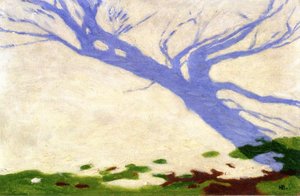
Portretul lui Hans Emmenegger

Cele 46 cele mai faimoase picturi ale lui Hans Emmenegger, o selecție de galerie

Actualizat Noiembrie 2026 · clasat în funcție de scorul nostru de popularitate (căutări, vizite și comenzi pentru fiecare operă) · 46 lucrări ale lui Hans Emmenegger în catalogul nostru

Pe scurt

Dintre toate originalele lăsate de Hans Emmenegger, cea mai faimoasă este Pictură de pădure (1936). Imediat după acestea urmează In the Forest (1933) și Flower Bowl (1924). Catalogul nostru cuprinde 46 lucrări ale lui Hans Emmenegger; galeria a păstrat cele 46 pe care lumea le admiră cel mai mult, fiecare fiind prezentată împreună cu data, muzeul și povestea sa.

1866 – 1940, Küssnacht Cele mai multe lucrări: Kunstmuseum Solothurn

Cele mai importante 10 picturi ale lui Hans Emmenegger: selecția galeriei

1
Pictură de pădure (1936) de Hans Emmenegger

Pictură de pădure

1936 · Ulei pe pânză

„Pictură de pădure” de Hans Emmenegger emerge de pe pânză ca un moment de liniște capturat în anul 1936. Această lucrare realizată în ulei pe pânză prezintă o fâșie specifică a lumii naturale, cuprinsă într-o ramă cu dimensiuni de 61 x 41 cm. Fiecare centimetru al suprafeței poartă amprenta mâinii artistului, transformând sentimentul de locul în o prezență tangibilă și fizică. Scara este intimă, invitând la o întâlnire apropiată cu…

2
In the Forest (1933) de Hans Emmenegger

In the Forest

1933 · Oil On Canvas

The oil on canvas painting depicts a dense woodland scene characterized by verticality and depth. Tall, slender trees occupy both the foreground and the background, their trunks creating a rhythmic pattern of lines that draw the eye upward. The foliage is rendered in various shades of green, suggesting the texture of leaves catching a soft light. Within this natural setting, two human figures are positioned to provide scale and perspective.…

3
Flower Bowl (1924) de Hans Emmenegger

Flower Bowl

1924 · Painting

Created in 1924, this work reflects a period of intense observation. The painting captures a fleeting arrangement of domestic objects, turning a simple bowl into a subject of deep scrutiny. There is a sense of solitude in the way the bowl sits alone, stripped of any surrounding clutter. The brushwork is controlled, focusing on the essential qualities of the object—its color, its shape, and the way it interacts with the…

4
Fig Tree in front of Red Soil (1911) de Hans Emmenegger

Fig Tree in front of Red Soil

1911 · Oil On Canvas

The painting presents a solitary tree positioned against a solid, saturated red background. This tree, identified as a fig tree, is rendered without leaves, leaving its skeletal branch structure exposed. The dark, textured lines of the branches extend into the red space, creating a sharp silhouette. The trunk and primary limbs are the central focus, showing a detailed application of oil on canvas that provides a tactile quality to the…

5
In Summer (first version) (1905) de Hans Emmenegger

In Summer (first version)

1905 · Oil

A lush green field stretches toward a backdrop of dense trees, capturing a moment of quiet repose under the high sun. Scattered throughout the meadow, several individuals engage in various outdoor activities, their forms integrated into the landscape. A dog rests near the center of the composition, grounding the scene in a sense of domestic tranquility. The atmosphere reflects the stillness of a warm afternoon, where the primary subject is…

6
In Summer (1905) de Hans Emmenegger

In Summer

1905 · Oil

The canvas presents a wide expanse of a green field under the light of a summer day. In the background, a line of trees marks the horizon, their forms rendered with varying degrees of clarity. Some trees appear as dense clusters of foliage, while others are more isolated, scattered across the middle ground. A single figure is positioned near the center of the composition, walking through the grass. This person…

7
Grove near Kuessnacht (1892) de Hans Emmenegger

Grove near Kuessnacht

1892 · Oil

The composition centers on a lush green hillside situated near Küssnacht. In the foreground, several trees occupy the immediate space, their forms defined by a palette of deep greens and touches of red. These arboreal elements are positioned at varying distances, creating a sense of spatial depth across the sloping terrain. The lighting suggests a daytime setting, casting distinct shadows from the foliage onto the ground below. The arrangement of…

8
Laundry (1889) de Hans Emmenegger

Laundry

1889 · Oil

A central furnace breathes orange light into a dim, stone interior. The air feels heavy with the scent of coal and heated metal. Men move through the thick shadows, their bodies defined by the sudden, sharp glow of the flames. Some hammer at glowing shapes, while others tend the fire, their movements rhythmic and purposeful. The light does not merely illuminate; it carves the figures out of the darkness, casting…

9
Elk Hunters (1895) de Hans Emmenegger

Elk Hunters

1895 · Oil On Canvas

The air feels heavy with the scent of pine and the biting chill of fresh snow. In this 1895 oil on canvas, the silence of a winter landscape is broken by the presence of hunters who have finally met their quarry. A massive moose lies central to the scene, its dark form a stark contrast against the vast, pale expanse of the snowy ground. The hunters stand near their prize,…

10
Dog (1899) de Hans Emmenegger

Dog

1899 · Oil On Canvas

A dog lies curled upon the floor, its body a heavy shape of rest. The scene is rendered in black and white, a study of light falling across fur and fabric. A couch and a single pillow frame the animal, creating a corner of domestic stillness. There is no movement here, only the weight of a sleeping creature in a soft, shadowed space. The air in the room feels still,…

Selecția pentru Hans Emmenegger continuă, de la 11 la 46

Piesele celebre ale lui Hans Emmenegger, perioadă cu perioadă

Subiectele care i-au captivat privirea lui Hans Emmenegger

Cele patru teme care revin cel mai des în aceste opere originale, fiecare având cel mai sublim exemplu.

Muzeele care păstrează originalele lui Hans Emmenegger

Cele 2 muzee care dețin cele mai multe dintre picturile de pe această pagină.

Muzee Oraș Lucrări lui Hans Emmenegger Picturi din această listă
Kunstmuseum Solothurn, SolothurnKunstmuseum Solothurn Solothurn 1 In February
Kunstmuseum Olten, OltenKunstmuseum Olten Olten 1 Impression of the Nightly Celebration at Lake Lucerne

Hans Emmenegger deceniu cu deceniu: originalul care definește fiecare

Lucrări pe deceniu

Alege o deceniu pentru a descoperi opera originală care îl definește.

Întrebări ale colecționarilor despre picturile lui Hans Emmenegger

Pentru ce operă este cel mai cunoscut Hans Emmenegger?Află răspunsul

Pictură de pădure (1936). Urmează In the Forest (1933) și Flower Bowl (1924).

Ce vârstă avea Hans Emmenegger când a fost creată Pictură de pădure?Află răspunsul

70 ani: Pictură de pădure datează din 1936, iar Hans Emmenegger s-a născut în 1866.

Care sunt cele mai celebre zece picturi ale lui Hans Emmenegger?Află răspunsul

Pictură de pădure, In the Forest, Flower Bowl, Fig Tree in front of Red Soil, In Summer (first version), In Summer, Grove near Kuessnacht, Laundry, Elk Hunters și Dog. Clasamentul de mai sus indică anul și muzeul pentru fiecare piesă.

Câte picturi a lăsat Hans Emmenegger?Află răspunsul

Catalogul nostru cuprinde 46 lucrări ale lui Hans Emmenegger, datate între 1889 și 1937.

În ce muzee sunt expuse capodoperele lui Hans Emmenegger?Află răspunsul

În principal în Kunstmuseum Solothurn (Solothurn) și Kunstmuseum Olten (Olten). Tabelul cu muzee de mai sus le enumeră pe toate.

În ce ani a pictat Hans Emmenegger cele mai cunoscute opere?Află răspunsul

În 1900s: 16 dintre cele 46 lucrări de pe această pagină au fost realizate atunci, fiind In Summer (first version) dintre acestea.

Care sunt prima și ultima pictură originală celebră a lui Hans Emmenegger?Află răspunsul

Pe această pagină, cea mai veche lucrare datează din Laundry (1889), iar cea mai recentă este din Impression of the Nightly Celebration at Lake Lucerne (1937).

Ce subiecte a ales cel mai des Hans Emmenegger?Află răspunsul

Landscape (11), Trees (8) și Tree (7), din cele 46 lucrări de pe această pagină.

Ce tehnică a folosit cel mai des Hans Emmenegger?Află răspunsul

Oil, pentru 18 dintre cele 46 lucrări de pe această pagină.

Hans Emmenegger: viață și operă

Hans Emmenegger: A Master of Alpine Light and Subtle Emotion

Hans Emmenegger (1866-1940) remains a quietly significant figure in the landscape of Swiss art, an artist whose evocative paintings capture not just the visual beauty of the Alps but also the subtle emotional currents that flow through them. Often overshadowed by the more flamboyant figures of his contemporaries, Emmenegger’s work reveals a profound sensitivity to light, color, and texture—a mastery honed through decades of dedicated observation and experimentation. His legacy lies in a body of paintings that offer intimate glimpses into the heart of the Swiss countryside, imbued with a quiet dignity and an understated power.

Born in 1866 in the village of Unterseen, near Interlaken, Emmenegger’s early life was deeply intertwined with the natural world. His father, a timber merchant, instilled in him a respect for craftsmanship and a keen awareness of the rhythms of rural life. This formative experience would profoundly shape his artistic vision, leading him to prioritize direct observation and a deep connection to the landscape. Initially trained as a watchmaker’s apprentice, Emmenegger's passion for art quickly superseded his technical skills, prompting him to pursue formal training at the Kunstakademie in Zurich. However, he soon abandoned the rigid academic approach, seeking instead to develop a more personal and expressive style.

Emmenegger’s artistic development can be traced through a remarkable series of notebooks—a meticulously documented record of his painting techniques, materials, and observations. This “Maltechnik-Notizbuch” (Painting Technique Notebook), created between 1901 and 1905, offers an unparalleled insight into the artist's creative process. Within its pages, Emmenegger detailed not only the physical aspects of painting—the mixing of pigments, the application of brushstrokes—but also his philosophical reflections on art, nature, and the human condition. The notebook reveals a methodical approach to experimentation, a willingness to embrace both successes and failures, and a constant striving for greater technical precision and emotional resonance. It’s a testament to his dedication that this resource is now available online through the collaborative efforts of the Swiss Institute for Art Research (SIK-ISEA) and arthistoricum.net.

The Language of Light and Shadow

Emmenegger's paintings are characterized by an extraordinary sensitivity to light—particularly the shifting qualities of Alpine light. He wasn’t interested in dramatic, theatrical effects; instead, he sought to capture the subtle nuances of illumination that define the Swiss landscape. His compositions often feature a limited palette of earthy tones—ochres, browns, greens, and blues—which he skillfully manipulated to create a sense of depth, atmosphere, and spatial ambiguity. The interplay of light and shadow is central to his work, lending an almost sculptural quality to his landscapes.

His use of chiaroscuro – the dramatic contrast between light and dark – isn’t employed for mere effect but serves to heighten the emotional impact of his scenes. He frequently depicts solitary figures—farmers tending their fields, shepherds watching over their flocks—set against vast, open vistas. These figures are rendered with a remarkable degree of psychological subtlety, conveying a sense of quiet contemplation and connection to the natural world. The paintings aren’t about grand narratives; they're about capturing fleeting moments of human experience within the context of the landscape.

Influences and Artistic Connections

While Emmenegger largely resisted direct influence from avant-garde movements, his work demonstrates a clear engagement with the artistic currents of his time. He shared a close relationship with other Swiss artists, including Giovanni Segantini and Ferdinand Walser, exchanging ideas and techniques through informal gatherings and exhibitions. His paintings also reflect the influence of Flemish masters such as Jan van Eyck and Hans Memling, particularly in their meticulous attention to detail and their use of layered glazing techniques. The subtle modeling of forms and the luminous quality of his surfaces owe a debt to these earlier painters.

Furthermore, Emmenegger’s work can be seen as part of a broader tradition of Swiss landscape painting—a movement that sought to celebrate the beauty and diversity of the Alpine region. However, unlike many of his contemporaries, he avoided romanticizing the landscape, instead presenting it with an honest and unvarnished realism.

Key Works and Lasting Significance

Among Emmenegger’s most celebrated paintings are “Spielhahn im Gleitflug” (Black Grouse in Flight), a dynamic depiction of birds soaring through the mountains, and numerous landscapes featuring farms, meadows, and forests. His work is now held by several important collections, including the Groeninge Museum in Bruges and the Kunsthaus Zürich. His paintings are characterized by their quiet dignity, their subtle emotional depth, and their remarkable technical skill.

Despite his relative obscurity during his lifetime, Hans Emmenegger’s legacy has been steadily growing in recent years. His “Maltechnik-Notizbuch” offers a unique window into the creative process of one of Switzerland's most perceptive artists, while his paintings continue to resonate with viewers who appreciate their understated beauty and profound connection to the natural world. He represents a vital voice within Swiss art history—a testament to the power of observation, dedication, and a deep love for the land.