Giovanni Battista Cipriani - Biographical Overview
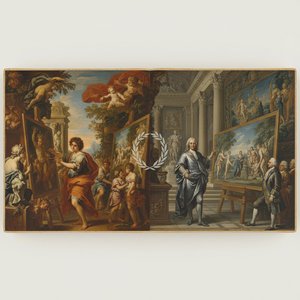
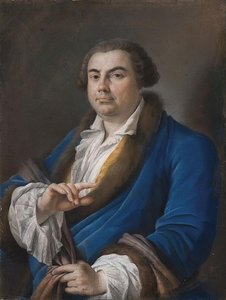
Giovanni Battista Cipriani, born in Florence in 1727, stands as a pivotal figure in the history of British decorative arts and a champion of Neoclassical aesthetics during the Georgian era. His artistic journey began under the tutelage of Ignatius Hugford, a Florentine artist deeply rooted in English cultural ties, establishing him firmly within the Baroque tradition before embarking on a transformative encounter with Anton Domenico Gabbiani – an experience that would profoundly shape his stylistic sensibilities. These formative years instilled within him not merely technical proficiency but also a profound appreciation for dramatic composition and narrative storytelling—elements that would characterize much of his subsequent oeuvre.
Early Commissions & Florentine Roots
Before venturing into England, Cipriani had already garnered considerable acclaim in Italy through commissions such as *St Tesauro* and *St Peter Igneo*, undertaken for the Abbey of San Michele in Pelago, Pistoia – projects which showcased his burgeoning talent and demonstrated a nascent inclination towards monumental artistic endeavors. Furthermore, he contributed to ecclesiastical decorations within Florence itself, cementing his reputation as a skilled craftsman dedicated to elevating religious spaces through visual splendor. These early undertakings served as invaluable preparation for his arrival in London, where he would swiftly establish himself as a respected artist and collaborator.
The English Patronage & Chamber’s Influence
His journey towards England was facilitated by connections forged in Rome between 1750 and 1753, notably with architect Sir William Chambers – a relationship that proved instrumental in unlocking doors to influential patronage and fostering artistic opportunities across the Channel. Chambers recognized Cipriani's exceptional abilities and enlisted his services on ambitious decorative projects, including the magnificent ceiling at the Albany for Lord Holland—a commission that exemplifies Cipriani’s mastery of illusionistic painting techniques and his commitment to crafting spaces imbued with grandeur and intellectual resonance. Similarly, he played a crucial role in shaping Buckingham House’s interior design, collaborating closely with Chambers and Joseph Wilton on this transformative undertaking – an endeavor that solidified Cipriani's position as a leading decorative artist of the era.
Neoclassical Style & Collaborative Achievements
Cipriani’s artistic style embodied a harmonious blend of Baroque drama and Neoclassical refinement—a stylistic fusion that profoundly impacted furniture design and interior decoration throughout Britain. His designs for furnishings, characterized by graceful nymphs, playful amorini, and intricately detailed medallion subjects, captivated audiences and elevated the aesthetic standards of Georgian society. Moreover, he forged enduring partnerships with fellow artists such as Francesco Bartolozzi – whose engravings faithfully reproduced Cipriani’s paintings—and John Hamilton Mortimer, establishing a collaborative network that enriched his artistic output and disseminated his stylistic vision across England. His involvement in monumental projects like Somerset House and the Gold State Coach further underscored his stature as a cultural innovator and reaffirmed his contribution to Britain's artistic heritage.
Legacy & Enduring Influence
Giovanni Battista Cipriani’s legacy extends far beyond his individual creations; he nurtured the talents of numerous aspiring artists, ensuring that his artistic sensibilities would continue to inspire future generations. His meticulous attention to detail, combined with his profound understanding of classical ideals—particularly those championed by Neoclassicism—established him as a cornerstone of British art history. Cipriani’s influence can be discerned in the elegant interiors of Georgian England and remains palpable today through reproductions of his stunning artwork – a testament to his enduring artistic legacy. He passed away peacefully in Hammersmith, West London, in 1785, leaving behind an indelible mark on the cultural landscape of his time. His final resting place is Dovehouse Green, Chelsea—a solemn reminder of his contribution to British art and culture.