Portretul lui Franz Ittenbach

Cele 8 cele mai faimoase picturi ale lui Franz Ittenbach, o selecție de galerie

Actualizat Noiembrie 2026 · clasat în funcție de scorul nostru de popularitate (căutări, vizite și comenzi pentru fiecare operă) · 8 lucrări ale lui Franz Ittenbach în catalogul nostru

Pe scurt

Dintre toate originalele lăsate de Franz Ittenbach, cea mai faimoasă este The Holy Family (1868). Imediat după acestea urmează Portrait of Margarete von Soist (1849) și Madonna and Child (1855). Catalogul nostru cuprinde 8 lucrări ale lui Franz Ittenbach; galeria a păstrat cele 8 pe care lumea le admiră cel mai mult, fiecare fiind prezentată împreună cu data, muzeul și povestea sa.

1813 – 1879, Königswinter Cele mai multe lucrări: Minneapolis Institute of Art

Cele mai importante 10 picturi ale lui Franz Ittenbach: selecția galeriei

1
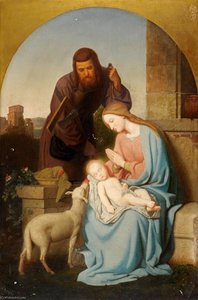
The Holy Family (1868) de Franz Ittenbach

The Holy Family

1868 · Oil On Panel

The air in the humble setting feels heavy with a stillness that only sacred moments possess. Mary cradles her child, Jesus, with a tenderness that pulls the viewer into her immediate circle of care. Nearby, Joseph watches, his presence a steady anchor in this simple environment. The scene unfolds with a quietude that suggests the world outside has ceased to turn. A few figures linger in the periphery, their presence…

2
Portrait of Margarete von Soist (1849) de Franz Ittenbach

Portrait of Margarete von Soist

1849 · Oil

Margarete von Soist sits with a quiet, heavy presence. She is draped in a deep blue dress, the fabric absorbing the light, while a fur-trimmed coat rests against her shoulders. A single strand of pearls circles her neck, catching a soft, pale glow. She looks directly at the viewer, her expression fixed in a serious, unyielding gaze. Behind her, the world is reduced to a few essential objects: two books…

3
Madonna and Child (1855) de Franz Ittenbach

Madonna and Child

1855 · Oil · Minneapolis Institute of Art, Minneapolis

A serene landscape provides the backdrop for this Neoclassical oil painting, where a mother and infant are framed within a soft, arched composition. The Madonna is draped in a deep rose-colored tunic and a rich blue mantle, her pale skin contrasting against the light blue sky. She gazes gently at the child, establishing an intimate connection that anchors the entire scene. In the foreground, the meticulous rendering of white lilies…

4
Mother of the World (1872) de Franz Ittenbach

Mother of the World

1872 · Oil On Canvas · Milwaukee Art Museum, Milwaukee

The composition centers on the Virgin Mary seated upon an ornate throne, her form symmetrical and formal. She holds the Christ Child upon her lap, who in turn holds a globus cruciger, a symbol of sovereignty. This arrangement establishes a hierarchy of sacred authority. The palette relies on saturated primary tones: a cerulean blue mantle for Mary and a coral-pink tunic for the Child, set against a luminous gold background.…

5
Christ and the Samaritan by the well - Franz Ittenbach (2026) de Franz Ittenbach

Christ and the Samaritan by the well - Franz Ittenbach

2026 · Acrilic

Franz Ittenbach's depiction of Christ and the Samaritan woman is not merely a rendering of a biblical scene; it’s an intimate exploration of faith, redemption, and the breaking down of societal barriers. Painted in 1854, this work exemplifies the Düsseldorf School’s commitment to religious narrative, deeply rooted in the traditions of the Nazarene movement. Ittenbach, known for his dedication to church decoration, imbues this canvas with a quiet reverence that…

Subiectele care i-au captivat privirea lui Franz Ittenbach

Cele patru teme care revin cel mai des în aceste opere originale, fiecare având cel mai sublim exemplu.

Muzeele care păstrează originalele lui Franz Ittenbach

Cele 3 muzee care dețin cele mai multe dintre picturile de pe această pagină.

Muzee Oraș Lucrări lui Franz Ittenbach Picturi din această listă
Minneapolis Institute of Art, MinneapolisMinneapolis Institute of Art Minneapolis 1 Madonna and Child
Milwaukee Art Museum, MilwaukeeMilwaukee Art Museum Milwaukee 1 Mother of the World
Minneapolis Institute of Arts, MinneapolisMinneapolis Institute of Arts Minneapolis 1 Madonna and Child

Franz Ittenbach deceniu cu deceniu: originalul care definește fiecare

Lucrări pe deceniu

Alege o deceniu pentru a descoperi opera originală care îl definește.

Întrebări ale colecționarilor despre picturile lui Franz Ittenbach

Pentru ce operă este cel mai cunoscut Franz Ittenbach?Află răspunsul

The Holy Family (1868). Urmează Portrait of Margarete von Soist (1849) și Madonna and Child (1855).

Ce vârstă avea Franz Ittenbach când a fost creată The Holy Family?Află răspunsul

55 ani: The Holy Family datează din 1868, iar Franz Ittenbach s-a născut în 1813.

Câte picturi a lăsat Franz Ittenbach?Află răspunsul

Catalogul nostru cuprinde 8 lucrări ale lui Franz Ittenbach, datate între 1849 și 1872.

În ce muzee sunt expuse capodoperele lui Franz Ittenbach?Află răspunsul

În principal în Minneapolis Institute of Art (Minneapolis), Milwaukee Art Museum (Milwaukee) și Minneapolis Institute of Arts (Minneapolis). Tabelul cu muzee de mai sus le enumeră pe toate.

În ce ani a pictat Franz Ittenbach cele mai cunoscute opere?Află răspunsul

În 1850s: 4 dintre cele 8 lucrări de pe această pagină au fost realizate atunci, fiind Madonna and Child dintre acestea.

Care sunt prima și ultima pictură originală celebră a lui Franz Ittenbach?Află răspunsul

Pe această pagină, cea mai veche lucrare datează din Portrait of Margarete von Soist (1849), iar cea mai recentă este din Mother of the World (1872).

Ce subiecte a ales cel mai des Franz Ittenbach?Află răspunsul

Child (3), Woman (3) și Blue mantle (2), din cele 8 lucrări de pe această pagină.

Ce tehnică a folosit cel mai des Franz Ittenbach?Află răspunsul

Oil, pentru 2 dintre cele 8 lucrări de pe această pagină.

Franz Ittenbach: viață și operă

The Spiritual Vision of Franz Ittenbach

In the heart of the nineteenth century, a period often defined by the rapid onset of industrialization and secularism, Franz Ittenbach emerged as a profound voice for spiritual continuity. Born in 1813 in the picturesque Königswinter, at the foot of the Drachenfels mountain range, Ittenbach’s early life was steeped in a reverence for faith that would later become the cornerstone of his artistic identity. The son of a modest wine shop owner, he grew up surrounded by the values of craftsmanship and religious conviction, a foundation that prepared him for a life dedicated to the pursuit of divine beauty through the medium of paint.

His journey into the upper echelons of European art began with rigorous formal training. After initial studies under Kaufmann, he moved to Cologne to refine his skills under Franz Katz, mastering the essential elements of draughtsmanship and technique. However, it was his arrival at the Düsseldorf Academy in 1832 that would irrevocably alter his destiny. Under the mentorship of Friedrich Wilhelm Schadow, the academy's president, Ittenbach found more than just technical instruction; he found a spiritual calling. This period marked his integration into the prestigious Düsseldorf school of painting, a movement renowned for its meticulous observation of nature and its deep commitment to emotional and spiritual contemplation.

The Nazarene Spirit and Italian Inspiration

Ittenbach was not merely a painter of scenes, but a member of a brotherhood. Alongside fellow students Karl Müller, Andreas Müller, and Ernst Deger, he formed a tight-knit quartet of artists who shared a common mission: to revive the purity of Christian art. This group became closely associated with the Nazarene movement, a group of German Romantic painters who sought to return to the sincerity and spiritual depth found in Late Medieval and Early Renaissance masterpieces. Their travels through Germany were characterized by a collective devotion to studying and replicating the great works of the past, fostering a style that rejected the superficial trends of their era in favor of timeless truth.

The years between 1839 and 1842 proved transformative as Ittenbach immersed himself in the artistic fervor of Italy. Living amidst the Roman art that had inspired the masters of old, he solidified a stylistic preference for academic realism blended with a profound sense of piety. This Italian sojourn infused his work with a classical grace and an appreciation for tonal harmonies. Upon his return to Germany, and eventually settling back in Düsseldorf in 1849, his work began to exhibit a unique ability to portray biblical narratives with an unwavering sincerity that resonated deeply with the Catholic faithful.

Mastery of Light and Sacred Narrative

The true brilliance of Ittenbach’s oeuvre lies in his ability to transform theological concepts into palpable, human experiences. His technique often utilized a restrained palette, prioritizing soft, ethereal light and earthy tones—rich reds, deep blues, and warm ochres—to create an atmosphere of both earthly groundedness and spiritual transcendence. In masterpieces such as Christ and the Samaritan by the Well, painted in 1854, one can witness his mastery of the human element. He does not merely depict a biblical encounter; he captures the subtle shift from skepticism to dawning understanding through nuanced facial expressions and expressive gestures.

His dedication to church decoration and religious subject matter left an indelible mark on the nineteenth-century landscape. Whether portraying the tender intimacy of the Madonna and Child or the solemnity of the Holy Family, Ittenbach’s work serves as a bridge between the historical past and the spiritual present. His legacy is defined by several key artistic contributions:

  • The Nazarene Ideal: A commitment to reviving the spiritual purity and technical precision of the Early Renaissance.
  • Düsseldorf School Excellence: The integration of meticulous naturalism with profound religious narrative.
  • Emotional Resonance: The use of light and color to convey complex theological themes like redemption, grace, and faith.

Though he passed away in Düsseldorf in 1879, the impact of Franz Ittenbach continues to be felt. He remains a pivotal figure for those who seek art that transcends the temporal, offering instead a window into the eternal through the delicate interplay of light, shadow, and sacred story.