


1


Actualizat Noiembrie 2026 · clasat în funcție de scorul nostru de popularitate (căutări, vizite și comenzi pentru fiecare operă) · 3 lucrări ale lui Francesco Mancini în catalogul nostru
Pe scurt
Dintre toate originalele lăsate de Francesco Mancini, cea mai faimoasă este Portrait of a Young Man (1718), din colecția Colecțiile Statale de Pictură din Bavaria, Munchen. Imediat după acestea urmează Church annihilates pagan gods (1712) și Rest during the Flight to Egypt. Catalogul nostru cuprinde 3 lucrări ale lui Francesco Mancini; galeria a păstrat cele 3 pe care lumea le admiră cel mai mult, fiecare fiind prezentată împreună cu data, muzeul și povestea sa.


To gaze upon this depiction of Rest during the Flight to Egypt is to be enveloped in an atmosphere of profound serenity, a moment plucked from sacred history and rendered with masterful grace. The scene immediately draws the eye to Mary, cradling the divine presence of the infant Jesus. It is not merely a portrait of figures; it is a tableau vivant of faith enduring, a quiet testament to protection…
Cele 2 muzee care dețin cele mai multe dintre picturile de pe această pagină.
| Muzee | Oraș | Lucrări lui Francesco Mancini | Picturi din această listă |
|---|---|---|---|
 Colecțiile Statale de Pictură din Bavaria |
Munchen | 1 | Portrait of a Young Man |
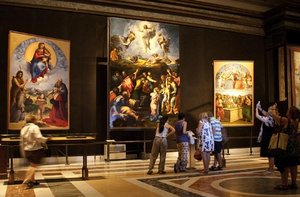 Pinacoteca Vaticană |
Vatican | 1 | Rest during the Flight to Egypt |
Lucrările datate ale lui Francesco Mancini din această selecție acoperă doar 7 ani, de la 1712 la 1718: o carieră scurtă, prezentată aici an de an.
Alege un an pentru a vedea originalele acestuia.
Portrait of a Young Man (1718), Colecțiile Statale de Pictură din Bavaria, Munchen. Urmează Church annihilates pagan gods (1712) și Rest during the Flight to Egypt.
39 ani: Portrait of a Young Man datează din 1718, iar Francesco Mancini s-a născut în 1679.
Catalogul nostru cuprinde 3 lucrări ale lui Francesco Mancini, datate între 1712 și 1718.
În principal în Colecțiile Statale de Pictură din Bavaria (Munchen) și Pinacoteca Vaticană (Vatican). Tabelul cu muzee de mai sus le enumeră pe toate.
Pe această pagină, cea mai veche lucrare datează din Church annihilates pagan gods (1712), iar cea mai recentă este din Portrait of a Young Man (1718).
Born in the ancient, stone-carved landscape of Matera around 1679, Francesco Mancini emerged as a luminous voice within the dramatic tapestry of the Neapolitan Baroque. His early life was shaped by the profound spiritual atmosphere of Southern Italy, a setting that would later infuse his canvases with an unmistakable sense of piety and grace. Under the tutelage of Antonino Bonaccersi in Acireale, Mancini mastered the foundational classical principles of composition and form, yet it was his subsequent journey to the prestigious Academy of Fine Arts in Naples that truly ignited his artistic soul. Immersed in the teachings of the Morelli school, he learned to look beyond mere representation, seeking instead a nuanced depiction of natural phenomena through meticulous observation and an acute sensitivity to the shifting qualities of light.
Mancini’s artistry is defined by a delicate balance between the theatrical grandeur of the Baroque era and a burgeoning, quiet realism. While many of his contemporaries sought to overwhelm the viewer with opulent ornamentation and sweeping, idealized figures, Mancini found beauty in the subtle. He cultivated a distinctive palette of subdued tones, using chiaroscuro not merely for dramatic effect, but to breathe life into the textures of the Sicilian coastline and the solemnity of religious subjects. His landscapes, particularly those capturing the rugged elegance of the Mediterranean, serve as a testament to his ability to manipulate light to convey deep emotion, turning a simple seascape or a rain-swept path into a profound meditation on the natural world.
The evolution of Mancini’s style was significantly enriched by his transformative travels. His period in Rome during the late 1800s allowed him to absorb the intellectual and artistic vitality of the papal city, exposing him to a wider breadth of classical influences. This era of exploration is reflected in his celebrated works such as “Da Vietri ad Amalfi” and “Pioggia,” where the atmospheric conditions of the Italian landscape are rendered with breathtaking accuracy. These paintings do more than document scenery; they capture the very essence of a moment, utilizing light to illuminate form and evoke a sense of tranquil nostalgia.
Upon returning to his roots in Acireale, Mancini became a prolific contributor to the cultural and religious fabric of the region. His legacy is etched into the very architecture of Sicilian churches and civic buildings, where his paintings served as windows into the divine. His work often bridged the gap between the earthly and the celestial, as seen in masterpieces like Rest during the Flight to Egypt, where the devotional light guides the viewer through a sacred narrative. Through his commitment to capturing the true essence of his subjects—whether a coastal vista or a holy figure—Mancini secured his place as a master of atmospheric storytelling.
The enduring significance of Francesco Mancini lies in his ability to harmonize the monumental with the intimate. His contributions to the Neapolitan Baroque movement provided a necessary counterpoint to the era's more aggressive theatricality, offering instead a vision of beauty rooted in truth and light. Today, his works remain vital touchstones for understanding the intersection of landscape, faith, and the mastery of light in 18th-century Italian art.