Portretul lui Francesco Botticini

Cele 43 cele mai faimoase picturi ale lui Francesco Botticini, fiecare unică în felul ei

Actualizat Noiembrie 2026 · clasat în funcție de scorul nostru de popularitate (căutări, vizite și comenzi pentru fiecare operă) · 44 lucrări ale lui Francesco Botticini în catalogul nostru

Pe scurt

Madonna and Child Enthroned with Saints and Angels (1481) este pictura lui Francesco Botticini care atrage cele mai multe priviri; originalul aparține Metropolitan Museum of Art, New York. După aceasta, privirea se îndreaptă către Saints Anna and Joachim (1460) și Incoronation of Mary (1460). Dintre cele 44 opere ale lui Francesco Botticini din catalogul nostru, acestea 43 sunt cele mai celebre, fiecare fiind o piesă unică, prezentată împreună cu anul creării, muzeul deținător și motivul pentru care aceasta rămâne memorabilă.

1446 – 1498, Florența Early renaissance Cele mai multe lucrări: Gemäldegalerie

Cele mai importante 10 picturi ale lui Francesco Botticini, prin ochii galeriei

1
Madonna and Child Enthroned with Saints and Angels (1481) de Francesco Botticini

Madonna and Child Enthroned with Saints and Angels

1481 · Tempera On Panel · Metropolitan Museum of Art, New York

The painting presents a central, elevated throne holding the Virgin Mary and the Christ Child. Mary is positioned in a frontal view, wearing a deep ultramarine blue mantle over a crimson red garment. The infant Jesus rests in her arms, his form rendered with anatomical clarity. Flanking the central throne, two angels are depicted in motion, while four saints occupy the foreground. These saints are identified by specific attributes, including…

2
Saints Anna and Joachim (1460) de Francesco Botticini

Saints Anna and Joachim

1460 · Tempera On Panel · Brooklyn Museum, Brooklyn

This Renaissance-era tempera painting presents a serene and devotional scene featuring two holy figures, likely Saints Anna and Joachim, depicted in profile. The composition is intimate and vertical, with the subjects positioned slightly to the right of the center. They are set against a background consisting of a blue sky and a reddish-brown crenelated wall.

3
Incoronation of Mary (1460) de Francesco Botticini

Incoronation of Mary

1460 · Tempera On Panel · Gemäldegalerie, Berlin

Incoronation of Mary by Francesco Botticini unfolds as a profound moment of divine recognition. This panel, dating to about 1460, captures a celestial event frozen in time. The scene centers on the kneeling Virgin Mary as she receives her crown, a moment of profound spiritual weight that bridges the gap between the heavens and the earth. Every figure in this assembly seems to hold its breath, caught in the stillness…

4
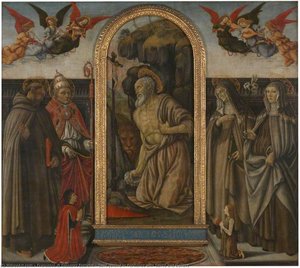
Madonna and Child with Tobias and the Angel Raphael (1470) de Francesco Botticini

Madonna and Child with Tobias and the Angel Raphael

1470 · Tempera On Panel · Cleveland Museum of Art, Cleveland

In this work, Madonna and Child with Tobias and the Angel Raphael, Francesco Botticini organizes the sacred narrative within a vertically oriented composition, contained by an arched frame. At the center, the Madonna is captured in a moment of quiet prayer, kneeling before the Christ Child who rests upon the ground. To the left, the artist has placed a smaller, secondary scene depicting the figures of Tobias and the Angel…

5
Madonna and Child (1475) de Francesco Botticini

Madonna and Child

1475 · Tempera On Panel · Cleveland Museum of Art, Cleveland

The Virgin Mary sits in a vertical stillness, her form defined by the soft pink of a pleated tunic. She holds the infant Jesus against a landscape that recedes into pale blue skies and earthy greens. A translucent veil rests upon her hair, its fine pattern catching a light that seems to emanate from within the skin of the figures. The child is a pale, luminous weight in her arms.…

6
Noli Me Tangere (1485) de Francesco Botticini

Noli Me Tangere

1485 · Tempera On Panel · Yale University Art Gallery, New Haven

The air in the enclosed garden feels still, held in a suspension of shock and divine presence. On the left, a male figure emerges from the shadows of the resurrection, his form draped in a long, flowing blue robe that catches the soft, diffused light. He holds a staff, a quiet marker of his transition from the tomb to the living world. Facing him, a woman kneels upon the green…

7
The Resurrection (1485) de Francesco Botticini

The Resurrection

1485 · Tempera On Panel · Yale University Art Gallery, New Haven

In this tempera on wood panel from 1485, we find a scene of profound spiritual transition. Christ rises from a stone sarcophagus, his form luminous against the earthy greens of a rolling Florentine landscape. He holds a white banner marked with a red cross, a symbol of victory over death, while his skin possesses a pale, translucent quality that suggests an inner light. Below, the earthly realm remains in a…

8
Way to Calvary (1475) de Francesco Botticini

Way to Calvary

1475 · Tempera On Panel · Yale University Art Gallery, New Haven

In this religious art painting, titled Way to Calvary, we encounter a significant work by the Florentine artist Francesco Botticini. Created around 1475, the piece belongs to the Early Renaissance period. It is a tempera painting on wood, a medium that allows for a specific kind of clarity in its depiction of sacred narratives.

9
Agony in the Garden (1485) de Francesco Botticini

Agony in the Garden

1485 · Tempera On Panel · Yale University Art Gallery, New Haven

In this tempera on wood panel from 1485, we find ourselves in a quiet, somber landscape where the weight of a divine burden is felt through stillness. The composition is divided into two distinct narrative zones, creating a tension between the spiritual and the earthly. On the left, a solitary figure of Christ kneels in prayer, his form defined by soft, contour-driven lines that suggest a profound sense of isolation.…

10
Madonna and Child with a Breviary (1475) de Francesco Botticini

Madonna and Child with a Breviary

1475 · Tempera On Panel · Cincinnati Art Museum, Cincinnati

The air feels still, as if the very light of the Florentine morning has paused to watch this intimate encounter. Within the soft, circular boundary of the tondo, the Virgin Mary sits in a moment of profound stillness, her presence anchoring the entire composition. She is draped in a mantle of deep ultramarine blue that flows around her, contrasting sharply with the rich vermilion red of her tunic. On her…

Păiți celebrele picturi ale lui Francesco Botticini, de la numărul 11 la 43

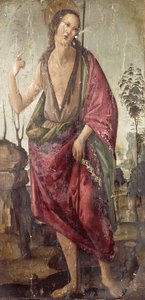
11Madonna and Child with St. Mary Magdalene, St. Bernard, Angels, Cherubim and Seraphim (1485) de Francesco BotticiniMadonna and Child with St. Mary Magdalene, St. Bernard, Angels, Cherubim and Seraphim1485 12Madonna Adoring the Christ Child (1470) de Francesco BotticiniMadonna Adoring the Christ Child1470 · Birmingham Museum of Art 13Crucifixion with Saints Vincent Ferrer, Peter Martyr, Stephen, Catherine of Siena and the Blessed Antonius at the Foot of the Cross (1474) de Francesco BotticiniCrucifixion with Saints Vincent Ferrer, Peter Martyr, Stephen, Catherine of Siena and the Blessed Antonius at the Foot of the Cross1474 · Courtauld Gallery 14Mary with the Child, the Boy John Adoring the Child, and Two Saints (1480) de Francesco BotticiniMary with the Child, the Boy John Adoring the Child, and Two Saints1480 · Gemäldegalerie 15Christ on the Cross and Four Saints (1475) de Francesco BotticiniChrist on the Cross and Four Saints1475 · Gemäldegalerie 16Virgin and Child with the Infant Saint John the Baptist (1472) de Francesco BotticiniVirgin and Child with the Infant Saint John the Baptist1472 · Isabella Stewart Gardner Museum 17The three archangels with the little Tobias (1491) de Francesco BotticiniThe three archangels with the little Tobias1491 · Colecțiile Statale de Pictură din Bavaria 18Madonna Adoring the Christ Child with St. John the Baptist and Two Angels (1487) de Francesco BotticiniMadonna Adoring the Christ Child with St. John the Baptist and Two Angels1487 19Mary and John Adoring the Child (1490) de Francesco BotticiniMary and John Adoring the Child1490 · Gemäldegalerie 20Virgin and Child (1475) de Francesco BotticiniVirgin and Child1475 21Madonna and Child in a Landscape with the Infant St. John the Baptist (1487) de Francesco BotticiniMadonna and Child in a Landscape with the Infant St. John the Baptist1487 22Scenes from the Life of Saint Jerome Predella (1490) de Francesco BotticiniScenes from the Life of Saint Jerome Predella1490 23Saint Jerome in Penitence with Saints and Donors (1490) de Francesco BotticiniSaint Jerome in Penitence with Saints and Donors1490 24Madonna with Child, St John the Baptist, and Angels (1490) de Francesco BotticiniMadonna with Child, St John the Baptist, and Angels1490 25Virgin and Child Enthroned (1495) de Francesco BotticiniVirgin and Child Enthroned1495 · National Gallery of Scotland 26St. Nicolas and Sts. Catherine, Lucy, Margaret and Apollonia de Francesco BotticiniSt. Nicolas and Sts. Catherine, Lucy, Margaret and ApolloniaMuzeul Național de Artă Occidentală 27Virgin Adoring the Child de Francesco BotticiniVirgin Adoring the ChildFitzwilliam Museum 28Portrait of a Young Man de Francesco BotticiniPortrait of a Young Man 29TRIPTYQUE, LA VIERGE ET L'ENFANT de Francesco BotticiniTRIPTYQUE, LA VIERGE ET L'ENFANT 30Saint Cecilia Between Saint Valerian and Saint Tiburtius with a Donor de Francesco BotticiniSaint Cecilia Between Saint Valerian and Saint Tiburtius with a DonorMuzeul Thyssen-Bornemisza 31John the Baptist de Francesco BotticiniJohn the BaptistRijksmuseum 32Scenes from the Life of Saint Jerome - Predella de Francesco BotticiniScenes from the Life of Saint Jerome - Predella 33La Vierge adorant l'enfant entourée de saint Jean Baptiste enfant et de deux anges de Francesco BotticiniLa Vierge adorant l'enfant entourée de saint Jean Baptiste enfant et de deux angesMuzeul Luvru 34LA VIERGE ET L'ENFANT EN GLOIRE ENTOURES D'ANGES, DE SAINTE MARIE MADELEINE ET DE SAINT BERNARD de Francesco BotticiniLA VIERGE ET L'ENFANT EN GLOIRE ENTOURES D'ANGES, DE SAINTE MARIE MADELEINE ET DE SAINT BERNARDMuzeul Luvru 35Saint Sebastian de Francesco BotticiniSaint Sebastian 36Saint Nicholas of Tolentino de Francesco BotticiniSaint Nicholas of Tolentino 37Saint Jerome in Penitence with Saints and Donors de Francesco BotticiniSaint Jerome in Penitence with Saints and DonorsNational Gallery 38S. gerolamo altarpiece de Francesco BotticiniS. gerolamo altarpieceNational Gallery 39The Assumption of the Virgin de Francesco BotticiniThe Assumption of the VirginNational Gallery 40Madonna and Child with the Infant St. John the Baptist (1487) de Francesco BotticiniMadonna and Child with the Infant St. John the Baptist1487 41The Three Archangels with Tobias (1470) de Francesco BotticiniThe Three Archangels with Tobias1470 · Galleria degli Uffizi 42Madonna with child St. John and Angel (1470) de Francesco BotticiniMadonna with child St. John and Angel1470 · Musée Des Beaux 43Saint Sebastian de Francesco BotticiniSaint SebastianMetropolitan Museum of Art

Piesele celebre ale lui Francesco Botticini, perioadă cu perioadă

Subiectele care i-au captivat privirea lui Francesco Botticini

Cele patru teme care revin cel mai des în aceste opere originale, fiecare având cel mai sublim exemplu.

Muzeele care păstrează originalele lui Francesco Botticini

Cele 8 muzee care dețin cele mai multe dintre picturile de pe această pagină.

Muzee Oraș Lucrări lui Francesco Botticini Picturi din această listă
Gemäldegalerie, BerlinGemäldegalerie Berlin 4 Incoronation of Mary, Mary with the Child, the Boy John Adoring the Child, and Two Saints, Christ on the Cross and Four Saints
Yale University Art Gallery, New HavenYale University Art Gallery New Haven 4 Noli Me Tangere, The Resurrection, Way to Calvary
National Gallery, LondraNational Gallery Londra 3 Saint Jerome in Penitence with Saints and Donors, S. gerolamo altarpiece, The Assumption of the Virgin
Metropolitan Museum of Art, New YorkMetropolitan Museum of Art New York 2 Madonna and Child Enthroned with Saints and Angels, Saint Sebastian
Cleveland Museum of Art, ClevelandCleveland Museum of Art Cleveland 2 Madonna and Child with Tobias and the Angel Raphael, Madonna and Child
Muzeul Luvru, ParisMuzeul Luvru Paris 2 La Vierge adorant l'enfant entourée de saint Jean Baptiste enfant et de deux anges, LA VIERGE ET L'ENFANT EN GLOIRE ENTOURES D'ANGES, DE SAINTE MARIE MADELEINE ET DE SAINT BERNARD
Brooklyn Museum, BrooklynBrooklyn Museum Brooklyn 1 Saints Anna and Joachim
Cincinnati Art Museum, CincinnatiCincinnati Art Museum Cincinnati 1 Madonna and Child with a Breviary

Francesco Botticini de-a lungul deceniilor: o piesă unică pentru fiecare

Lucrări pe deceniu

Alege o deceniu pentru a descoperi opera originală care îl definește.

Picturile lui Francesco Botticini: întrebări pentru galerie

Care este cea mai celebră operă a lui Francesco Botticini?Află răspunsul

Madonna and Child Enthroned with Saints and Angels (1481), Metropolitan Museum of Art, New York. Urmează Saints Anna and Joachim (1460) și Incoronation of Mary (1460).

La ce vârstă a creat Francesco Botticini Madonna and Child Enthroned with Saints and Angels?Află răspunsul

35 ani: Madonna and Child Enthroned with Saints and Angels datează din 1481, iar Francesco Botticini s-a născut în 1446.

Care sunt cele mai celebre zece picturi ale lui Francesco Botticini?Află răspunsul

Madonna and Child Enthroned with Saints and Angels, Saints Anna and Joachim, Incoronation of Mary, Madonna and Child with Tobias and the Angel Raphael, Madonna and Child, Noli Me Tangere, The Resurrection, Way to Calvary, Agony in the Garden și Madonna and Child with a Breviary. Clasamentul de mai sus indică anul și muzeul pentru fiecare piesă.

Câte lucrări ale lui Francesco Botticini sunt cunoscute?Află răspunsul

Catalogul nostru cuprinde 44 lucrări ale lui Francesco Botticini, datate între 1460 și 1495.

Unde pot fi vizualizate originalele celor mai faimoși Francesco Botticini?Află răspunsul

În principal în Gemäldegalerie (Berlin), Yale University Art Gallery (New Haven) și National Gallery (Londra). Tabelul cu muzee de mai sus le enumeră pe toate.

În ce perioadă a creat Francesco Botticini cele mai cunoscute picturi?Află răspunsul

În 1470s: 11 dintre cele 43 lucrări de pe această pagină au fost realizate atunci, fiind Madonna and Child with Tobias and the Angel Raphael dintre acestea.

Care este cea mai veche și care este cea mai recentă pictură a lui Francesco Botticini?Află răspunsul

Pe această pagină, cea mai veche lucrare datează din Saints Anna and Joachim (1460), iar cea mai recentă este din Virgin and Child Enthroned (1495).

Ce teme prefera Francesco Botticini?Află răspunsul

Woman (14), Child (13) și Landscape (9), din cele 43 lucrări de pe această pagină.

Cu ce materiale a pictat cel mai des Francesco Botticini?Află răspunsul

Tempera On Panel, pentru 23 dintre cele 43 lucrări de pe această pagină.

Din ce curent artistic face parte opera lui Francesco Botticini?Află răspunsul

Early renaissance, judecând după originalele de pe această pagină.

Ce originale de Francesco Botticini pot vedea la Gemäldegalerie?Află răspunsul

Incoronation of Mary, Mary with the Child, the Boy John Adoring the Child, and Two Saints și Christ on the Cross and Four Saints: Gemäldegalerie, Berlin deține 4 dintre lucrările de pe această pagină.

Francesco Botticini: un portret al artistului

Maestrul florentin: Viața și moștenirea lui Francesco Botticini

În străzile vibrante și însorite ale Florenței secolului al XV-lea, în mijlocul inteligenței înfloritoare a Renașterii timpurii, trăia un pictor al cărui pensulă a capturat esența spirituală profundă a unei epoci. Francesco Botticini, născut în jurul anului 1446, a fost mult mai mult decât un simplu contemporan al giganților timpului său; el a fost o fire vitală în bogata țesătură a artei florentine. În timp ce istoria pune adesea lumina reflectoarelor pe umbrele monumentale ale lui Leonardo da Vinci sau Michelangelo, opera lui Botticini oferă o fereastră către o perioadă de tranziție exquisite, în care structurile rigide ale devotamentului medieval începeau să se topească în grația umanistă a Renașterii.

Călătoria lui Botticini în inima artei a fost predestinată de ascunzătura sa familială. Născut într-o familie împletită în tradițiile meseriei, el a fost fiul lui Giovanni di Domenico di Piero, un pictor priceput de cărți de joc. Această expunere timpurie la cerințele meticuloase ale pigmentului și designului a pus bazele unei cariere definite de precizie și devotament. Educația sa formală a început în atelierul prestigios al lui Neri di Bicci, unde, ca ucenic în 1459, a absorbit principiile fundamentale ale frescei și spiritul colaborativ al sistemului de atelier florentin. Totuși, imersia sa ulterioară în atelierul legendarului Andrea del Verrocchio este cea care i-a transformat cu adevărat viziunea. În cadrul atelierului lui Verrocchio — același creuzet care l-a hrănit pe Leonardo da Vinci — Botticini a învățat să îmbine profunzimea sculpturală a formei tridimensionale cu frumusețea eterică a picturii cu tempera.

O simfonie a devotamentului și a tehnicii

Opera lui Botticini este o dovadă a capacității sale de a evoca divinul prin tangibil. Stilul său, puternic influențat de eleganța lirică a lui Botticelli și de claritatea structurală a lui Filippino Lippi, s-a concentrat adesea pe narațiuni religioase care invitau la o contemplare profundă. Nu se poate discuta despre măiestria sa fără a reflecta asupra realizării sale monumentale, "Ascunderea Fecioarei." Această lucrare de mari dimensiuni realizată cu tempera pe panou de lemn, găsită acum în National Gallery din Londra, servește ca o demonstrație uluitoare a priceperii sale tehnice. În această operă, cerurile se deschid pentru a dezvălui o ierarhie celestială de îngeri, în timp ce tărâmul pământesc este populat de discipoli și donatori, toți pictați cu un echilibru delicat între mișcare și liniștea deplină.

Talentul lui Botticini s-a întins dincolo de picturile de altare grandioase, pătrund în domeniul intim al panourilor religioase de mici dimensiuni și al portretelor. Capacitatea sa de a manipula lumina și umbra i-a permis să creeze scene de o intimitate profundă, precum "Madona cu Pruncul în Tron,", unde granițele dintre sacru și uman par să se dizolve. Tehnica sa utiliza adesea mijlocul tradițional al temperei, care conferă o calitate luminoasă, aproape translucidă, pielii figurilor sale sfinte, făcându-le să pară că radiază o lumină interioară, spirituală. Fie că picta greutatea intelectuală a lui Sfântul Ieronim sau grația tandră a Madonei, Botticini poseda un dar unic de a surprinde gravitatea emoțională a subiectelor sale.

Semnificația istorică și redescoperirea

Traiectoria istorică a lui Francesco Botticini este la fel de emoționantă ca arta pe care a produs-o. Timp de secole, o mare parte din contribuția sa a fost obscurizată de moștenirile copleșitoare ale colegilor săi mai celebri. Multe dintre lucrările sale au fost atribuite în trecut altor maeștri, pierzându-se în fluxurile schimbătoare ale atribuirii istorice a artei. Doar prin eforturile meticuloase ale cercetătorilor moderni — care i-au reconstruit opera prin analiza stilistică și cercetarea arhivelor — Botticini a fost recuperat ca o voce semnificativă a Quattrocento.

Astăzi, îl recunoaștem pe Botticini nu doar ca pe un ucenic al lui Verrocchio sau un urmaș al tradiției florentine, ci ca pe un artist care a adus un sentiment distinct de serenitate și profunzime spirituală Renașterii. Moștenirea sa rezidă în:

  • Integrarea formei sculpturale: Aducerea unei senzații de greutate și prezență figurilor religioase prin instruirea sa sub îndrumarea lui Verrocchio.
  • Stăpânirea stilului florentin: Contribuția la limbajul estetic al grației, liniei și luminozității care a definit epoca.
  • Povestirea spirituală: Crearea de lucrări care au servit atât ca instrumente educaționale pentru credincioși, cât și ca obiecte profunde de meditație.

În timp ce privim panourile sale supraviețuitoare, vedem mai mult decât simplă vopsea pe lemn; vedem spiritul durabil al unui maestru care, deși a trăit la umbra giganților, a lăsat o marcă indelibilă asupra sufletului Florenței.