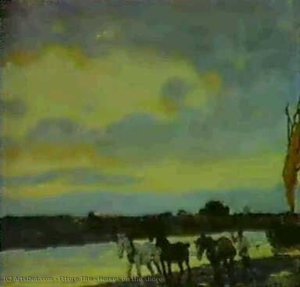
Portretul lui Ettore Tito

Cele 25 cele mai faimoase picturi ale lui Ettore Tito, fiecare unică în felul ei

Actualizat Noiembrie 2026 · clasat în funcție de scorul nostru de popularitate (căutări, vizite și comenzi pentru fiecare operă) · 26 lucrări ale lui Ettore Tito în catalogul nostru

Pe scurt

She is a model (1884) este pictură lui Ettore Tito care atrage cele mai multe priviri. După aceasta, privirea se îndreaptă către Women in the rice fields of Polesine (1885) și Asiago (Vicenza) (1894). Dintre cele 26 opere ale lui Ettore Tito din catalogul nostru, acestea 25 sunt cele mai celebre, fiecare fiind o piesă unică, prezentată împreună cu anul creării, muzeul deținător și motivul pentru care aceasta rămâne memorabilă.

1859 – 1941, Castellammare di Stabia Cele mai multe lucrări: Musée d'Orsay

Cele mai importante 10 picturi ale lui Ettore Tito, prin ochii galeriei

1
She is a model (1884) de Ettore Tito

She is a model

1884 · Oil

The oil painting She is a model by Ettore Tito captures a specific pulse of life from 1884. It presents a realist depiction of a bustling canal scene in Venice. A woman moves through the foreground, her presence a quiet anchor amidst the movement of the water and the stone.

2
Women in the rice fields of Polesine (1885) de Ettore Tito

Women in the rice fields of Polesine

1885 · Oil

In "Women in the rice fields of Polesine" by Ettore Tito, the scene depicts a group of peasant women working within a lush, expansive rice field. The composition utilizes a wide horizontal format to emphasize the vastness of the landscape under a bright, cloudy sky. In the foreground and midground, several women are engaged in various tasks; some are bent over in the shallow water of the paddy, while others…

3
Asiago (Vicenza) (1894) de Ettore Tito

Asiago (Vicenza)

1894 · Oil On Canvas · Museum of Fine Arts Ghent (MSK), Ghent

The scene unfolds in the rugged landscape of Asiago, Vicenza, captured in the year 1894 by the artist Ettore Tito. This genre painting presents a moment of quiet, heavy labor amidst the mountainous terrain. A white horse pulls a cart through the uneven, rocky ground, guided by a man walking steadily alongside the animal. The weight of the task feels present in the very air of the composition, as the…

4
Breezy day in Venice (1895) de Ettore Tito

Breezy day in Venice

In this oil painting, titled Breezy day in Venice, the artist Ettore Tito captures a specific moment of urban life. Created about 1895, the work presents a bustling street scene situated along a Venetian canal. It offers a glimpse into the daily rhythms of the city, focusing on the movement of people and the atmosphere of the quay.

5
Chioggia (1898) de Ettore Tito

Chioggia

1898 · Oil On Canvas · Musée d'Orsay, Paris

In Chioggia, Ettore Tito captures a sunlit day on a coastal promenade. The scene settles upon a bustling walkway where the light of the Adriatic meets the stone pavement. People move through the space in a casual rhythm. Women, children, and adults populate the promenade, some carrying goods and others simply walking through the warmth of the afternoon. The air feels heavy with the salt of the nearby sea and…

6
With the rose between the lips (1895) de Ettore Tito

With the rose between the lips

1895 · Oil On Canvas

With the rose between the lips is a portrait by the Italian artist Ettore Tito. Executed about 1895, the work presents a classic female subject. The composition focuses on the intimate details of the sitter's face and upper shoulders.

7
The Ondina (1905) de Ettore Tito

The Ondina

1905 · Oil

In The Ondina by Ettore Tito, painted about 1905, the viewer is drawn into an intimate encounter with a nude female figure. She is positioned in the foreground, slightly off-center, which lends a sense of natural movement to the scene. This figure, likely a mythological Ondina or sea nymph, is seated at the edge of a shoreline where the rhythmic movement of waves meets the sand. The arrangement of the…

8
Descent from the cross (1911) de Ettore Tito

Descent from the cross

1911 · Oil On Canvas · Muzeul Național de Arte Fine din Buenos Aires, Buenos Aires

In "Descent from the cross" by Ettore Tito, a heavy silence hangs over the scene as the limp body of Christ is lowered from a wooden structure. The composition relies on a dynamic, upward-reaching arrangement that pulls the viewer's gaze toward the center of the struggle. A vertical arrangement of figures guides the eye from the base of the scene upward, emphasizing the physical weight of the descent. The perspective…

9
Oxen Plowing (1911) de Ettore Tito

Oxen Plowing

1911 · Oil · Brooklyn Museum, Brooklyn

Oxen Plowing is an oil painting by Ettore Tito, executed about 1911. This work represents a departure from the artist's frequent urban and lagoon scenes, moving instead toward pastoral subject matter. The piece captures a moment of manual labor within a rural landscape.

10
The dunes (1907) de Ettore Tito

The dunes

1907 · Oil On Canvas · Palazzo Pitti, Florența

We are looking at The dunes, an oil on canvas created by Ettore Tito. This particular work dates to about 1907, a period when the artist was deeply engaged with the shifting light and atmosphere of the coastal landscapes. It is a piece that captures a specific, quiet moment within a natural setting.

Păiți celebrele picturi ale lui Ettore Tito, de la numărul 11 la 25

Subiectele care i-au captivat privirea lui Ettore Tito

Cele patru teme care revin cel mai des în aceste opere originale, fiecare având cel mai sublim exemplu.

Muzeele care păstrează originalele lui Ettore Tito

Cele 8 muzee care dețin cele mai multe dintre picturile de pe această pagină.

Muzee Oraș Lucrări lui Ettore Tito Picturi din această listă
Musée d'Orsay, ParisMusée d'Orsay Paris 2 Chioggia, The Bath
Museum of Fine Arts Ghent (MSK), GhentMuseum of Fine Arts Ghent (MSK) Ghent 1 Asiago (Vicenza)
Muzeul de Artă Plastică din Boston, BostonMuzeul de Artă Plastică din Boston Boston 1 Breezy day in Venice
Muzeul Național de Arte Fine din Buenos Aires, Buenos AiresMuzeul Național de Arte Fine din Buenos Aires Buenos Aires 1 Descent from the cross
Brooklyn Museum, BrooklynBrooklyn Museum Brooklyn 1 Oxen Plowing
Palazzo Pitti, FlorențaPalazzo Pitti Florența 1 The dunes
Art Gallery of New South Wales, SydneyArt Gallery of New South Wales Sydney 1 Air and water
Galleria Nazionale d'Arte Moderna e Contemporanea, RomaGalleria Nazionale d'Arte Moderna e Contemporanea Roma 1 The old fish market in Venice

Ettore Tito de-a lungul deceniilor: o piesă unică pentru fiecare

Lucrări pe deceniu

Alege o deceniu pentru a descoperi opera originală care îl definește.

Picturile lui Ettore Tito: întrebări pentru galerie

Care este cea mai celebră operă a lui Ettore Tito?Află răspunsul

She is a model (1884). Urmează Women in the rice fields of Polesine (1885) și Asiago (Vicenza) (1894).

La ce vârstă a creat Ettore Tito She is a model?Află răspunsul

25 ani: She is a model datează din 1884, iar Ettore Tito s-a născut în 1859.

Care sunt cele mai celebre zece picturi ale lui Ettore Tito?Află răspunsul

She is a model, Women in the rice fields of Polesine, Asiago (Vicenza), Breezy day in Venice, Chioggia, With the rose between the lips, The Ondina, Descent from the cross, Oxen Plowing și The dunes. Clasamentul de mai sus indică anul și muzeul pentru fiecare piesă.

Câte lucrări ale lui Ettore Tito sunt cunoscute?Află răspunsul

Catalogul nostru cuprinde 26 lucrări ale lui Ettore Tito, datate între 1883 și 1922.

Unde pot fi vizualizate originalele celor mai faimoși Ettore Tito?Află răspunsul

În principal în Musée d'Orsay (Paris), Museum of Fine Arts Ghent (MSK) (Ghent) și Muzeul de Artă Plastică din Boston (Boston). Tabelul cu muzee de mai sus le enumeră pe toate.

În ce perioadă a creat Ettore Tito cele mai cunoscute picturi?Află răspunsul

În 1900s: 6 dintre cele 25 lucrări de pe această pagină au fost realizate atunci, fiind The Ondina dintre acestea.

Care este cea mai veche și care este cea mai recentă pictură a lui Ettore Tito?Află răspunsul

Pe această pagină, cea mai veche lucrare datează din Chatting (1883), iar cea mai recentă este din Air and water (1922).

Ce teme prefera Ettore Tito?Află răspunsul

Landscape (6), People (6) și Sky (5), din cele 25 lucrări de pe această pagină.

Cu ce materiale a pictat cel mai des Ettore Tito?Află răspunsul

Oil, pentru 7 dintre cele 25 lucrări de pe această pagină.

Ce originale de Ettore Tito pot vedea la Musée d'Orsay?Află răspunsul

Chioggia și The Bath: Musée d'Orsay, Paris deține 2 dintre lucrările de pe această pagină.

Ettore Tito: un portret al artistului

Ettore Tito: The Venetian Visionary

In the shimmering tapestry of Italian art history, few names evoke the luminous atmosphere of the Venetian lagoon as poignently as Ettore Tito. Born on December 17, 1859, in Castellammare di Stabia near Naples, Tito’s life was a journey defined by the pull of the Adriatic. Though his roots lay in the south, his soul belonged to Venice, the city of his mother, where he returned as a young boy and would remain until his death in 1941. His artistic odyssey began with an almost supernatural precocity; accepted into the prestigious Accademia di Belle Arti di Venezia at the tender age of twelve, he demonstrated a prodigious talent that saw him securing a professorship at just seventeen years old. This early mastery laid the groundwork for a career that would bridge the gap between classical tradition and the burgeoning light-filled experiments of Impressionism.

The genesis of Tito’s unique aesthetic can be traced to his formative encounters with diverse masters. His initial training under Marino Nolenti provided him with a rigorous foundation in classical principles, yet it was his lifelong friendship with the Dutch Impressionist Cecil van Haanen that truly unlocked his creative spirit. Through this influence, Tito began to move beyond mere representation, seeking instead to capture the ephemeral qualities of light, moisture, and movement. His brushwork evolved into a delicate dance of color, where the heavy textures of realism met the soft, atmospheric strokes characteristic of the Impressionist movement. This synthesis allowed him to transform the mundane activities of Venetian life into something ethereal and timeless.

A Master of Light and Contemporary Life

Tito’s oeuvre serves as a vibrant window into the late nineteenth and early twentieth centuries, particularly through his breathtaking landscapes that capture the transition of dawn and dusk. He possessed an uncanny ability to render the Venetian atmosphere—that specific, heavy humidity that catches the golden light of a setting sun or the pale, misty promise of morning. His works are not merely depictions of scenery but are emotional evocations of a city in flux. Whether painting the bustling energy of a crowded market or the quiet solitude of a canal at twilight, Tito utilized a palette reminiscent of Monet and Sisley to elevate his subjects.

The pinnacle of his early recognition arrived in 1887 with the unveiling of “Pescheria Vecchia a Venezia.” This masterpiece, a depiction of the historic Rialto fish market, achieved immediate critical triumph and was acquired by the Galleria Nazionale d’Arte Moderna in Rome. In this work, one can witness the seamless blend of his technical skill: the gritty realism of the marketplace's daily commerce is softened by an Impressionistic luminosity that makes the scene feel alive with breath and motion. This success paved the way for a series of prestigious accolades, including the Città di Venezia Prize in 1897 and a Grand Medal of Gold at the 1903 Biennale, cementing his status as a leading figure of his era.

Legacy and Artistic Significance

Beyond the borders of Italy, Tito’s reputation resonated globally. His ability to capture the essence of contemporary life earned him international acclaim, most notably when he was awarded the Grand Prize in painting at the 1915 Panama–Pacific International Exposition in San Francisco. This recognition highlighted his role not just as a local chronicler of Venice, but as an artist of universal appeal. His later years were marked by continued academic influence and institutional respect, culminating in his appointment to the Royal Academy of Italy in 1926.

The enduring significance of Ettore Tito lies in his ability to document a vanishing world with both precision and poetry. His paintings remain essential historical documents of Venetian life, yet they transcend mere documentation through their profound beauty. To look upon a Tito landscape is to experience the heartbeat of Venice itself—a rhythmic interplay of shadow and light, tradition and modernity. He remains a pivotal figure whose work continues to enchant collectors and historians alike, serving as a luminous bridge between the classical past and the modern era.