A Life Etched in Light and Shadow
Ethel Léontine Gabain, a name perhaps less instantly recognizable than some of her contemporaries, nevertheless occupies a significant place in the narrative of early 20th-century British art. Born in Le Havre, France, in 1883 to a French father and Scottish mother, Gabain’s artistic journey was one of remarkable independence and quiet innovation. Her story is not simply that of a painter or printmaker, but of a woman navigating the complexities of an evolving art world while forging her own path with unwavering dedication. The blend of her heritage – a foot in both French artistic tradition and British sensibility – shaped a unique perspective reflected in her evocative works. From a young age, she demonstrated a keen aptitude for visual expression, nurtured during her education at Wycombe Abbey School where she was even commissioned to paint the headmistress, an early indication of her burgeoning talent. This foundation led her to further studies at the prestigious Slade School of Fine Art in London and later, Raphaël Collin’s studio in Paris, before returning to London to master the intricacies of lithography at the Central School of Arts and Crafts under F.E. Jackson.Early Influences and Artistic Formation
Gabain's formative years were marked by a profound engagement with visual culture. Growing up in Le Havre, she absorbed the artistic traditions of Normandy – landscapes steeped in Impressionistic light and color – alongside the intellectual currents of Parisian salons. Her family’s upbringing instilled in her a respect for scholarship and observation—qualities that would prove invaluable to her artistic development. Wycombe Abbey School provided her with an exceptional education, fostering not only academic pursuits but also cultivating her innate talent for drawing and painting. The commission to depict Miss Watt Whitelaw served as a crucial catalyst, honing her skills in portraiture and establishing her reputation as a promising young artist. Subsequently, she pursued formal training at the Slade School of Fine Art, immersing herself in the teachings of William Ord Kendall and Frank Wilfrid Bacon—artists who championed a bold exploration of form and color. This exposure to avant-garde ideas solidified Gabain’s commitment to artistic experimentation and propelled her toward a distinctive visual idiom.The Lithographic Revolution: A Singular Technique
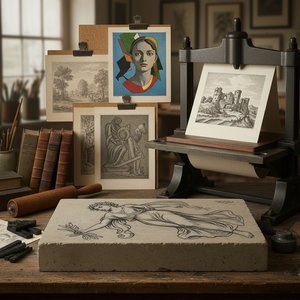
Gabain's artistic breakthrough arrived with her mastery of lithography – a technique that allowed for an unparalleled interplay of light, shadow, and texture. Unlike painting, which relied on pigment applied directly to canvas, lithography utilized stone etching combined with ink printing, resulting in prints possessing a remarkable tonal range and subtle surface nuances. This method demanded meticulous precision and artistic vision—qualities Gabain possessed in abundance. In an era where printmaking often lagged behind painting in terms of prestige and acceptance, Gabain distinguished herself as one of the few artists capable of sustaining a livelihood solely through the sale of her prints. Her decision to embrace lithography wasn’t merely pragmatic; it reflected a deep conviction that this medium offered a unique opportunity for artistic expression—one that resonated powerfully with audiences. Gabain's prints frequently depicted melancholic figures bathed in diffused light, capturing moments of quiet contemplation and conveying an emotional depth rarely achieved by other artists of her time. Her work from this period embodied the spirit of Neo-Romanticism – a movement characterized by its preoccupation with emotion, imagination, and the sublime—and it established Gabain as a pioneer in exploring psychological landscapes through printmaking.Membership in the Senefelder Club and Artistic Collaboration
Gabain’s artistic trajectory gained momentum through her involvement with the Senefelder Club of Printmakers – an institution founded in 1910 by artists like John Copley, Joseph Pennell, and herself—dedicated to elevating lithography as a respected art form. The club served as a vital hub for printmaking innovation, fostering collaborative projects and promoting critical dialogue about technique and aesthetic considerations. Gabain’s partnership with fellow artist John Copley proved particularly fruitful – their shared passion for printmaking fueled a prolific creative output characterized by mutual inspiration and stylistic convergence. Together, they explored themes of domestic life, portraiture, and landscape—often capturing the beauty of rural England with sensitivity and precision. Their collaborative prints showcased Gabain’s ability to synthesize her artistic vision with Copley's technical expertise—resulting in works that transcended individual styles and achieved a harmonious blend of aesthetic qualities.Legacy: Portraits of Women and Artistic Resilience
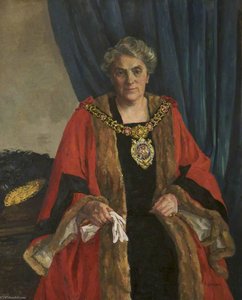
Gabain’s artistic output spanned several decades, encompassing oil paintings, etchings, drypoints, and posters – demonstrating her versatility as an artist and her willingness to adapt to evolving artistic trends. Her portraits of actresses—particularly those depicting Carmen Watson—became iconic representations of feminine beauty and psychological complexity. Gabain skillfully captured the essence of her subjects’ personalities—translating their inner lives onto canvas with remarkable insight—and establishing herself as one of Britain's foremost portraitists. During World War II, Gabain served as a war artist, documenting the experiences of women involved in the conflict – most notably capturing the poignant faces of evacuee children—affirming her commitment to artistic engagement with social issues and conveying empathy for vulnerable populations. Ethel Léontine Gabain died peacefully in London in 1950, leaving behind a legacy of artistic achievement and unwavering resilience—a testament to her enduring influence on British art history. Her work continues to inspire admiration for its evocative beauty and profound psychological depth.Întrebări și răspunsuri
Cum pot urmări creațiile lui Ethel Léontine Gabain an de an?
Există o cronologie a lucrărilor lui Ethel Léontine Gabain: pagina Cronologia operelor de artă a artistului ordonează operele în funcție de data creației.
Câte opere de artă ale lui Ethel Léontine Gabain pot fi vizualizate?
Puteți vizualiza 31 opere de artă de opere ale lui Ethel Léontine Gabain pe pagina Toate operele de artă.
De unde este Ethel Léontine Gabain?
Ethel Léontine Gabain s-a născut în Franța.