Emile Munier: artistul
A Life Woven in Light: The World of Émile Munier
Émile Munier, born on June 2nd, 1840, within the vibrant heart of Paris, is a figure whose life and artistic journey are inextricably linked to the late 19th-century French academic art scene. His story isn’t merely one of an artist; it's a tapestry woven with familial heritage, profound personal loss, and an unwavering dedication to capturing beauty—a narrative that began within the very walls of the Gobelins Manufactory, where his father, Pierre François Munier, served as an artist upholsterer, and his mother, Marie Louise Carpentier, honed her skills in polishing cashmere cloth. This intimate connection to craftsmanship, this immersion in a world of artistry from birth, instilled in young Émile—alongside his brothers François and Florimond—a natural inclination towards creative expression that would blossom into a remarkable career. From an early age, the Munier siblings displayed a keen eye for detail and a remarkable talent for drawing; self-portraits created as teenagers offered tantalizing glimpses of the potential within, hinting at the artistic promise they held. Émile’s formal training commenced at the Gobelins under the tutelage of Abel Lucas, where he diligently mastered the foundational skills of draftsmanship and design—skills that would prove indispensable to his future success. A pivotal moment arrived in 1861 with his marriage to Henriette Lucas, a union that not only solidified his connection to a prominent artistic family but also immersed him further within Paris’s thriving creative community.
The Shadow of Loss & The Pursuit of Purpose
Tragedy struck early in their shared life together when Henriette succumbed to illness after the birth of their son, Emile Henri—a devastating loss that profoundly impacted Munier's world. Yet, amidst this profound grief, he found solace and renewed purpose within his art. This experience, coupled with the quiet strength inherited from his father, fueled a determination to transform personal sorrow into something beautiful and enduring. Later in 1872, he married Sargine Augrand-Campenon, a student of Abel Lucas and a close friend of Henriette—a union that brought a new chapter of stability and companionship to his life. Together, they established a home and studio, creating a nurturing environment for their daughter, Marie Louise, who would often serve as the subject of Munier’s tender depictions of childhood innocence. The early years were marked by a deep sense of loss, yet it was precisely through this lens that Munier began to develop his signature style—a poignant blend of realism and idealized beauty, imbued with an undeniable emotional resonance.
The Influence of Bouguereau & the Shaping of Style
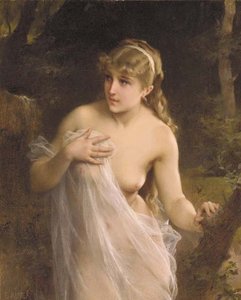
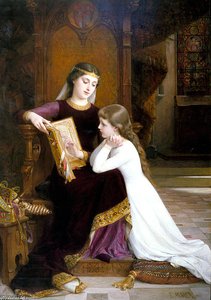
Munier’s artistic development truly flourished during the 1860s, a period profoundly shaped by his encounter with William-Adolphe Bouguereau—a master whose influence would be both immediate and enduring. He became utterly captivated by Bouguereau's meticulous technique, his ability to capture the delicate nuances of light and shadow, and his idealized portrayal of human figures. Munier sought out Bouguereau’s guidance, spending countless hours studying his methods and absorbing his artistic philosophy. This mentorship wasn’t merely a formal apprenticeship; it was a deep-seated admiration for a kindred spirit—a fellow artist dedicated to achieving the highest standards of technical skill and aesthetic beauty. Bouguereau affectionately nicknamed Munier “la sagesse” or “le sage Munier,” recognizing in him a thoughtful, discerning artist with a quiet dedication to his craft. This intimate connection fostered a mutual respect that profoundly shaped Munier’s artistic trajectory. The influence of Bouguereau is readily apparent in Munier's works—particularly in the soft lighting, the graceful poses of his figures, and the harmonious compositions that characterize his oeuvre.
Themes of Innocence & Domestic Harmony
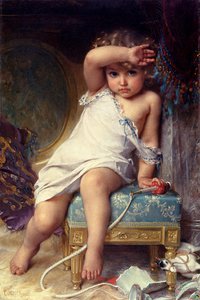
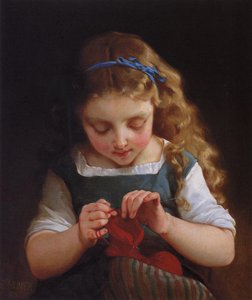
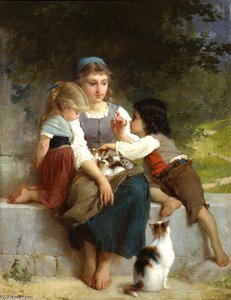
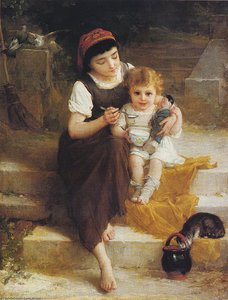
Munier’s artistic output during this period was characterized by a consistent focus on idyllic scenes of domestic tranquility, childhood innocence, and pastoral beauty. He frequently depicted children engaged in simple pleasures—playing with beloved pets, exploring nature, or sharing quiet moments of companionship. These scenes weren't merely charming illustrations; they were imbued with a profound sense of warmth, tenderness, and nostalgia—evoking a longing for a simpler, more harmonious time. His most celebrated work, *Trois Amis* (Three Friends), exemplifies this style perfectly—a captivating depiction of a young girl accompanied by a kitten and a dog, which achieved widespread popularity and was famously utilized in advertising campaigns for Pears soap. Other notable works include the deeply moving *Angel Comforting His Grieving Mother*, commissioned by Jane Stanford as a poignant memorial to her son, Leland Stanford Jr., now housed at the Cantor Arts Center at Stanford University; and *La jeune fille et le panier de chatons* (The Young Girl and Basket of Kittens), completed shortly before his death—a testament to Munier’s enduring fascination with childhood innocence. The recurring presence of family members as models further enhanced the personal touch and emotional depth of his paintings.
Recognition & A Lasting Legacy
Munier's artistic reputation extended far beyond the borders of France, garnering significant recognition in America. Patrons like Chapman H. Hyams and his wife amassed a substantial collection of his work, now housed at the New Orleans Museum of Art—a testament to the enduring appeal of his art. His inclusion in the 1893 Chicago World’s Fair further solidified his international standing, exposing his paintings to a wider audience and earning critical acclaim. Émile Munier passed away on June 29th, 1895, leaving behind a body of work that continues to resonate with viewers today. He represents a crucial link in the continuation of French academic art during a period of evolving artistic styles—a master who skillfully blended tradition with personal expression, creating paintings that evoke feelings of warmth, nostalgia, and enduring human connection. His legacy lies not only in the beauty of his art but also in its ability to transport us to a world of idealized innocence and quiet harmony.