


1


Actualizat Noiembrie 2026 · clasat în funcție de scorul nostru de popularitate (căutări, vizite și comenzi pentru fiecare operă) · 20 lucrări ale lui Elizabeth Boott în catalogul nostru
Pe scurt
Woman and Children (1878) este pictura lui Elizabeth Boott care atrage cele mai multe priviri; originalul aparține Cincinnati Art Museum, Cincinnati. După aceasta, privirea se îndreaptă către The shawm player and his son (1876) și Narcissus on the Campagna (1872). Dintre cele 20 opere ale lui Elizabeth Boott din catalogul nostru, acestea 20 sunt cele mai celebre, fiecare fiind o piesă unică, prezentată împreună cu anul creării, muzeul deținător și motivul pentru care aceasta rămâne memorabilă.


 Richmond1884 · Smithsonian American Art Museum
12
 Fort Monroe, (painting)1882
13
 Villa Castellani Bellosquardo, (painting)1886
14
 Girl in Grey Shawl, (painting)1888
15
 Head of a Child, (painting)1886
16
 Portrait of a Girl, (painting)
17
 Dock Scene, (painting)
18
 Venetian Water Scene, (painting)
19
 Girl in Red, (painting)
20
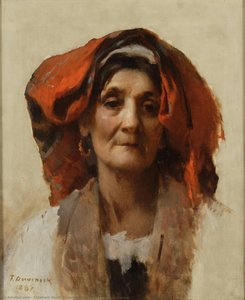 Head of an Italian Woman
Cele 5 muzee care dețin cele mai multe dintre picturile de pe această pagină.
| Muzee | Oraș | Lucrări lui Elizabeth Boott | Picturi din această listă |
|---|---|---|---|
 Brooklyn Museum |
Brooklyn | 4 | Rhododendrons, Rhododendrons, Autumn Foliage |
 Cincinnati Art Museum |
Cincinnati | 2 | Woman and Children, Apple Tree Branches |
 Smithsonian American Art Museum |
Washington, D.C. | 2 | Sharon Springs, Richmond |
 Metropolitan Museum of Art |
New York | 1 | The shawm player and his son |
 Muzeul de Artă Plastică din Boston |
Boston | 1 | Narcissus on the Campagna |
O carieră de 17 ani, de la 1872 la 1888: cele mai faimoase originale ale lui Elizabeth Boott, prezentate an de an.
Alege un an pentru a vedea originalele acestuia.


Mai multe de la 1886

Woman and Children (1878), Cincinnati Art Museum, Cincinnati. Urmează The shawm player and his son (1876) și Narcissus on the Campagna (1872).
32 ani: Woman and Children datează din 1878, iar Elizabeth Boott s-a născut în 1846.
Woman and Children, The shawm player and his son, Narcissus on the Campagna, Lady Bloodgood, (painting), Apple Tree Branches, Rhododendrons, Rhododendrons, Autumn Foliage, Apple Blossoms și Sharon Springs. Clasamentul de mai sus indică anul și muzeul pentru fiecare piesă.
Catalogul nostru cuprinde 20 lucrări ale lui Elizabeth Boott, datate între 1872 și 1888.
În principal în Brooklyn Museum (Brooklyn), Cincinnati Art Museum (Cincinnati) și Smithsonian American Art Museum (Washington, D.C.). Tabelul cu muzee de mai sus le enumeră pe toate.
În 1882: 5 dintre cele 20 lucrări de pe această pagină au fost realizate atunci, fiind Rhododendrons dintre acestea.
Pe această pagină, cea mai veche lucrare datează din Narcissus on the Campagna (1872), iar cea mai recentă este din Girl in Grey Shawl, (painting) (1888).
Rhododendrons, Rhododendrons și Autumn Foliage: Brooklyn Museum, Brooklyn deține 4 dintre lucrările de pe această pagină.
The life of Elizabeth Boott Duveneck, often affectionately known as Lizzie, reads like a sweeping narrative from a Jamesian novel, filled with cosmopolitan elegance and profound romantic devotion. Born in Boston, Massachusetts, she was raised within a world of high culture, the daughter of the accomplished composer Francis Boott. Her early years were shaped by a privileged upbringing that spanned continents, moving from the refined atmosphere of her father's home to the sun-drenched landscapes of Italy. This international existence provided her with a unique, multifaceted perspective, allowing her to absorb the artistic currents flowing through Europe and America alike.
Her journey into the realm of fine art was marked by a rigorous pursuit of mastery. She sought instruction from some of the most influential figures of her era, beginning with the William Morris Hunt class for women in Boston, where she embraced modern French aesthetic principles. Her education continued under the guidance of Thomas Couture outside Paris and later through a transformative summer of study in Munich under her future husband, Frank Duveneck. These mentors helped shape her ability to work across various media, including watercolor, pencil, pen, and ink, as she developed a particular facility for capturing the delicate nuances of still lifes, landscapes, and portraits.
As an American Impressionist, Elizabeth Boott Duveneck possessed a remarkable ability to translate the atmosphere of her surroundings onto the canvas. Her work often reflected the beauty of the Italian landscapes she inhabited, most notably during her time at the Villa Castellani in Bellosguardo. One of her most celebrated achievements, Villa Castellani Bellosquardo, stands as a stunning testament to her skill in capturing Italian beauty through an Impressionist lens. Her technique was characterized by a sensitive touch, whether she was rendering the quiet stillness of a still life or the sweeping vistas of a landscape.
Her professional trajectory was marked by significant milestones that established her reputation within the American art community. She achieved notable success through various exhibitions, including:
Beyond her technical prowess, Elizabeth's life was defined by a legendary romance that defied social expectations. Her marriage to Frank Duveneck in Paris in 1886 was a subject of great speculation, as it united a woman of high Bostonian social standing with a painter perceived by some as a bohemian outsider. Despite the disapproval of her father and the concerns of friends like the novelist Henry James, the couple shared a deep and devoted bond. They lived together at the Villa Castellini, creating a vibrant artistic hub that attracted students and intellectuals alike.
Tragically, the brilliance of her life was extinguished far too soon. Her death in Paris from pneumonia left a void in both the art world and the heart of her husband. The impact of her passing was so profound that Frank Duveneck, devastated by the loss, created a highly expressive funerary monument for her at the Cimitero degli Allori in Florence. Today, Elizabeth Boott Duveneck is remembered not only as a talented painter of landscapes and portraits but as a woman whose life and art were inextricably linked to the beauty and the tragedies of the world she so exquisitely captured.


