Portretul lui Elihu Vedder

Picturi Elihu Vedder: Cele 100 de cele mai faimoase, prin ochii unei galerii

Actualizat Noiembrie 2026 · clasat în funcție de scorul nostru de popularitate (căutări, vizite și comenzi pentru fiecare operă) · 119 lucrări ale lui Elihu Vedder în catalogul nostru

Pe scurt

În ochii galeriei, cea mai celebră pictură a lui Elihu Vedder este (Illustration for Rubáiyát of Omar Khayyám) The Cup of Death (1884), a cărei originală este expusă la Smithsonian American Art Museum, Washington, D.C.. (Illustration for Rubáiyát of Omar Khayyám) The Bitter Cup (1884) și A Glimpse into Hell, or Fear (1893) completează trioul pe care orice ochi îl recunoaște. Dintre cele 119 opere ale lui Elihu Vedder din catalogul nostru, galeria prezintă mai jos cele 100 cele mai faimoase, fiecare fiind originală, cu anul creării, muzeul de păstrare și elementul care o face unică.

1836 – 1923, New York Symbolism Cele mai multe lucrări: Metropolitan Museum of Art

Cele mai apreciate 10 picturi ale lui Elihu Vedder din galerie

1
(Illustration for Rubáiyát of Omar Khayyám) The Cup of Death (1884) de Elihu Vedder

(Illustration for Rubáiyát of Omar Khayyám) The Cup of Death

1884 · Acrylic On Canvas · Smithsonian American Art Museum, Washington, D.C.

Elihu Vedder’s Illustration for Rubáiyát of Omar Khayyám, subtitled "The Cup of Death," captures a scene so tender, it feels lifted directly from a whispered secret. This painting is not merely a depiction of two figures; it is an exquisite meditation on connection, devotion, and the quiet moments that define a life shared. The composition centers on a man bending with profound tenderness to kiss the forehead of a woman…

2
(Illustration for Rubáiyát of Omar Khayyám) The Bitter Cup (1884) de Elihu Vedder

(Illustration for Rubáiyát of Omar Khayyám) The Bitter Cup

1884 · Acrylic On Canvas · Smithsonian American Art Museum, Washington, D.C.

Elihu Vedder’s “The Bitter Cup,” a watercolor illustration accompanying Edward FitzGerald’s translation of Omar Khayyam’s *Rubaiyat*, is more than just a depiction of a simple vessel; it’s a profound meditation on mortality, beauty, and the ephemeral nature of existence. Created in 1884, this piece captures a pivotal moment within the collection – a contemplative pause amidst the verses that grapple with life's fleeting pleasures and inevitable sorrows. The artwork resides…

3
A Glimpse into Hell, or Fear (1893) de Elihu Vedder

A Glimpse into Hell, or Fear

1893 · Oil On Canvas · Art Institute of Chicago, Chicago

A tight arc of faces presses against the viewer, trapped within a lunette shape that denies any escape. Five female figures crowd the foreground, their skin pale against a backdrop of heavy, dark shadows. Their eyes are wide, fixed on something unseen below the frame, reflecting a profound psychological anguish. The light is directional, catching the sharp lines of furrowed brows and the frantic stillness of wide-eyed gazes. It is…

5
The Lost Mind (1864) de Elihu Vedder

The Lost Mind

1864 · Oil On Canvas · Metropolitan Museum of Art, New York

A lone woman stands amidst a desolate, rocky landscape, her figure centered against a vast, pale blue sky. She is wrapped in a dark cloak and a white cloth that catches the diffused light, creating a stark contrast against the rugged, jagged edges of the cliffs. The earth beneath her feet is a collection of ochre, tan, and brown tones, rendered with visible brushstrokes that give the stones a rough,…

6
Soul in Bondage (1891) de Elihu Vedder

Soul in Bondage

1891 · Oil On Canvas · Brooklyn Museum, Brooklyn

Soul in Bondage is an oil on canvas painting by the American artist Elihu Vedder. Created between 1891 and 1892, the work reflects the artist's established presence in the international art scene during the late nineteenth century. Vedder, born in 1836, utilized this period to refine a visual language centered on the internal complexities of the human condition.

7
Memory (1870) de Elihu Vedder

Memory

1870 · Oil On Board · Los Angeles County Museum of Art, Los Angeles

In this 1870 work, titled Memory, Elihu Vedder explores a landscape that feels pulled from the quietest corners of the subconscious. The painting presents a scene where the natural world meets the surreal, featuring a turbulent sky and a dark sea that meet at a sandy shoreline. Within the heavy, dark blue and grey storm clouds, a translucent human face emerges from the mist, appearing to drift through the atmosphere.…

8
The Questioner of the Sphinx (1863) de Elihu Vedder

The Questioner of the Sphinx

1863 · Oil On Canvas · Muzeul de Artă Plastică din Boston, Boston

The shadows of antiquity settle upon The Questioner of the Sphinx, a work that emerges from the hand of Elihu Vedder. Painted about 1863, this piece captures a moment of profound stillness. The artist, an American symbolist painter, book illustrator, and poet, brings a visionary depth to the canvas. His gaze often turned toward the mystical and the unseen, seeking to give form to the intangible through his brush and…

9
Fisherman and the Genie (Sketch) (1863) de Elihu Vedder

Fisherman and the Genie (Sketch)

Elihu Vedder’s Fisherman and the Genie (Sketch) presents an asymmetrical landscape defined by narrative tension. On the left, a dense cluster of dark, gnarled trees anchors the composition, their twisted trunks rendered with expressive, gestural lines. This heavy massing contrasts with the right side of the frame, where a large, rising plume of dark smoke or a mountain-like shape creates a sense of upward movement and depth. The perspective is…

10
Fisherman and the Genie (1863) de Elihu Vedder

Fisherman and the Genie

1863 · Oil On Canvas · Muzeul de Artă Plastică din Boston, Boston

In Fisherman and the Genie, Elihu Vedder explores a moment drawn from the depths of folklore. Created about 1863, this work captures a singular, transformative encounter. The scene focuses on a small, seated fisherman who finds himself dwarfed by the supernatural. He looks upward, his expression caught between awe and fear, as he confronts a presence far beyond the natural order.

Picturi cu Elihu Vedder, clasate de la 11 la 100

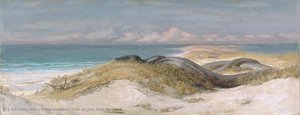
11Study for Prayer for Death in the Desert (1867) de Elihu VedderStudy for Prayer for Death in the Desert1867 · Brooklyn Museum 12Head of Medusa (1878) de Elihu VedderHead of Medusa1878 · Detroit Institute of Arts 13Italian Scene: Pompeo, Monte Colognola Landscape (1878) de Elihu VedderItalian Scene: Pompeo, Monte Colognola Landscape1878 · Rhode Island School of Design Museum of Art 14Young Marsyas (Marsyas Enchanting the Hares) (1878) de Elihu VedderYoung Marsyas (Marsyas Enchanting the Hares)1878 · Crystal Bridges Museum of American Art 15The Water Nymph (1878) de Elihu VedderThe Water Nymph1878 16Eugenia: Head of a Roman Girl (1879) de Elihu VedderEugenia: Head of a Roman Girl1879 · Muzeul de Artă Plastică din Boston 17Delilah (1886) de Elihu VedderDelilah1886 · Detroit Institute of Arts 18Ideal Head — Dawn (1886) de Elihu VedderIdeal Head — Dawn1886 · Muzeul de Artă Plastică din Boston 19Nude (1890) de Elihu VedderNude1890 · Muzeul de Artă Plastică din Boston 20Frivolity (1893) de Elihu VedderFrivolity1893 · Yale University Art Gallery 21Victory (1893) de Elihu VedderVictory1893 · Yale University Art Gallery 22Goddess of Fortune Stay With U (1893) de Elihu VedderGoddess of Fortune Stay With U1893 · Yale University Art Gallery 23Abundance of The Days of the Week (1893) de Elihu VedderAbundance of The Days of the Week1893 · Yale University Art Gallery 24Music (1893) de Elihu VedderMusic1893 · Yale University Art Gallery 25Fame (1893) de Elihu VedderFame1893 · Yale University Art Gallery 26Drama (1893) de Elihu VedderDrama1893 · Yale University Art Gallery 27Wealth (1893) de Elihu VedderWealth1893 · Yale University Art Gallery 28Bounty (1893) de Elihu VedderBounty1893 · Yale University Art Gallery 29Poetry (1893) de Elihu VedderPoetry1893 · Yale University Art Gallery 30Rome Representative of the Arts (1894) de Elihu VedderRome Representative of the Arts1894 · Brooklyn Museum 31Head of Minerva (1896) de Elihu VedderHead of Minerva1896 32Lazarus Rising from the Tomb (1899) de Elihu VedderLazarus Rising from the Tomb1899 · Muzeul de Artă Plastică din Boston 33Music (1910) de Elihu VedderMusic1910 · New Britain Museum of American Art 34Girl with Poppies (1877) de Elihu VedderGirl with Poppies1877 · High Museum of Art 35The Fable of the Miller, His Son, and the Donkey No. 1 (1867) de Elihu VedderThe Fable of the Miller, His Son, and the Donkey No. 11867 · Metropolitan Museum of Art 36Pansies and Spirea (1882) de Elihu VedderPansies and Spirea1882 · Yale University Art Gallery 37The Fable of the Miller, His Son, and the Donkey No. 4 (1867) de Elihu VedderThe Fable of the Miller, His Son, and the Donkey No. 41867 · Metropolitan Museum of Art 38The Fable of the Miller, His Son, and the Donkey No. 6 (1867) de Elihu VedderThe Fable of the Miller, His Son, and the Donkey No. 61867 · Metropolitan Museum of Art 39The Last Man (1886) de Elihu VedderThe Last Man1886 40The Sun God (1882) de Elihu VedderThe Sun God1882 · Smithsonian American Art Museum 41The Cup of Death de Elihu VedderThe Cup of DeathSmithsonian American Art Museum 42The Lair of the Sea Serpent (1864) de Elihu VedderThe Lair of the Sea Serpent1864 · Muzeul de Artă Plastică din Boston 43The Fable of the Miller, His Son, and the Donkey No. 3 (1867) de Elihu VedderThe Fable of the Miller, His Son, and the Donkey No. 31867 · Metropolitan Museum of Art 44The Venetian Model (1878) de Elihu VedderThe Venetian Model1878 · Columbus Museum of Art 45Cypress and Poppies (1880) de Elihu VedderCypress and Poppies1880 · Metropolitan Museum of Art 46Landscape with Sheep and Old Well (1857) de Elihu VedderLandscape with Sheep and Old Well1857 · Muzeul de Artă Plastică din Boston 47Volterra (1860) de Elihu VedderVolterra1860 · Smithsonian American Art Museum 48Three Trees: Italy (1871) de Elihu VedderThree Trees: Italy1871 · Cleveland Museum of Art 49Monks on the Appian Way (1865) de Elihu VedderMonks on the Appian Way1865 · Smithsonian American Art Museum 50Outside Porta San Lorenzo, Rome (1867) de Elihu VedderOutside Porta San Lorenzo, Rome1867 · New Britain Museum of American Art 51Old White Houses, Vitré, France (1866) de Elihu VedderOld White Houses, Vitré, France1866 · New York Historical Society 52Roman Campagna, Lago Di Bracciano (1866) de Elihu VedderRoman Campagna, Lago Di Bracciano1866 · New York Historical Society 53Near Perugia (1870) de Elihu VedderNear Perugia1870 54The Fable of the Miller, His Son, and the Donkey No. 5 (1867) de Elihu VedderThe Fable of the Miller, His Son, and the Donkey No. 51867 · Metropolitan Museum of Art 55The Fable of the Miller, His Son, and the Donkey No. 9 (1867) de Elihu VedderThe Fable of the Miller, His Son, and the Donkey No. 91867 · Metropolitan Museum of Art 56Etruscan Girl (1868) de Elihu VedderEtruscan Girl1868 57Girl with a Lute (1866) de Elihu VedderGirl with a Lute1866 58Etruscan Girl with Turtle (1867) de Elihu VedderEtruscan Girl with Turtle1867 59The Music Party (1871) de Elihu VedderThe Music Party1871 60The Lonely Spring (1865) de Elihu VedderThe Lonely Spring1865 61The Roc's Egg (1868) de Elihu VedderThe Roc's Egg1868 62Hillside Between Perugia and Gubbio, Italy (1867) de Elihu VedderHillside Between Perugia and Gubbio, Italy1867 63Landscape - Torgiano, Autumn Scene (1877) de Elihu VedderLandscape - Torgiano, Autumn Scene1877 · Rhode Island School of Design Museum of Art 64The Music Party (1875) de Elihu VedderThe Music Party1875 · Cleveland Museum of Art 65Storm in Umbria (1875) de Elihu VedderStorm in Umbria1875 · Art Institute of Chicago 66Waves at Palo (1874) de Elihu VedderWaves at Palo1874 67The Cumean Sibyl (1876) de Elihu VedderThe Cumean Sibyl1876 · Detroit Institute of Arts 68Feisole (1859) de Elihu VedderFeisole1859 · Detroit Institute of Arts 69San Gimignano (1879) de Elihu VedderSan Gimignano1879 · Metropolitan Museum of Art 70The Cloud, Florence, Sull'Arno, Italy (1885) de Elihu VedderThe Cloud, Florence, Sull'Arno, Italy1885 · New York Historical Society 71Roman Model Posing (1881) de Elihu VedderRoman Model Posing1881 72The Cup of Death (1885) de Elihu VedderThe Cup of Death1885 73Japanese Still Life (1879) de Elihu VedderJapanese Still Life1879 · Los Angeles County Museum of Art 74Sphinx, Egypt (1890) de Elihu VedderSphinx, Egypt1890 · Pennsylvania Academy of Fine Arts 75Egyptian Nile (1890) de Elihu VedderEgyptian Nile1890 76The Etruscan Sorceress (1886) de Elihu VedderThe Etruscan Sorceress1886 77Fisherman and Mermaid (1888) de Elihu VedderFisherman and Mermaid1888 · Fogg Art Museum 78The Poet Bears the Sorrows of the World (1890) de Elihu VedderThe Poet Bears the Sorrows of the World1890 · Georgia Museum of Art 79Soul in Bondage (1891) de Elihu VedderSoul in Bondage1891 · Museum of Fine Arts 80Sibilia Cumaea (1898) de Elihu VedderSibilia Cumaea1898 81The Morning Glory (1899) de Elihu VedderThe Morning Glory1899 · Muzeul de Artă Plastică din Boston 82The Fable of the Miller, His Son, and the Donkey No. 8 (1867) de Elihu VedderThe Fable of the Miller, His Son, and the Donkey No. 81867 · Metropolitan Museum of Art 83Sea Breeze (1899) de Elihu VedderSea Breeze1899 84Marsyas Enchanting the Hares (1899) de Elihu VedderMarsyas Enchanting the Hares1899 85Head of a Young Woman (1900) de Elihu VedderHead of a Young Woman1900 86The Old Well, Bordighera (1899) de Elihu VedderThe Old Well, Bordighera1899 87Color Sketch for Crown of Thorns de Elihu VedderColor Sketch for Crown of ThornsReading Public Museum 88Sketch for End of Story of the Fisherman's Mermaid de Elihu VedderSketch for End of Story of the Fisherman's MermaidReading Public Museum 89The lost mind de Elihu VedderThe lost mind 90The pleiades de Elihu VedderThe pleiadesMetropolitan Museum of Art 91The african sentinel de Elihu VedderThe african sentinelMetropolitan Museum of Art 92The cup of love de Elihu VedderThe cup of loveMetropolitan Museum of Art 93Study for the question of the sphinx de Elihu VedderStudy for the question of the sphinx 94The fable of the miller his son and the donkey no de Elihu VedderThe fable of the miller his son and the donkey no 95Little Shrine, Subiaco, Italy de Elihu VedderLittle Shrine, Subiaco, Italy 96Study of Jane Jackson de Elihu VedderStudy of Jane Jackson 97Elements Gazing on the First Man (1913) de Elihu VedderElements Gazing on the First Man1913 98The Fates Gathering in the Stars (1887) de Elihu VedderThe Fates Gathering in the Stars1887 · Art Institute of Chicago 99Lair of the Sea Serpent (1899) de Elihu VedderLair of the Sea Serpent1899 · Metropolitan Museum of Art 100The Fable of the Miller, His Son, and the Donkey No. 2 (1867) de Elihu VedderThe Fable of the Miller, His Son, and the Donkey No. 21867 · Metropolitan Museum of Art

Piesele celebre ale lui Elihu Vedder, perioadă cu perioadă

Late Medieval

1867 – 1870 · 3 lucrări în această listă

Subiectele care i-au captivat privirea lui Elihu Vedder

Cele patru teme care revin cel mai des în aceste opere originale, fiecare având cel mai sublim exemplu.

Muzeele care păstrează originalele lui Elihu Vedder

Cele 8 muzee care dețin cele mai multe dintre picturile de pe această pagină.

Muzee Oraș Lucrări lui Elihu Vedder Picturi din această listă
Metropolitan Museum of Art, New YorkMetropolitan Museum of Art New York 18 The Lost Mind, The Fable of the Miller, His Son, and the Donkey No. 1, The Fable of the Miller, His Son, and the Donkey No. 4
Yale University Art Gallery, New HavenYale University Art Gallery New Haven 11 Frivolity, Victory, Goddess of Fortune Stay With U
Muzeul de Artă Plastică din Boston, BostonMuzeul de Artă Plastică din Boston Boston 10 The Questioner of the Sphinx, Fisherman and the Genie (Sketch), Fisherman and the Genie
Smithsonian American Art Museum, Washington, D.C.Smithsonian American Art Museum Washington, D.C. 7 (Illustration for Rubáiyát of Omar Khayyám) The Cup of Death, (Illustration for Rubáiyát of Omar Khayyám) The Bitter Cup, The Sun God
Detroit Institute of Arts, DetroitDetroit Institute of Arts Detroit 4 Head of Medusa, Delilah, The Cumean Sibyl
Art Institute of Chicago, ChicagoArt Institute of Chicago Chicago 3 A Glimpse into Hell, or Fear, Storm in Umbria, The Fates Gathering in the Stars
Brooklyn Museum, BrooklynBrooklyn Museum Brooklyn 3 Soul in Bondage, Study for Prayer for Death in the Desert, Rome Representative of the Arts
New York Historical Society, New York CityNew York Historical Society New York City 3 Old White Houses, Vitré, France, Roman Campagna, Lago Di Bracciano, The Cloud, Florence, Sull'Arno, Italy

Elihu Vedder, o pictură emblematică pe deceniu

Lucrări pe deceniu

Alege o deceniu pentru a descoperi opera originală care îl definește.

Picturile lui Elihu Vedder: răspunsurile galeriei

Care este cea mai celebră pictură a lui Elihu Vedder?Află răspunsul

(Illustration for Rubáiyát of Omar Khayyám) The Cup of Death (1884), Smithsonian American Art Museum, Washington, D.C.. Urmează (Illustration for Rubáiyát of Omar Khayyám) The Bitter Cup (1884) și A Glimpse into Hell, or Fear (1893).

Ce vârstă avea Elihu Vedder când a finalizat (Illustration for Rubáiyát of Omar Khayyám) The Cup of Death?Află răspunsul

48 ani: (Illustration for Rubáiyát of Omar Khayyám) The Cup of Death datează din 1884, iar Elihu Vedder s-a născut în 1836.

Care sunt cele mai importante 10 picturi ale lui Elihu Vedder?Află răspunsul

(Illustration for Rubáiyát of Omar Khayyám) The Cup of Death, (Illustration for Rubáiyát of Omar Khayyám) The Bitter Cup, A Glimpse into Hell, or Fear, The Keeper of the Threshold, The Lost Mind, Soul in Bondage, Memory, The Questioner of the Sphinx, Fisherman and the Genie (Sketch) și Fisherman and the Genie. Clasamentul de mai sus indică anul și muzeul pentru fiecare piesă.

Câte lucrări a creat Elihu Vedder?Află răspunsul

Catalogul nostru cuprinde 119 lucrări ale lui Elihu Vedder, datate între 1857 și 1913.

Unde sunt expuse cele mai celebrele opere originale ale lui Elihu Vedder?Află răspunsul

În principal în Metropolitan Museum of Art (New York), Yale University Art Gallery (New Haven) și Muzeul de Artă Plastică din Boston (Boston). Tabelul cu muzee de mai sus le enumeră pe toate.

Când a creat Elihu Vedder cele mai faimoase picturi?Află răspunsul

În 1890s: 27 dintre cele 100 lucrări de pe această pagină au fost realizate atunci, fiind A Glimpse into Hell, or Fear dintre acestea.

Care sunt cele mai vechi și cele mai recente opere celebre ale lui Elihu Vedder?Află răspunsul

Pe această pagină, cea mai veche lucrare datează din Landscape with Sheep and Old Well (1857), iar cea mai recentă este din Elements Gazing on the First Man (1913).

La ce subiecte s-a întors cel mai des Elihu Vedder?Află răspunsul

Woman (19), Ribbons (10) și Drapery (9), din cele 100 lucrări de pe această pagină.

În ce tehnică a lucrat cel mai mult Elihu Vedder?Află răspunsul

Oil On Canvas, pentru 28 dintre cele 100 lucrări de pe această pagină.

Cu ce mișcare este asociat(ă) Elihu Vedder?Află răspunsul

Symbolism, judecând după originalele de pe această pagină.

Ce opere originale ale lui Elihu Vedder deține Metropolitan Museum of Art?Află răspunsul

The Lost Mind, The Fable of the Miller, His Son, and the Donkey No. 1 și The Fable of the Miller, His Son, and the Donkey No. 4: Metropolitan Museum of Art, New York deține 15 dintre lucrările de pe această pagină.

Elihu Vedder: artistul

Primii Ani și Formarea Artistică

  • Naștere: 26 februarie 1836, New York, Statele Unite
  • Deces: 29 ianuarie 1923, Roma, Italia

Elijah Vedder s-a născut într-o familie marcată de circumstanțe neobișnuite, părinții săi fiind veri. Copilăria sa a fost o călătorie prin experiențe diverse, de la perioadele petrecute în Cuba, din cauza mutării tatălui său, până la zilele trecute între casa bunicului matern din Schenectady și viața de intern în școli. Deși tatăl său a manifestat inițial anumite rezerve, ambițiile artistice ale lui Vedder au găsit un sprijin necondiționat din partea mamei sale.

Călătoria sa formativă a început în New York, unde a urmat instruirea formală sub îndrumarea lui Tompkins H. Matteson. Ulterior, vederea sa artistică s-a extins pe continentul european; studiile sale din Paris, realizate alături de François-Édouard Picot, și experiența profundă petrecută în Italia, unde a fost cucerit de estetica Renașterii italiene și de stilul pictorilor Macchiaioli, i-au modelat definitiv viziunea. Această perioadă italiană nu a fost doar una de studiu, ci și una de profunzime emoțională, legându-l prin prietenie de pictorul Giovanni Costa și oferindu-i oportunități de călătorie care s-ar fi prelungit dacă constrângerile financiare nu l-ar fi forțat să revină în America.

Momentul de Apogeu și Opere Remarcabile

Cariera lui Vedder a fost o explorare fascinantă a diverselor discipline artistice, întinzându-se de la pictură și ilustrație până la designul mural și poezie. Într-un univers cultural vibrant, el a cultivat prietenii cu figuri emblematice ale epocii, precum Walt Whitman și Herman Melville.

Cele mai memorabile realizări ale sale sunt însă cele care îi vor asigurat locul în istoria simbolismului. Vedder este celebrat pentru cele cincizeci și cinci de ilustrații care însoțesc traducerea lui Edward FitzGerald, Rubáiyát of Omar Khayyam (ediția deluxe), opere considerate adevărate capodopere ale artei simboliste. Picturile sale vizionare, precum „The Roc’s Egg”, „The Fisherman and the Genii” și „Lair of the Sea Serpent”, demonstrează o capacitate incredibilă de a proiecta teme imaginative într-un stil oniric. Dincolo de suportul pe hârtie, el și-a lăsat amprenta în spații monumentale, decorând holul Sălii de Lectură din Biblioteca Congresului din Washington cu picturi murale impresionante. De asemenea, colaborarea sa cu Louis Comfort Tiffany a adus o notă de rafinament obiectelor de artă, prin designul său pentru veselă, mozaicuri și statuete create pentru celebra companie Tiffany.

Stilul Artistic și Influențele

Stilul artistic al lui Vedder este definit de o natură vizionară, de imagini romantice și de o integrare subtilă a influențelor orientale. El a fost o figură centrală în mișcarea Simbolistă, unde emoția și individualismul primeau prioritate în fața realismului strict.

Această viziune a fost îmbogățită de timpul petrecut în Anglia, unde contactul cu Frăția Pre-Rafaelită i-a influențat estetica spre o claritate și un detaliu mai pronunțate. În același timp, opera sa reflectă o fascinație pentru misticism și spiritualitate, fiind profund influențată de poezia lui William Blake și a lui William Butler Yeats. Totul este completat de studiile sale din Italia, care i-au structurat înțelegerea formei, a culorii și a compoziției, oferindu-i acea profunzime clasică aplicată unor teme fantastice.

Moștenirea și Anii de Final

Contribuțiile lui Vedder la arta americană au depășit limitele picturii clasice. El a jucat un rol activ în stabilirea grupului „In Arte Libertas” în Italia și a lăsat în urmă o moștenire literară bogată, formată din reflecții autobiografice și poezie.

Recunoscut pentru meritul său artistic, Vedder a fost membru al Academiei Americane de Arte și Litere. Activitatea sa literară include volume precum The Digressions of V (1910), Miscellaneous Moods in Verse (1914) și Doubt and Other Things (1922). Anii săi de final au fost petrecuți în principal în Italia, unde a continuat să creeze și să scrie până la moartea sa din Roma, în 1923. Moștenirea sa rămâne vie prin acele picturi și ilustrații evocate, care reușesc, chiar și astăzi, să captiveze imaginația publicului.