Portretul lui Edward Bird

Cele 54 cele mai faimoase picturi ale lui Edward Bird, o selecție de galerie

Actualizat Noiembrie 2026 · clasat în funcție de scorul nostru de popularitate (căutări, vizite și comenzi pentru fiecare operă) · 54 lucrări ale lui Edward Bird în catalogul nostru

Pe scurt

Dintre toate originalele lăsate de Edward Bird, cea mai faimoasă este The Scavengers (1800), din colecția Musée Cognacq-Jay, Paris. Imediat după acestea urmează Village Choristers Rehearsing an Anthem for Sunday (1810) și Mr Ricketts' Return From Shooting. Catalogul nostru cuprinde 54 lucrări ale lui Edward Bird; galeria a păstrat cele 54 pe care lumea le admiră cel mai mult, fiecare fiind prezentată împreună cu data, muzeul și povestea sa.

1772 – 1819, Wolverhampton Cele mai multe lucrări: Sunnycroft

Cele mai importante 10 picturi ale lui Edward Bird: selecția galeriei

1
The Scavengers (1800) de Edward Bird

The Scavengers

1800 · Oil On Canvas · Musée Cognacq-Jay, Paris

Two small figures occupy the center of a shadowed world. They are children, caught in a quiet act of discovery amidst the heavy, dark foliage of a large tree. A strong light descends from the upper left, carving their pale faces out of the gloom and catching the light-colored fabric of a girl's apron. The scene is a study in contrast, where the soft skin of youth meets the rough,…

2
Village Choristers Rehearsing an Anthem for Sunday (1810) de Edward Bird

Village Choristers Rehearsing an Anthem for Sunday

1810 · Oil On Canvas · Colecția Regală, Londra

The scene unfolds within a crowded, dimly lit room where a group of villagers has assembled for a musical rehearsal. The composition is dense, with figures arranged in a semi-circle around a central wooden table. To the left, seated musicians anchor the group, while standing figures occupy the right side of the frame. Light enters from a window on the far left, casting directional beams that illuminate faces and hands…

3
Mr Ricketts' Return From Shooting de Edward Bird

Mr Ricketts' Return From Shooting

Oil

The room is heavy with the scent of roasted meat and the warmth of a low fire. At the head of the table, a man sits in a green coat, his yellow waistcoat catching the light as he turns his gaze toward the viewer. He has returned from the field, his presence anchoring the domestic scene. Beside him, a woman in a blue dress looks upward, her posture a silent…

4
The Reading Of The Will Concluded de Edward Bird

The Reading Of The Will Concluded

Oil On Panel

The air in the room feels heavy, thick with the unspoken expectations of those gathered. A man stands at the center of the composition, his posture firm as he holds a document that holds the power to shift fortunes. He reads aloud, his voice cutting through the stillness of the drawing room. Around him, the figures are frozen in a state of intense observation. Some sit in chairs, their bodies…

5
Proclaiming Joash King de Edward Bird

Proclaiming Joash King

Oil

Proclaiming Joash King is an oil painting by the English artist Edward Bird. Created about 1815, the work depicts a specific narrative from the Old Testament of the Bible. The scene focuses on the anointing of the young Joash as the king of Judah. This historical and religious subject matter reflects the artist's transition toward large-scale historical and religious themes during this period of his career.

6
Princess Caraboo of Javasu , (1817) de Edward Bird

Princess Caraboo of Javasu ,

1817 · Oil

Edward Bird painted Princess Caraboo of Javasu , in 1817. The portrait presents Mary Baker in exotic attire, presenting her as the fictional Princess Caraboo of Javasu. This identity was a fabrication used by Baker, an English impostor, to claim royal lineage from a non-existent island in the Indian Ocean.

Selecția pentru Edward Bird continuă, de la 11 la 54

Piesele celebre ale lui Edward Bird, perioadă cu perioadă

Subiectele care i-au captivat privirea lui Edward Bird

Cele patru teme care revin cel mai des în aceste opere originale, fiecare având cel mai sublim exemplu.

Muzeele care păstrează originalele lui Edward Bird

Cele 4 muzee care dețin cele mai multe dintre picturile de pe această pagină.

Muzee Oraș Lucrări lui Edward Bird Picturi din această listă
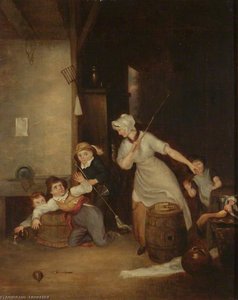
Sunnycroft, WellingtonSunnycroft Wellington 2 A Dame Scolding Naughty Children, The Toy Prisoner Being Shot In The School Room
Musée Cognacq-Jay, ParisMusée Cognacq-Jay Paris 1 The Scavengers
Colecția Regală, LondraColecția Regală Londra 1 Village Choristers Rehearsing an Anthem for Sunday
Anglesey AbbeyAnglesey Abbey 1 The Life Guards In A Guardroom

Edward Bird an de an: originalele care definesc fiecare perioadă

De la 1800 la 1817, Edward Bird a activat timp de 18 ani: selecția urmărește această lungă carieră an de an, prin cele mai deosebite opere originale.

Lucrări pe an

Alege un an pentru a vedea originalele acestuia.

Întrebări ale colecționarilor despre picturile lui Edward Bird

Pentru ce operă este cel mai cunoscut Edward Bird?Află răspunsul

The Scavengers (1800), Musée Cognacq-Jay, Paris. Urmează Village Choristers Rehearsing an Anthem for Sunday (1810) și Mr Ricketts' Return From Shooting.

Ce vârstă avea Edward Bird când a fost creată The Scavengers?Află răspunsul

28 ani: The Scavengers datează din 1800, iar Edward Bird s-a născut în 1772.

Care sunt cele mai celebre zece picturi ale lui Edward Bird?Află răspunsul

The Scavengers, Village Choristers Rehearsing an Anthem for Sunday, Mr Ricketts' Return From Shooting, The Reading Of The Will Concluded, Proclaiming Joash King, Princess Caraboo of Javasu ,, The Arrival of Louis XVIII at Calais, The Birth, The Duet și The Life Guards In A Guardroom. Clasamentul de mai sus indică anul și muzeul pentru fiecare piesă.

Câte picturi a lăsat Edward Bird?Află răspunsul

Catalogul nostru cuprinde 54 lucrări ale lui Edward Bird, datate între 1800 și 1817.

În ce muzee sunt expuse capodoperele lui Edward Bird?Află răspunsul

În principal în Sunnycroft (Wellington), Musée Cognacq-Jay (Paris) și Colecția Regală (Londra). Tabelul cu muzee de mai sus le enumeră pe toate.

Care sunt prima și ultima pictură originală celebră a lui Edward Bird?Află răspunsul

Pe această pagină, cea mai veche lucrare datează din The Scavengers (1800), iar cea mai recentă este din Princess Caraboo of Javasu , (1817).

Ce subiecte a ales cel mai des Edward Bird?Află răspunsul

Children (5), Man (3) și Royalty (3), din cele 54 lucrări de pe această pagină.

Ce tehnică a folosit cel mai des Edward Bird?Află răspunsul

Oil, pentru 3 dintre cele 54 lucrări de pe această pagină.

Ce lucrări ale lui Edward Bird sunt expuse la Sunnycroft?Află răspunsul

A Dame Scolding Naughty Children și The Toy Prisoner Being Shot In The School Room: Sunnycroft, Wellington deține 2 dintre lucrările de pe această pagină.

Edward Bird: viață și operă

Edward Bird: A Pioneer of Naturalistic Painting

Edward Bird (1772 – 1819) stands as a singular figure in British art history, primarily recognized for his pivotal role in establishing the Bristol School and his distinctive approach to blending genre painting with historical themes. Born in Wolverhampton, amidst the burgeoning industrial landscape of Staffordshire, Bird’s artistic journey commenced not within formal academies but rather within the practical framework of his father's carpentry trade—a formative experience that instilled a meticulous attention to detail and an unwavering dedication to craftsmanship. This early grounding would prove instrumental in shaping his subsequent artistic endeavors.
  • Early Influences: Bird’s initial artistic inclinations were nurtured by the precision demanded by japanning, the decorative art of applying enamel paint onto tea trays—a technique that instilled a profound appreciation for meticulous execution and textural nuance.
  • George Cumberland's Patronage: Crucially, Bird benefited from the generosity of George Cumberland, an influential art collector and connoisseur whose expansive library served as a conduit to artistic inspiration drawn from the Old Masters. Cumberland’s unwavering belief in Bird’s talent fostered intellectual curiosity and broadened his understanding of artistic traditions.
  • Sir David Wilkie's Rivalry: Like many artists of his time, Bird engaged in a spirited rivalry with Sir David Wilkie—a celebrated genre painter whose stylistic dominance challenged Bird to forge his own path. Despite this competitive dynamic, their relationship evolved into one of mutual respect and admiration for each other’s artistic vision.

The Bristol School: Collaboration and Innovation

Bird's artistic trajectory gained momentum in Bristol, where he joined forces with a cohort of fellow artists—Edward Villiers Rippingille, Nathan Cooper Branwhite, John King, and Thomas Stothard—forming what would become known as the Bristol School. This informal collective transcended conventional academic boundaries, fostering an environment characterized by spirited debate and reciprocal encouragement. The Bristol School championed a distinctive naturalistic style, prioritizing fresh color palettes and astute observation of everyday life—a stylistic hallmark that profoundly impacted subsequent generations of artists. Regular evening sketching sessions and excursions into the surrounding countryside nurtured both technical skill and a shared artistic ethos. Notably, Bird’s collaboration with Francis Danby solidified the school's reputation for capturing the essence of British landscapes and fostering a collective pursuit of artistic excellence.

Historical Painting: Capturing Dramatic Narrative

Recognizing his burgeoning talent in historical painting—a genre demanding both technical virtuosity and compelling storytelling—Bird embarked on ambitious projects that showcased his ability to convey emotion and dynamism. His most celebrated works included “The Field of Chevy Chase,” “The Day After the Battle,” and “The Crucifixion”—each meticulously rendered with painstaking detail and imbued with palpable dramatic intensity. These paintings cemented Bird’s legacy as a master of genre and history painting, establishing him as one of Britain's foremost artistic voices during his era.

Legacy and Artistic Style

Edward Bird’s enduring influence extends beyond the aesthetic beauty of his canvases—it resides in his pioneering role in shaping the Bristol School’s stylistic trajectory and fostering a tradition of naturalistic representation that continues to resonate with artists today. His meticulous attention to detail, combined with his masterful use of color and composition, ensured that his paintings would endure as timeless expressions of artistic vision. Bird's legacy is cemented by his election as Associate of the Royal Academy in 1812 and Full Member in 1815—honors bestowed upon him for his exceptional contribution to British art history.