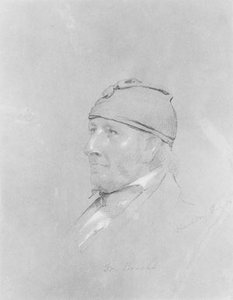
Portretul lui Jonathan Eastman Johnson

Picturi Jonathan Eastman Johnson: Cele 100 de cele mai faimoase, prin ochii unei galerii

Actualizat Noiembrie 2026 · clasat în funcție de scorul nostru de popularitate (căutări, vizite și comenzi pentru fiecare operă) · 208 lucrări ale lui Jonathan Eastman Johnson în catalogul nostru

Pe scurt

În ochii galeriei, cea mai celebră pictură a lui Jonathan Eastman Johnson este William Hayes Fogg (1817-1884) (1887), a cărei originală este expusă la Harvard Art Museums, Cambridge. In the Hayloft (1877) și Grover Cleveland (1891) completează trioul pe care orice ochi îl recunoaște. Dintre cele 208 opere ale lui Jonathan Eastman Johnson din catalogul nostru, galeria prezintă mai jos cele 100 cele mai faimoase, fiecare fiind originală, cu anul creării, muzeul de păstrare și elementul care o face unică.

1824 – 1906, Lovell American realism Cele mai multe lucrări: National Gallery of Art

Cele mai apreciate 10 picturi ale lui Jonathan Eastman Johnson din galerie

1
William Hayes Fogg (1817-1884) (1887) de Jonathan Eastman Johnson

William Hayes Fogg (1817-1884)

1887 · Oil On Canvas · Harvard Art Museums, Cambridge

The room feels quiet, held in a heavy, dignified stillness. An elderly man, William Hayes Fogg, sits before us, his gaze drifting toward the upper left as if caught in a moment of private reflection. He is a figure of authority, draped in the somber weight of a dark frock coat that absorbs the light, leaving only the crisp white of his collar to catch the eye. His face, etched…

2
In the Hayloft (1877) de Jonathan Eastman Johnson

In the Hayloft

1877 · Oil On Canvas

The painting "In the Hayloft" by Jonathan Eastman Johnson is a remarkable piece of art that showcases the artist's skill in capturing everyday life scenes. Created in 1877, this oil on canvas painting is currently located at the San Diego Museum of Art in the United States. Painting Description The painting depicts a group of people standing on a wooden platform or bridge within a barn. Some individuals are engaged…

3
Grover Cleveland (1891) de Jonathan Eastman Johnson

Grover Cleveland

1891 · Oil · Metropolitan Museum of Art, New York

The face emerges from a heavy, dark void. In this 1891 oil portrait, Grover Cleveland sits caught in a sharp beam of light that carves his features out of the gloom. The background remains indistinct, a deep well of blacks and muted ochres that pushes the subject forward. His gaze is direct, meeting the viewer with a steady, unblinking weight. There is no movement here, only the stillness of a…

4
Amos Adams Lawrence (1814-1886) (1887) de Jonathan Eastman Johnson

Amos Adams Lawrence (1814-1886)

1887 · Oil On Canvas · Harvard Art Museums, Cambridge

A formal three-quarter length portrait, this oil on canvas presents an older man emerging from a dark, atmospheric void. The composition centers the subject against a somber, monochromatic background of charcoal and deep brown, a choice that directs all visual attention to the face. Light falls with dramatic precision upon the forehead, cheeks, and nose, utilizing a chiaroscuro-like technique to sculpt the features from the shadows. The subject is dressed…

5
Parke Godwin (1880) de Jonathan Eastman Johnson

Parke Godwin

1880 · Oil · National Portrait Gallery, Washington, D.C.

This 1880 oil portrait, titled Parke Godwin, presents a formal and dignified medium close-up of an elderly man. The subject is depicted from the waist up, positioned against a dark, indistinct background that emphasizes the somber and classical aesthetic of the composition. The lighting, appearing to originate from the upper left, casts a soft glow across the man's forehead, his white hair, and his full, bushy white beard, while leaving…

6
Girl in the Woods [verso of On the Hillside] (1877) de Jonathan Eastman Johnson

Girl in the Woods [verso of On the Hillside]

1877 · Oil · Yale University Art Gallery, New Haven

In "Girl in the Woods [verso of On the Hillside]", Eastman Johnson places us in a quiet, shadowed realm. The composition centers entirely on a young girl, a solitary figure positioned within a dense and dark woodland. This placement creates an immediate, intimate connection, as the eye-level perspective brings the viewer directly in front of the child. There is a certain stillness here, a sense of solitude that borders on…

7
The Little Convalescent (1872) de Jonathan Eastman Johnson

The Little Convalescent

A woman sits in a bed, her attention anchored by a book. Beside her, a child rests, sharing in the stillness of the room. The scene is composed of scattered volumes and a single bottle resting on a nearby surface, creating an atmosphere of intimate, quiet recovery. This 1872 work captures a private moment of connection, where the act of reading provides a gentle anchor for both mother and child.

8
Grover Cleveland (1884) de Jonathan Eastman Johnson

Grover Cleveland

1884 · Oil On Canvas · National Portrait Gallery, Washington, D.C.

In this portrait of Grover Cleveland, Eastman Johnson employs a close-up bust view that brings the viewer into an immediate, quiet proximity with the subject. The composition is intentionally intimate, positioning the man slightly off-center to create a sense of natural presence rather than rigid formality. He is turned toward the right of the frame, his gaze directed away from the viewer, which lends the work a contemplative quality. This…

9
Portrait of Mrs. Eastman Johnson (1888) de Jonathan Eastman Johnson

Portrait of Mrs. Eastman Johnson

1888 · Oil On Canvas · Smithsonian American Art Museum, Washington, D.C.

In Portrait of Mrs. Eastman Johnson, Jonathan Eastman Johnson employs a close-up, three-quarter view to establish an intimate perspective. The composition focuses tightly on the subject's head, shoulders, and hands, drawing the viewer into a contemplative state. This proximity creates a sense of quiet introspection, pulling the observer into the subject's private, melancholic mood.

10
Eastman Johnson Self-Portrait (1877) de Jonathan Eastman Johnson

Eastman Johnson Self-Portrait

1877 · Oil On Board · National Portrait Gallery, Washington, D.C.

We are looking at the Eastman Johnson Self-Portrait, a painting executed by the artist Jonathan Eastman Johnson in 1877. This work is a self-portrait, a genre in which the artist turns his gaze inward to capture his own likeness. In this specific instance, the subject of the work is the artist himself, Jonathan Eastman Johnson.

Picturi cu Jonathan Eastman Johnson, clasate de la 11 la 100

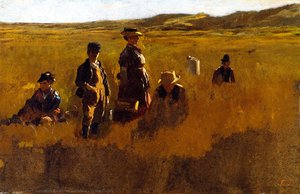
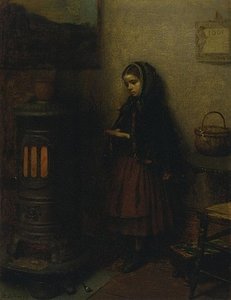
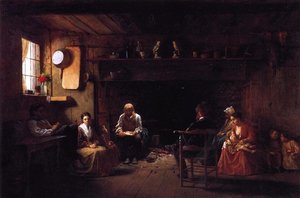
11The Young Sweep (1863) de Jonathan Eastman JohnsonThe Young Sweep1863 · Detroit Institute of Arts 12Little Brown Boy (1863) de Jonathan Eastman JohnsonLittle Brown Boy1863 · Rhode Island School of Design Museum of Art 13The Sugar Camp (also known as Making Maple Sugar or Susan Ray’s Maple Sugaring Kitchen) (1863) de Jonathan Eastman JohnsonThe Sugar Camp (also known as Making Maple Sugar or Susan Ray’s Maple Sugaring Kitchen)1863 · Yale University Art Gallery 14Home and Warmth (1863) de Jonathan Eastman JohnsonHome and Warmth1863 · Museum of Fine Arts 15Southern Courtship (1859) de Jonathan Eastman JohnsonSouthern Courtship1859 · Museum of Fine Arts 16Writing to Father (1863) de Jonathan Eastman JohnsonWriting to Father1863 · Muzeul de Artă Plastică din Boston 17Knitting for the Soldiers (1861) de Jonathan Eastman JohnsonKnitting for the Soldiers1861 · New York Historical Society 18The Field Hospital (1867) de Jonathan Eastman JohnsonThe Field Hospital1867 · Muzeul de Artă Plastică din Boston 19Maine Interior - Man with Pipe (1865) de Jonathan Eastman JohnsonMaine Interior - Man with Pipe1865 20Dinah, Portrait of a Negress (1866) de Jonathan Eastman JohnsonDinah, Portrait of a Negress1866 · Gibbes Museum of Art 21Copy after Jules Breton's 'Le Depart les Champs' (1865) de Jonathan Eastman JohnsonCopy after Jules Breton's 'Le Depart les Champs'1865 22A Prisoner of the State (1874) de Jonathan Eastman JohnsonA Prisoner of the State1874 23Lambs, Nantucket (1874) de Jonathan Eastman JohnsonLambs, Nantucket1874 · National Gallery of Art 24Back from the Orchard (1876) de Jonathan Eastman JohnsonBack from the Orchard1876 25Grover Cleveland (1837-1908) (1885) de Jonathan Eastman JohnsonGrover Cleveland (1837-1908)1885 · New York Historical Society 26Augustus Schell (1812–1884) (1885) de Jonathan Eastman JohnsonAugustus Schell (1812–1884)1885 · New York Historical Society 27James McCosh (1811-1894) (1883) de Jonathan Eastman JohnsonJames McCosh (1811-1894)1883 28Sanford Robinson Gifford (1880) de Jonathan Eastman JohnsonSanford Robinson Gifford1880 · Metropolitan Museum of Art 29Joseph Wesley Harper, Jr. (1885) de Jonathan Eastman JohnsonJoseph Wesley Harper, Jr.1885 · National Gallery of Art 30Seth Low (1850–1916) (1890) de Jonathan Eastman JohnsonSeth Low (1850–1916)1890 · New York Historical Society 31David Dows (1814-1890) (1891) de Jonathan Eastman JohnsonDavid Dows (1814-1890)1891 · New York Historical Society 32Rev. Lyman Hotchkiss Atwater (1813-1883) (1888) de Jonathan Eastman JohnsonRev. Lyman Hotchkiss Atwater (1813-1883)1888 33Grover Cleveland (1891) de Jonathan Eastman JohnsonGrover Cleveland1891 34Benjamin Harrison (1895) de Jonathan Eastman JohnsonBenjamin Harrison1895 35Ice Skater (study) (also known as Child Warming Hands in Studio (study)) (1879) de Jonathan Eastman JohnsonIce Skater (study) (also known as Child Warming Hands in Studio (study))1879 36The Right Reverend Henry Codman Potter (1835–1908) (1899) de Jonathan Eastman JohnsonThe Right Reverend Henry Codman Potter (1835–1908)1899 · New York Historical Society 37The Mother (1870) de Jonathan Eastman JohnsonThe Mother1870 · Fine Arts Museums of San Francisco 38Christmas-Time, The Blodgett Family (1864) de Jonathan Eastman JohnsonChristmas-Time, The Blodgett Family1864 · Metropolitan Museum of Art 39Lunchtime (1865) de Jonathan Eastman JohnsonLunchtime1865 40Tasting the Sugar (1861) de Jonathan Eastman JohnsonTasting the Sugar1861 · Los Angeles County Museum of Art 41The Toilet (1873) de Jonathan Eastman JohnsonThe Toilet1873 · National Gallery of Art 42A Ride for Liberty - The Fugitive Slaves (1862) de Jonathan Eastman JohnsonA Ride for Liberty - The Fugitive Slaves1862 · Virginia Museum of Fine Arts 43The Pets (1856) de Jonathan Eastman JohnsonThe Pets1856 · National Gallery of Art 44Corn-Shelling (1864) de Jonathan Eastman JohnsonCorn-Shelling1864 · Toledo Museum of Art 45Sunday Morning (aka The Evening Paper) de Jonathan Eastman JohnsonSunday Morning (aka The Evening Paper) 46In the Fields (1878) de Jonathan Eastman JohnsonIn the Fields1878 · Detroit Institute of Arts 47The Chimney Corner (1863) de Jonathan Eastman JohnsonThe Chimney Corner1863 48The Old Stagecoach (1871) de Jonathan Eastman JohnsonThe Old Stagecoach1871 49Corn Husking (1860) de Jonathan Eastman JohnsonCorn Husking1860 50Thy Word is a Lamp unto My Feet and a Light unto My Path (1880) de Jonathan Eastman JohnsonThy Word is a Lamp unto My Feet and a Light unto My Path1880 · Nelson-Atkins Museum of Art 51The Picture Book (1855) de Jonathan Eastman JohnsonThe Picture Book1855 52The Card Players (1853) de Jonathan Eastman JohnsonThe Card Players1853 53Man with a Hat (also known as Self Portrait) (1853) de Jonathan Eastman JohnsonMan with a Hat (also known as Self Portrait)1853 54The Counterfeiters (1853) de Jonathan Eastman JohnsonThe Counterfeiters1853 55The Confab de Jonathan Eastman JohnsonThe Confab 56Sugaring Off (1863) de Jonathan Eastman JohnsonSugaring Off1863 · Rhode Island School of Design Museum of Art 57Hannah (1859) de Jonathan Eastman JohnsonHannah1859 58Hiawatha (1857) de Jonathan Eastman JohnsonHiawatha1857 59Warming Her Hands (1862) de Jonathan Eastman JohnsonWarming Her Hands1862 60The Freedom Ring (1860) de Jonathan Eastman JohnsonThe Freedom Ring1860 61Lighting His Pipe (1860) de Jonathan Eastman JohnsonLighting His Pipe1860 62Sarah Osgood Johnson Newton (1856) de Jonathan Eastman JohnsonSarah Osgood Johnson Newton1856 63The Young Musicians (1862) de Jonathan Eastman JohnsonThe Young Musicians1862 64The Pension Claim Agent (1867) de Jonathan Eastman JohnsonThe Pension Claim Agent1867 · Fine Arts Museums of San Francisco 65A Child's Menagerie (1859) de Jonathan Eastman JohnsonA Child's Menagerie1859 66Self Portrait with Bottle of Champagne (1863) de Jonathan Eastman JohnsonSelf Portrait with Bottle of Champagne1863 67Street Musicians (1861) de Jonathan Eastman JohnsonStreet Musicians1861 68The Back Fence (1870) de Jonathan Eastman JohnsonThe Back Fence1870 · Yale University Art Gallery 69A Different Sugaring Off (1865) de Jonathan Eastman JohnsonA Different Sugaring Off1865 · Fine Arts Museums of San Francisco 70Sugaring Off (1865) de Jonathan Eastman JohnsonSugaring Off1865 · Muzeul de Young 71The Brown Family (1869) de Jonathan Eastman JohnsonThe Brown Family1869 · National Gallery of Art 72The Truants (1870) de Jonathan Eastman JohnsonThe Truants1870 · National Gallery of Art 73The Early Scholar (1865) de Jonathan Eastman JohnsonThe Early Scholar1865 · National Gallery of Art 74The Sleigh Ride (1866) de Jonathan Eastman JohnsonThe Sleigh Ride1866 75Fiddling His Way (1866) de Jonathan Eastman JohnsonFiddling His Way1866 76Sunday Morning (1866) de Jonathan Eastman JohnsonSunday Morning1866 · New York Historical Society 77Interior of a Farm House in Maine (1865) de Jonathan Eastman JohnsonInterior of a Farm House in Maine1865 78Cranberry Picker (1878) de Jonathan Eastman JohnsonCranberry Picker1878 · Yale University Art Gallery 79On Their Way to Camp (1873) de Jonathan Eastman JohnsonOn Their Way to Camp1873 · National Gallery of Art 80The New Bonnet (1876) de Jonathan Eastman JohnsonThe New Bonnet1876 · Metropolitan Museum of Art 81Girl in Barn (also known as Sarah May) (1877) de Jonathan Eastman JohnsonGirl in Barn (also known as Sarah May)1877 82A Quiet Hour (1873) de Jonathan Eastman JohnsonA Quiet Hour1873 83Hollyhocks (1874) de Jonathan Eastman JohnsonHollyhocks1874 · New Britain Museum of American Art 84Winnowing Grain (1877) de Jonathan Eastman JohnsonWinnowing Grain1877 · Muzeul de Artă Plastică din Boston 85Mrs. Allan Shelden (1885) de Jonathan Eastman JohnsonMrs. Allan Shelden1885 · Detroit Institute of Arts 86Harriet Hubbard Ayer (1881) de Jonathan Eastman JohnsonHarriet Hubbard Ayer1881 · National Gallery of Art 87Portrait of a Woman (1881) de Jonathan Eastman JohnsonPortrait of a Woman1881 88Old Man, Seated (1880) de Jonathan Eastman JohnsonOld Man, Seated1880 89Worthington Whittredte (1854) de Jonathan Eastman JohnsonWorthington Whittredte1854 · Detroit Institute of Arts 90Shoemaker Haberty's Shop (1887) de Jonathan Eastman JohnsonShoemaker Haberty's Shop1887 91The Voice of the Harp de Jonathan Eastman JohnsonThe Voice of the Harp 92Lewis einstein de Jonathan Eastman JohnsonLewis einsteinMetropolitan Museum of Art 93Dr. Bracht de Jonathan Eastman JohnsonDr. Bracht 94Samuel W. Rowse de Jonathan Eastman JohnsonSamuel W. RowseCleveland Museum of Art 95Woman in a White Dress de Jonathan Eastman JohnsonWoman in a White Dress 96Watering Flowers de Jonathan Eastman JohnsonWatering Flowers 97A Fisherman de Jonathan Eastman JohnsonA FishermanMetropolitan Museum of Art 98Camp Scene at Grand Portage de Jonathan Eastman JohnsonCamp Scene at Grand Portage 99Winter, Portrait of a Child de Jonathan Eastman JohnsonWinter, Portrait of a ChildBrooklyn Museum 100Feeding the Turkey de Jonathan Eastman JohnsonFeeding the TurkeyMetropolitan Museum of Art

Piesele celebre ale lui Jonathan Eastman Johnson, perioadă cu perioadă

Subiectele care i-au captivat privirea lui Jonathan Eastman Johnson

Cele patru teme care revin cel mai des în aceste opere originale, fiecare având cel mai sublim exemplu.

Muzeele care păstrează originalele lui Jonathan Eastman Johnson

Cele 8 muzee care dețin cele mai multe dintre picturile de pe această pagină.

Muzee Oraș Lucrări lui Jonathan Eastman Johnson Picturi din această listă
National Gallery of Art, WashingtonNational Gallery of Art Washington 10 Lambs, Nantucket, Joseph Wesley Harper, Jr., The Toilet
Metropolitan Museum of Art, New YorkMetropolitan Museum of Art New York 11 Grover Cleveland, Sanford Robinson Gifford, Christmas-Time, The Blodgett Family
New York Historical Society, New York CityNew York Historical Society New York City 8 Knitting for the Soldiers, Grover Cleveland (1837-1908), Augustus Schell (1812–1884)
Detroit Institute of Arts, DetroitDetroit Institute of Arts Detroit 6 The Young Sweep, In the Fields, Mrs. Allan Shelden
Muzeul de Artă Plastică din Boston, BostonMuzeul de Artă Plastică din Boston Boston 5 The Little Convalescent, Writing to Father, The Field Hospital
Yale University Art Gallery, New HavenYale University Art Gallery New Haven 4 Girl in the Woods [verso of On the Hillside], The Sugar Camp (also known as Making Maple Sugar or Susan Ray’s Maple Sugaring Kitchen), The Back Fence
Fine Arts Museums of San Francisco, San FranciscoFine Arts Museums of San Francisco San Francisco 4 The Mother, The Pension Claim Agent, A Different Sugaring Off
National Portrait Gallery, Washington, D.C.National Portrait Gallery Washington, D.C. 3 Parke Godwin, Grover Cleveland, Eastman Johnson Self-Portrait

Jonathan Eastman Johnson, o pictură emblematică pe deceniu

Lucrări pe deceniu

Alege o deceniu pentru a descoperi opera originală care îl definește.

Picturile lui Jonathan Eastman Johnson: răspunsurile galeriei

Care este cea mai celebră pictură a lui Jonathan Eastman Johnson?Află răspunsul

William Hayes Fogg (1817-1884) (1887), Harvard Art Museums, Cambridge. Urmează In the Hayloft (1877) și Grover Cleveland (1891).

Ce vârstă avea Jonathan Eastman Johnson când a finalizat William Hayes Fogg (1817-1884)?Află răspunsul

63 ani: William Hayes Fogg (1817-1884) datează din 1887, iar Jonathan Eastman Johnson s-a născut în 1824.

Care sunt cele mai importante 10 picturi ale lui Jonathan Eastman Johnson?Află răspunsul

William Hayes Fogg (1817-1884), In the Hayloft, Grover Cleveland, Amos Adams Lawrence (1814-1886), Parke Godwin, Girl in the Woods [verso of On the Hillside], The Little Convalescent, Grover Cleveland, Portrait of Mrs. Eastman Johnson și Eastman Johnson Self-Portrait. Clasamentul de mai sus indică anul și muzeul pentru fiecare piesă.

Câte lucrări a creat Jonathan Eastman Johnson?Află răspunsul

Catalogul nostru cuprinde 208 lucrări ale lui Jonathan Eastman Johnson, datate între 1853 și 1899.

Unde sunt expuse cele mai celebrele opere originale ale lui Jonathan Eastman Johnson?Află răspunsul

În principal în National Gallery of Art (Washington), Metropolitan Museum of Art (New York) și New York Historical Society (New York City). Tabelul cu muzee de mai sus le enumeră pe toate.

Când a creat Jonathan Eastman Johnson cele mai faimoase picturi?Află răspunsul

În 1860s: 33 dintre cele 100 lucrări de pe această pagină au fost realizate atunci, fiind The Young Sweep dintre acestea.

Care sunt cele mai vechi și cele mai recente opere celebre ale lui Jonathan Eastman Johnson?Află răspunsul

Pe această pagină, cea mai veche lucrare datează din The Card Players (1853), iar cea mai recentă este din The Right Reverend Henry Codman Potter (1835–1908) (1899).

La ce subiecte s-a întors cel mai des Jonathan Eastman Johnson?Află răspunsul

Man (23), White collar (10) și Dark background (9), din cele 100 lucrări de pe această pagină.

În ce tehnică a lucrat cel mai mult Jonathan Eastman Johnson?Află răspunsul

Oil On Canvas, pentru 31 dintre cele 100 lucrări de pe această pagină.

Cu ce mișcare este asociat(ă) Jonathan Eastman Johnson?Află răspunsul

American realism, judecând după originalele de pe această pagină.

Ce opere originale ale lui Jonathan Eastman Johnson deține National Gallery of Art?Află răspunsul

Lambs, Nantucket, Joseph Wesley Harper, Jr. și The Toilet: National Gallery of Art, Washington deține 9 dintre lucrările de pe această pagină.

Jonathan Eastman Johnson: artistul

A Life Etched in American Realism

Jonathan Eastman Johnson, a name that resonates with the quiet dignity of 19th-century American life, was far more than simply a painter; he was a visual chronicler of his era. His journey to artistic prominence wasn’t one of immediate acclaim, but rather a gradual unfolding shaped by familial connections, rigorous training, and an unwavering dedication to portraying the world as he perceived it – with honesty, nuance, and a touch of melancholic beauty. Born in Lovell, Maine, in 1824, Johnson's early life was deeply rooted in the traditions of New England, experiences that would profoundly inform his artistic vision. His father, Philip Carrigan Johnson, held positions in business and fraternal organizations, instilling in young Eastman a strong sense of community engagement – a value that would later find expression through Johnson’s subjects and his commitment to documenting American life. The family's relocation to Washington D.C., due to his father’s naval appointment, broadened Johnson’s horizons considerably, exposing him to the diverse tapestry of American society and offering opportunities for observation beyond the familiar landscapes of Maine.

From Dutch Masters to American Scenes

Johnson’s artistic development was a fascinating synthesis of influences. Initially drawn to portraiture, he quickly expanded his repertoire to encompass genre painting – scenes depicting everyday life with remarkable detail and sensitivity. This wasn't merely about representation; it was about capturing the essence of American society, offering glimpses into the lives of ordinary people often overlooked by more grandiose historical narratives. A pivotal moment arrived during the 1850s when Johnson embarked on a transformative journey to The Hague, immersing himself in the works of 17th-century Dutch masters. This encounter proved profoundly influential. He absorbed their mastery of composition, lighting, and realism – techniques that would become hallmarks of his mature style. The subtle palette, dramatic chiaroscuro (the use of strong contrasts between light and dark), and almost photographic attention to detail in his paintings are all testaments to this profound influence. However, Johnson didn’t simply imitate; he synthesized these European techniques with his uniquely American sensibility, creating works that were both technically brilliant and deeply rooted in the social fabric of his time. He aligned himself firmly with the burgeoning Realist movement, rejecting idealized representations in favor of accurate depictions of everyday life – a commitment that would define his artistic legacy for decades to come.

Bearing Witness to an Era

Johnson’s oeuvre is remarkably diverse, encompassing portraits of prominent figures like Abraham Lincoln, Nathaniel Hawthorne, Ralph Waldo Emerson, and Henry Wadsworth Longfellow alongside intimate scenes of domesticity and rural life. Yet, certain works stand out as particularly significant for their social commentary and artistic innovation. *Negro Life at the South* (1859), perhaps his most controversial and celebrated painting, remains a powerful testament to his commitment to portraying the realities of American society. Depicting African Americans enjoying leisure time in a carefully constructed tableau vivant – a staged scene meant to evoke a particular mood or narrative – it sparked intense debate regarding race relations and the complexities of slavery in the antebellum South. The ambiguity inherent in the scene—was it a romanticized portrayal, a subtle critique, or perhaps both?—fueled discussions that resonated far beyond the art world. His response to the Civil War was equally poignant. Rather than focusing on battlefield heroics – a common theme in many war paintings of the era – Johnson turned his attention to the impact of conflict on civilian life, creating haunting images of anxious families and scenes away from the front lines. *Ride For Liberty* (1862), depicting an enslaved family escaping to freedom, is a powerful testament to his commitment to social justice, capturing a moment of desperate hope amidst chaos and uncertainty. Furthermore, Johnson’s depictions of New England rural life – maple sugar harvesting, cranberry picking, the quiet rhythms of farm work – celebrated traditional American values and craftsmanship with a gentle reverence, offering a nostalgic glimpse into a disappearing way of life.

A Legacy Beyond the Canvas

Beyond his artistic achievements, Jonathan Eastman Johnson played a crucial role in shaping the American art landscape. His dedication to genre painting elevated it as a respected form of artistic expression, challenging prevailing notions of what constituted “high art.” He wasn’t merely an artist; he was a cultural advocate, actively involved in promoting and supporting the arts within his community. His commitment extended beyond his own practice, culminating in his co-founding of the Metropolitan Museum of Art in New York City – a testament to his belief in the power of art to educate and inspire. His name is inscribed at its entrance, a permanent recognition of his significant contribution to the nation’s artistic heritage. Johnson's influence on American Realism is undeniable; his dedication to depicting everyday life with honesty and detail paved the way for future generations of artists who sought to capture the complexities of the human experience. He died in New York City in 1906, leaving behind a body of work that continues to captivate and inspire, ensuring his enduring recognition as a significant figure in American art history.

Enduring Significance

Johnson’s legacy extends far beyond specific paintings or institutional contributions. He was a pioneer in bridging the gap between European artistic traditions and uniquely American subject matter. His ability to imbue ordinary scenes with profound meaning, his willingness to engage with complex social issues, and his unwavering commitment to realism cemented his place as a pivotal figure in 19th-century American art. He wasn’t simply recording life; he was interpreting it, prompting viewers to reflect on their own values and beliefs. His work serves as a powerful reminder that true artistry lies not just in technical skill but also in the ability to connect with the human spirit and illuminate the world around us.