Portretul lui Cornelis van Spaendonck

Picturi Cornelis van Spaendonck: Cele 15 de cele mai faimoase, prin ochii unei galerii

Actualizat Noiembrie 2026 · clasat în funcție de scorul nostru de popularitate (căutări, vizite și comenzi pentru fiecare operă) · 16 lucrări ale lui Cornelis van Spaendonck în catalogul nostru

Pe scurt

În ochii galeriei, cea mai celebră pictură a lui Cornelis van Spaendonck este Still Life of Flowers (1793), a cărei originală este expusă la Herbert F. Johnson Museum of Art, Ithaca. Still-Life with Fruit on Table (1798) și Vase of Roses (1806) completează trioul pe care orice ochi îl recunoaște. Dintre cele 16 opere ale lui Cornelis van Spaendonck din catalogul nostru, galeria prezintă mai jos cele 15 cele mai faimoase, fiecare fiind originală, cu anul creării, muzeul de păstrare și elementul care o face unică.

1756 – 1839, Tilburg Cele mai multe lucrări: Fitzwilliam Museum

Cele mai apreciate 10 picturi ale lui Cornelis van Spaendonck din galerie

1
Still Life of Flowers (1793) de Cornelis van Spaendonck

Still Life of Flowers

1793 · Oil · Herbert F. Johnson Museum of Art, Ithaca

In this 1793 composition, we find ourselves in the presence of a lush, pyramidal arrangement that speaks to the quiet intensity of the late Baroque tradition. A large, cream-colored vase sits at the center, its ornate surface catching the light as it overflows with a dense collection of blossoms. The arrangement is not merely a display of flora but a carefully constructed study of form and shadow. Soft pink peonies…

2
Still-Life with Fruit on Table (1798) de Cornelis van Spaendonck

Still-Life with Fruit on Table

1798 · Oil On Canvas · Muzeul Luvru, Paris

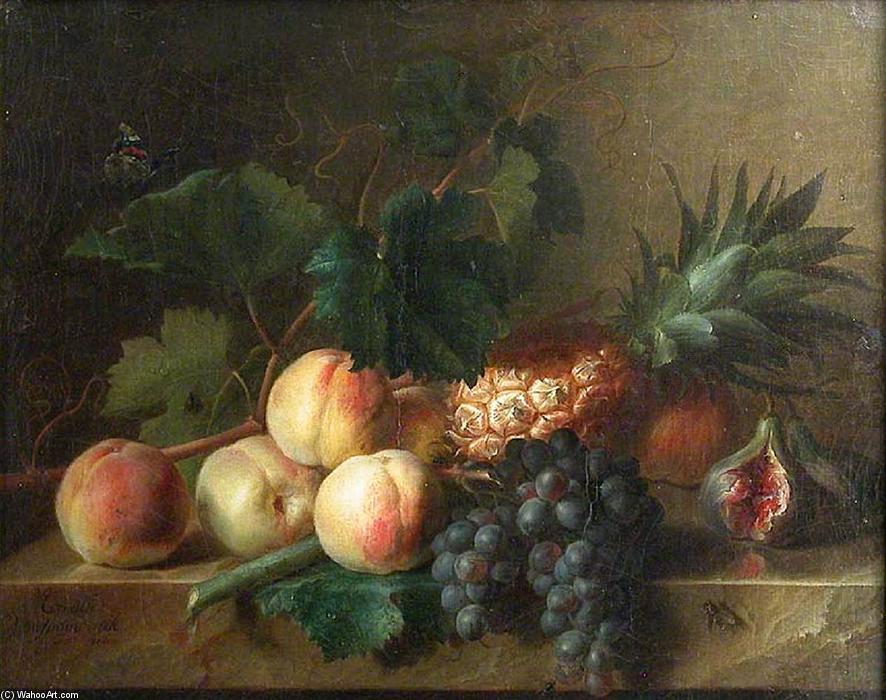
Gaze upon this exquisite vision of abundance, a moment captured in time that speaks volumes through its vibrant arrangement of nature's bounty. This still life, featuring an array of ripe fruit—luscious apples nestled in the foreground, stately pears positioned just behind them, and clusters of deep purple grapes alongside bright oranges—is more than mere depiction; it is a celebration of harvest and earthly pleasure. The composition is further enriched by…

3
Vase of Roses (1806) de Cornelis van Spaendonck

Vase of Roses

When the Dutch painter Cornelis van Spaendonck was around the age of twenty, he settled in Paris, which had become the new center of flower painting since the mid-18th century. As the artistic director of the Sèvres porcelain manufactory between 1785 and 1800, he created a great number motifs for the porcelain pieces designed to embellish the houses of princes and royals. This bouquet containing several varieties of roses was…

Picturi cu Cornelis van Spaendonck, clasate de la 11 la 15

Subiectele care i-au captivat privirea lui Cornelis van Spaendonck

Cele patru teme care revin cel mai des în aceste opere originale, fiecare având cel mai sublim exemplu.

Muzeele care păstrează originalele lui Cornelis van Spaendonck

Cele 7 muzee care dețin cele mai multe dintre picturile de pe această pagină.

Muzee Oraș Lucrări lui Cornelis van Spaendonck Picturi din această listă
Fitzwilliam MuseumFitzwilliam Museum 3 Open Wicker Basket Of Mixed Flowers, Including Tulip, Roses, Harebell, Hollyhock, Poppy, Larkspur And Auricula On A Marble Ledge, Vase Of Flowers, Open wicker basket of mixed flowers, including iris, roses, poppies, hollyhock, marigold, larkspur and convolvulus on a marble ledge
Noordbrabants Museum, 's-HertogenboschNoordbrabants Museum 's-Hertogenbosch 2 Cabbage rose, Still Life with Flowers in a Vase
Herbert F. Johnson Museum of Art, IthacaHerbert F. Johnson Museum of Art Ithaca 1 Still Life of Flowers
Muzeul Luvru, ParisMuzeul Luvru Paris 1 Still-Life with Fruit on Table
Muzeul Fine Arts din Lyon, LyonMuzeul Fine Arts din Lyon Lyon 1 Vase of Roses
Musée des Beaux-Arts, CarcassonneMusée des Beaux-Arts Carcassonne 1 Cornelis Van Spaendonck - Vase de fleurs avec nid
Ashmolean Museum, OxfordAshmolean Museum Oxford 1 Basket of Flowers

Cornelis van Spaendonck, o pictură emblematică pe deceniu

Lucrări pe deceniu

Alege o deceniu pentru a descoperi opera originală care îl definește.

Picturile lui Cornelis van Spaendonck: răspunsurile galeriei

Care este cea mai celebră pictură a lui Cornelis van Spaendonck?Află răspunsul

Still Life of Flowers (1793), Herbert F. Johnson Museum of Art, Ithaca. Urmează Still-Life with Fruit on Table (1798) și Vase of Roses (1806).

Ce vârstă avea Cornelis van Spaendonck când a finalizat Still Life of Flowers?Află răspunsul

37 ani: Still Life of Flowers datează din 1793, iar Cornelis van Spaendonck s-a născut în 1756.

Care sunt cele mai importante 10 picturi ale lui Cornelis van Spaendonck?Află răspunsul

Still Life of Flowers, Still-Life with Fruit on Table, Vase of Roses, Still Life with Fruit Basket, Vase of Flowers on a Stone Table, with a Nest and a Male Greenfinch, Cornelis Van Spaendonck - Vase de fleurs avec nid, Cabbage rose, Still Life with Flowers in a Vase, Open Wicker Basket Of Mixed Flowers, Including Tulip, Roses, Harebell, Hollyhock, Poppy, Larkspur And Auricula On A Marble Ledge și Basket and Vase of Flowers. Clasamentul de mai sus indică anul și muzeul pentru fiecare piesă.

Câte lucrări a creat Cornelis van Spaendonck?Află răspunsul

Catalogul nostru cuprinde 16 lucrări ale lui Cornelis van Spaendonck, datate între 1781 și 1830.

Unde sunt expuse cele mai celebrele opere originale ale lui Cornelis van Spaendonck?Află răspunsul

În principal în Fitzwilliam Museum, Noordbrabants Museum ('s-Hertogenbosch) și Herbert F. Johnson Museum of Art (Ithaca). Tabelul cu muzee de mai sus le enumeră pe toate.

Când a creat Cornelis van Spaendonck cele mai faimoase picturi?Află răspunsul

În 1780s: 3 dintre cele 15 lucrări de pe această pagină au fost realizate atunci, fiind Still Life with Fruit Basket dintre acestea.

Care sunt cele mai vechi și cele mai recente opere celebre ale lui Cornelis van Spaendonck?Află răspunsul

Pe această pagină, cea mai veche lucrare datează din Still Life with Fruit Basket (1781), iar cea mai recentă este din Still Life with Flowers in a Vase (1830).

La ce subiecte s-a întors cel mai des Cornelis van Spaendonck?Află răspunsul

Flowers (4), Vase (2) și Floral arrangement (2), din cele 15 lucrări de pe această pagină.

Ce opere originale ale lui Cornelis van Spaendonck deține Fitzwilliam Museum?Află răspunsul

Open Wicker Basket Of Mixed Flowers, Including Tulip, Roses, Harebell, Hollyhock, Poppy, Larkspur And Auricula On A Marble Ledge, Vase Of Flowers și Open wicker basket of mixed flowers, including iris, roses, poppies, hollyhock, marigold, larkspur and convolvulus on a marble ledge: Fitzwilliam Museum deține 3 dintre lucrările de pe această pagină.

Cornelis van Spaendonck: artistul

The Delicate Mastery of Cornelis van Spaendonck

In the grand tapestry of European art history, few threads possess the delicate, luminous quality found in the works of Cornelis van Spaendonck. Born in the Dutch city of Tilburg in 1756, Van Spaendonck emerged from a lineage of profound artistic dedication, beginning his journey under the tutelage of Willem Jacob Herreyns in Antwerp. This early training laid the foundation for a career that would eventually bridge the gap between the meticulous traditions of the Dutch Golden Age and the refined elegance of the French Neoclassical era. In 1773, a pivotal year that redirected the course of his life, he moved to Paris, where he joined his older brother, Gérard van Spaendonck. Together, they became central figures in the Parisian art scene, weaving a legacy of botanical precision and decorative splendor that would captivate the French Academy for decades.

The essence of Van Spaendonck’s artistry lies in his ability to transform the ephemeral into the eternal. While many artists of his era sought the drama of historical epic or the grandeur of portraiture, Cornelis found his muse in the quiet, intimate corners of the natural world. His mastery of oils and gouache allowed him to capture the translucent petals of a rose, the velvety texture of a tulip, and the subtle, dewy moisture on a leaf with an almost scientific accuracy. His compositions often transcend mere botanical documentation; they are poetic meditations on life and decay. In works such as "Open Wicker Basket Of Mixed Flowers," one can sense the artist's profound reverence for each individual bloom, from the sturdy hollyhock to the delicate harebell, all arranged with a grace that feels both spontaneous and perfectly balanced.

A Legacy of Porcelain and Prestige

Van Spaendonck’s influence extended far beyond the canvas, reaching into the very fabric of decorative arts that defined 18th-century luxury. His tenure as the director of the prestigious Sèvres porcelain factory from 1785 to 1800 represents a remarkable intersection of fine art and industrial design. During this period, his botanical sensibilities were translated into exquisite motifs for porcelain, bringing the beauty of the natural world to the tables of the European aristocracy. Even after his administrative departure from Sèvres in 1800, his creative spirit remained tethered to the manufactory, as he continued to design decorative elements that would become hallmarks of French elegance until 1808.

His professional stature was further solidified by his membership in the Académie des Beaux Arts, a distinction he earned in 1789. This prestigious affiliation provided him with a continuous platform to showcase his botanical wonders to the most discerning eyes in Europe. His work often featured more than just flora; he possessed a singular talent for integrating small, living details that breathed life into his still lifes. A wandering bee, a shimmering dragonfly, or a tiny bird's nest tucked among the stems served as subtle reminders of the interconnectedness of nature, adding layers of narrative depth to his compositions.

The historical significance of Cornelis van Spaendonck is found not only in his individual achievements but also in the lineage of talent he helped cultivate. As a mentor to artists like Frédéric Bouchardy, he ensured that the tradition of meticulous botanical illustration would endure into the next century. His life’s work remains a testament to the power of observation and the enduring allure of the natural world, offering a window into an era where beauty was captured with unparalleled precision and profound affection.