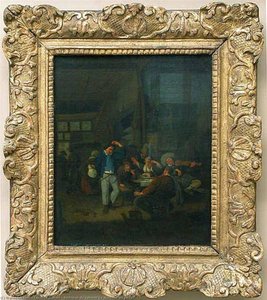
Portretul lui Cornelis Dusart

Picturi Cornelis Dusart: Cele 37 de cele mai faimoase, prin ochii unei galerii

Actualizat Noiembrie 2026 · clasat în funcție de scorul nostru de popularitate (căutări, vizite și comenzi pentru fiecare operă) · 40 lucrări ale lui Cornelis Dusart în catalogul nostru

Pe scurt

În ochii galeriei, cea mai celebră pictură a lui Cornelis Dusart este Peasants in Front of an Inn (1681), a cărei originală este expusă la Muzeul Kunsthistorisches din Viena, Viena. Village inn (1690) și Country Inn with Hurdy-Gurdy Player (1681) completează trioul pe care orice ochi îl recunoaște. Dintre cele 40 opere ale lui Cornelis Dusart din catalogul nostru, galeria prezintă mai jos cele 37 cele mai faimoase, fiecare fiind originală, cu anul creării, muzeul de păstrare și elementul care o face unică.

1660 – 1704, Haarlem Dutch golden age Cele mai multe lucrări: Rijksmuseum

Cele mai apreciate 10 picturi ale lui Cornelis Dusart din galerie

1
Peasants in Front of an Inn (1681) de Cornelis Dusart

Peasants in Front of an Inn

1681 · Oil On Panel · Muzeul Kunsthistorisches din Viena, Viena

The air outside the inn feels heavy with the scent of damp earth and woodsmoke. Under the shade of a leafy canopy, a group of peasants gathers, their bodies leaning into the ease of a midday rest. There is a palpable sense of movement held in suspension; a man sits perched on a bench, perhaps listening to the low murmur of conversation or the distant sound of a traveler approaching.…

2
Village inn (1690) de Cornelis Dusart

Village inn

1690 · Oil On Panel · Rijksmuseum, Amsterdam

In this 1690 oil on panel, we find ourselves drawn into the quiet, unhurried rhythm of a Dutch village inn. The scene is one of communal leisure, where the boundaries between public social life and private intimacy blur under the soft, natural light of a rural afternoon. In the foreground, a man and a woman sit together, their presence grounding the composition with a sense of lived experience. He holds…

3
Country Inn with Hurdy-Gurdy Player (1681) de Cornelis Dusart

Country Inn with Hurdy-Gurdy Player

1681 · Painting · Städel Museum, Frankfurt pe Main

A group of peasants gathers in the courtyard of a rustic, thatched-roof inn. The composition is crowded, with figures occupying the foreground and midground to create a sense of social activity. On the right, the heavy architecture of the building provides a structured frame, while foliage on the left balances the scene. The light originates from the upper left, casting soft shadows across the courtyard and highlighting the central figures.…

Picturi cu Cornelis Dusart, clasate de la 11 la 37

Subiectele care i-au captivat privirea lui Cornelis Dusart

Cele patru teme care revin cel mai des în aceste opere originale, fiecare având cel mai sublim exemplu.

Muzeele care păstrează originalele lui Cornelis Dusart

Cele 8 muzee care dețin cele mai multe dintre picturile de pe această pagină.

Muzee Oraș Lucrări lui Cornelis Dusart Picturi din această listă
Rijksmuseum, AmsterdamRijksmuseum Amsterdam 6 Village inn, A Mother with her Children, Village fair
Statens Museum For Kunst, CopenhagaStatens Museum For Kunst Copenhaga 2 Bagpiper at an Inn, Peasants outside an Inn
Muzeul Frans Hals, HaarlemMuzeul Frans Hals Haarlem 2 Drinking party, The Notary
Muzeul Kunsthistorisches din Viena, VienaMuzeul Kunsthistorisches din Viena Viena 1 Peasants in Front of an Inn
Städel Museum, Frankfurt pe MainStädel Museum Frankfurt pe Main 1 Country Inn with Hurdy-Gurdy Player
Fine Arts Museums of San Francisco, San FranciscoFine Arts Museums of San Francisco San Francisco 1 Village Scene
Muzeul Național din Varșovia, VarșoviaMuzeul Național din Varșovia Varșovia 1 Fish scraping
National Gallery of Ireland, DublinNational Gallery of Ireland Dublin 1 A Merry-making

Cornelis Dusart, o pictură emblematică pe deceniu

Lucrări pe deceniu

Alege o deceniu pentru a descoperi opera originală care îl definește.

Picturile lui Cornelis Dusart: răspunsurile galeriei

Care este cea mai celebră pictură a lui Cornelis Dusart?Află răspunsul

Peasants in Front of an Inn (1681), Muzeul Kunsthistorisches din Viena, Viena. Urmează Village inn (1690) și Country Inn with Hurdy-Gurdy Player (1681).

Ce vârstă avea Cornelis Dusart când a finalizat Peasants in Front of an Inn?Află răspunsul

21 ani: Peasants in Front of an Inn datează din 1681, iar Cornelis Dusart s-a născut în 1660.

Care sunt cele mai importante 10 picturi ale lui Cornelis Dusart?Află răspunsul

Peasants in Front of an Inn, Village inn, Country Inn with Hurdy-Gurdy Player, Village Scene, teasing the cat, Fish scraping, A Merry-making, A kermess, Bagpiper at an Inn și Peasants outside an Inn. Clasamentul de mai sus indică anul și muzeul pentru fiecare piesă.

Câte lucrări a creat Cornelis Dusart?Află răspunsul

Catalogul nostru cuprinde 40 lucrări ale lui Cornelis Dusart, datate între 1679 și 1702.

Unde sunt expuse cele mai celebrele opere originale ale lui Cornelis Dusart?Află răspunsul

În principal în Rijksmuseum (Amsterdam), Statens Museum For Kunst (Copenhaga) și Muzeul Frans Hals (Haarlem). Tabelul cu muzee de mai sus le enumeră pe toate.

Când a creat Cornelis Dusart cele mai faimoase picturi?Află răspunsul

În 1680s: 11 dintre cele 37 lucrări de pe această pagină au fost realizate atunci, fiind Peasants in Front of an Inn dintre acestea.

Care sunt cele mai vechi și cele mai recente opere celebre ale lui Cornelis Dusart?Află răspunsul

Pe această pagină, cea mai veche lucrare datează din The Milk Seller (1679), iar cea mai recentă este din Drinking party (1702).

La ce subiecte s-a întors cel mai des Cornelis Dusart?Află răspunsul

Inn (3), Woman (3) și Men (3), din cele 37 lucrări de pe această pagină.

În ce tehnică a lucrat cel mai mult Cornelis Dusart?Află răspunsul

Oil On Panel, pentru 4 dintre cele 37 lucrări de pe această pagină.

Cu ce mișcare este asociat(ă) Cornelis Dusart?Află răspunsul

Dutch golden age și Baroque, judecând după originalele de pe această pagină.

Ce opere originale ale lui Cornelis Dusart deține Rijksmuseum?Află răspunsul

Village inn, A Mother with her Children și Village fair: Rijksmuseum, Amsterdam deține 6 dintre lucrările de pe această pagină.

Cornelis Dusart: artistul

Cornelis Dusart: A Window into Dutch Everyday Life

Cornelis Dusart (1660-1704) stands as a fascinating figure within the Haarlem School of painting, offering viewers a glimpse into the vibrant tapestry of 17th-century Dutch society. Unlike many artists of his era focused on grand historical narratives or mythological subjects, Dusart dedicated himself to capturing the commonplace – itinerant peddlers haggling in bustling marketplaces and intimate scenes unfolding within taverns. This deliberate choice reveals a profound interest in portraying the realities of daily life, reflecting a humanist sensibility that was gaining momentum during the Golden Age. His artistic training began under the tutelage of Rembrandt Harmenszoon van Rijn, arguably the most influential painter of his time, cementing Dusart’s connection to the stylistic innovations emerging from Leiden and Amsterdam. Rembrandt's emphasis on dramatic lighting and psychological realism undoubtedly shaped Dusart’s approach, fostering a meticulous attention to detail that distinguishes his oeuvre. However, Dusart developed a unique style—characterized by soft brushstrokes and subtle tonal gradations—that subtly diverged from Rembrandt’s bolder palette. This distinctive technique allowed him to convey atmosphere and emotion with remarkable sensitivity. Dusart's prolific output spanned numerous commissions, primarily focusing on genre scenes. He skillfully rendered the textures of fabrics, the expressions of faces, and the nuances of light and shadow, creating images that feel remarkably authentic. Consider “The Street Seller,” a captivating depiction of a peddler engaging in trade—the artist’s meticulous observation captures not only the physical appearance of the scene but also the palpable energy of the marketplace. Similarly, "The Quack" portrays a physician examining a patient with quiet dignity and precision, highlighting Dusart's ability to convey psychological depth within seemingly simple compositions. Furthermore, Dusart’s work exemplifies the burgeoning fascination with realism that permeated Dutch art circles during his lifetime. He wasn’t merely documenting what he saw; he was striving to evoke feeling and understanding in the viewer. This ambition aligns perfectly with the broader cultural context of the period—a time marked by intellectual curiosity and a desire to represent human experience accurately. Dusart's contribution to Haarlem School painting is significant not only for its stylistic merits but also for its enduring portrayal of ordinary life, securing his place as an artist who captured the spirit of his era with remarkable artistry.
  • Notable Commissions: Dusart undertook numerous commissions for wealthy patrons and civic institutions, showcasing his versatility and artistic skill.
  • Influences: Rembrandt van Rijn’s masterful use of light and psychological realism profoundly impacted Dusart's artistic development.
  • Technique: Dusart employed soft brushstrokes and tonal gradations to create atmospheric paintings imbued with emotion and subtlety.

Major Achievements & Legacy

Dusart’s enduring legacy resides in his ability to distill the essence of everyday life into powerfully evocative images. His genre scenes continue to resonate with audiences today, offering insights into the social customs and psychological complexities of 17th-century Holland. While Dusart may not command the same level of fame as Rembrandt or Vermeer, his meticulous style and humanist vision solidify his position as a pivotal artist within the Haarlem School—a testament to the transformative power of observing and representing the human condition with unwavering dedication.