Portretul lui Cornelis Anthonisz

Picturi Cornelis Anthonisz: Cele 6 de cele mai faimoase, prin ochii unei galerii

Actualizat Noiembrie 2026 · clasat în funcție de scorul nostru de popularitate (căutări, vizite și comenzi pentru fiecare operă) · 6 lucrări ale lui Cornelis Anthonisz în catalogul nostru

Pe scurt

În ochii galeriei, cea mai celebră pictură a lui Cornelis Anthonisz este Banquet of Members of Amsterdam's Crossbow Civic Guard (1533), a cărei originală este expusă la Muzeul Istoric al Amsterdamului, Amsterdam. Portrait of Sybrand Pompejusz. Occo (1538) și Portrait of a Man (1530) completează trioul pe care orice ochi îl recunoaște. Dintre cele 6 opere ale lui Cornelis Anthonisz din catalogul nostru, galeria prezintă mai jos cele 6 cele mai faimoase, fiecare fiind originală, cu anul creării, muzeul de păstrare și elementul care o face unică.

1505 – 1553, Amsterdam Cele mai multe lucrări: Amsterdam Museum

Cele mai apreciate 10 picturi ale lui Cornelis Anthonisz din galerie

1
Banquet of Members of Amsterdam's Crossbow Civic Guard (1533) de Cornelis Anthonisz

Banquet of Members of Amsterdam's Crossbow Civic Guard

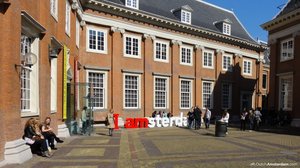
1533 · Oil · Muzeul Istoric al Amsterdamului, Amsterdam

The air in the room feels heavy with the scent of roasted meats and spilled wine. Men gather around a long, sturdy table, their bodies frozen in a moment of communal celebration. They wear the heavy, textured fabrics of the early sixteenth century, with collars that frame faces set in dignified, somewhat stiff expressions. Some men stand, looming over the seated figures, while others lean into the conversation, their hands…

2
Portrait of Sybrand Pompejusz. Occo (1538) de Cornelis Anthonisz

Portrait of Sybrand Pompejusz. Occo

1538 · Oil On Panel · Muzeul Kunsthistorisches din Viena, Viena

A man sits anchored in the stillness of 1538. Sybrand Pompejusz Occo meets the viewer with a gaze that carries the gravity of his station. He is framed by the heavy geometry of classical ruins, where weathered stone columns rise like silent witnesses to his status. The light enters from the upper left, carving the sharp lines of his face and casting soft shadows that give his features a sculptural…

3
Portrait of a Man (1530) de Cornelis Anthonisz

Portrait of a Man

1530 · Oil On Panel · Detroit Institute of Arts, Detroit

The Portrait of a Man is a painting by Cornelis Anthonisz, an artist born around 1505 in Amsterdam, Netherlands. Created in 1530, this work captures a single male figure in a moment of quiet stillness. The subject is rendered in period-appropriate attire, his presence defined by the heavy weight of his garments and the steady gaze of his eyes.

4
Civic Guardsmen of Squad A of the Arquebusier Civic Guards (1531) de Cornelis Anthonisz

Civic Guardsmen of Squad A of the Arquebusier Civic Guards

1531 · Oil On Panel · Amsterdam Museum, Amsterdam

The scene unfolds through the oil on panel work titled Civic Guardsmen of Squad A of the Arquebusier Civic Guards. Attributed to the artist Cornelis Anthonisz, this large-scale assembly captures a specific moment in the history of the Habsburg Netherlands. The figures gather in a dense, organized formation, presenting a formal militia group portrait that reflects the communal strength of their unit. Every man in the squad carries the weight…

5
Henry VIII of England on Horseback (1538) de Cornelis Anthonisz

Henry VIII of England on Horseback

1538 · Oil On Canvas · Rijksmuseum, Amsterdam

The year is 1538. Henry VIII, already a figure of immense power and turbulent change, stands poised upon his warhorse – a potent symbol of both military might and the evolving image he sought to project. Cornelis Anthonisz’s “Henry VIII of England on Horseback” isn't merely a portrait; it’s a meticulously crafted document of an era, a visual testament to the king’s ambition and the burgeoning artistic landscape of Amsterdam.…

Subiectele care i-au captivat privirea lui Cornelis Anthonisz

Cele patru teme care revin cel mai des în aceste opere originale, fiecare având cel mai sublim exemplu.

Muzeele care păstrează originalele lui Cornelis Anthonisz

Cele 5 muzee care dețin cele mai multe dintre picturile de pe această pagină.

Muzee Oraș Lucrări lui Cornelis Anthonisz Picturi din această listă
Amsterdam Museum, AmsterdamAmsterdam Museum Amsterdam 2 Civic Guardsmen of Squad A of the Arquebusier Civic Guards, Bird’s-eye View of Amsterdam
Muzeul Istoric al Amsterdamului, AmsterdamMuzeul Istoric al Amsterdamului Amsterdam 1 Banquet of Members of Amsterdam's Crossbow Civic Guard
Muzeul Kunsthistorisches din Viena, VienaMuzeul Kunsthistorisches din Viena Viena 1 Portrait of Sybrand Pompejusz. Occo
Detroit Institute of Arts, DetroitDetroit Institute of Arts Detroit 1 Portrait of a Man
Rijksmuseum, AmsterdamRijksmuseum Amsterdam 1 Henry VIII of England on Horseback

Cornelis Anthonisz, picturile emblematice ale fiecărei ani

Un deceniu, de la 1530 la 1538, a fost suficient pentru Cornelis Anthonisz: galeria îi parcurge an de an, cap-coadă, o operă originală celebră după alta.

Lucrări pe an

Alege un an pentru a vedea originalele acestuia.

Picturile lui Cornelis Anthonisz: răspunsurile galeriei

Care este cea mai celebră pictură a lui Cornelis Anthonisz?Află răspunsul

Banquet of Members of Amsterdam's Crossbow Civic Guard (1533), Muzeul Istoric al Amsterdamului, Amsterdam. Urmează Portrait of Sybrand Pompejusz. Occo (1538) și Portrait of a Man (1530).

Ce vârstă avea Cornelis Anthonisz când a finalizat Banquet of Members of Amsterdam's Crossbow Civic Guard?Află răspunsul

28 ani: Banquet of Members of Amsterdam's Crossbow Civic Guard datează din 1533, iar Cornelis Anthonisz s-a născut în 1505.

Câte lucrări a creat Cornelis Anthonisz?Află răspunsul

Catalogul nostru cuprinde 6 lucrări ale lui Cornelis Anthonisz, datate între 1530 și 1538.

Unde sunt expuse cele mai celebrele opere originale ale lui Cornelis Anthonisz?Află răspunsul

În principal în Amsterdam Museum (Amsterdam), Muzeul Istoric al Amsterdamului (Amsterdam) și Muzeul Kunsthistorisches din Viena (Viena). Tabelul cu muzee de mai sus le enumeră pe toate.

Când a creat Cornelis Anthonisz cele mai faimoase picturi?Află răspunsul

În 1538: 3 dintre cele 6 lucrări de pe această pagină au fost realizate atunci, fiind Portrait of Sybrand Pompejusz. Occo dintre acestea.

Care sunt cele mai vechi și cele mai recente opere celebre ale lui Cornelis Anthonisz?Află răspunsul

Pe această pagină, cea mai veche lucrare datează din Portrait of a Man (1530), iar cea mai recentă este din Portrait of Sybrand Pompejusz. Occo (1538).

La ce subiecte s-a întors cel mai des Cornelis Anthonisz?Află răspunsul

Man (2), Landscape (2) și Sky (2), din cele 6 lucrări de pe această pagină.

În ce tehnică a lucrat cel mai mult Cornelis Anthonisz?Află răspunsul

Oil On Panel, pentru 3 dintre cele 6 lucrări de pe această pagină.

Ce opere originale ale lui Cornelis Anthonisz deține Amsterdam Museum?Află răspunsul

Civic Guardsmen of Squad A of the Arquebusier Civic Guards și Bird’s-eye View of Amsterdam: Amsterdam Museum, Amsterdam deține 2 dintre lucrările de pe această pagină.

Cornelis Anthonisz: artistul

Cornelis Anthonisz: The Pioneer of Amsterdam’s Bird's Eye View

Cornelis Anthonisz (ca. 1505 – 1553), anthonisz., also spelled anthonissen or teunissen, was a Dutch painter, engraver, and mapmaker whose legacy rests primarily on his groundbreaking achievement: the creation of the first complete map of Amsterdam—a monumental undertaking that cemented his place in art history. Born around 1505 in Amsterdam, Anthonisz’s artistic lineage traced back to Jacob Cornelisz van Oostsanen, a painter who instilled in him a foundational understanding of visual representation and perspective. His cousin, Dirck Jacobsz., further nurtured his talent within the vibrant artistic milieu of Haarlem.
  • Early Life & Artistic Training:
  • Commission for Amsterdam:
  • The Bird’s Eye View: A Revolutionary Map:
  • Other Notable Works: Portraits and Allegorical Prints:
  • Death & Legacy:

Commission for Amsterdam: Shaping the City's Image

In 1538, Anthonisz received an extraordinary commission from Amsterdam’s city fathers—a task that would propel him to international acclaim. They tasked him with producing a map of Amsterdam as a gift intended for Charles V, Holy Roman Emperor during his visit to the burgeoning Dutch Republic. This project demanded meticulous observation and artistic skill; Anthonisz embarked on a detailed survey of the city's topography, incorporating architectural features and street layouts with unprecedented accuracy. The resulting map wasn’t merely decorative—it was a powerful statement about Amsterdam’s status as a center of commerce and civic pride. It showcased a remarkable grasp of aerial perspective, skillfully conveying depth and spatial relationships through shading and tonal variations—a technique that would become synonymous with Anthonisz's style.

The Bird’s Eye View: A Revolutionary Map

Anthonisz’s magnum opus is undeniably his 1544 bird’s eye view of Amsterdam, a woodcut print consisting of twelve meticulously crafted blocks that captured the city in breathtaking detail. This ambitious undertaking involved painstaking preparation and execution—the artist spent considerable time studying the cityscape, sketching preliminary designs, and transferring them onto wooden planks. The printing process itself was laborious, requiring skilled craftsmen to carve intricate lines into the blocks and apply ink with precision. What distinguishes this map from its predecessors is not just its visual splendor but also its scientific rigor; it represents the first truly comprehensive depiction of Amsterdam’s urban landscape—a landmark achievement in cartography that would inspire generations of artists and engravers. Remarkably, the print was copied repeatedly until well into the seventeenth century, demonstrating its enduring authority as the definitive representation of Amsterdam at the time.

Other Notable Works: Portraits and Allegorical Prints

Beyond his monumental mapmaking endeavors, Anthonisz produced a diverse portfolio of artworks encompassing portraits and allegorical prints. His portrait of Reinoud III van Brederode exemplifies his mastery of anatomical realism and expressive rendering—a testament to his meticulous observation of human form and his ability to convey psychological nuance. Similarly, his militia group portrait ("The Civic Guard") captures the spirit of Amsterdam’s civic life, portraying members of the crossbow guild with a stiff yet dignified posture. Anthonisz's allegorical prints explored themes of virtue and morality through symbolic imagery—demonstrating his versatility as an artist and his engagement with broader intellectual currents of the Renaissance.

Death & Legacy

Cornelis Anthonisz died in Amsterdam in 1553, leaving behind a legacy that continues to resonate today. Although only two paintings attributed to him survive—the militia group portrait and the portrait of Reinoud III van Brederode—his influence extended far beyond his artistic output. The enduring fame of his bird’s eye view testifies to its pioneering spirit and its contribution to visual culture—a masterpiece that remains a symbol of Amsterdam's historical significance and Anthonisz’s unparalleled artistic achievement. Furthermore, the meticulous restoration of the damaged map in 1932 ensured that this iconic image would endure for future generations, safeguarding a tangible link to the Renaissance era and cementing Anthonisz’s place as one of the most important artists of his time.