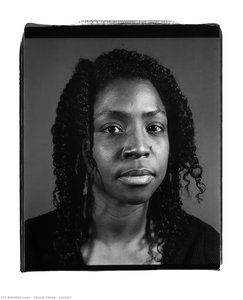
Portretul lui Chuck Close

Picturi Chuck Close: Cele 13 de cele mai faimoase, prin ochii unei galerii

Actualizat Octombrie 2026 · clasat în funcție de scorul nostru de popularitate (căutări, vizite și comenzi pentru fiecare operă) · 17 lucrări ale lui Chuck Close în catalogul nostru

Pe scurt

În ochii galeriei, cea mai celebră pictură a lui Chuck Close este Big Self-Portrait (1968), a cărei originală este expusă la Walker Art Center, Minneapolis. Barack Obama by Chuck Close (2013) și Alex (1994) completează trioul pe care orice ochi îl recunoaște. Dintre cele 17 opere ale lui Chuck Close din catalogul nostru, galeria prezintă mai jos cele 13 cele mai faimoase, fiecare fiind originală, cu anul creării, muzeul de păstrare și elementul care o face unică.

1940 – 2021, Monroe Contemporary realism Cele mai multe lucrări: Walker Art Center

Cele mai apreciate 10 picturi ale lui Chuck Close din galerie

1
Big Self-Portrait (1968) de Chuck Close

Big Self-Portrait

1968 · Black and White Photography · Walker Art Center, Minneapolis

To stand before a work like Big Self-Portrait is not merely to observe a likeness; it is to confront an intensely rendered meditation on identity itself. Created in 1968, this piece by Chuck Close captures the artist at a pivotal moment, presenting a self that feels both intimately known and profoundly alien. The composition is a masterful study in compression, tightly framing the head and shoulders until the viewer has…

2
Barack Obama by Chuck Close (2013) de Chuck Close

Barack Obama by Chuck Close

2013 · Acrylic On Canvas · National Portrait Gallery, Londra

Barack Obama by Chuck Close: A Portrait of Resilience and Reflection Chuck Close’s “Barack Obama” is more than just a photograph; it's a testament to the artist’s groundbreaking approach to portraiture and a poignant exploration of identity. Created in 2013, this diptych—featuring two black and white prints—captures Obama’s gaze with remarkable detail and immediacy, embodying Close’s signature style: monumental hyperrealism achieved through a meticulous grid system. The artwork speaks volumes…

4
Alex Reduction Block (1993) de Chuck Close

Alex Reduction Block

1993 · Acrilic pe pânză întinsă · Parrish Art Museum, Water Mill

Chuck Close și „Alex/Reduction Block”: O Explorare Profundă în Stilul Monumental și În Observație Detaliată Chuck Close este unul dintre cei mai influenți artiști ai secolului XX, cunoscut pentru abordarea sa inovatoare a picturii portretului și pentru modul unic în care își exprimă emoțiile prin intermediul unei tehnici caracterizate de meticulozitate și obsesie pentru detalii. În 1993, artistul american a realizat „Alex/Reduction Block”, o lucrare emblematică care reprezintă vârful creativității…

6
Lorna I (1997) de Chuck Close

Lorna I

1997 · Photography · Kemper Museum of Contemporary Art, Kansas City

Lorna I is a photograph created by the artist Chuck Close. The original image was produced in 1996, and the specific version of this work was printed in 1997. This piece is an inkjet print on kozo paper. The composition focuses on a close-up view of a woman, capturing her face and upper torso against a dark gray backdrop. The subject features tightly coiled hair and a direct gaze toward…

Picturi cu Chuck Close, clasate de la 11 la 13

Subiectele care i-au captivat privirea lui Chuck Close

Cele patru teme care revin cel mai des în aceste opere originale, fiecare având cel mai sublim exemplu.

Muzeele care păstrează originalele lui Chuck Close

Cele 5 muzee care dețin cele mai multe dintre picturile de pe această pagină.

Muzee Oraș Lucrări lui Chuck Close Picturi din această listă
Walker Art Center, MinneapolisWalker Art Center Minneapolis 1 Big Self-Portrait
National Portrait Gallery, LondraNational Portrait Gallery Londra 1 Barack Obama by Chuck Close
Parrish Art Museum, Water MillParrish Art Museum Water Mill 1 Alex Reduction Block
Kemper Museum of Contemporary Art, Kansas CityKemper Museum of Contemporary Art Kansas City 1 Lorna I
Muzeul de Artă Plastică din Boston, BostonMuzeul de Artă Plastică din Boston Boston 1 Paul IV

Chuck Close, o pictură emblematică pe deceniu

Lucrări pe deceniu

Alege o deceniu pentru a descoperi opera originală care îl definește.

Picturile lui Chuck Close: răspunsurile galeriei

Care este cea mai celebră pictură a lui Chuck Close?Află răspunsul

Big Self-Portrait (1968), Walker Art Center, Minneapolis. Urmează Barack Obama by Chuck Close (2013) și Alex (1994).

Ce vârstă avea Chuck Close când a finalizat Big Self-Portrait?Află răspunsul

28 ani: Big Self-Portrait datează din 1968, iar Chuck Close s-a născut în 1940.

Care sunt cele mai importante 10 picturi ale lui Chuck Close?Află răspunsul

Big Self-Portrait, Barack Obama by Chuck Close, Alex, Alex Reduction Block, Self-Portrait, Lorna I, Nat, Mark, Robert - (104,072) și Self-Portrait Spitbite White on Black. Clasamentul de mai sus indică anul și muzeul pentru fiecare piesă.

Câte lucrări a creat Chuck Close?Află răspunsul

Catalogul nostru cuprinde 17 lucrări ale lui Chuck Close, datate între 1968 și 2013.

Unde sunt expuse cele mai celebrele opere originale ale lui Chuck Close?Află răspunsul

În principal în Walker Art Center (Minneapolis), National Portrait Gallery (Londra) și Parrish Art Museum (Water Mill). Tabelul cu muzee de mai sus le enumeră pe toate.

Când a creat Chuck Close cele mai faimoase picturi?Află răspunsul

În 1990s: 3 dintre cele 13 lucrări de pe această pagină au fost realizate atunci, fiind Alex dintre acestea.

Care sunt cele mai vechi și cele mai recente opere celebre ale lui Chuck Close?Află răspunsul

Pe această pagină, cea mai veche lucrare datează din Big Self-Portrait (1968), iar cea mai recentă este din Barack Obama by Chuck Close (2013).

La ce subiecte s-a întors cel mai des Chuck Close?Află răspunsul

Detail (2) și Portrait (2), din cele 13 lucrări de pe această pagină.

Cu ce mișcare este asociat(ă) Chuck Close?Află răspunsul

Contemporary realism, judecând după originalele de pe această pagină.

Chuck Close: artistul

Chuck Close: A Monumental Vision of Detail and Resilience

  • Early Life & Education
  • The Birth of Photorealism
  • Innovation Amidst Adversity
  • Influences & Artistic Legacy
  • A Continuing Dialogue

Early Life & Education

Chuck Close (born July 5, 1940, Monroe, Washington) stands as a singular figure in the annals of contemporary art—a testament to artistic perseverance and an innovator who fundamentally reshaped portraiture. From his formative years grappling with neurological challenges and dyslexia to his unwavering dedication to mastering his craft after a devastating spinal artery occlusion, Close’s journey embodies both vulnerability and extraordinary creative force. Growing up in Everett and Tacoma, Washington, he experienced early hardships that instilled within him a profound appreciation for the transformative power of art. His father, Leslie Durward Close, passed away when Chuck was eleven years old, leaving Mildred Wagner Close to raise him alone—a circumstance that profoundly shaped his worldview. As a child, Close faced significant difficulties in school due to his neuromuscular condition and dyslexia; these obstacles fostered an acute observational skill – a quality that would become central to his artistic practice. He attended Everett Junior College (later Everett Community College) from fall 1958 to spring 1960, where he studied art alongside sculptor Leslie Rose, marking the beginning of a collaborative relationship that would endure for decades. Close’s exposure to Jackson Pollock’s drip paintings at the Seattle Art Museum proved pivotal, igniting within him an ambition to transcend conventional artistic boundaries and explore new expressive avenues—a desire fueled by Pollock's daring disregard for established conventions.

The Birth of Photorealism

Close’s artistic trajectory took a decisive turn in the late 1960s when he embraced photorealism—a movement that challenged the prevailing dominance of Abstract Expressionism and redefined portraiture as an art form. Rejecting the gestural freedom championed by earlier artists, Close turned to photography as his primary source material—a deliberate choice informed by a fascination with the mechanical limitations of image capture. He didn’t aim for mere replication; instead, he embarked on a complex process of translation—breaking down photographic images into manageable squares and meticulously transferring each detail onto colossal canvases using acrylic paints and airbrush techniques. This method wasn't merely about achieving visual accuracy but rather about delving into the underlying structure of perception itself—a conceptual exploration that distinguished Close’s approach from many of his contemporaries. As Graham Thompson eloquently describes, “One demonstration of the way photography became assimilated into the art world is the success of photorealist painting in the late 1960s and early 1970s. It is also called super-realism or hyperrealism and painters like Richard Estes, Denis Peterson, Audrey Flack, and Chuck Close often worked from photographic stills to create paintings that appeared to be photographs.”

Innovation Amidst Adversity

A dramatic turning point arrived in 1988 when Close suffered a spinal artery occlusion—a debilitating stroke that resulted in paralysis from the neck down. Despite this devastating setback, Close refused to surrender his artistic spirit and continued to create art using innovative techniques adapted to his physical limitations—even painting with his mouth. This unwavering determination exemplifies not only his resilience but also his profound commitment to transforming adversity into inspiration. His groundbreaking “fingerprint series,” in which he inked his thumb and forefinger onto canvas, demonstrated a remarkable ability to distill complex visual information into subtle gradations of gray—a technique that underscored Close’s meticulous attention to detail and his willingness to push the boundaries of artistic expression.

Influences & Artistic Legacy

Close’s artistic lineage is marked by influences ranging from Jackson Pollock's expressive abstraction to Alden Mason's masterful depiction of human form. However, he forged his own path—driven by a desire to objectively observe and meticulously recreate reality—establishing himself as one of the most distinctive voices in contemporary art. His exploration of scale, detail, and process profoundly impacted subsequent generations of artists—inspiring them to reconsider conventional notions of representation and embrace new approaches to visual storytelling.

A Continuing Dialogue

Chuck Close’s legacy extends far beyond his technical achievements; it resides in his unwavering belief that art can transcend circumstance and illuminate the human condition. His monumental portraits confront viewers with unflinching honesty—revealing not only physical likeness but also psychological depth. As a symbol of artistic perseverance, Close continues to inspire artists worldwide—serving as a reminder that creativity flourishes even amidst profound challenges.