Portretul lui Christopher Dresser

Cele 5 cele mai faimoase picturi ale lui Christopher Dresser, o selecție de galerie

Actualizat Noiembrie 2026 · clasat în funcție de scorul nostru de popularitate (căutări, vizite și comenzi pentru fiecare operă) · 5 lucrări ale lui Christopher Dresser în catalogul nostru

Pe scurt

Dintre toate originalele lăsate de Christopher Dresser, cea mai faimoasă este Spoon warmer (1880). Imediat după acestea urmează Teapot with warmer (1878) și Jardinière. Catalogul nostru cuprinde 5 lucrări ale lui Christopher Dresser; galeria a păstrat cele 5 pe care lumea le admiră cel mai mult, fiecare fiind prezentată împreună cu data, muzeul și povestea sa.

1834 – 1904, Glasgow Cele mai multe lucrări: The Baltimore Museum of Art

Cele mai importante 10 picturi ale lui Christopher Dresser: selecția galeriei

1
Spoon warmer (1880) de Christopher Dresser

Spoon warmer

1880

Dresser, born in 1834, is seen as a pioneer of modern industrial design. Between 1865 and 1885 he designed various everyday objects for silverware factories in London and Birmingham. All objects were industrially manufactured and for the most part silver-plated. Dresser

2
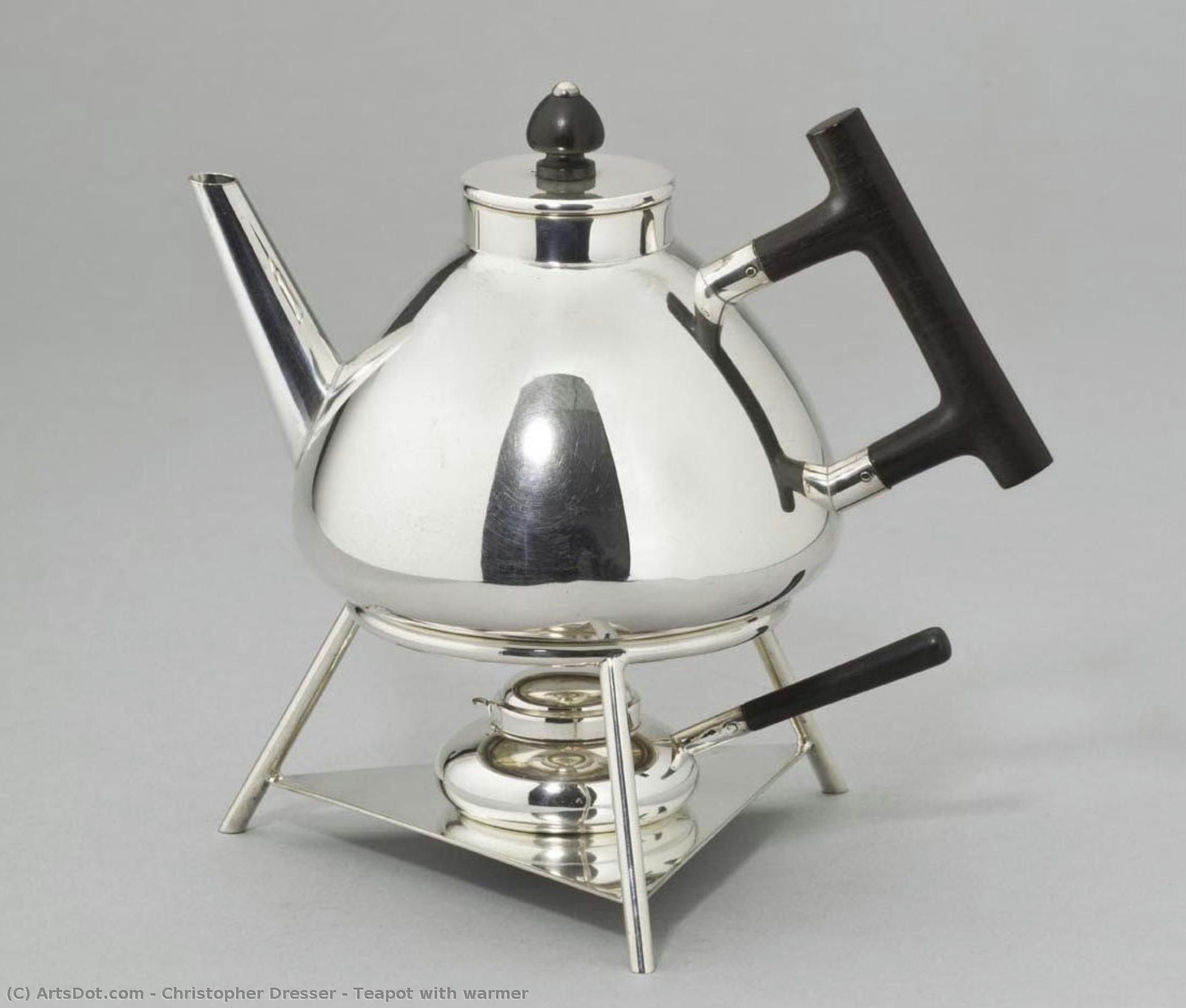
Teapot with warmer (1878) de Christopher Dresser

Teapot with warmer

1878

Dresser, born in 1834, is seen as a pioneer of modern industrial design. Between 1865 and 1885 he designed various everyday objects for silverware factories in London and Birmingham. All objects were industrially manufactured and for the most part silver-plated. Dresser

4
Congressional Pugilists (1798) de Christopher Dresser

Congressional Pugilists

1798 · Watercolor · Metropolitan Museum of Art, New York

Congressional Pugilists: A Clash of Styles in Victorian Glasgow The artwork "Congressional Pugilists," created by Christopher Dresser in 1898, transcends mere depiction; it embodies the spirit of its time—a confluence of industrial innovation and artistic rebellion against convention. Executed in black and white watercolor on paper measuring 16 x 22 cm, this piece stands as a testament to Dresser’s pioneering role as an industrial designer and his enduring influence on…

5
Clutha glass vase (1889) de Christopher Dresser

Clutha glass vase

1889 · Museum of Applied Arts, Budapesta

A long, twisted and wavy bottle with a collar-like, splaying top rim. The blue-green, bubbled glass is enriched with silvery, glittering mica grits and yellow-white and red stripes. This bottle is an outstanding example of the «Clutha»-type glass designed by Christopher Dresser. Jenő Radisics published the piece described above as one made by the Dobson and Rose company. However, the marking on the bottle - and the initials of the…

Subiectele care i-au captivat privirea lui Christopher Dresser

Cele patru teme care revin cel mai des în aceste opere originale, fiecare având cel mai sublim exemplu.

Muzeele care păstrează originalele lui Christopher Dresser

Cele 3 muzee care dețin cele mai multe dintre picturile de pe această pagină.

Muzee Oraș Lucrări lui Christopher Dresser Picturi din această listă
The Baltimore Museum of Art, BaltimoreThe Baltimore Museum of Art Baltimore 1 Jardinière
Metropolitan Museum of Art, New YorkMetropolitan Museum of Art New York 1 Congressional Pugilists
Museum of Applied Arts, BudapestaMuseum of Applied Arts Budapesta 1 Clutha glass vase

Christopher Dresser an de an: originalele care definesc fiecare perioadă

Selecția urmărește activitatea lui Christopher Dresser pe parcursul a 12 ani, de la 1878 la 1889, păstrând cele mai deosebite originale ale fiecărei ani.

Lucrări pe an

Alege un an pentru a vedea originalele acestuia.

Întrebări ale colecționarilor despre picturile lui Christopher Dresser

Pentru ce operă este cel mai cunoscut Christopher Dresser?Află răspunsul

Spoon warmer (1880). Urmează Teapot with warmer (1878) și Jardinière.

Ce vârstă avea Christopher Dresser când a fost creată Spoon warmer?Află răspunsul

46 ani: Spoon warmer datează din 1880, iar Christopher Dresser s-a născut în 1834.

Câte picturi a lăsat Christopher Dresser?Află răspunsul

Catalogul nostru cuprinde 5 lucrări ale lui Christopher Dresser, datate între 1878 și 1889.

În ce muzee sunt expuse capodoperele lui Christopher Dresser?Află răspunsul

În principal în The Baltimore Museum of Art (Baltimore), Metropolitan Museum of Art (New York) și Museum of Applied Arts (Budapesta). Tabelul cu muzee de mai sus le enumeră pe toate.

Care sunt prima și ultima pictură originală celebră a lui Christopher Dresser?Află răspunsul

Pe această pagină, cea mai veche lucrare datează din Teapot with warmer (1878), iar cea mai recentă este din Clutha glass vase (1889).

Christopher Dresser: viață și operă

Christopher Dresser: The Father of Industrial Design

Christopher Dresser (1834–1904) stands as a monumental figure in Victorian design, recognized today as arguably the first industrial designer and a pivotal contributor to both the Aesthetic Movement and Anglo-Japanese style—influences that continue to resonate across artistic disciplines. Born in Glasgow, Scotland, Dresser’s early life was marked by an interest in botany and natural sciences, shaping his worldview and informing his aesthetic sensibilities. This fascination would become central to his groundbreaking approach to design, prioritizing functionality alongside beauty – a radical departure from prevailing Victorian tastes dominated by ornate decoration.
  • Early Career & Influences: Dresser began his artistic journey as a decorative painter and designer of wallpaper, establishing himself in London’s burgeoning art scene. He was profoundly impacted by Japanese art and craftsmanship during his travels to Japan in 1870, absorbing the principles of asymmetry, simplicity, and natural materials—elements that would become hallmarks of the Anglo-Japanese style.
  • The Aesthetic Movement & Design Reform: Dresser championed the Aesthetic Movement, advocating for a rejection of academic conventions and embracing artistic freedom. He argued passionately for “design reform,” asserting that art should serve practical purposes while elevating human experience. This conviction fueled his tireless pursuit of innovation in various mediums.

A Diverse Artistic Output: Ceramics, Glassware & Furniture

Dresser’s creative output spanned an astonishing range of disciplines—ceramics, glassware, furniture design, textiles, and silver plating. He meticulously studied the techniques of artisans from around the globe, incorporating elements of Japanese craftsmanship into his creations. His ceramics, particularly the Jardinière – a celebrated piece housed in The Baltimore Museum of Art – exemplify his masterful blending of form and function. This vase showcases Dresser’s ability to transform natural materials like stoneware into elegant sculptural objects. Similarly, his glassware designs prioritized clarity and simplicity, reflecting the influence of Japanese aesthetics.
  • Notable Projects: Among Dresser's most significant achievements were collaborations with renowned manufacturers like Josiah Wedgwood & Sons, where he spearheaded transformative innovations in ceramic production. His furniture designs embraced minimalist silhouettes combined with natural textures—a stylistic hallmark of the Anglo-Japanese aesthetic.

The Anglo-Japanese Style: A Synthesis of Tradition and Innovation

Dresser’s embrace of Japanese aesthetics wasn't merely an admiration for exotic beauty; it represented a deliberate effort to reimagine Western design principles. He believed that studying Japanese craftsmanship could inspire new approaches to artistic expression, prioritizing natural materials, understated ornamentation, and harmonious proportions. This fusion of Eastern and Western traditions resulted in a distinctive style characterized by refined elegance and intellectual depth—a style that continues to captivate designers and artists today.

Legacy & Historical Significance

Christopher Dresser’s impact on the history of design is undeniable. He fundamentally challenged Victorian artistic conventions, advocating for a more rational and aesthetically informed approach to craftsmanship. His pioneering spirit paved the way for the emergence of industrial design as a recognized field, establishing Dresser as a visionary ahead of his time. Today, his work remains celebrated for its enduring beauty and its profound contribution to shaping the visual culture of the late nineteenth century—a testament to the transformative power of artistic innovation.