Portretul lui Charles Brooking

Cele 49 cele mai faimoase picturi ale lui Charles Brooking, fiecare unică în felul ei

Actualizat Noiembrie 2026 · clasat în funcție de scorul nostru de popularitate (căutări, vizite și comenzi pentru fiecare operă) · 49 lucrări ale lui Charles Brooking în catalogul nostru

Pe scurt

Shipping in a Rough Sea (1741) este pictura lui Charles Brooking care atrage cele mai multe priviri; originalul aparține Nostell Priory, Wakefield. După aceasta, privirea se îndreaptă către A Flagship before the Wind with other Vessels (1744) și A Two-Decker on Fire at Night off a Fort (1740). Dintre cele 49 opere ale lui Charles Brooking din catalogul nostru, acestea 49 sunt cele mai celebre, fiecare fiind o piesă unică, prezentată împreună cu anul creării, muzeul deținător și motivul pentru care aceasta rămâne memorabilă.

1723 – 1759, Londra Cele mai multe lucrări: National Maritime Museum

Cele mai importante 10 picturi ale lui Charles Brooking, prin ochii galeriei

Păiți celebrele picturi ale lui Charles Brooking, de la numărul 11 la 49

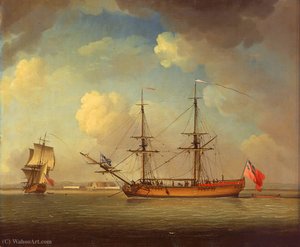
11An English Vice-Admiral of the Red and his Squadron at Sea (1754) de Charles BrookingAn English Vice-Admiral of the Red and his Squadron at Sea1754 · National Maritime Museum 12An East Indiaman in a Fresh Breeze (1755) de Charles BrookingAn East Indiaman in a Fresh Breeze1755 · National Maritime Museum 13Ships in a Light Breeze (1754) de Charles BrookingShips in a Light Breeze1754 · National Maritime Museum 14Commodore Walker's Action: the Privateer 'Boscawen' Engaging a Fleet of French Ships, 23 May 1745 (1750) de Charles BrookingCommodore Walker's Action: the Privateer 'Boscawen' Engaging a Fleet of French Ships, 23 May 17451750 · National Maritime Museum 15Shipping Becalmed in the Solent (1750) de Charles BrookingShipping Becalmed in the Solent1750 · National Maritime Museum 16An English Squadron Going to Windward (1750) de Charles BrookingAn English Squadron Going to Windward1750 · National Maritime Museum 17A Dutch Beach Scene with a Man-of-War in the Distance (1749) de Charles BrookingA Dutch Beach Scene with a Man-of-War in the Distance1749 · National Maritime Museum 18The Capture of the 'Marquise d'Antin' and 'Louis Erasme' by the English Privateers 'Duke' and 'Prince Frederick', 10 July 1745 (1745) de Charles BrookingThe Capture of the 'Marquise d'Antin' and 'Louis Erasme' by the English Privateers 'Duke' and 'Prince Frederick', 10 July 17451745 · National Maritime Museum 19The Capture of the 'Glorioso', 8 October 1747 (1747) de Charles BrookingThe Capture of the 'Glorioso', 8 October 17471747 · National Maritime Museum 20Men of War in Harbour (1750) de Charles BrookingMen of War in Harbour1750 · Walker Art Gallery 21The Capture of the "Marquis d'Antin" and the "Louis Erasme" (1750) de Charles BrookingThe Capture of the "Marquis d'Antin" and the "Louis Erasme"1750 · Yale Center for British Art 22The Coast near Scheveningen with Fishing Pinks on the Shore (1755) de Charles BrookingThe Coast near Scheveningen with Fishing Pinks on the Shore1755 · Yale Center for British Art 23English Ships Under Sail in a Very Light Breeze (1752) de Charles BrookingEnglish Ships Under Sail in a Very Light Breeze1752 · Yale Center for British Art 24A two-decker and a frigate running Into the Thames off Gravesend (1756) de Charles BrookingA two-decker and a frigate running Into the Thames off Gravesend1756 · National Maritime Museum 25English Ships Running before a Gale (1759) de Charles BrookingEnglish Ships Running before a Gale1759 · Yale Center for British Art 26A Smack Under Sail in a Light Breeze in a River (1756) de Charles BrookingA Smack Under Sail in a Light Breeze in a River1756 · Yale Center for British Art 27A Merchantman and a Royal Yacht Beating to Windward off Dover de Charles BrookingA Merchantman and a Royal Yacht Beating to Windward off DoverNational Maritime Museum 28Shipping in Light Airs in the Thames Estuary de Charles BrookingShipping in Light Airs in the Thames EstuaryNational Maritime Museum 29A cutter close-hauled on the port tack de Charles BrookingA cutter close-hauled on the port tackNational Maritime Museum 30A bomb-ketch, a two-decker and other shipping in a fresh breeze de Charles BrookingA bomb-ketch, a two-decker and other shipping in a fresh breezeNational Maritime Museum 31Fishing Smacks Becalmed near a Shore de Charles BrookingFishing Smacks Becalmed near a Shore 32Two Men-of-war in a Gale de Charles BrookingTwo Men-of-war in a Gale 33The flagship 'Admiral of the Blue' firing a gun and another two-decker getting underway at dawn de Charles BrookingThe flagship 'Admiral of the Blue' firing a gun and another two-decker getting underway at dawn 34Frigates shortening sails offshore de Charles BrookingFrigates shortening sails offshore 35A Beach Scene near Scheveningen de Charles BrookingA Beach Scene near ScheveningenNational Maritime Museum 36East Indiamen in a Gale de Charles BrookingEast Indiamen in a GaleNational Maritime Museum 37A naval snow de Charles BrookingA naval snowNational Maritime Museum 38Ship wrecked on a rocky coast de Charles BrookingShip wrecked on a rocky coastYale Center for British Art 39Shipping in a Calm de Charles BrookingShipping in a Calm 40Cutter Close Hauled in a Fresh Breeze, with Other Shipping de Charles BrookingCutter Close Hauled in a Fresh Breeze, with Other ShippingYale Center for British Art 41A Cutter in a Strong Breeze de Charles BrookingA Cutter in a Strong BreezeYale Center for British Art 42A Dutch Beach Scene with a Man-of-War in the Distance de Charles BrookingA Dutch Beach Scene with a Man-of-War in the DistanceFondation Custodia 43A Royal Yacht Firing a Salute de Charles BrookingA Royal Yacht Firing a Salute 44The Capture of a French Ship by Royal Family Privateers de Charles BrookingThe Capture of a French Ship by Royal Family Privateers 45Ship on fire at night de Charles BrookingShip on fire at nightYale Center for British Art 46Shipping in the English Channel de Charles BrookingShipping in the English ChannelYale Center for British Art 47An English Flagship Under Easy Sail in a Moderate Breeze de Charles BrookingAn English Flagship Under Easy Sail in a Moderate BreezeYale Center for British Art 48Fishing Boats in a Calm Sea de Charles BrookingFishing Boats in a Calm SeaYale Center for British Art 49A Lugger and a Smack in Light Airs de Charles BrookingA Lugger and a Smack in Light AirsYale Center for British Art

Subiectele care i-au captivat privirea lui Charles Brooking

Cele patru teme care revin cel mai des în aceste opere originale, fiecare având cel mai sublim exemplu.

Muzeele care păstrează originalele lui Charles Brooking

Cele 7 muzee care dețin cele mai multe dintre picturile de pe această pagină.

Muzee Oraș Lucrări lui Charles Brooking Picturi din această listă
National Maritime Museum, LondraNational Maritime Museum Londra 21 Greenland Fishery: English Whalers in the Ice, A Galley with Other Vessels Wrecked on a Rocky Coast, Royal Yachts in a Storm
Yale Center for British Art, New HavenYale Center for British Art New Haven 14 A Two-Decker on Fire at Night off a Fort, The Capture of the "Marquis d'Antin" and the "Louis Erasme", The Coast near Scheveningen with Fishing Pinks on the Shore
Saltram House, PlymouthSaltram House Plymouth 2 British Warship firing Salvoes in a Calm with Other Boats, Schooner in a Storm
Nostell Priory, WakefieldNostell Priory Wakefield 1 Shipping in a Rough Sea
Anglesey AbbeyAnglesey Abbey 1 Fishing Boats on a Calm Sea
Walker Art Gallery, LiverpoolWalker Art Gallery Liverpool 1 Men of War in Harbour
Fondation Custodia, ParisFondation Custodia Paris 1 A Dutch Beach Scene with a Man-of-War in the Distance

Charles Brooking de-a lungul anilor: originalele unice ale fiecăruia

O carieră de 20 ani, de la 1740 la 1759: cele mai faimoase originale ale lui Charles Brooking, prezentate an de an.

Lucrări pe an

Alege un an pentru a vedea originalele acestuia.

Picturile lui Charles Brooking: întrebări pentru galerie

Care este cea mai celebră operă a lui Charles Brooking?Află răspunsul

Shipping in a Rough Sea (1741), Nostell Priory, Wakefield. Urmează A Flagship before the Wind with other Vessels (1744) și A Two-Decker on Fire at Night off a Fort (1740).

La ce vârstă a creat Charles Brooking Shipping in a Rough Sea?Află răspunsul

18 ani: Shipping in a Rough Sea datează din 1741, iar Charles Brooking s-a născut în 1723.

Care sunt cele mai celebre zece picturi ale lui Charles Brooking?Află răspunsul

Shipping in a Rough Sea, A Flagship before the Wind with other Vessels, A Two-Decker on Fire at Night off a Fort, Fishing Boats on a Calm Sea, British Warship firing Salvoes in a Calm with Other Boats, Schooner in a Storm, Greenland Fishery: English Whalers in the Ice, A Galley with Other Vessels Wrecked on a Rocky Coast, Royal Yachts in a Storm și East Indiamen Driven Ashore in a Storm. Clasamentul de mai sus indică anul și muzeul pentru fiecare piesă.

Câte lucrări ale lui Charles Brooking sunt cunoscute?Află răspunsul

Catalogul nostru cuprinde 49 lucrări ale lui Charles Brooking, datate între 1740 și 1759.

Unde pot fi vizualizate originalele celor mai faimoși Charles Brooking?Află răspunsul

În principal în National Maritime Museum (Londra), Yale Center for British Art (New Haven) și Saltram House (Plymouth). Tabelul cu muzee de mai sus le enumeră pe toate.

În ce perioadă a creat Charles Brooking cele mai cunoscute picturi?Află răspunsul

În 1750: 9 dintre cele 49 lucrări de pe această pagină au fost realizate atunci, fiind Greenland Fishery: English Whalers in the Ice dintre acestea.

Care este cea mai veche și care este cea mai recentă pictură a lui Charles Brooking?Află răspunsul

Pe această pagină, cea mai veche lucrare datează din A Two-Decker on Fire at Night off a Fort (1740), iar cea mai recentă este din English Ships Running before a Gale (1759).

Ce teme prefera Charles Brooking?Află răspunsul

Beach (4), Boats (4) și Scenes (2), din cele 49 lucrări de pe această pagină.

Ce originale de Charles Brooking pot vedea la National Maritime Museum?Află răspunsul

Greenland Fishery: English Whalers in the Ice, A Galley with Other Vessels Wrecked on a Rocky Coast și Royal Yachts in a Storm: National Maritime Museum, Londra deține 21 dintre lucrările de pe această pagină.

Charles Brooking: un portret al artistului

Charles Brooking: A Pioneer of Naval Romanticism

Charles Brooking (1723 – 1759) stands as a pivotal figure in the burgeoning field of marine painting during the mid-18th century, marking a significant transition from academic tradition to the expressive dynamism that would characterize Romantic art. Born in England, his artistic journey unfolded against the backdrop of Britain’s imperial ambitions and naval prowess, shaping him into one of the foremost practitioners of depicting maritime life with unprecedented realism and emotional intensity.

Early Life and Apprenticeship

Little is known definitively about Brooking's formative years beyond documented evidence suggesting he was born in London. His father, Charles Brooking Sr., a skilled painter and decorator employed by Greenwich Hospital, instilled in him an early appreciation for visual arts and craftsmanship. Crucially, Brooking’s apprenticeship with his father at Greenwich Hospital provided invaluable experience—a cornerstone of his artistic education—and exposed him to the meticulous observation demanded by topographical painting. This formative period cemented his dedication to capturing accurate representations of ships and their surroundings. He was trained in the art of depicting landscapes with remarkable precision, a skill that would profoundly influence his later marine compositions.

The Foundling Hospital Commission and Artistic Breakthrough

Brooking’s career gained considerable momentum in 1754 when he was commissioned by the Foundling Hospital in London to create “A Flagship Before the Wind Under Easy Sail.” This monumental undertaking, undertaken at the behest of Treasurer Taylor White, catapulted him into public recognition and established his reputation as a master of maritime art. The commission necessitated collaboration with Peter Monamy, whose painting "Fleet in the Downs" served as inspiration—a testament to Brooking’s engagement with contemporary artistic trends. Furthermore, Dominic Serres, a fellow artist who briefly mentored Brooking, acknowledged Brooking's influence on his own style, highlighting the transmission of artistic techniques and sensibilities across generations. This partnership fostered a shared understanding of how to convey emotion through visual imagery—a crucial element in shaping Brooking’s distinctive aesthetic.

Technique and Style: Realism Elevated

Brooking’s artistic approach distinguished him from many of his contemporaries. He championed meticulous observation—a hallmark of topographical painting—translating it into breathtakingly detailed depictions of naval vessels and their crews. Unlike some artists who prioritized idealized beauty, Brooking relentlessly pursued realism, meticulously rendering textures, lighting effects, and the turbulent conditions of sea voyages. His canvases pulsate with palpable energy, conveying not merely visual accuracy but also a profound emotional response to the grandeur and drama of maritime experience. The artist’s masterful use of oil paint—particularly his ability to capture shimmering reflections on water surfaces—became synonymous with the Romantic aesthetic. He achieved this remarkable feat through layering thin glazes of pigment, creating luminous surfaces that seemed to breathe with life.

Legacy and Historical Significance

Despite his untimely death in 1759 at the age of 36 from consumption, Charles Brooking left an indelible mark on British art history. His “Flagship Before the Wind Under Easy Sail” remains a celebrated masterpiece, embodying the spirit of Romanticism’s fascination with nature and heroic endeavor. More broadly, Brooking's pioneering realism paved the way for subsequent generations of marine artists—establishing him as a foundational figure in shaping the visual language of naval art and contributing significantly to Britain’s artistic heritage. His work continues to inspire admiration for its technical brilliance and emotive power, securing his place among the most influential painters of his era. He is remembered not only for his stunning seascapes but also for his unwavering commitment to capturing the essence of human experience within the context of grand natural forces—a legacy that resonates powerfully even today.