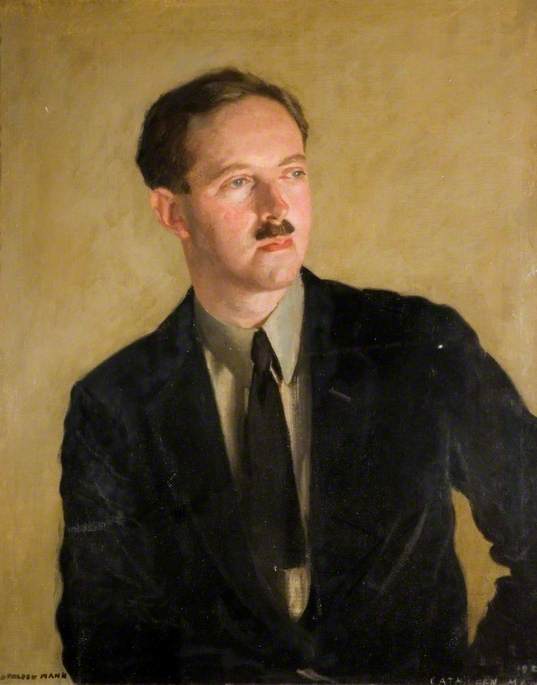
Portretul lui Cathleen Sabine Mann

Cele 14 cele mai faimoase picturi ale lui Cathleen Sabine Mann, o selecție de galerie

Actualizat Noiembrie 2026 · clasat în funcție de scorul nostru de popularitate (căutări, vizite și comenzi pentru fiecare operă) · 14 lucrări ale lui Cathleen Sabine Mann în catalogul nostru

Pe scurt

Dintre toate originalele lăsate de Cathleen Sabine Mann, cea mai faimoasă este Ballerina (1934). Imediat după acestea urmează Francis Brett Young (1884–1954) (1922) și Jane Posing (1931). Catalogul nostru cuprinde 14 lucrări ale lui Cathleen Sabine Mann; galeria a păstrat cele 14 pe care lumea le admiră cel mai mult, fiecare fiind prezentată împreună cu data, muzeul și povestea sa.

1896 – 1959, Newcastle upon Tyne Cele mai multe lucrări: University of Birmingham

Cele mai importante 10 picturi ale lui Cathleen Sabine Mann: selecția galeriei

1
Ballerina (1934) de Cathleen Sabine Mann

Ballerina

1934

The Ballerina painting by Cathleen Mann is a stunning example of artistic excellence, showcasing the artist's skill and attention to detail. Created in 1934, this oil on canvas masterpiece measures 91 x 71 cm and is currently housed at the Glasgow Museums Resource Centre in the United Kingdom. Artist Background Cathleen Mann was a talented artist known for her captivating portraits and figurative paintings. Her work often featured women and…

Selecția pentru Cathleen Sabine Mann continuă, de la 11 la 14

Muzeele care păstrează originalele lui Cathleen Sabine Mann

Cele 4 muzee care dețin cele mai multe dintre picturile de pe această pagină.

Muzee Oraș Lucrări lui Cathleen Sabine Mann Picturi din această listă
University of Birmingham, BirminghamUniversity of Birmingham Birmingham 1 Francis Brett Young (1884–1954)
Ferens Art Gallery, HullFerens Art Gallery Hull 1 Diana Napier (1904–1982) (Mrs Richard Tauber)
National Trust, GranthamNational Trust Grantham 1 Peregrine Francis Adelbert Cust (1899–1978), 6th Baron Brownlow
Bolton Museum And Art Gallery, BoltonBolton Museum And Art Gallery Bolton 1 Flowers

Cathleen Sabine Mann deceniu cu deceniu: originalul care definește fiecare

Lucrări pe deceniu

Alege o deceniu pentru a descoperi opera originală care îl definește.

Întrebări ale colecționarilor despre picturile lui Cathleen Sabine Mann

Pentru ce operă este cel mai cunoscut Cathleen Sabine Mann?Află răspunsul

Ballerina (1934). Urmează Francis Brett Young (1884–1954) (1922) și Jane Posing (1931).

Ce vârstă avea Cathleen Sabine Mann când a fost creată Ballerina?Află răspunsul

38 ani: Ballerina datează din 1934, iar Cathleen Sabine Mann s-a născut în 1896.

Care sunt cele mai celebre zece picturi ale lui Cathleen Sabine Mann?Află răspunsul

Ballerina, Francis Brett Young (1884–1954), Jane Posing, Composition in Pink and Green, David Douglas, Viscount Drumlanrig (b.1929), Diana Napier (1904–1982) (Mrs Richard Tauber), Barrage Balloons over St James's Park, St James's Park, Evreux și Evan Frederick Morgan (1893–1949), 2nd Viscount Tredegar (2nd Creation). Clasamentul de mai sus indică anul și muzeul pentru fiecare piesă.

Câte picturi a lăsat Cathleen Sabine Mann?Află răspunsul

Catalogul nostru cuprinde 14 lucrări ale lui Cathleen Sabine Mann, datate între 1922 și 1952.

În ce muzee sunt expuse capodoperele lui Cathleen Sabine Mann?Află răspunsul

În principal în University of Birmingham (Birmingham), Ferens Art Gallery (Hull) și National Trust (Grantham). Tabelul cu muzee de mai sus le enumeră pe toate.

În ce ani a pictat Cathleen Sabine Mann cele mai cunoscute opere?Află răspunsul

În 1940s: 6 dintre cele 14 lucrări de pe această pagină au fost realizate atunci, fiind Barrage Balloons over St James's Park dintre acestea.

Care sunt prima și ultima pictură originală celebră a lui Cathleen Sabine Mann?Află răspunsul

Pe această pagină, cea mai veche lucrare datează din Francis Brett Young (1884–1954) (1922), iar cea mai recentă este din Sir Eduardo Luigi Paolozzi (1952).

Cathleen Sabine Mann: viață și operă

A Life in Lines and Layers

Cathleen Mann began her days in Newcastle upon Tyne, born to parents who lived through the brush and pigment. Her father, Harrington Mann, and her mother, Florence Sabine Pasley, were both portraitists, providing a childhood shaped by the quiet work of the studio. She learned to paint within her father's London studio, receiving early lessons that would later lead her to the Slade School of Fine Art and eventually to Paris. These formative years were marked by the steadying influence of Ethel Walker, another painter who continued to guide her even as Cathleen pursued her own studies.

The rhythms of her life changed with the arrival of the First World War. The studio was left behind for the work of an ambulance unit, a period that placed her in the middle of a much larger, more chaotic reality. When she returned to her art, her focus remained on the human form and the quiet details of life. She became known for portraits and landscapes, often capturing women and children with a careful eye for the subtle shifts in emotion. Her work found homes in the Victoria and Albert Museum, the Musée du Luxembourg, and the Royal Glasgow Institute of the Fine Arts.

The Dual Path of Paint and Film

During the 1930s, her hands were busy with more than just canvas. She moved into the world of British film, working as a costume designer. This period saw her contributing to the visual fabric of films such as:

  • The Iron Duke (1935)
  • Things to Come (1937)
  • Backstage (1937)
  • Forbidden Music (1936)
  • The Show Goes On (1936)
  • Evensong (1934)
  • Chu Chin Chow (1934)
  • The Wandering Jew (1933)

Her design work left a physical trace in the collections of the Victoria & Albert Museum. At the same time, her painting continued to evolve. In 1934, she produced Ballerina, an oil on canvas that shows a woman on a couch with a black cat nearby. Her later years brought a shift toward abstraction. Influenced by Matthew Smith, she began experimenting with landscapes of increasing abstraction, nude drawings, and sculpture. This period of experimentation followed the personal losses of 1953, when her husband, John Robert Follett, passed away.

Service and Legacy

The Second World War brought a different kind of responsibility. Mann served as an official war artist, painting portraits of officers and Allied commanders. These works were seen in London and traveled to America, sometimes appearing in the pages of Time magazine. Beyond the canvas, she used her position as the Marchioness of Queensberry to assist others during the bombing of 1940. She worked to secure transport by road and rail to move people to safety in the dock district of south West Ham.

Her career was defined by a movement between the structured world of portraiture and the fluid experimentation of her later years. She held memberships in both the Royal Institute of Oil Painters and the Royal Society of Portrait Painters. Her portraits, such as those of Sir Matthew Smith and Sir Eduardo Paolozzi, remain in the National Portrait Gallery in London. She died in 1959 in her studio on Montpelier Walk, Brompton.