Portretul lui Bernard Van Orley

Picturi Bernard Van Orley: Cele 15 de cele mai faimoase, prin ochii unei galerii

Actualizat Noiembrie 2026 · clasat în funcție de scorul nostru de popularitate (căutări, vizite și comenzi pentru fiecare operă) · 17 lucrări ale lui Bernard Van Orley în catalogul nostru

Pe scurt

În ochii galeriei, cea mai celebră pictură a lui Bernard Van Orley este Portrait of Margaret of Austria, Duchess of Savoy (1520), a cărei originală este expusă la Muzeul Regal de Arte Frumoase din Anvers, Antwerpen. Marie Haneton (1519) și Portrait of a Young Man (1520) completează trioul pe care orice ochi îl recunoaște. Dintre cele 17 opere ale lui Bernard Van Orley din catalogul nostru, galeria prezintă mai jos cele 15 cele mai faimoase, fiecare fiind originală, cu anul creării, muzeul de păstrare și elementul care o face unică.

Northern renaissance Cele mai multe lucrări: Muzeul Kunsthistorisches din Viena

Cele mai apreciate 10 picturi ale lui Bernard Van Orley din galerie

1
Portrait of Margaret of Austria, Duchess of Savoy (1520) de Bernard Van Orley

Portrait of Margaret of Austria, Duchess of Savoy

1520 · Oil On Panel · Muzeul Regal de Arte Frumoase din Anvers, Antwerpen

In the quiet, dignified presence of “Portrait of Margaret of Austria, Duchess of Savoy,” we encounter more than just a likeness; we enter the refined atmosphere of the early sixteenth century. Painted around 1520 by the Flemish master Barend or Barent van Orley, this half-length portrait serves as a breathtaking window into the Northern Renaissance. The subject, Margaret of Austria, stands captured in a moment of serene composure, her gaze…

2
Marie Haneton (1519) de Bernard Van Orley

Marie Haneton

1519 · Oil On Panel

The portrait of Marie Haneton, painted by Bernard Van Orley, captures a noblewoman in a moment of quietude. This work dates to about 1519. The subject sits against a dark, neutral background that pushes her presence forward. She is a woman of status, marked by the fine details of her station.

4
The Adoration of The magi (1533) de Bernard Van Orley

The Adoration of The magi

1533 · Oil On Panel · Yale University Art Gallery, New Haven

The Adoration of The magi is a religious work by the Netherlandish painter Bernard Van Orley. Created about 1533, the painting captures a moment of profound reverence from the Christian tradition. The scene focuses on the presentation of gifts to the infant Jesus by the Magi. This central act of devotion unfolds within a structured space, where the figures gather to honor the child.

5
Last Judgement and the Seven Acts of Mercy (1525) de Bernard Van Orley

Last Judgement and the Seven Acts of Mercy

1525 · Oil On Panel

The Last Judgement and the Seven Acts of Mercy is a work by Bernard Van Orley. Created in 1525, the piece emerged from the workshop of the artist during a period of profound stylistic transition. It was commissioned by the almoners of the Cathedral of Our Lady, Antwerp, to serve a specific devotional purpose within the sacred space of the church.

7
Presentation of Christ (1530) de Bernard Van Orley

Presentation of Christ

1530 · Oil On Panel · Muzeul Kunsthistorisches din Viena, Viena

In this oil painting from 1530, titled Presentation of Christ, the artist Bernard Van Orley explores a profound moment of biblical narrative. The scene depicts the Presentation of Christ in the Temple, a significant religious event that centers on the infant Jesus being brought before the religious authorities. Through this specific subject matter, the work represents Christ’s acceptance within the Jewish community, capturing a moment of divine recognition within a…

8
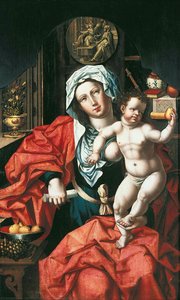
The Virgin and Child (1520) de Bernard Van Orley

The Virgin and Child

1520 · Oil · National Gallery of Canada, Ottawa

In the quiet intimacy of The Virgin and Child, we are invited into a moment of profound tenderness that transcends the centuries. This exquisite work by the Brussels master Barend van Orley captures the essence of maternal devotion through the delicate interaction between the Virgin Mary and her infant son. As the child nurses, there is a palpable sense of warmth and vulnerability, a humanizing touch that anchors the divine…

Picturi cu Bernard Van Orley, clasate de la 11 la 15

Subiectele care i-au captivat privirea lui Bernard Van Orley

Cele patru teme care revin cel mai des în aceste opere originale, fiecare având cel mai sublim exemplu.

Muzeele care păstrează originalele lui Bernard Van Orley

Cele 8 muzee care dețin cele mai multe dintre picturile de pe această pagină.

Muzee Oraș Lucrări lui Bernard Van Orley Picturi din această listă
Muzeul Kunsthistorisches din Viena, VienaMuzeul Kunsthistorisches din Viena Viena 3 Portrait of a Young Man, Presentation of Christ, Thomas Und Matthias Altar
Muzeul Regal de Arte Frumoase din Anvers, AntwerpenMuzeul Regal de Arte Frumoase din Anvers Antwerpen 1 Portrait of Margaret of Austria, Duchess of Savoy
Yale University Art Gallery, New HavenYale University Art Gallery New Haven 1 The Adoration of The magi
Muzeul Kelvingrove, GlasgowMuzeul Kelvingrove Glasgow 1 Virgin and Child near a Fountain
National Gallery of Canada, OttawaNational Gallery of Canada Ottawa 1 The Virgin and Child
Oriel College, OxfordOriel College Oxford 1 Triptych (middle panel) Christ Falls, with the Cross, Before a City Gate
Musée municipal de Bourg-en-Bresse, Bourg-en-BresseMusée municipal de Bourg-en-Bresse Bourg-en-Bresse 1 Portrait of Margaret of Austria
Muzeul din Cádiz, CádizMuzeul din Cádiz Cádiz 1 San Jerónimo penitent

Bernard Van Orley, o pictură emblematică pe deceniu

Lucrări pe deceniu

Alege o deceniu pentru a descoperi opera originală care îl definește.

Picturile lui Bernard Van Orley: răspunsurile galeriei

Care este cea mai celebră pictură a lui Bernard Van Orley?Află răspunsul

Portrait of Margaret of Austria, Duchess of Savoy (1520), Muzeul Regal de Arte Frumoase din Anvers, Antwerpen. Urmează Marie Haneton (1519) și Portrait of a Young Man (1520).

Care sunt cele mai importante 10 picturi ale lui Bernard Van Orley?Află răspunsul

Portrait of Margaret of Austria, Duchess of Savoy, Marie Haneton, Portrait of a Young Man, The Adoration of The magi, Last Judgement and the Seven Acts of Mercy, Virgin and Child near a Fountain, Presentation of Christ, The Virgin and Child, Triptych (middle panel) Christ Falls, with the Cross, Before a City Gate și Portrait of Margaret of Austria. Clasamentul de mai sus indică anul și muzeul pentru fiecare piesă.

Câte lucrări a creat Bernard Van Orley?Află răspunsul

Catalogul nostru cuprinde 17 lucrări ale lui Bernard Van Orley, datate între 1519 și 1533.

Unde sunt expuse cele mai celebrele opere originale ale lui Bernard Van Orley?Află răspunsul

În principal în Muzeul Kunsthistorisches din Viena (Viena), Muzeul Regal de Arte Frumoase din Anvers (Antwerpen) și Yale University Art Gallery (New Haven). Tabelul cu muzee de mai sus le enumeră pe toate.

Când a creat Bernard Van Orley cele mai faimoase picturi?Află răspunsul

În 1520s: 6 dintre cele 15 lucrări de pe această pagină au fost realizate atunci, fiind Portrait of Margaret of Austria, Duchess of Savoy dintre acestea.

Care sunt cele mai vechi și cele mai recente opere celebre ale lui Bernard Van Orley?Află răspunsul

Pe această pagină, cea mai veche lucrare datează din Marie Haneton (1519), iar cea mai recentă este din The Adoration of The magi (1533).

La ce subiecte s-a întors cel mai des Bernard Van Orley?Află răspunsul

Woman (3), Man (3) și Child (2), din cele 15 lucrări de pe această pagină.

În ce tehnică a lucrat cel mai mult Bernard Van Orley?Află răspunsul

Oil On Panel, pentru 7 dintre cele 15 lucrări de pe această pagină.

Cu ce mișcare este asociat(ă) Bernard Van Orley?Află răspunsul

Northern renaissance, judecând după originalele de pe această pagină.

Ce opere originale ale lui Bernard Van Orley deține Muzeul Kunsthistorisches din Viena?Află răspunsul

Portrait of a Young Man, Presentation of Christ și Thomas Und Matthias Altar: Muzeul Kunsthistorisches din Viena, Viena deține 3 dintre lucrările de pe această pagină.

Bernard Van Orley: artistul

The Renaissance Soul of Brussels


In the heart of a burgeoning Brussels, where the scent of damp wool and the rhythmic clatter of looms defined the urban landscape, Barend van Orley emerged as a titan of the Flemish Renaissance. Born into an era of profound artistic transition, his very lineage was woven into the fabric of the arts; as the son of the esteemed tapestry designer Valentin van Orley, his childhood was likely an immersive education in the intricate textures and grand narratives required for the great tapestries of Europe. This early exposure to the meticulous craftsmanship of the Brussels workshops provided a foundation that would eventually allow him to transcend the boundaries of mere decoration, elevating the medium of tapestry to a level of painterly sophistication previously unseen in the Low Countries.

A Synthesis of Northern Realism and Italian Grace


While many of his contemporaries embarked on arduous pilgrimages to the sun-drenched studios of Italy, van Orley achieved a remarkable feat of artistic osmosis, absorbing the revolutionary aesthetics of Raphael’s Rome from afar. He became a leading figure of the Romanist movement, a stylistic bridge that married the unflinching, microscopic realism characteristic of the Netherlandish tradition with the idealized proportions and classical grandeur of the Italian Renaissance. In his hands, the heavy, tactile world of Flemish painting—where every fold of velvet and glint of gold could be felt through the gaze—met the harmonious compositions and balanced grace of the South. This synthesis created a visual language that was both intimately familiar to Northern patrons and breathlessly modern, characterized by a profound command over light, shadow, and the human form.

A Legacy Woven in Paint and Thread


Van Orley’s genius lay in his extraordinary versatility, an ability to command the brush, the loom, and the stained-glass window with equal mastery. His oeuvre is a testament to a creator who saw no distinction between the monumental scale of a tapestry design and the delicate intimacy of a religious oil painting. Whether depicting the profound gravity of the Last Judgement or the tender grace of a Virgin and Child, his work consistently radiated a sense of divine order and earthly beauty. Beyond his individual masterpieces, his historical significance is cemented by his role as a pivotal link in the evolution of Northern art, ensuring that the traditions of his ancestors were not merely preserved but transformed for a new age. Through his prolific output and the continuation of his family’s artistic lineage, Barend van Orley left an indelible mark on the cultural identity of the Flemish Renaissance, leaving behind a legacy as enduring as the very tapestries he helped to define.