Bernard Finnigan Gribble (1872–1962): A Master of Maritime Impressionism
Bernard Finnigan Gribble (1872–1962) occupies a unique position within British marine art, revered for his dramatic portrayals of naval history and captivating illustrations that breathed life into the spirit of seafaring adventure. Born amidst the Victorian fascination with exploration and industrial progress—a period defined by daring expeditions and burgeoning scientific inquiry—Gribble’s artistic path unfolded against a backdrop of considerable cultural dynamism. Biographical details concerning his early years remain somewhat elusive, reflecting the conventions of his time; however, his prolific output speaks volumes about his unwavering dedication to capturing the essence of maritime scenes with unparalleled precision and profound emotional resonance.Early Life & Artistic Foundations
Precise information regarding Gribble’s formative years is scarce—a circumstance that underscores the challenges inherent in reconstructing biographical narratives from eras past. Nevertheless, anecdotal evidence suggests he cultivated his artistic skills largely independently, honing his craft through diligent observation and experimentation. The stylistic bedrock of his oeuvre was firmly established in traditional watercolor techniques—a deliberate choice that aligned seamlessly with the prevailing aesthetic sensibilities of his generation and would characterize much of his artistic output. This foundational grounding in watercolor allowed him to achieve remarkable luminosity and textural nuance—elements crucial to conveying the atmospheric conditions prevalent during naval engagements and coastal landscapes alike.Embracing Impressionism: A Revolutionary Shift
Like countless artists of his time, Bernard Finnigan Gribble wholeheartedly embraced the transformative ideas circulating within the burgeoning Impressionist movement. This influence is palpably present in his later works—a conscious departure from academic conventions that prioritized meticulous realism for looser brushstrokes and vibrant color palettes. Rejecting the rigid formalism of traditional painting, Gribble sought to capture fleeting moments of visual experience—a hallmark of Impressionism that championed spontaneity and sensory perception. He skillfully utilized color theory and atmospheric perspective to imbue his canvases with an immediacy and emotional depth unattainable through more conventional methods.Notable Commissions & Artistic Achievements
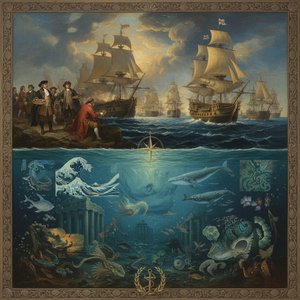
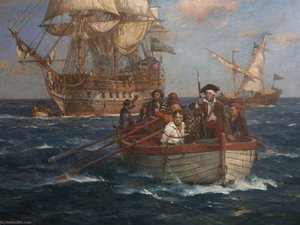
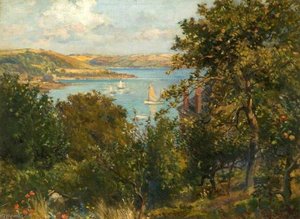
Gribble’s artistic reputation soared thanks to commissions from naval authorities and publishers alike—institutions eager to engage artists capable of documenting significant maritime events with both accuracy and aesthetic brilliance. He undertook ambitious projects depicting battleships embroiled in combat, charting unexplored territories, and commemorating pivotal moments in naval history. His meticulous attention to detail—particularly concerning rigging, hull construction, and the subtle interplay of light and shadow—established him as a pioneer of realistic marine painting—a distinction that distinguishes his oeuvre from many contemporaries. Among his most celebrated achievements are “Lifeboat,” “The Purbecks from Poole Harbour, Dorset” and “Morgan's Prize”—paintings that exemplify his mastery of Impressionistic principles while upholding the highest standards of nautical accuracy. These works continue to inspire admiration for their evocative atmosphere and masterful execution—testaments to Gribble’s enduring legacy as a champion of maritime art and a significant contributor to British artistic heritage.Technique & Artistic Vision
Gribble's technique involved layering watercolor washes with glazing techniques, resulting in luminous surfaces that retained remarkable depth and subtlety. He favored a panoramic perspective—a stylistic choice that immersed viewers within the scene—capturing not merely visual representations but also the psychological impact of seafaring life. His artistic vision centered on conveying not merely visual representations but also the emotional resonance of maritime experiences—a goal achieved through careful consideration of color harmony, compositional balance, and textural variation. He skillfully utilized light to sculpt forms and create dramatic contrasts—techniques honed during his formative years at Bruges and perfected under the tutelage of Albert Toft—resulting in paintings that resonate with both visual splendor and psychological insight. ### Legacy & Historical Significance Bernard Finnigan Gribble’s contribution to British marine art is undeniable—his canvases stand as enduring symbols of Victorian ambition, scientific curiosity, and artistic innovation. His unwavering commitment to portraying naval history with breathtaking realism cemented his place among the foremost marine artists of the 20th century—a legacy that continues to inspire admiration for its evocative atmosphere and masterful execution. He skillfully blended Impressionistic principles with meticulous observation—a singular achievement that distinguishes him from many contemporaries—ensuring his enduring influence on subsequent generations of painters and solidifying his position as a cornerstone of British artistic heritage.Întrebări și răspunsuri
Pot să explorez lucrările lui Bernard Finnigan Gribble în funcție de paleta de culori?
Operele lui Bernard Finnigan Gribble pot fi explorate pe baza paletei cromatice în pagina de După paletă de culori a artistului.
Cum pot găsi toate lucrările lui Bernard Finnigan Gribble dintr-un anumit tip de tehnică?
Pagina Toate tehnicile grupează operele lui Bernard Finnigan Gribble pe tehnici.
Pot vizita un muzeu virtual al lucrărilor lui Bernard Finnigan Gribble?
Pagina Galerie 3D a lui Bernard Finnigan Gribble prezintă operele de artă ale artistului într-o galerie virtuală tridimensională.