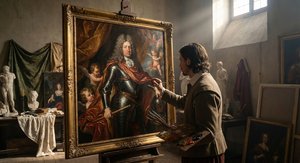
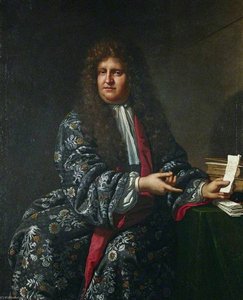
A Legacy Forged in Baroque Splendor: The Life and Art of Benedetto Gennari II
Benedetto Gennari II, born in Cento, Italy, in 1633, emerged from a distinguished lineage of artists, destined to leave his own indelible mark on the vibrant tapestry of the Baroque period. As the grandson of Benedetto Gennari I and brother to Cesare Gennari, he inherited not merely a family name steeped in artistic tradition but also a profound understanding of painting’s power—a legacy nurtured by his father, Ercole Gennari, and mother, Lucia Barbieri. His formative years were profoundly shaped by an apprenticeship under the celebrated Guercino, whose dramatic use of light and shadow, emotional intensity, and dynamic compositions would become foundational to Gennari's early style. This tutelage instilled in him a meticulous technique and a keen eye for capturing both physical likeness and inner character, qualities that would define his future success.Early Influences & Artistic Training
The influence of Guercino was paramount to Benedetto’s artistic development. Recognizing the genius of this Bolognese maestro—whose masterful manipulation of chiaroscuro and expressive brushwork revolutionized painting—Gennari sought guidance from Guercino himself, embarking on a formative apprenticeship that cemented his stylistic sensibilities. Guercino's dramatic approach to depicting emotion and capturing the dynamism of movement served as an inspiration for Gennari’s subsequent works, shaping his technique and fostering a deep appreciation for expressive visual language. This early training instilled in him a meticulous attention to detail—a hallmark of his oeuvre—and established a bedrock of artistic principles that would inform his entire career. The familial connection to Guercino I further solidified Gennari's commitment to upholding the traditions of Bolognese Baroque painting, ensuring that his own artistic endeavors remained rooted in the legacy of a revered predecessor.From Bologna to Royal Courts: A Cosmopolitan Career
Following Guercino’s passing in 1672, Benedetto and Cesare jointly inherited the master's studio, recognizing the importance of preserving Guercino’s artistic vision while simultaneously allowing them space to cultivate their individual voices. However, Gennari possessed a restless spirit and an ambition that extended beyond the confines of Bologna. Driven by a desire for recognition and propelled by his innate talent, he embarked on a daring journey to Paris in March 1672—seeking opportunities at the court of King Louis XIV. This decisive step marked a turning point in Gennari’s life, exposing him to the refined tastes and intellectual currents of the French capital and fostering connections with influential artists and patrons. His arrival in Paris coincided with a period of considerable artistic ferment, where innovative ideas were debated openly and new stylistic trends emerged—influences that would subtly enrich Gennari’s oeuvre. In September 1674, Gennari continued his travels, arriving in London where he swiftly established himself as a sought-after court painter for both King Charles II and his successor, James II. It was during this period that his reputation as a portraitist truly blossomed—capturing the dignity and grandeur of royal subjects with unparalleled skill. He became particularly favored by Catholic consorts—Catherine of Braganza and Mary of Modena—who commissioned devotional works for their private chapels and personal contemplation. These commissions reveal not only Gennari’s artistic prowess but also the complex religious landscape of 17th-century England, where faith was often practiced with a degree of discretion. His patronage by James II—a staunch defender of Catholicism—provided him with invaluable access to royal circles and fostered collaborations with prominent artists and intellectuals.A Style in Transition: Blending Tradition and Innovation
Gennari’s artistic development wasn't static; it was a continuous process of evolution fueled by his travels and exposure to diverse artistic traditions. While initially deeply rooted in Guercino’s style—characterized by dramatic chiaroscuro, expressive brushwork, and emotionally charged compositions—he gradually incorporated elements from Northern European painting into his work. This synthesis resulted in a more nuanced approach to composition, color palettes, and the rendering of detail—reflecting the broader artistic currents circulating throughout Europe during this period. His portraits, in particular, distinguished themselves through their ability to capture not only the physical likeness of his sitters but also their personalities and psychological depth—a testament to Gennari’s profound understanding of human emotion and form. He possessed an exceptional talent for conveying dignity, refinement, and a sense of inner life within his subjects—a hallmark of his distinctive artistic style.Legacy & Artistic Contributions
Gennari's prolific output spanned across various genres—including mythological paintings, allegorical scenes, and portraits—demonstrating versatility and skill. He became one of the founding members of the Bolognese Accademia Clementina in 1709—an institution dedicated to promoting innovation and elevating the standards of art within the Bolognese community—further cementing his commitment to artistic excellence and fostering collaborations with fellow artists. His influence extended beyond his individual artworks; he played an active role in shaping the artistic landscape of Bologna, ensuring that future generations would benefit from a vibrant and thriving creative environment. Benedetto Gennari II’s paintings stand as enduring testaments to his technical mastery, artistic sensitivity, and lasting contribution to the Baroque tradition—a legacy that continues to captivate and inspire viewers today.Întrebări și răspunsuri
Din ce epocă face parte Benedetto Gennari Cel Tânăr?
Benedetto Gennari Cel Tânăr a activat în perioada Epoca modernă timpurie. Această perioadă situează activitatea artistului în context istoric.
Unde pot vedea toate operele create de Benedetto Gennari Cel Tânăr?
Toate lucrările lui Benedetto Gennari Cel Tânăr de pe acest site web pot fi explorate în pagina Toate operele de artă a artistului.
Cum pot găsi lucrările lui Benedetto Gennari Cel Tânăr dintr-o anumită paletă de culori?
Operele lui Benedetto Gennari Cel Tânăr pot fi explorate pe baza paletei cromatice în pagina de După paletă de culori a artistului.