Portretul lui Antonio Zucchi

Cele 87 cele mai faimoase picturi ale lui Antonio Zucchi, o selecție de galerie

Actualizat Noiembrie 2026 · clasat în funcție de scorul nostru de popularitate (căutări, vizite și comenzi pentru fiecare operă) · 101 lucrări ale lui Antonio Zucchi în catalogul nostru

Pe scurt

Dintre toate originalele lăsate de Antonio Zucchi, cea mai faimoasă este A Putto Being Woken from Sleep by Tickling of His Nose (1770), din colecția Nostell Priory, Wakefield. Imediat după acestea urmează James Adam, 1732 - 1794. Architect and designer (1763) și Landscape with a Bridge and Ruins with Peasants Fishing (a set of six decorative wall panels) (1781). Catalogul nostru cuprinde 101 lucrări ale lui Antonio Zucchi; galeria a păstrat cele 87 pe care lumea le admiră cel mai mult, fiecare fiind prezentată împreună cu data, muzeul și povestea sa.

1726 – 1795, Veneția Neoclassical style Cele mai multe lucrări: Nostell Priory

Cele mai importante 10 picturi ale lui Antonio Zucchi: selecția galeriei

1
A Putto Being Woken from Sleep by Tickling of His Nose (1770) de Antonio Zucchi

A Putto Being Woken from Sleep by Tickling of His Nose

1770 · Oil · Nostell Priory, Wakefield

We find ourselves before A Putto Being Woken from Sleep by Tickling of His Nose, a work by the Venetian painter Antonio Zucchi. This piece dates to about 1770, a period when Zucchi was establishing his presence within the English artistic landscape. The painting is currently held within the Nostell Priory collection, where it has been preserved as part of their significant holdings.

2
James Adam, 1732 - 1794. Architect and designer (1763) de Antonio Zucchi

James Adam, 1732 - 1794. Architect and designer

1763 · Oil On Canvas · Galeria Națională a Scottei, Edinburgh

In this portrait, James Adam, 1732 - 1794. Architect and designer, meets the viewer through the brush of Antonio Zucchi. The scene unfolds in Rome, captured during the subject's Grand Tour of Italy in 1763. Here, the youngest member of a prominent dynasty of Scottish architects appears not merely as a man, but as a central figure in the unfolding Neoclassical movement. He carries the weight of his profession with…

3
Landscape with a Bridge and Ruins with Peasants Fishing (a set of six decorative wall panels) (1781) de Antonio Zucchi

Landscape with a Bridge and Ruins with Peasants Fishing (a set of six decorative wall panels)

1781 · Oil On Canvas · National Trust, Plymouth

Antonio Zucchi’s “Landscape with a Bridge and Ruins with Peasants Fishing,” painted in 1781, is more than just a picturesque scene; it’s a poignant meditation on time, memory, and the enduring relationship between humanity and nature. This captivating work, originally conceived as one of a set of decorative wall panels, transports us to an idealized Italian countryside where classical grandeur meets rustic simplicity. The eye is immediately drawn to the…

4
Nymphs garlanding Cupid (1774) de Antonio Zucchi

Nymphs garlanding Cupid

1774 · Oil · Nostell Priory, Wakefield

This work, titled Nymphs garlanding Cupid, is an oil painting by the Italian painter and printmaker Antonio Zucchi. Created about 1774, the piece presents a mythological scene set within a sun-drenched woodland. The composition focuses on a central group of figures, including several nymphs and a small, nude Cupid, captured in a moment of celebration.

6
Hector and Andromache (1773) de Antonio Zucchi

Hector and Andromache

1773 · Oil On Canvas · Nostell Priory, Wakefield

In Hector and Andromache, Antonio Zucchi captures a heavy moment of farewell and reunion. A muscular warrior, clad in a helmet, pulls a woman into a tight embrace. She holds a small baby against her, a fragile weight amidst the tension of the scene. They are framed by the skeletal remains of Roman architecture, where weathered stone walls and broken arches rise into the shadows. In the distance, other figures…

7
Three dancing nymphs and a reclining cupid in a landscape (1772) de Antonio Zucchi

Three dancing nymphs and a reclining cupid in a landscape

1772 · Metropolitan Museum of Art, New York

The forest breathes with a quiet, rhythmic energy as three women move through the dappled light. They are caught in a moment of pure, unburdened motion, their bodies swaying in a synchronized grace that defies the stillness of the trees. One woman leads on the left, her pose a delicate curve against the greenery, while the central figure anchors the movement, her form a focal point of light and motion.…

8
Jurisprudence (1769) de Antonio Zucchi

Jurisprudence

1769 · Oil · English Heritage, Londra

In the quiet, commanding presence of Antonio Zucchi’s Jurisprudence, we encounter more than a mere portrait; we enter a realm where personified virtue meets classical grandeur. Painted in 1769, this exquisite work serves as a profound meditation on the nature of law, wisdom, and authority. The composition centers upon a regal woman, seated with a poised grace that suggests both accessibility and an impenetrable intellect. As she sits with her…

9
The Four Continents America (1777) de Antonio Zucchi

The Four Continents America

1777 · Painting · National Trust, Derby

To gaze upon this magnificent piece is to step directly into the vibrant heart of Enlightenment-era global ambition. The Four Continents America, executed in 1777 by Antonio Zucchi, is far more than a mere depiction of people; it is a sweeping, allegorical testament to human connection, exploration, and the perceived organization of the known world at the close of the eighteenth century. The composition immediately draws the eye to the…

10
Mathematics (1769) de Antonio Zucchi

Mathematics

1769 · Oil On Canvas · English Heritage, Londra

In "Mathematics," Antonio Zucchi presents a scene where intellect and grace meet in a quiet, suspended moment. Completed in 1769, the painting centers on a woman seated upon an easel-like structure. She exists in a state of profound contemplation, her gaze directed upwards toward an unseen height, as if she is tracing the very logic of the heavens. This upward look suggests a mind reaching beyond the physical realm to…

Selecția pentru Antonio Zucchi continuă, de la 11 la 87

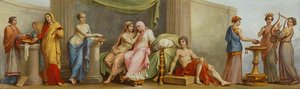
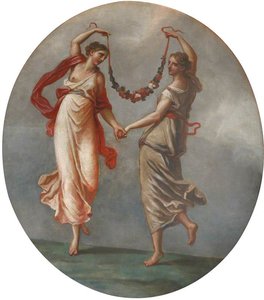
11The Four Continents Europe (1777) de Antonio ZucchiThe Four Continents Europe1777 · National Trust 12Winter (1769) de Antonio ZucchiWinter1769 · English Heritage 13Chloe Playing the Lyre to Daphnis (or Sappho and Anacreon) (1776) de Antonio ZucchiChloe Playing the Lyre to Daphnis (or Sappho and Anacreon)1776 · Nostell Priory 14The Four Continents Asia (1777) de Antonio ZucchiThe Four Continents Asia1777 · National Trust 15The Four Continents Africa (1777) de Antonio ZucchiThe Four Continents Africa1777 · National Trust 16Diogenes Casting Away His Wooden Bowl as a Superfluity, on Seeing a Youth Drinking from His Hand (a set of three decorative wall panels) (1768) de Antonio ZucchiDiogenes Casting Away His Wooden Bowl as a Superfluity, on Seeing a Youth Drinking from His Hand (a set of three decorative wall panels)1768 · National Trust 17Theology (1769) de Antonio ZucchiTheology1769 · English Heritage 18Ruins of Classical Baths with Nymphs Bathing (a set of six decorative wall panels) (1781) de Antonio ZucchiRuins of Classical Baths with Nymphs Bathing (a set of six decorative wall panels)1781 · National Trust 19A Bacchanal (1769) de Antonio ZucchiA Bacchanal1769 · English Heritage 20Minerva among the Arts (1769) de Antonio ZucchiMinerva among the Arts1769 · English Heritage 21Sappho Giving Anacreon a Feather from Cupid's Wing (1770) de Antonio ZucchiSappho Giving Anacreon a Feather from Cupid's Wing1770 · Nostell Priory 22Capriccio of Figures Dancing amongst Classical Ruins, with a Statue of the Rape of Proserpine (1775) de Antonio ZucchiCapriccio of Figures Dancing amongst Classical Ruins, with a Statue of the Rape of Proserpine1775 · Nostell Priory 23Commerce (1769) de Antonio ZucchiCommerce1769 · English Heritage 24The Rape of Europa (1769) de Antonio ZucchiThe Rape of Europa1769 · English Heritage 25Apollo and the Muses (1767) de Antonio ZucchiApollo and the Muses1767 · Nostell Priory 26Capriccio of Figures Dancing amongst Classical Ruins, with a Ruined Arch (1775) de Antonio ZucchiCapriccio of Figures Dancing amongst Classical Ruins, with a Ruined Arch1775 · Nostell Priory 27The Aldobrandini Marriage (1769) de Antonio ZucchiThe Aldobrandini Marriage1769 · English Heritage 28Navigation (1769) de Antonio ZucchiNavigation1769 · English Heritage 29Justice Embracing Peace (1769) de Antonio ZucchiJustice Embracing Peace1769 · English Heritage 30Bacchantes (5 of 6 ovals) (1773) de Antonio ZucchiBacchantes (5 of 6 ovals)1773 · English Heritage 31Homer Crowned as Poet Laureate (1767) de Antonio ZucchiHomer Crowned as Poet Laureate1767 · Nostell Priory 32Agriculture (1769) de Antonio ZucchiAgriculture1769 · English Heritage 33Bacchantes (2 of 6 ovals) (1773) de Antonio ZucchiBacchantes (2 of 6 ovals)1773 · English Heritage 34Dido and Aeneas ( ) (1773) de Antonio ZucchiDido and Aeneas ( )1773 · Nostell Priory 35An Unidentified Classical Subject A Fight (1767) de Antonio ZucchiAn Unidentified Classical Subject A Fight1767 · Nostell Priory 36Putti Making Music (1770) de Antonio ZucchiPutti Making Music1770 · Nostell Priory 37The Infant Hercules (1769) de Antonio ZucchiThe Infant Hercules1769 · English Heritage 38Anacreon Sacrificing to the Three Graces (1770) de Antonio ZucchiAnacreon Sacrificing to the Three Graces1770 · Nostell Priory 39Bacchantes (4 of 6 ovals) (1773) de Antonio ZucchiBacchantes (4 of 6 ovals)1773 · English Heritage 40Bacchantes (3 of 6 ovals) (1773) de Antonio ZucchiBacchantes (3 of 6 ovals)1773 · English Heritage 41Bacchantes (1 of 6 ovals) (1773) de Antonio ZucchiBacchantes (1 of 6 ovals)1773 · English Heritage 42Putti Fishing (1770) de Antonio ZucchiPutti Fishing1770 · Nostell Priory 43An Epithalium (1769) de Antonio ZucchiAn Epithalium1769 · English Heritage 44An Unidentified Classical Subject A Quarrel over a Dead Ass (1767) de Antonio ZucchiAn Unidentified Classical Subject A Quarrel over a Dead Ass1767 · Nostell Priory 45Putti with a Bird (1770) de Antonio ZucchiPutti with a Bird1770 · Nostell Priory 46Putti with a Dog (1770) de Antonio ZucchiPutti with a Dog1770 · Nostell Priory 47Socrates Drinking the Hemlock (1767) de Antonio ZucchiSocrates Drinking the Hemlock1767 48Wisdom (Prudence) and Temperance (1767) de Antonio ZucchiWisdom (Prudence) and Temperance1767 · Nostell Priory 49Rinaldo and Armida (1773) de Antonio ZucchiRinaldo and Armida1773 · Nostell Priory 50A Greek Philosopher and His Disciples (1767) de Antonio ZucchiA Greek Philosopher and His Disciples1767 · Nostell Priory 51Justice and Strength (Fortitude) (1767) de Antonio ZucchiJustice and Strength (Fortitude)1767 · Nostell Priory 52Minerva Presenting the Personifications of the Arts of Painting, Gardening, Sculpture and Architecture to Britannia (1767) de Antonio ZucchiMinerva Presenting the Personifications of the Arts of Painting, Gardening, Sculpture and Architecture to Britannia1767 · Nostell Priory 53Putti with a Garland of Flowers (1770) de Antonio ZucchiPutti with a Garland of Flowers1770 · Nostell Priory 54The Return of Telemachus (1773) de Antonio ZucchiThe Return of Telemachus1773 · Nostell Priory 55Virgil Reading the Aeneid to the Emperor Augustus, His Wife Livia and His Fainting Sister, Octavia (1767) de Antonio ZucchiVirgil Reading the Aeneid to the Emperor Augustus, His Wife Livia and His Fainting Sister, Octavia1767 · Nostell Priory 56Hercules between Glory and the Passions (1769) de Antonio ZucchiHercules between Glory and the Passions1769 · English Heritage 57Cupid Preparing Venus for an Amorous Encounter with Mars (1773) de Antonio ZucchiCupid Preparing Venus for an Amorous Encounter with Mars1773 · Nostell Priory 58Mythological Subject with a Couple in an Embrace (1773) de Antonio ZucchiMythological Subject with a Couple in an Embrace1773 · Nostell Priory 59Bacchus and Ceres (1773) de Antonio ZucchiBacchus and Ceres1773 · English Heritage 60Aristippus and His Companions after Being Shipwrecked, Seeing Mathematical Diagrams, Realise the Land Was Inhabited (a set of three decorative wall panels) (1768) de Antonio ZucchiAristippus and His Companions after Being Shipwrecked, Seeing Mathematical Diagrams, Realise the Land Was Inhabited (a set of three decorative wall panels)1768 · National Trust 61Mitellus Ordering a Marble Crow to Be Put on the Tomb of His Former Master, Diodorus Siculus (a set of three decorative wall panels) (1768) de Antonio ZucchiMitellus Ordering a Marble Crow to Be Put on the Tomb of His Former Master, Diodorus Siculus (a set of three decorative wall panels)1768 · National Trust 62Catullus Comforting Lesbia over the Death of Her Pet Sparrow and Writing an Ode (1773) de Antonio ZucchiCatullus Comforting Lesbia over the Death of Her Pet Sparrow and Writing an Ode1773 · Nostell Priory 63Angelica and Medoro Medoro Carving the Name of Angelica into the Trunk of a Tree (1773) de Antonio ZucchiAngelica and Medoro Medoro Carving the Name of Angelica into the Trunk of a Tree1773 · Nostell Priory 64Capriccio with a Pagan Temple and a Sacrifice (1776) de Antonio ZucchiCapriccio with a Pagan Temple and a Sacrifice1776 · Nostell Priory 65Capriccio with the Ruins of a Triumphal Arch and a Bridge (1776) de Antonio ZucchiCapriccio with the Ruins of a Triumphal Arch and a Bridge1776 · Nostell Priory 66A Ruined Temple and Fountain with Musicians (a set of six decorative wall panels) (1781) de Antonio ZucchiA Ruined Temple and Fountain with Musicians (a set of six decorative wall panels)1781 · National Trust 67Fountain with Women Washing Clothes (a set of six decorative wall panels) (1781) de Antonio ZucchiFountain with Women Washing Clothes (a set of six decorative wall panels)1781 · National Trust 68Daphnis Giving an Apple to Chloe (1776) de Antonio ZucchiDaphnis Giving an Apple to Chloe1776 · Nostell Priory 69Daphnis Bestowing a Garland of Flowers on Chloe (1776) de Antonio ZucchiDaphnis Bestowing a Garland of Flowers on Chloe1776 · Nostell Priory 70Philetus Explaining Love to Daphnis and Chloe (1776) de Antonio ZucchiPhiletus Explaining Love to Daphnis and Chloe1776 · Nostell Priory 71A Procession of Classical Figures with a Donkey and a Tambourine (a set of six decorative wall panels) (1781) de Antonio ZucchiA Procession of Classical Figures with a Donkey and a Tambourine (a set of six decorative wall panels)1781 · National Trust 72Girls Dancing amid Classical Ruins (a set of six decorative wall panels) (1781) de Antonio ZucchiGirls Dancing amid Classical Ruins (a set of six decorative wall panels)1781 · National Trust 73Philosophy (1769) de Antonio ZucchiPhilosophy1769 · English Heritage 74Spring (1769) de Antonio ZucchiSpring1769 · English Heritage 75Venus and Cupid de Antonio ZucchiVenus and CupidNostell Priory 76Putto with a Personification of Chemistry de Antonio ZucchiPutto with a Personification of ChemistryNostell Priory 77Putto with a Personification of Sculpture de Antonio ZucchiPutto with a Personification of SculptureNostell Priory 78Putto with a Personification of Drawing de Antonio ZucchiPutto with a Personification of DrawingNostell Priory 79Putto with a Personification of Architecture de Antonio ZucchiPutto with a Personification of ArchitectureNostell Priory 80Putto with a Personification of Mathematics de Antonio ZucchiPutto with a Personification of MathematicsNostell Priory 81Putto with a Personification of Painting de Antonio ZucchiPutto with a Personification of PaintingNostell Priory 82Putto with a Personification of Poetry de Antonio ZucchiPutto with a Personification of PoetryNostell Priory 83Autumn (1769) de Antonio ZucchiAutumn1769 · English Heritage 84Summer (1769) de Antonio ZucchiSummer1769 · English Heritage 85Βακχαάντες (1773) de Antonio ZucchiΒακχαάντες1773 · English Heritage 86A Pair of Dancing Women de Antonio ZucchiA Pair of Dancing WomenNational Trust 87Disarming of Cupid de Antonio ZucchiDisarming of CupidThe National Trust For Scotland

Piesele celebre ale lui Antonio Zucchi, perioadă cu perioadă

Subiectele care i-au captivat privirea lui Antonio Zucchi

Cele patru teme care revin cel mai des în aceste opere originale, fiecare având cel mai sublim exemplu.

Muzeele care păstrează originalele lui Antonio Zucchi

Cele 8 muzee care dețin cele mai multe dintre picturile de pe această pagină.

Muzee Oraș Lucrări lui Antonio Zucchi Picturi din această listă
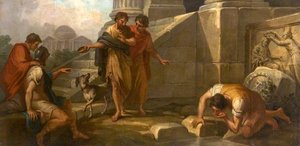
Nostell Priory, WakefieldNostell Priory Wakefield 43 A Putto Being Woken from Sleep by Tickling of His Nose, Nymphs garlanding Cupid, Putto with Personification of Music
English Heritage, LondraEnglish Heritage Londra 26 Jurisprudence, Mathematics, Winter
National Trust, PlymouthNational Trust Plymouth 9 Landscape with a Bridge and Ruins with Peasants Fishing (a set of six decorative wall panels), Diogenes Casting Away His Wooden Bowl as a Superfluity, on Seeing a Youth Drinking from His Hand (a set of three decorative wall panels), Ruins of Classical Baths with Nymphs Bathing (a set of six decorative wall panels)
National Trust, DerbyNational Trust Derby 4 The Four Continents America, The Four Continents Europe, The Four Continents Asia
Galeria Națională a Scottei, EdinburghGaleria Națională a Scottei Edinburgh 1 James Adam, 1732 - 1794. Architect and designer
Metropolitan Museum of Art, New YorkMetropolitan Museum of Art New York 1 Three dancing nymphs and a reclining cupid in a landscape
National Trust, AylesburyNational Trust Aylesbury 1 A Pair of Dancing Women
The National Trust For Scotland, MayboleThe National Trust For Scotland Maybole 1 Disarming of Cupid

Antonio Zucchi deceniu cu deceniu: originalul care definește fiecare

Lucrări pe deceniu

Alege o deceniu pentru a descoperi opera originală care îl definește.

Întrebări ale colecționarilor despre picturile lui Antonio Zucchi

Pentru ce operă este cel mai cunoscut Antonio Zucchi?Află răspunsul

A Putto Being Woken from Sleep by Tickling of His Nose (1770), Nostell Priory, Wakefield. Urmează James Adam, 1732 - 1794. Architect and designer (1763) și Landscape with a Bridge and Ruins with Peasants Fishing (a set of six decorative wall panels) (1781).

Ce vârstă avea Antonio Zucchi când a fost creată A Putto Being Woken from Sleep by Tickling of His Nose?Află răspunsul

44 ani: A Putto Being Woken from Sleep by Tickling of His Nose datează din 1770, iar Antonio Zucchi s-a născut în 1726.

Care sunt cele mai celebre zece picturi ale lui Antonio Zucchi?Află răspunsul

A Putto Being Woken from Sleep by Tickling of His Nose, James Adam, 1732 - 1794. Architect and designer, Landscape with a Bridge and Ruins with Peasants Fishing (a set of six decorative wall panels), Nymphs garlanding Cupid, Putto with Personification of Music, Hector and Andromache, Three dancing nymphs and a reclining cupid in a landscape, Jurisprudence, The Four Continents America și Mathematics. Clasamentul de mai sus indică anul și muzeul pentru fiecare piesă.

Câte picturi a lăsat Antonio Zucchi?Află răspunsul

Catalogul nostru cuprinde 101 lucrări ale lui Antonio Zucchi, datate între 1763 și 1781.

În ce muzee sunt expuse capodoperele lui Antonio Zucchi?Află răspunsul

În principal în Nostell Priory (Wakefield), English Heritage (Londra) și National Trust (Plymouth). Tabelul cu muzee de mai sus le enumeră pe toate.

În ce ani a pictat Antonio Zucchi cele mai cunoscute opere?Află răspunsul

În 1770s: 38 dintre cele 87 lucrări de pe această pagină au fost realizate atunci, fiind A Putto Being Woken from Sleep by Tickling of His Nose dintre acestea.

Care sunt prima și ultima pictură originală celebră a lui Antonio Zucchi?Află răspunsul

Pe această pagină, cea mai veche lucrare datează din James Adam, 1732 - 1794. Architect and designer (1763), iar cea mai recentă este din Landscape with a Bridge and Ruins with Peasants Fishing (a set of six decorative wall panels) (1781).

Ce subiecte a ales cel mai des Antonio Zucchi?Află răspunsul

Woman (28), People (20) și Man (13), din cele 87 lucrări de pe această pagină.

Ce tehnică a folosit cel mai des Antonio Zucchi?Află răspunsul

Oil On Canvas, pentru 33 dintre cele 87 lucrări de pe această pagină.

Din ce mișcare artistică face parte Antonio Zucchi?Află răspunsul

Neoclassical style, judecând după originalele de pe această pagină.

Ce lucrări ale lui Antonio Zucchi sunt expuse la Nostell Priory?Află răspunsul

A Putto Being Woken from Sleep by Tickling of His Nose, Nymphs garlanding Cupid și Putto with Personification of Music: Nostell Priory, Wakefield deține 43 dintre lucrările de pe această pagină.

Antonio Zucchi: viață și operă

Francis Cotes: Un pionier al pastelului englez

Francis Cotes (1726–1770) se impune ca o figură esențială în lumea înfloritoare a portretului englezesc, fiind recunoscut în special pentru utilizarea sa inovatoare a pastelului și pentru capacitatea de a surprinde momente efemere de caracter. Născut în Londra, acesta a fost ucenit de William Faithorne, un pictor renumit pentru portretele sale de grup cu tentă teatrală, o experienente care, fără îndoială, i-a modelat sensibilitățile artistice timpurii. Totuși, Cotes l-a depășit rapid pe maestru său, dezvoltând un stil distinctiv, caracterizat printr-o sensibilitate remarcabilă față de lumină, textură și nuanțele psihologice ale subiectelor sale. Spre deosebire de formalitatea adesea rigidă a portretului englezesc anterior, operele lui Cotes posedă o imediatitate vibrantă, reflectând o implicare profundă cu personalitatea celui încadrat și o conștiință acută a lumii vizuale din jurul său. Cariera sa timpurie a fost marcată de comenzi din partea unor familii ilustre, inclusiv familia Astley, pentru care a creat celebra lucrare „Vârsta de șapte ani, și fratele ei Edward, vârsta de cinci ani și jumătate”, o reprezentare tandră a inocenței copilăriei care rămâne una dintre cele mai iubite opere ale sale. Această pictură exemplifică abilitatea lui Cotes de a îmbui subiecte aparent simple cu o rezonanță emoțională profundă. El a utilizat cu măiestrie pastelul — un medium considerat atunci relativ nou în Anglia — pentru a obține efecte remarcabile de culoare și ton, surprinzând albul delicat al pielii, strălucirea țesăturilor și gradațiile subtile ale luminii și umbrei. Cotes nu se limita pur și simplu la replicarea aparențelor; el transpunea realitatea observată pe pânză cu o grație picturală ce îl separa de contemporanii săi. Utilizarea unor pilde libere și expresive crea un sentiment de mișcare și vitalitate, contribuind la calitatea captivantă a portretărilor săi.

Tehnică și influențe

Măiestria tehnică a lui Cotes provenea nu doar din talentul său înnăscut, ci și din studiul său meticulos al naturii și al lucrărilor altor artiști. A fost profund influențat de maeștrii olandezi, în special de Rembrandt, al cărui folosire a luminii și a umbrei pentru a crea efecte dramatice este evidentă în portretele lui Cotes. De asemenea, a admirat opera lui Anthony van Dyck, căruia i-a căutat să emuleze compozițiile elegante și profunzimea psihologică. Totuși, spre deosebire de stilul rafinat al lui Van Dyck, Cotes a adoptat o abordare mai informală, reprezentându-și adesea modelele în pose relaxate și surprinzându-i în cadre naturale. Tehnica sa pastelă a fost rafinată prin experimentarea suprapunerii culorilor și aplicarea acestora cu grade variabile de presiune, permițându-i să atingă o gamă uimitoare de valori tonale și texturi. Portretele rezultate nu sunt simple asemănări, ci studii intime de caracter, îmbibate cu un sentiment palpabil de viață.

Opere notabile și comenzi

Dincolo de iconica lucrare „Vârsta de șapte ani”, Cotes a produs un corpus semnificativ de opere care include numeroase portrete ale membrilor aristocrației și nobilimii. El a pictat pentru figuri proeminente precum Sir Robert Peel, Lord Charles Townshend și Lady Mary Wortley Montagu. Comenzile sale erau adesea motivate de dorința de a surprinde personalitatea unică și statutul social al modelului, reflectând gusturile în schimbare ale Angliei secolului al XVIII-lea. Opera sa s-a extins însă și dincolo de portretistică; el a realizat picturi de peisaj și scene de gen, demonstrând versatilitatea sa de artist. Royal Academy, fondată în 1769, i-a recunoscut contribuțiile prin alegerea sa ca unul dintre membrii săi fondatori, consolidându-i locul printre primii artiști ai timpului său.

Moștenire și semnificație istorică

Moștenirea lui Francis Cotes rezidă în principal în rolul său de pionier în dezvoltarea picturii cu pastel engleză. El a demonstrat potențialul acestui medium de a surprinde nuanțe subtile de culoare și ton, deschizând calea generațiilor viitoare de pictori de pastel. Portretele sale sunt admirate astăzi nu doar pentru strălucirea lor tehnică, ci și pentru profunzimea psihologică și rezonanța emoțională. Opera lui Cotes reprezintă o schimbare de paradigmă față de convențiile formale ale portretului anterior, adoptând o abordare mai intimă și expresivă care reflecta spiritul Iluminismului. Este rememorat ca o figură cheie în stabilirea picturii engleze ca o tradiție distinctă și vibrantă, lăsând o marcă indelibilă în istoria artei. Influența sa poate fi văzută în lucrările artiștilor ulteriori care i-au urmat urmele, consolidându-și poziția de adevărat inovator și maestru al artei sale.