Portretul lui Alfred Philippe Roll

Cele 49 cele mai faimoase picturi ale lui Alfred Philippe Roll, o selecție de galerie

Actualizat Noiembrie 2026 · clasat în funcție de scorul nostru de popularitate (căutări, vizite și comenzi pentru fiecare operă) · 50 lucrări ale lui Alfred Philippe Roll în catalogul nostru

Pe scurt

Dintre toate originalele lăsate de Alfred Philippe Roll, cea mai faimoasă este Portrait de Mme Roll. Imediat după acestea urmează Retour du bal și The feast of Silenus (1871). Catalogul nostru cuprinde 50 lucrări ale lui Alfred Philippe Roll; galeria a păstrat cele 49 pe care lumea le admiră cel mai mult, fiecare fiind prezentată împreună cu data, muzeul și povestea sa.

1845 – 1919, Paris Cele mai multe lucrări: Petit Palais

Cele mai importante 10 picturi ale lui Alfred Philippe Roll: selecția galeriei

1
Portrait de Mme Roll de Alfred Philippe Roll

Portrait de Mme Roll

Oil On Canvas

The portrait depicts a woman, identified as Madame Roll, positioned in a vertical orientation. She is situated slightly off-center within a domestic interior, appearing to stand near a window. The figure is rendered with a muted color palette, primarily composed of blacks, grays, and browns. Subtle ochre and muted red tones appear in the highlights and the background. Her attire is formal, and her expression remains serene with a slight…

2
Retour du bal de Alfred Philippe Roll

Retour du bal

Oil On Canvas · Musée d'Arts de Nantes, Nantes

The air in the room feels heavy with the scent of perfume and the soft rustle of silk as two women move through an opulent interior. We watch them from behind, catching only the graceful curve of their backs and the sweeping lines of their attire. They are poised, perhaps caught in a moment of transition between the excitement of a social gathering and the quietude of their private quarters.…

3
The feast of Silenus (1871) de Alfred Philippe Roll

The feast of Silenus

1871 · Oil On Canvas · Museum of Fine Arts Ghent (MSK), Ghent

The feast of Silenus emerges from the brush of Alfred Philippe Roll, a painter whose life spanned the transformative decades of the late nineteenth century. Born in the former 8th arrondissement of Paris, France, in 1845, Roll carries the weight of a changing era within his lineage. He remains a figure of the French tradition, having departed this world in 1919. This specific work, The feast of Silenus, captures a…

4
Marianne Orfrey, Green Crier (1880) de Alfred Philippe Roll

Marianne Orfrey, Green Crier

1880 · Oil On Canvas · Musée des Beaux-Arts de Pau, Pau

In this 1880 oil on canvas, we find ourselves standing at eye-level with a solitary woman, a street vendor whose presence commands a quiet, stoic dignity. She is positioned slightly off-center, a choice that lends a sense of naturalism to the vertical composition. There is a certain weight to her figure, anchored by the heavy folds of her skirt and the rounded, organic form of the basket she carries. The…

5
July 14, 1880, Inauguration of the Monument to the République (1882) de Alfred Philippe Roll

July 14, 1880, Inauguration of the Monument to the République

1882 · Oil · Petit Palais, Paris

The canvas depicts a dense, wide-angle view of a Parisian square during a large-scale public celebration. In the center of the composition, a monument rises toward a sky filled with fluttering flags. The scene is populated by a vast, diverse crowd of figures that extend from the immediate foreground into the distance. These people are rendered with varied postures, some standing in groups and others moving through the space. The…

6
Henri Rochefort (Victor-Henri, marquis de Rochefort-Luçay, 1831-1913), journalist, politician and writer (1879) de Alfred Philippe Roll

Henri Rochefort (Victor-Henri, marquis de Rochefort-Luçay, 1831-1913), journalist, politician and writer

1879 · Oil On Canvas · Muzeul Carnavalet, Paris

The portrait emerges from a period of transition in French art, moving away from the rigid constraints of academic tradition toward a more grounded, empathetic realism. The visible layering of paint suggests a preoccupation with the authentic human form rather than an idealized version of it. There is a palpable sense of the man's internal life, a quiet intensity that lingers in the way the light interacts with his features.…

7
Woman and bull (1885) de Alfred Philippe Roll

Woman and bull

The air feels heavy and still within this shadowed woodland, where the light filters through a dense canopy in soft, dappled patches. A nude woman rests in an intimate, quiet moment, her pale skin glowing against the deep, earthy tones of the surrounding meadow. Beside her, the muscular form of a bull emerges from the darkness, its presence a powerful counterpoint to her vulnerability. There is a profound sense of…

8
Alsatian and Lorrainer (1891) de Alfred Philippe Roll

Alsatian and Lorrainer

1891 · Oil · Museum of the French Revolution, Vizille

In the work Alsatian and Lorrainer by Alfred Philippe Roll, the composition is structured as a tight, intimate close-up of two female figures. The primary subject is positioned in the foreground, presented in a sharp profile facing toward the left side of the frame. Behind her, a second woman is partially visible, also oriented toward the left. This overlapping arrangement creates a sense of depth within the narrow field of…

9
Portrait of Thaulow and His Wife (1890) de Alfred Philippe Roll

Portrait of Thaulow and His Wife

1890 · Oil On Canvas · Petit Palais, Paris

In this intimate oil on canvas, Alfred Philippe Roll presents Portrait of Thaulow and His Wife. Painted about 1890, the work captures a quiet moment between a man and a woman. The subjects are likely the artist's acquaintances, Thaulow and his wife, rendered with a sense of naturalism that suggests a close proximity to the figures. There is a palpable sense of companionship in the way they are positioned together.

10
Portrait of Jane Hading (1890) de Alfred Philippe Roll

Portrait of Jane Hading

1890 · Oil On Canvas · Petit Palais, Paris

The portrait presents a woman seated centrally within a luxurious interior. She is positioned in a vertical orientation, wearing a sleeveless black gown that features shimmering, light-colored patterns suggestive of sequins or embroidery. A large, dark, textured element, resembling a fur mantle or heavy drapery, surrounds the upper portion of her chair. Her skin is rendered with smooth, luminous textures, and her reddish-brown hair is styled softly around her face.…

Selecția pentru Alfred Philippe Roll continuă, de la 11 la 49

11André Manaut (1890) de Alfred Philippe RollAndré Manaut1890 · Municipal museum (Saverne) 12Au trot (1888) de Alfred Philippe RollAu trot1888 · Municipal museum (Saverne) 13Adolphe Alphand (1888) de Alfred Philippe RollAdolphe Alphand1888 · Petit Palais 14Centenary of the Estates General at the Neptune Basin (May 3, 1889) (1889) de Alfred Philippe RollCentenary of the Estates General at the Neptune Basin (May 3, 1889)1889 15Exodus (1893) de Alfred Philippe RollExodus1893 · Petit Palais 16Louise Cattel, wet nurse (1894) de Alfred Philippe RollLouise Cattel, wet nurse1894 · Palais des Beaux-Arts de Lille 17Alexandre Dumas fils (1895) de Alfred Philippe RollAlexandre Dumas fils1895 · Musée des Beaux-Arts 18Roll Painting (1900) de Alfred Philippe RollRoll Painting1900 · Petit Palais 19Portrait de Mme Henriette Roll (1900) de Alfred Philippe RollPortrait de Mme Henriette Roll1900 · Municipal museum (Saverne) 20Nu couché (1900) de Alfred Philippe RollNu couché1900 · Musée d'Art Moderne et Contemporain de Strasbourg 21In Summer, Woman with Dog (1909) de Alfred Philippe RollIn Summer, Woman with Dog1909 · Petit Palais 22Sketch for the Petit Palais, south gallery: Apotheosis (central ceiling) (1909) de Alfred Philippe RollSketch for the Petit Palais, south gallery: Apotheosis (central ceiling)1909 · Petit Palais 23Sketch for the Petit Palais, south gallery: Poetry - Drama (1910) de Alfred Philippe RollSketch for the Petit Palais, south gallery: Poetry - Drama1910 · Petit Palais 24Sketch for the Petit Palais, south gallery: Fantastic Music (1911) de Alfred Philippe RollSketch for the Petit Palais, south gallery: Fantastic Music1911 · Petit Palais 25Sketch for the South Gallery of the Petit Palais: Apotheosis (central ceiling) (1913) de Alfred Philippe RollSketch for the South Gallery of the Petit Palais: Apotheosis (central ceiling)1913 · Petit Palais 26The Big Bed (1912) de Alfred Philippe RollThe Big Bed1912 · Municipal museum (Saverne) 27Bourgeoisie (1913) de Alfred Philippe RollBourgeoisie1913 · Municipal museum (Saverne) 28Portrait of Miss Amélie Diéterle, in 1913. Title : In June, Amélie Diéterle. (1913) de Alfred Philippe RollPortrait of Miss Amélie Diéterle, in 1913. Title : In June, Amélie Diéterle.1913 · Petit Palais 29The Tea Cup (1918) de Alfred Philippe RollThe Tea Cup1918 · Municipal museum (Saverne) 30CHEMIN SOUS BOIS de Alfred Philippe RollCHEMIN SOUS BOIS 31July 14, 1880, Inauguration of the Monument to the Republic (1881) de Alfred Philippe RollJuly 14, 1880, Inauguration of the Monument to the Republic1881 · Petit Palais 32Esquisse pour La fête nationale du 14 juillet 1880 (1881) de Alfred Philippe RollEsquisse pour La fête nationale du 14 juillet 18801881 · Municipal museum (Saverne) 33Sketch for the Hôtel de Ville de Paris: Art, Movement, Work, Lights (1897) de Alfred Philippe RollSketch for the Hôtel de Ville de Paris: Art, Movement, Work, Lights1897 · Petit Palais 34The Vigil under the Arc de Triomphe (1903) de Alfred Philippe RollThe Vigil under the Arc de Triomphe1903 · Musée Victor Hugo 35The Wave (1911) de Alfred Philippe RollThe Wave1911 · Petit Palais 36Sketch for the Petit Palais, south gallery: Fantastic Music (1911) de Alfred Philippe RollSketch for the Petit Palais, south gallery: Fantastic Music1911 · Petit Palais 37Peder Severin Kröyer (1851-1909) de Alfred Philippe RollPeder Severin Kröyer (1851-1909)Nationalmuseum 38Petite République (1907) de Alfred Philippe RollPetite République1907 · Municipal museum (Saverne) 39La grève de mineurs de Alfred Philippe RollLa grève de mineurs 40Portrait de Léon Bourgeois de Alfred Philippe RollPortrait de Léon Bourgeois 41PORTRAIT DE JEUNE FILLE de Alfred Philippe RollPORTRAIT DE JEUNE FILLE 42Portrait de jeune femme de Alfred Philippe RollPortrait de jeune femme 43L'Exécution d'un trompette sous la Commune de Alfred Philippe RollL'Exécution d'un trompette sous la CommuneMuzeul Carnavalet 44Les baigneuses Panneau décoratif (Ancien titre) de Alfred Philippe RollLes baigneuses Panneau décoratif (Ancien titre) 45Bathers de Alfred Philippe RollBathersMusée des Beaux-Arts de Dijon 46Chevaux à l'écurie de Alfred Philippe RollChevaux à l'écurie 47Manda Lamétrie, fermière (1887) de Alfred Philippe RollManda Lamétrie, fermière1887 · Musée d'Orsay 48The Young Republic (1908) de Alfred Philippe RollThe Young Republic1908 · Musée d'Orsay 49The Striker's Wife de Alfred Philippe RollThe Striker's WifeMusee Baron Martin

Piesele celebre ale lui Alfred Philippe Roll, perioadă cu perioadă

Subiectele care i-au captivat privirea lui Alfred Philippe Roll

Cele patru teme care revin cel mai des în aceste opere originale, fiecare având cel mai sublim exemplu.

Muzeele care păstrează originalele lui Alfred Philippe Roll

Cele 8 muzee care dețin cele mai multe dintre picturile de pe această pagină.

Muzee Oraș Lucrări lui Alfred Philippe Roll Picturi din această listă
Petit Palais, ParisPetit Palais Paris 16 July 14, 1880, Inauguration of the Monument to the République, Portrait of Thaulow and His Wife, Portrait of Jane Hading
Municipal museum (Saverne), SaverneMunicipal museum (Saverne) Saverne 8 André Manaut, Au trot, Portrait de Mme Henriette Roll
Muzeul Carnavalet, ParisMuzeul Carnavalet Paris 2 Henri Rochefort (Victor-Henri, marquis de Rochefort-Luçay, 1831-1913), journalist, politician and writer, L'Exécution d'un trompette sous la Commune
Musée d'Orsay, ParisMusée d'Orsay Paris 2 Manda Lamétrie, fermière, The Young Republic
Musée d'Arts de Nantes, NantesMusée d'Arts de Nantes Nantes 1 Retour du bal
Museum of Fine Arts Ghent (MSK), GhentMuseum of Fine Arts Ghent (MSK) Ghent 1 The feast of Silenus
Musée des Beaux-Arts de Pau, PauMusée des Beaux-Arts de Pau Pau 1 Marianne Orfrey, Green Crier
Muzeul Național de Arte Fine din Buenos Aires, Buenos AiresMuzeul Național de Arte Fine din Buenos Aires Buenos Aires 1 Woman and bull

Alfred Philippe Roll deceniu cu deceniu: originalul care definește fiecare

Lucrări pe deceniu

Alege o deceniu pentru a descoperi opera originală care îl definește.

Întrebări ale colecționarilor despre picturile lui Alfred Philippe Roll

Pentru ce operă este cel mai cunoscut Alfred Philippe Roll?Află răspunsul

Portrait de Mme Roll. Urmează Retour du bal și The feast of Silenus (1871).

Care sunt cele mai celebre zece picturi ale lui Alfred Philippe Roll?Află răspunsul

Portrait de Mme Roll, Retour du bal, The feast of Silenus, Marianne Orfrey, Green Crier, July 14, 1880, Inauguration of the Monument to the République, Henri Rochefort (Victor-Henri, marquis de Rochefort-Luçay, 1831-1913), journalist, politician and writer, Woman and bull, Alsatian and Lorrainer, Portrait of Thaulow and His Wife și Portrait of Jane Hading. Clasamentul de mai sus indică anul și muzeul pentru fiecare piesă.

Câte picturi a lăsat Alfred Philippe Roll?Află răspunsul

Catalogul nostru cuprinde 50 lucrări ale lui Alfred Philippe Roll, datate între 1871 și 1918.

În ce muzee sunt expuse capodoperele lui Alfred Philippe Roll?Află răspunsul

În principal în Petit Palais (Paris), Municipal museum (Saverne) (Saverne) și Muzeul Carnavalet (Paris). Tabelul cu muzee de mai sus le enumeră pe toate.

În ce ani a pictat Alfred Philippe Roll cele mai cunoscute opere?Află răspunsul

În 1880s: 9 dintre cele 49 lucrări de pe această pagină au fost realizate atunci, fiind Marianne Orfrey, Green Crier dintre acestea.

Care sunt prima și ultima pictură originală celebră a lui Alfred Philippe Roll?Află răspunsul

Pe această pagină, cea mai veche lucrare datează din The feast of Silenus (1871), iar cea mai recentă este din The Tea Cup (1918).

Ce subiecte a ales cel mai des Alfred Philippe Roll?Află răspunsul

Woman (19), Man (8) și Skin tones (5), din cele 49 lucrări de pe această pagină.

Ce tehnică a folosit cel mai des Alfred Philippe Roll?Află răspunsul

Oil On Canvas, pentru 17 dintre cele 49 lucrări de pe această pagină.

Ce lucrări ale lui Alfred Philippe Roll sunt expuse la Petit Palais?Află răspunsul

July 14, 1880, Inauguration of the Monument to the République, Portrait of Thaulow and His Wife și Portrait of Jane Hading: Petit Palais, Paris deține 16 dintre lucrările de pe această pagină.

Alfred Philippe Roll: viață și operă

Sufletul Republicii a Treia: Călătoria Artistică a lui Alfred Philippe Roll

În peisajul vibrant și în continuă transformare al Franței de la sfârșitul secolului al XIX-lea, puțini artiști au capturat pulsul unei națiuni în schimbare cu atâta sensibilitate ca Alfred Philippe Roll. Născut în Paris în 1846, Roll a pășit din prestigioasele săli ale École des Beaux-Arts, fiind un elev modelat de tradițiile academice riguroase ale unor maeștri precum Jean-Léon Gérôme, Léon Bonnat și Charles-François Daubigny. Primii săi ani au fost marcați de o sensibilitate romantică, o perioadă stilistică în care pânzele sale respirau cu măreția și farmecul pitoresc caracteristic epocii. În această etapă formativă, opera sa a ecouat adesea cu emoționalitatea debordantă a tradiției Bologneze și cu realismul emergent al lui Gustave Courbet, creând o tensiune delicată între frumusețea clasică și observația brută.

Traiectoria carierei lui Roll a fost schimbată iremediabil de vânturile tulburătoare ale istoriei. Războiul Franco-Prusac, în care a servit ca locotenent de miliție, i-a infuzat perspectiva cu o înțelegere profundă a rezilienței umane și a agitației societale. Această perioadă de conflict a acționat ca un creuzet, rafinându-i privirea de la pur romantic către un realism mai ancorat în realitate și plin de empatie. Capodopera sa din 1875, The Flood at Toulouse, stă ca o mărturie tulburătoare a acestei tranziții; prin capturarea suferinței imediate și a fragilității vieții în timpul unui dezastru natural, el a depășit simpla decorațiune pentru a interacționa cu psihicul colectiv al poporului francez. Această lucrare, care se află acum în Musée Malraux, a semnalat ascensiunea sa ca un artist capabil de o narativă vizuală profundă.

De la Romantism la Brutalitatea Realismului

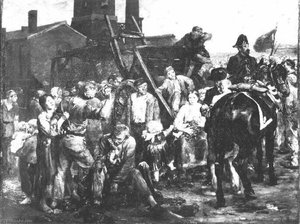
Pe măsură ce deceniile treau, brushwork-ul lui Roll a început să își piardă marginile romantizate, îmbrățișând în schimb asprimea și adevărul mișcării Naturaliste. A devenit un pictor al poporului, îndreptându-și atenția către dinamica socio-politică a Republicii a Treia. Această evoluție nu a fost doar una stilistică, ci profund ideologică. El a căutat să documenteze experiența umană autentică, în special luptele și triumful clasei muncitoare. Pictura sa emblematică, Miners’ Strike (1880), rămâne una dintre cele mai semnificative realizări ale sale, catapultându-l în înaltele ceruri ale lumii artei franceze. În această lucrare, el nu a despăpănuit doar tulburările de muncă; el a umanizat lupta, îmbuatind figurile cu o demnitate care a rezonat mult dincolo de pereții galeriilor.

Această dedicare realismului social i-a permis lui Roll să navigheze prin complexitățile erei sale cu o dexteritate remarcabilă. Repertoarul său s-a extins pentru a include:

  • Peisaje Urbane: Reprezentări meticuloase ale vieții pariziene și ale feței în schimbare a orașului.
  • Portrete Intime: Studii care reflectau nuanțele identităților burgheze și ale celor din clasa muncitoare.
  • Narațiuni Sociale: Compoziții de mari dimensiuni care abordau probleme politice și sociale contemporane.

Capacitatea sa de a îmbina precizia tehnică învățată de la mentorii săi academici cu o abordare progresistă, aproape documentară, a subiectelor abordate, l-a transformat într-o voce vitală în arta franceză. El nu a fost doar un observator al vieții, ci un cronicar al celor mai presante transformări ale acesteia.

Moștenire și Semnificație Istorică

Moștenirea lui Alfred Philippe Roll este definită de rolul său de punte între vechea lume a tradiției academice și noua lume a angajamentului social. Ca co-fondator al Société Nationale des Beaux-Arts, el a jucat un rol crucial în remodelarea peisajului instituțional al artei franceze, susținând un spațiu în care stiluri diverse puteau coexista. Opera sa rămâne o înregistrare istorică vitală, capturând esența unei Franțe prinse între ecourile romantismului și realitățile aspre ale industrializării și reformei sociale.

Prin mă maestria sa asupra luminii, texturii și compoziției, Roll s-a asigurat că luptele și frumusețea vieții de zi cu zi sunt imortalizate. Fie că este vorba despre văzduhuri de neuitat ale regiunii Champagne sau despre tonurile sumbre ale unei greve de muncă, arta sa continuă să invite privitorii într-un dialog profund cu trecutul. El rămâne o figură semnificativă pentru oricine dorește să înțeleagă bătăia inimii Franței din secolul al XIX-lea — un artist care a privit lumea nu doar așa cum apărea, ci așa cum era simțită.