Meniu
CONSULTAȚIE GRATUITĂ DE ARTĂ

Kazimir Malevici

1878 - 1935

Detalii rapide

  • Creative periods: mature period
  • Emotional tone: contemplativă
  • Mediums: acrilic pe pânză
  • Nationality: Ucraina
  • Best occasions:
    • punct central
    • accent
  • Works on APS: 508
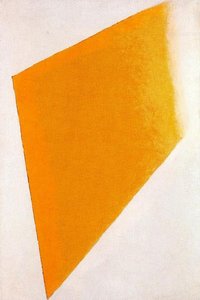
  • Movements: suprematism
  • Vibe: minimalist
  • Art period: Modernism
  • Born: 1878, Kiev, Ucraina
  • Typical colors: călduroase
  • Vezi mai multe…
  • Died: 1935
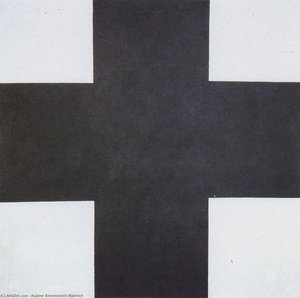
  • Top-ranked work: Pătrat Negru
  • Copyright status: Public domain
  • Gift suitability: other-none
  • Room fit: living room
  • Museums on APS:
    • National Gallery of Australia
    • National Gallery of Australia
    • National Gallery of Australia
    • National Gallery of Australia
    • National Gallery of Australia
  • Top 3 works:
    • Pătrat Negru
    • Compoziție Suprematistă
    • Compoziție Suprematistă: Alb pe Alb
  • Color intensity: vibrant
  • Lifespan: 57 years
  • Also known as: Kazimir Severinovich Malevici

Test de cunoștințe despre artă

Fiecare întrebare are un singur răspuns corect.

Întrebare 1:
Care a fost influența principală asupra stilului lui Kazimir Malevich în copilărie?
Întrebare 2:
Ce reprezintă, în esență, mișcarea Suprematismului pe care a fondat-o Malevich?
Întrebare 3:
Care dintre următoarele opere de artă este considerată cea mai faimoasă și radicală abatere a lui Malevich de la arta tradițională?
Întrebare 4:
În ce țară s-a născut Kazimir Malevich?
Întrebare 5:
Cum a fost afectată cariera lui Malevich din cauza regimului politic stalinist?

Kazimir Malevich: A Pioneer of Abstract Art

Kazimir Severinovich Malevich (1878-1935) stands as a monumental figure in Russian art history, recognized globally for establishing Suprematism – an avant-garde movement that fundamentally reshaped the visual landscape of the 20th century. His unwavering conviction in the primacy of pure feeling and geometric abstraction continues to inspire artists today, cementing his legacy as one of the most influential innovators of modernism.

Early Life and Influences

Born near Kyiv Oblast, Ukraine, Kazimir Malevich’s formative years were deeply rooted in the traditions of rural Ukrainian culture. His upbringing instilled within him a profound appreciation for folk art—particularly vibrant embroidered textiles and stylized depictions of peasant life—which would subtly permeate his artistic vision throughout his career. The stark contrast between the tranquil landscapes of his childhood and the burgeoning dynamism of urban centers fueled his desire to explore new expressive possibilities. Formal training commenced in Kyiv, where he honed his drawing skills before embarking on a journey toward broader artistic horizons, culminating in studies at Moscow’s prestigious Stroganov School of Art. This formative period exposed him to influential artists like Ivan Rerberg, who championed Impressionistic techniques and encouraged Malevich to embrace experimentation.

Artistic Development & Key Movements

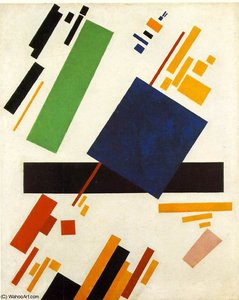
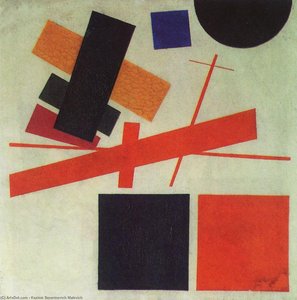
Malevich's artistic trajectory began with explorations of Impressionism and Symbolism, mirroring the prevailing stylistic currents of his time. However, a pivotal encounter with Fernand Léger’s Cubist innovations in Paris during 1912 irrevocably altered his artistic course. Léger’s embrace of geometric abstraction—particularly the simplification of forms into spheres, cylinders, and cones—provided Malevich with a crucial conceptual framework for dismantling traditional representational conventions. Recognizing the transformative potential of this approach, he swiftly transitioned toward Cubism, absorbing its principles while simultaneously forging his own distinctive style. This decisive shift culminated in the birth of Suprematism around 1915 – an audacious movement predicated on the assertion that art should transcend objective depiction and prioritize “the supremacy of pure feeling.” Malevich articulated this revolutionary philosophy in his seminal manifesto, “From Cubism to Suprematism,” declaring that painting’s true essence resided not in mirroring reality but in expressing fundamental geometric forms—squares, circles, and rectangles—stripped bare of any extraneous ornamentation.

Major Achievements & Notable Works

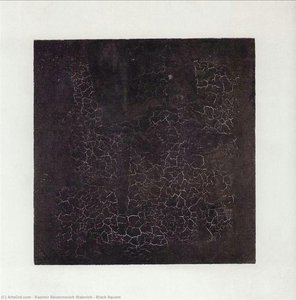
Malevich's artistic output is characterized by a remarkable consistency in its core aesthetic principles – unwavering dedication to abstraction and the exploration of pure geometric forms. Among his most iconic creations are *Black Square* (1915) and *White on White* (1918), works that represent watershed moments in the history of art. *Black Square*, arguably Malevich’s most celebrated masterpiece, embodies Suprematism's radical rejection of illusionism and its insistence on confronting viewers with a stark visual experience devoid of recognizable imagery. Its monumental scale and uncompromising simplicity serve as a testament to Malevich’s conviction that art could achieve profound spiritual significance through the reduction of form to its purest essence. Similarly, *White on White* – consisting of a square canvas painted entirely white—represents an equally daring experiment in minimalist aesthetics. By eliminating color and texture altogether, Malevich sought to distill painting down to its fundamental components, challenging conventional notions of beauty and prompting viewers to contemplate the relationship between perception and representation. Furthermore, his involvement in the Vitebsk Practical Art School under Anatoly Lunacharsky’s patronage fostered a collaborative environment where he championed Suprematism alongside fellow artists like Vladimir Tatlin and Aleksandr Exter—establishing Vitebsk as a crucible for avant-garde innovation.

Historical Significance & Legacy

Kazimir Malevich's artistic legacy extends far beyond the confines of his own lifetime, profoundly influencing subsequent generations of artists and shaping the trajectory of modern art movements. His uncompromising commitment to abstraction served as an inspiration for Minimalism and Constructivism—movements that championed simplicity and geometric rigor in response to the excesses of Expressionism and Surrealism. Malevich’s theoretical pronouncements on art – particularly his assertion that painting should liberate itself from representational constraints—continue to resonate with artists grappling with questions of artistic expression and cultural identity. Despite facing political persecution under Stalin's regime—a period marked by censorship and suppression—Malevich persevered in his artistic practice and teaching, safeguarding the enduring significance of Suprematism as a beacon of creative freedom. His unwavering belief in the transformative power of art cemented his place as one of the most influential figures in 20th-century visual culture, ensuring that Kazimir Malevich’s pioneering vision would endure for decades to come.