

Introduction
There is a specific kind of gravity found in the deep, resonant hues of walnut. It is a color that doesn't just sit on a canvas; it anchors a room. When we talk about paintings dominated by walnut tones, we aren't just discussing a palette of browns and ochres—we are talking about the visual equivalent of a bassline in a lo-far track or the heavy, textured grain of a vintage streetwear piece. These earthy, sophisticated depths evoke a sense of permanence, warmth, and an undeniable urban grit that feels both ancient and incredibly modern.
Historically, these rich, woody tones have been the backbone of some of the most impactful movements in art history. From the dramatic, shadow-heavy chiaroscuro of the Baroque era to the moody, atmospheric layers of late-century realism, walnut tones provide the essential contrast needed to make light pop. These pigments carry a cultural weight, reminding us of old-world libraries, sun-drenched studies, and the raw, organic textures of the natural world. They represent a time when art was built on depth, layering, and a profound connection to the earth's most grounded elements.
In today’s fast-paced, neon-saturated digital landscape, these works remain deeply meaningful because they offer a visual sanctuary. In an era of high-frequency brightness, there is a massive psychological pull toward the stability and soul found in darker, more complex tones. They provide a sophisticated anchor for contemporary interiors, bringing a sense of curated history to even the most avant-garde spaces. Whether it is the way a deep umber catches the light or how a walnut shadow creates depth on a flat wall, these paintings command attention through subtlety rather than noise.
As we walk through this curated selection, prepare to see how the mastery of brown and earth tones can transform a canvas from a simple image into an immersive experience. We have hand-picked ten iconic works that prove that when you master the depth of walnut, you don't just paint a subject—you create an atmosphere. Get ready to dive into a world of texture, shadow, and unparalleled visual impact.
The Night Cafe - vincent willem van gogh
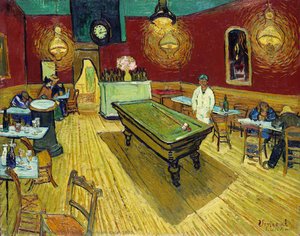 The Night Cafe - vincent willem van gogh
Step into the heavy, nocturnal atmosphere of a late-night Arles tavern, where the air feels thick with tension and the scent of spilled spirits. In The Night Cafe , Vincent van Gogh doesn't just paint a room; he captures a psychological fever dream. This masterpiece earns its place in our selection of walnut-toned icons through its masterful use of deep, earthy shadows and rich, woody undertones that anchor the composition’s more volatile elements.
The painting is a study in contrast, where somber browns and dark wood textures collide with jarring reds and sickly greens to evoke what Van Gogh called the "terrible passions of humanity." It belongs in this collection because it proves how deep, saturated tones can provide a structural soul to even the most chaotic emotions. Bringing such a piece into a modern space does more than decorate a wall; it introduces a profound sense of history and raw, unfiltered human depth, transforming a contemporary room into a sanctuary of storytelling and intense, visual character.
Two Women on the Beach - Eugène Henri Paul Gauguin
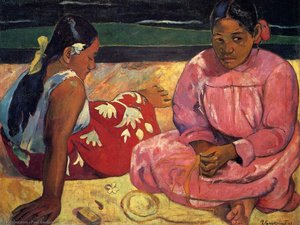 Two Women on the Beach - Eugène Henri Paul Gauguin
There is a gaze in Two Women on the Beach by Paul Gauguin that follows you—not with judgment, but with understanding . This isn’t just a window into 1891 Tahiti; it is a mirror reflecting a profound, quiet intimacy. As a standout in our collection of paintings dominated by walnut tones, this masterpiece uses deep, earthy ochres and rich, woody browns to anchor its tropical heat.
Gauguin rejects the polished realism of the academy, opting instead for Cloisonnism —bold, flat planes of color that feel as impactful as modern graphic art. The heavy, walnut-hued earth provides a grounded, organic backdrop for the vibrant reds and sun-drenched pinks of the figures' attire. The texture of the visible brushstrokes adds a tactile depth that pulls you into their silent game of cards. Now, imagine that soulful gaze in your space. Not watching you, but reminding you : you are seen. You are part of this timeless, sun-soaked story.
The Mocking of Christ - matthias grünewald
 The Mocking of Christ - matthias grünewald
In Matthias Grünewald’s The Mocking of Christ , the lines aren’t merely drawn; they are choreographed in a high-stakes drama of shadow and light. This isn't just a historical scene; it is a dance frozen in time , where the heavy, walnut-toned shadows collide with visceral, earthy pigments to create an atmosphere of crushing tension. The composition is a masterclass in using deep, woody hues to anchor a chaotic crowd, pulling your eyes through a labyrinth of textures—from the rough, coarse ropes to the somber, saturated browns of the onlookers' garments.
As you navigate this masterpiece, notice how the rich, dark tones provide a rhythmic pulse to the suffering on display. The way the deep umbers and walnut shadows wrap around the central figures creates a sense of profound weight and gravity. What if your living room could hold that same balance? What if your walls could breathe rhythm through the use of such powerful, grounded color palettes? This painting proves that even in total chaos, a sophisticated use of dark, organic tones can achieve a haunting, cinematic harmony.
The Self-Seers II (Death and Man) - Egon Schiele
 The Self-Seers II (Death and Man) - Egon Schiele
If you are looking for a piece that commands the room with raw, psychological gravity, Egon Schiele’s The Self-Seers II (Death and Man) is an absolute powerhouse. This isn't just art; it is a visceral encounter with the human condition. The painting is anchored by a heavy, brooding palette of walnut tones , deep ochres, and earthy umbers that create an atmosphere of profound existential weight.
Schiele uses thick, gestural impasto to build a textured landscape of shadows, where skeletal hands and distorted forms emerge from the darkness. The way the rich, dark browns bleed into murky grays evokes a sense of beautiful decay and haunting introspection. For the collector who rejects superficial decor, this work offers transformation . Bringing this masterpiece into your space turns a simple wall into a gallery of the soul, injecting a sophisticated, moody energy that celebrates the beauty found in life's most intense, shadowed moments.
Crucifixion - Salvador Dalí
 Crucifixion - Salvador Dalí
Owning Crucifixion by Salvador Dalí isn’t just a purchase; it is an inheritance of the avant-garde. In this 1954 masterpiece, Dalí moves beyond traditional religious iconography to deliver a high-impact vision of "nuclear mysticism." The piece is anchored by deep, walnut tones and heavy shadows that ground the surrealist fever dream in a sense of ancient gravity.
The composition is dominated by a geometric hypercube—a golden, angular structure that replaces the wooden cross, suspending Christ in a multidimensional void. This architectural precision, rendered with masterful oil techniques, creates a striking tension against the dark, atmospheric landscape and the muted, earthy palette. The way the light hits the golden cubes against the somber, woody depths of the background makes this more than a painting; it is a lineage of taste for the modern collector. Bringing this piece into your space is a nod to the masters, transforming your walls into a gallery where science meets spirituality through a lens of pure, cinematic impact.
The Love Embrace of the Universe, The earth (Mexico), Myself, Diego and Señor Xó - Frida Kahlo
 The Love Embrace of the Universe, The earth (Mexico), Myself, Diego and Señor Xó - Frida Kahlo
Frida Kahlo’s 1949 masterpiece, The Love Embrace of the Universe, The earth (Mexico), Myself, Diego and Señor Xó , is a profound cosmic map that bridges the gap between personal trauma and universal myth. This piece earns its place in our selection of walnut-toned heavyweights through its incredible depth; the earthy, deep brown undertones provide a grounded foundation for Kahlo’s swirling celestial drama. The painting uses these rich, woody hues to anchor the monumental female figure, creating a visual weight that feels both ancient and eternal.
As you observe the interplay of dark, organic shadows and vibrant, symbolic flora, you are witnessing a masterclass in using heavy, saturated tones to evoke the cycle of life, death, and rebirth. The walnut-like warmth of the composition doesn't just decorate a space—it commands it, offering a soulful conversation between Mexican heritage and modern interior design. It invites us to reflect on our own connection to the earth, making it an essential cornerstone for any curated collection seeking emotional resonance and sophisticated, high-impact visual storytelling.
The Rape of the Sabine Women - Nicolas Poussin
 The Rape of the Sabine Women - Nicolas Poussin
Nicolas Poussin’s The Rape of the Sabine Women is a masterclass in high-stakes drama, pulling you instantly into the chaotic heart of ancient Rome. As a standout in our collection of paintings dominated by walnut tones , this piece uses a deep, earthy palette of rich browns, beiges, and muted umbers to anchor its explosive movement. The heavy, wood-toned shadows create a grounded, cinematic atmosphere that feels incredibly modern, much like the moody, dark-academia aesthetic trending in contemporary urban lofts.
The composition is a whirlwind of motion—swirling robes, thrusting swords, and desperate gestures—yet it is held together by that sophisticated, dark color temperature. The way the light hits the central figures against those deep, walnut-colored recesses provides a striking visual punch that demands attention. For the design-conscious collector, this isn't just a historical scene; it is a powerful statement piece. Integrating such a heavy, tonal masterpiece into a room adds instant architectural depth and a sense of timeless, masculine luxury to any modern interior.
at the moulin rouge - henri de toulouse-lautrec
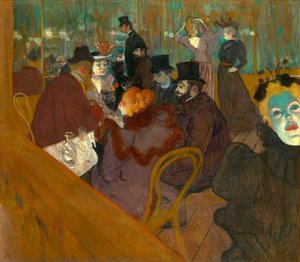 at the moulin rouge - henri de toulouse-lautrec
In At the Moulin Rouge by Henri de Toulouse-Lautrec, deep, amber-infused walnut tones anchor the chaotic energy of Belle Époque Paris. These rich, woody undertones serve as the essential foundation for the painting's legendary atmosphere, grounding the vibrant flashes of neon pink and electric orange within a heavy, nocturnal warmth. This mastery of a darkened, sepia-adjacent palette is precisely why this work earns its spot among the top 10 famous paintings dominated by walnut tones ; it uses shadow not just to obscure, but to sculpt light.
For the modern collector, integrating this piece into a contemporary interior offers a masterclass in mood curation. The painting’s heavy use of warm, dark pigments makes it an ideal centerpiece for a dining room or lounge seeking a sophisticated, low-light aesthetic. By echoing these deep, toasted hues through leather textures or dark wood furniture, you can replicate the decadent, intimate glow of a Montmartre cabaret, transforming a standard living space into a high-impact, soulful sanctuary.
The Child's Brain - Giorgio de Chirico
 The Child's Brain - Giorgio de Chirico
What story does the haunting, silent environment in The Child's Brain by Giorgio de Chirico tell? As a pioneer of the Metaphysical movement, de Chirico didn't just paint scenes; he engineered psychological landscapes. Emerging from the intellectual tension of 1917, this masterpiece uses a heavy, grounded palette of walnut tones , deep beiges, and muted shadows to anchor its surrealist dreamscape. The composition is a masterclass in mood, where the earthy, woody depths of the architectural elements meet the unsettling presence of a contemplative figure.
For the modern collector, this piece offers more than just visual impact; it provides a curated escape into a world of introspection. The way the somber, dark wood tones interact with the sharp, geometric shadows creates a sophisticated atmosphere that anchors any contemporary room. Integrating these deep, organic hues into your home decor allows you to evoke a sense of historical mystery and philosophical depth, making it a standout choice for those seeking art that feels both timeless and provocatively avant-garde.
Self-Portrait with Two Circles - Rembrandt van Rijn
 Self-Portrait with Two Circles - Rembrandt van Rijn
Step into the shadows of 1665, where the heavy, soulful atmosphere of Self-Portrait with Two Circles by Rembrandt van Rijn envelops the senses. This masterpiece earns its place in our top ten through its unparalleled command of the 'walnut' palette—a deep, resonant spectrum of umber, sienna, and dark wood tones that define the Dutch Baroque era. Rembrandt doesn't just paint a face; he sculpts emotion using dramatic chiaroscuro , where light breaks through murky, earth-toned depths to reveal a weathered, wise gaze.
The painting’s influence on visual culture is undeniable, utilizing thick, tactile impasto to turn shadows into something you can almost feel. Its moody, organic textures and rich, dark pigments offer a sophisticated anchor for modern design, providing a sense of historical gravity and quiet strength. At OriginalUniqueArt.com, we believe such profound beauty should be accessible to all. By bringing a high-fidelity, hand-painted reproduction of this iconic work into your home or office, you invite Rembrandt’s transformative, introspective energy into your personal gallery, turning any contemporary space into a sanctuary of timeless art.
Conclusion
As the light fades on this gallery of shadows and warmth, we are reminded that these walnut-toned masterpieces are far more than mere relics of a bygone era; they are living, breathing presences. The deep umbers, rich sienna, and grounded earth tones found within these works do not just occupy space—they anchor it, offering a sense of permanence and soulful quietude in an increasingly frenetic world. These paintings continue to move hearts and shape the very atmosphere of our modern interiors, proving that the human connection to depth, texture, and warmth is truly timeless.
At OriginalUniqueArt.com , we believe this profound emotional resonance should not be confined to museum walls. Our mission is to bridge the gap between the historic and the tangible, allowing these legendary compositions to find a new home within your own sanctuary. Every piece we offer is reborn through the hands of skilled artists who honor the original's soul, meticulously recreating every visible brushstroke and tonal nuance on 100% cotton canvas. We invite you to explore the enduring warmth of our full collection and bring the quiet power of these timeless treasures into your daily life.