Comută pe versiunea Print
 Vezi mai mult







































 Pentru opere de artă sau reproduceri care depășesc 105 cm (aproximativ 41 de inch) pe oricare dintre laturi, cadrul va fi livrat demontat, sub formă de kit. Această metodă asigură o livrare sigură și previne deteriorarea în timpul transportului.


A Tableau of Divine Agony
In the profound depths of The Scourging of Christ, the viewer is met with a scene of unparalleled dramatic intensity. The composition centers upon the agonizing moment of Jesus's flogging, where the physical reality of suffering meets a transcendent spiritual weight. Set against an enveloping, dark backdrop, the central figure emerges with a striking presence, his form illuminated in a way that highlights both the visceral horror of the lashes and the quiet dignity of His endurance. The Roman soldiers, positioned with an almost chilling detachment, serve as silent witnesses to the torment, their impassive expressions creating a psychological tension that pulls the observer into the very heart of the narrative. Every shadow and every highlight works in concert to heighten the emotional impact, making the scene feel less like a distant historical event and more like a living, breathing moment of human tragedy.
The Renaissance Echo in American Art
The brilliance of this work lies in its unique ability to bridge the gap between the New World and the timeless traditions of the Old World. Titian Ramsay Peale II, a singular figure in the 19th-century American landscape, achieved something truly remarkable by infusing his canvases with the aesthetic principles of the High Renaissance. Drawing deep inspiration from the Venetian masters, particularly the legendary Titian and Rembrandt, Peale brought a level of classical sophistication to American art that was rare among his contemporaries. His technique is a masterful blend of scientific observation—a legacy of his naturalist training—and an unwavering devotion to humanist ideals. This duality allows for a painting that is both anatomically precise and symbolically rich, where the meticulous detail of the scene serves to amplify the larger themes of human suffering and divine resilience.
A Masterpiece for the Curated Space
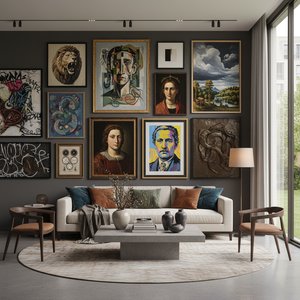
For collectors and interior designers, The Scourging of Christ represents more than just a historical artifact; it is a profound statement piece capable of anchoring an entire room. The painting’s dramatic use of light and shadow—the classic technique of chiaroscuro—provides a sense of depth and gravitas that is essential for creating a sophisticated atmosphere in any gallery or private collection. Its somber, powerful palette offers a versatile foundation for high-end decor, working harmoniously with both classical and modern settings to evoke a sense of history and contemplation. To display such a work is to invite a conversation about the enduring power of art to capture the most intense facets of the human experience, making it an invaluable acquisition for those who seek beauty that is as intellectually stimulating as it is visually arresting.
Întrebări și răspunsuri
Ce fel de operă este "The Scourging of Christ"?
"The Scourging of Christ" este o piesă de tip WallArt.
În ce cameră este recomandată lucrarea "The Scourging of Christ" de Titian Ramsay Peale al II-lea?
Spațiul recomandat pentru "The Scourging of Christ" de Titian Ramsay Peale al II-lea este o Living Room. Sugestia poate fi, desigur, adaptată interiorului dumneavoastră.
Ce atmosferă conferă "The Scourging of Christ" de Titian Ramsay Peale al II-lea unui interior?
Cu atmosfera sa Dramatic, „The Scourging of Christ” este recomandată pentru o Living Room.
Mai multe detalii despre această pictură
 Previzualizare
 Trimite prin felicitare
 Distribuie
 Detalii despre lucrare
 Ghid
Ghid

 Descarcă imaginea
 Produse similare
 Radiografie
 Galerie foto
 Întrebări și răspunsuri
 Statistici