

 Previzualizare
 Trimite
 Distribuie
 Detalii despre lucrare

 Descarcă
 Produse similare
 Radiografie
 Diapozitive automate
Autorportret ca bărbat în vârstă
 Acrilic pe pânză întinsă
- Artă de perete
- Baroque Realism
 41.0 x 30.0 cm
 Muzeul de Artă Fine din Budapesta
 Vezi mai mult
Reproducere pictată manual în ulei
Pictură în ulei pe pânză, realizată manual de artiștii noștri la dimensiunea și ramele dorite de dumneavoastră, pe comandă. ( Comandă printul Cumpără imaginea)




P118B $10

P118H $10

P118W $10

P438Z $10

P508JH $12

P508YH $12

P805H $10

P805Z $10

P919BZ $10

P919G $10

P919XJ $10

P959ZH $10

P968JZ $12

W106C $8

W218G $10

W218JH $8

W218Y $10

W307PJ $10

W316G $10

W316PJ $8

W316Y $10

W398PJ $8

W4111J $10

W500HY $15

W500JH $15

W692G $12

W849H $8

W940BG $15

W953PJ $8




Alegeți dintre dimensiunile noastre prestabilite, care respectă proporțiile originale ale operei de artă.

Puteți introduce propriile dimensiuni pentru a se potrivi unui anumit cadru sau spațiu. Dacă dimensiunea selectată nu corespunde proporțiilor imaginii originale, vom decupa opera de artă sau vom extinde pictura cu elemente suplimentare pictate manual. O simulare digitală vă va fi trimisă pentru aprobare înainte de începerea producției.
Vă rugăm să rețineți că previzualizarea de pe ecran nu reflectă decuparea sau extinderea reală. Doar macheta va arăta cu exactitate compoziția finală.
Deși sunt disponibile dimensiuni personalizate, vă recomandăm să selectați o dimensiune din lista predefinită pentru a păstra proporțiile originale.
După plasarea comenzii, echipa OriginalUniqueArt.com va contacta clientul prin e-mail pentru instrucțiuni și îi va furniza o previzualizare a machetei
Livrare în întreaga lume () în 3-4 săptămâni, în loc de cele 5 săptămâni standard. (22 August). Fără compromisuri în ceea ce privește calitatea.

Livrare expres gratuită la nivel mondial

Pânză de in de înaltă calitate

Asigurare completă pentru transport

Garanție de rambursare a taxelor vamale

Garanția fidelității culorilor

Politica de retur în 60 de zile (doar pentru defecte)

Garanție de rambursare 100%

Ofertă pentru comenzi multiple
 Opțiunea cu sticlă este disponibilă doar pentru dimensiuni de sub 110 cm

Autorportret ca bărbat în vârstă
Tehnică de reproducere
Dimensiune reproducere
-


Preț total calculat
$ 300
Descriere operă de artă
Christian Seybold: A Pioneer of Psychological Portraiture
Christian Seybold (19 March 1695, Neuenhain bei Berlin – 29 September 1768, Vienna) stands as a singular figure in Baroque art—a painter who defied the prevailing trend toward idealized beauty and instead championed an unprecedented level of realism, particularly evident in his prolific self-portraits. He represents a fascinating intersection between artistic innovation and humanist introspection, marking him as one of the most distinctive voices of his era. Unlike many artists preoccupied with glorifying monarchs or celebrating mythological narratives, Seybold focused intently on capturing the inner life of his subjects—a daring choice that foreshadowed developments in portraiture centuries later.- Early Life & Education: Little is known about Seybold’s formative years beyond his familial origins. He appears to have been largely self-taught, a remarkable feat considering the artistic conventions of his time. This independence fostered a unique approach to observation and representation, prioritizing accuracy over conventional embellishment.
- Vienna Years (1715-1728): Seybold established himself in Vienna shortly after marrying and fathering a child—a union that provided him with stability amidst the turbulent political landscape of Central Europe. During this period, he honed his skills under the tutelage of Balthasar Denner, absorbing influences from the Venetian Renaissance and developing his signature style: meticulous detail combined with subtle psychological nuance.
- The Seybold Style – Hyperrealism & Pore Painting Seybold’s artistic method was revolutionary for its time. He practiced what is known as “pore painting,” a technique that aimed to reproduce textures with astonishing precision—from the delicate wrinkles of skin to the rough weave of fabrics like fur. This dedication to realism wasn't merely stylistic; it reflected a profound engagement with human anatomy and physiology, demonstrating an understanding far ahead of its contemporaries.
- Notable Works & Recognition: Seybold’s most celebrated canvases include “Self-Portrait as an Old Man” (41 x 30 cm), housed in the Museum of Fine Arts, Budapest, where he meticulously documented every sign of aging—a poignant meditation on mortality and the passage of time. This painting exemplifies his mastery of chiaroscuro – the dramatic interplay of light and shadow – creating a palpable sense of depth and emotion. Another significant piece is “The Communion of Saint Magdalen,” which showcases Seybold’s ability to convey spiritual contemplation through masterful composition and expressive brushwork.
- Legacy & Context: Seybold's work challenged the prevailing aesthetic ideals of his time, particularly Denner’s assertion that extreme naturalism was "vulgar." His unwavering commitment to realism positioned him as a precursor to Impressionism and Expressionism, demonstrating the enduring power of observation and psychological insight in artistic expression.
- Benkő, Éva – Garas, Klára – Urbach, Zsuzsa, Ember, Ildikó – Takács, Imre (eds.), Old Masters’ Gallery Summary Catalogue Vol. 3: German, Austrian, Bohemian and British Paintings 3, Budapest, p. 122.
- Pigler, Andor, Katalog der Galerie Alter Meister: Museum der Bildenden Künste Budapest 1-2, Akadémiai Kiadó, Budapest, 1967, p. 638.
- Ruhe, Lilian – Personal Communication (2011).
- Ruhe, Lilian – PhD Dissertation (2018).
Biografie artist
The Master of Psychological Realism: The Life and Legacy of Christian Seybold
In the grand tapestry of the Baroque era, where many painters sought to elevate their subjects through an idealized, ethereal beauty, Christian Seybold emerged as a defiant voice of uncompromising truth. Born in 1695 in Neuenhain bei Berlin, Seybold’s journey was one of profound personal tragedy and extraordinary artistic triumph. His early years, though shrouded in the mists of historical obscurity, were marked by a resilience that would later define his brushwork. Moving to Vienna, he experienced the devastating loss of both his first wife and his newborn son within a mere two-year span—a period of grief that many scholars believe infused his work with a deep, empathetic understanding of the human condition. This emotional gravity became the heartbeat of his art, transforming simple portraits into profound psychological studies.
Seybold’s technical mastery was nothing short of legendary, characterized by a meticulousness that bordered on the miraculous. He was known to employ a magnifying glass to capture the most infinitesimal details, rendering every silver strand of hair, every weathered wrinkle, and every subtle glint in an eye with startling precision. This dedication to verisimilitude placed him in a unique position within the art world; while his contemporaries often smoothed away the imperfections of life, Seybold embraced them. His work frequently took the form of tronies—highly detailed character heads that allowed him to explore various expressions and textures without the constraints of formal portraiture. In doing so, he bridged the gap between mere representation and a visceral, living presence on the canvas.
Influences and the Path to Courtly Eminence
The evolution of Seybold’s style was shaped by a sophisticated dialogue with the masters who preceded him. While his detailed character heads drew heavy inspiration from the refined precision of Balthasar Denner, his approach to the human soul and the dramatic use of light echoed the profound legacies of Rembrandt and Jan Kupecký. This blend of influences allowed him to navigate between two worlds: the hyper-realistic observation of physical texture and the emotive, atmospheric depth of the Dutch tradition. His ability to synthesize these styles made his work instantly recognizable and highly sought after by the European elite.
His ascent within the social and political hierarchies of Europe was marked by significant milestones that solidified his status as a premier artist of the 18th century:
- The Viennese Breakthrough: In 1728, his portrait of Count Johann Adam von Questenberg served as a pivotal moment, introducing his extraordinary talent to influential patrons and establishing his reputation in the imperial capital.
- Saxon Court Appointment: In 1742, Seybold reached a professional zenith when he was appointed court painter to King Augustus III of Saxony in Dresden, a role that brought him immense prestige and access to royal resources.
- Imperial Recognition: His talent eventually led him to the court of Empress Maria Theresa, further cementing his importance within the highest echelons of Habsburg society.
A Lasting Impression on Art History
Though some contemporary critics, most notably the influential Johann Joachim Winckelmann, occasionally dismissed his hyper-detailed approach as mere "slavish imitation" of nature, such critiques failed to capture the true essence of Seybold’s genius. To view a Seybold portrait is not merely to observe a technical feat, but to encounter a soul captured in time. His prolific self-portraits, spanning decades of his own aging process, serve as a moving visual diary of a life lived through both immense sorrow and unparalleled professional success.
Today, the works of Christian Seybold are scattered across the world's most prestigious institutions, including the Louvre, the Uffizi, and the Hermitage. His historical significance lies in his refusal to look away from reality. By documenting the textures of age, the nuances of emotion, and the raw truth of the human face, he provided a vital counterpoint to the era's penchant for artifice. He remains a singular figure in the Baroque movement—a painter who used the smallest details to tell the largest stories of human existence.

Christian Seybold
1695 - 1768 , Germany
Detalii rapide
- Artistic Movement Or Style: Baroque
- Artists Or Movements Influenced By This Artist: ['']
- Artists Who Influenced This Artist:
- Balthasar Denner
- Jan Kupecký
- Date Of Birth: 1695
- Full Name: Christian Seybold
- Nationality: German
- Notable Artworks:
- A Boy in a Lace Collar
- Old woman with green scarf
- Old man with spotted fur hat
- Place Of Birth: Neuenhagen bei Berlin, Germany
Articole similare

Barocul în Splendoare: Cele Mai Reprezentative 10 Capodopere Artistice | OriginalUniqueArt.ro
Descoperă splendoarea Barocului! Explorează cele mai importante 10 capodopere ale lui Caravaggio, Rembrandt și Rubens. Află poveștile din spatele picturilor iconice și adu eleganța clasică în casa ta cu reproduceri de artă premium pe OriginalUniqueArt.ro

Drama Barocă: Cum să Aduceți Splendoare și Emoție în Interioarele Contemporane
Descoperiți cum să integrați splendoarea stilului baroc în locuința dumneavoastră! Ghid complet cu elemente de design, culori și inspirație pentru interioare luxoase și pline de emoție.

The Dramatic Flourish: Exploring the Baroque Movement's Enduring Legacy in Art History
Explore the dramatic world of Baroque art! Discover iconic artists like Caravaggio & Rubens, defining techniques, and its lasting impact on art history. Expert insights for collectors & enthusiasts at OriginalUniqueArt.

The Visceral Stage: Exploring Dramatic Narratives & Emotional Intensity in Baroque Art
Explore the dramatic world of Baroque art! Discover iconic masters like Caravaggio & Rembrandt, their techniques, and the movement's lasting impact. Expert insights for collectors & enthusiasts at OriginalUniqueArt.
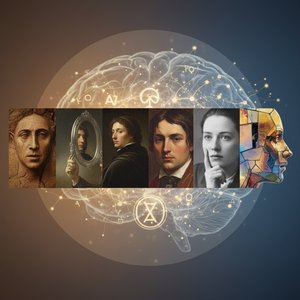
Reflecting the Self: A History of Portraiture & Psychological Insight
Explore the fascinating history of self-portraiture from Renaissance masters like Dürer & Rembrandt to modern interpretations. Discover the psychological insights and artistic techniques behind these iconic works. Expert analysis for art enthusiasts.


