Impressionism · 1931
Peterhof (Piotr Konchalovsky, 1931)
Piotr Konchalovsky (1876–1956) a realizat Peterhof. Data sa este din 1931. Face parte din mișcarea Impressionism. Este realizată în Watercolor. Dimensiunile sunt 39 × 52 cm.
- 1931
- Watercolor
- 39 × 52 cm

 Previzualizare

 Tablou în ulei pictat manual
 Trimite prin felicitare
 Distribuie
 Fișă informativă


 Descarcă imaginea
 Produse similare
 Radiografie
 Galerie foto
 Întrebări și răspunsuri

 Statistici
Peterhof, pe scurt
- Titlu
- Peterhof
- Artist
- Piotr Konchalovsky (1876–1956)
- Artist născut în
- Slaviansk, Ucraina
- Date
- 1931
- Medium
- Watercolor
- Dimensiuni
- 39 × 52 cm
- Mișcare
- Impressionism
- Perioadă
- Modern
- Subiect
- russian architecture, park landscape”, “watercolor painting”, “historic palace”, “impressionist style”, “peterhof gardens”
Ce reprezintă Peterhof?
Identification of the Artwork and Artist
In this watercolor, we encounter Peterhof, a work created by Pyotr Konchalovsky around 1931. The piece offers a quiet study of the intersection between architecture and nature, focusing on a large red brick building situated within a park-like setting. It captures a specific sense of place through a lens that balances the structured lines of the facade with the organic, fluid forms of the surrounding trees.
Pyotr Konchalovsky was a significant figure in the Russian and Soviet art scenes, moving through various stylistic movements throughout his career. This particular work reflects a period in his development where his approach to form and color had become increasingly grounded. The composition relies on a sense of distance between the viewer and the building, using perspective to establish a tranquil atmosphere within the landscape.
Visual Composition and Subject Matter
In this watercolor, the viewer is presented with an exterior view of a large red brick building, positioned within a quiet, park-like setting. The composition is anchored by the building’s facade, which is framed and softened by the surrounding trees. Through a careful use of perspective, the artist creates a sense of depth, drawing the eye into the space between the architectural forms and the organic lines of the foliage. It is a subtle blending of urban and natural elements, where the geometry of the structure meets the fluid, irregular shapes of the landscape.
The subject matter suggests a moment of stillness. There is a certain tranquility in the way the building sits amidst the greenery, offering a nostalgic view of a historic setting. The interplay between the man-made brickwork and the natural environment creates a balanced, quiet atmosphere. Rather than focusing on sharp, rigid details, the work emphasizes the relationship between the architecture and the light of an overcast day, capturing the essence of the site through soft transitions and a sense of distance.
Artistic Technique and Materials
In this watercolor, the artist utilizes a wet-on-wet application to achieve soft transitions and blended colors. This method allows the pigments to bleed into one another, creating a sense of atmosphere that suggests a diffused, overcast light. The texture is built through a layered effect, where visible brushstrokes interact with various washes of color to establish depth within the park-like setting.
The approach is reminiscent of impressionistic or post-impressionistic sensibilities. Rather than focusing on precise architectural detail, the work relies on fluid and expressive lines to define the building's facade and the organic forms of the surrounding trees. These lines provide a sense of movement to the branches and the structural elements of the red brick building. The medium of watercolor on paper allows for a certain transparency, capturing the interplay between the architecture and the natural elements through light and subtle tonal shifts.
Related Works by Pyotr Konchalovsky
To understand the breadth of Konchalovsky’s development, one might look toward his earlier explorations of form and color. In 1912, he painted Family Portrait (Siena), a work that offers a striking portrayal of domesticity. This large-scale oil painting transcends a simple depiction of a family, employing a flattened perspective and simplified forms characteristic of early 20th-century Modernism. The scene centers on a mother, child, and an older man seated around a table within an interior setting.
His output during the 1930s demonstrates a transition toward a more monumental style. He produced Bakhchisaray in 1930 and View on Beshtau place duel with Lermontov in 1938. These works align with the evolving aesthetic of the era, moving away from the fragmented planes of his youth toward a more solid, grounded representation of life. Even his still life compositions, such as Still Life with a Coffeepot from 1919, reveal a consistent interest in the physical presence of his subjects and the weight of their forms.
Imagini la înaltă rezoluție ale lui Peterhof

Domeniu public: artistul a decedat în 1956.
Alte dimensiuni, cadrări și citări →Piotr Konchalovsky, Peterhof (1931). Domeniu public
Întrebări despre Peterhof, răspunsuri
În ce an a fost creată „Peterhof”?
„Peterhof” datează din 1931. Această dată plasează lucrarea în cadrul carierei lui Piotr Konchalovsky și în contextul epocii sale.
Ce tehnică a fost utilizată pentru "Peterhof" de Piotr Konchalovsky?
"Peterhof" este realizat în Watercolor."
Ce dimensiuni are "Peterhof" de Piotr Konchalovsky în realitate?
„Peterhof” măsoară 39 x 52 cm în formatul său original. Dimensiunile originale reprezintă o referință utilă atunci când alegeți dimensiunea unei reproduceri.
Ce reprezintă "Peterhof" de Piotr Konchalovsky?
"Peterhof" de Piotr Konchalovsky surprinde: russian architecture, park landscape”, “watercolor painting”, “historic palace”, “impressionist style”, “peterhof gardens”, “1930s art”.
"Peterhof" de Piotr Konchalovsky face parte din domeniul public?
În ceea ce privește drepturile de autor, "Peterhof" este în domeniul public – drepturile de autor au expirat.
La ce artist este atribuită opera „Peterhof”?
„Peterhof” a fost creat de Piotr Konchalovsky. Informațiile de pe această pagină descriu opera originală a lui Piotr Konchalovsky.
Din ce stil face parte "Peterhof"?
„Peterhof” este o operă de Impressionism. Acest curent indică tradiția artistică din care face parte lucrarea.
Din ce perioadă a carierei lui Piotr Konchalovsky face parte „Peterhof”?
În cariera lui Piotr Konchalovsky, „Peterhof” aparține perioadei Mature Period. Această etapă facilitează compararea sa cu celelalte opere ale artistului.
Ce vârstă avea Piotr Konchalovsky când a creat "Peterhof" în 1931?
Piotr Konchalovsky avea 55 ani când a creat "Peterhof" în 1931. Vârsta este calculată pe baza anului nașterii artistului, 1876.
Despre artistul Piotr Konchalovsky
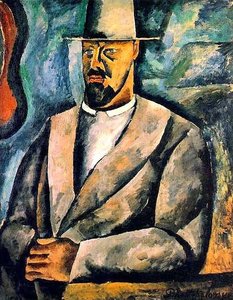
1876–1956, Ucraina
Piotr Konchalovsky
Viața timpurie, familia și formarea artistică Povestea lui Piotr Konchalovsky începe în satul Slavianka, situat în guvernoratul Harkov al Imperiului Rus. Născut pe 21 februarie 1876, acesta a pășit într-o lume în care granițele dintre artă și intelectualism erau deja conturate de cei din jurul său. Tatăl său, Piotr Petrovich Konchalovsky, era un om al literelor și un editor de artă, o profesie care a asigurat o atmosferă în care căminul familial era îmbibat cu curentele vizuale și literare ale epocii. Acest mediu i-a oferit o introducere naturală, deși discretă, în viața unui creator, pe măsură ce familia se muta în celelaltă capitală, Moscova, unde casa sa a devenit un punct de întâlnire pentru numeroase figuri semnificative ale scenei artistice rusești.
Despre Piotr Konchalovsky Lucrări remarcabile ale lui Piotr Konchalovsky
Alte lucrări ale lui Piotr Konchalovsky
 Podul din Abramtsevo1911
 Matador Manuel Gartha1910
 Piazza della Signoria in Siena1912
 San Gimignano1912
Eseuri despre Peterhof
 Unveiling Emotion: The Top 25 Masterpieces by Alexej von JawlenskyImmerse yourself in the vibrant world of Alexej von Jawlensky. Explore 25 iconic Expressionist masterpieces, from emotive portraits to bold…
 Ukrainian artworks of the 1910sUkrainian artworks from the 1910s featuring Kazimir Malevich, Ilya Repin, and Zinaida Serebryakova. View the full collection at OriginalUni…
 Russian artworks of the 1890s1890s Russian art by Ivan Shishkin, Viktor Vasnetsov, and Konstantin Makovsky captures the nation's soul. View the full collection at Origi…